On This Page
Description
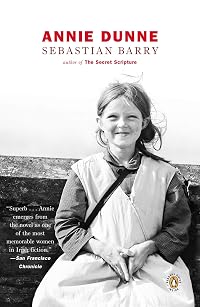
It is 1959 in Wicklow, Ireland, and Annie and her cousin Sarah are living and working together to keep Sarah's small farm running. Suddenly, Annie's young niece and nephew are left in their care.Unprepared for the chaos that the two children inevitably bring, but nervously excited nonetheless, Annie finds the interruption of her normal life and her last chance at happiness complicated further by the attention being paid to Sarah by a local man with his eye on the farm.
A summer of show more adventure, pain, delight, and, ultimately, epiphany unfolds for both the children and their caretakers in this poignant and exquisitely told story of innocence, loss, and reconciliation.
. show less
Tags
Recommendations








Member Reviews
Annie Dunne is getting old. At fifty-nine her hair is grayed and she lives with her cousin, Sarah, two years her elder, not exactly as charity, because she does the bulk of the work around the farm they occupy, but certainly as a person without property or standing. Billy Kerr is a forty-five year old man who hangs about the place, doing small chores, and schmoozing Sarah, and Annie sees him as a threat, a man who wants to acquire a farm and is not adverse to any method of acquiring it.
Into this scenario come two children, Annie’s nephew’s children, to stay for the summer while their parents relocate the family to London. Their presence stirs Annie’s memories and sensibilities, and heightens her awareness of the vulnerability of show more her age. There is also an undercurrent of bewilderment about the presence of children in this world of disillusioned adults--can Annie even know what innocence is any longer?
What is this growing old, when even the engine that holds our despair and hope in balance begins to fail us.
This story has a sad, haunted quality from the first sentence.
“Oh, Kelsha is a distant place, over the mountains from everywhere. You go over the mountains to get there, and eventually, through dreams.
And yet, there is something so beautiful and lyrical about Barry’s writing that it soothes the soul. His descriptions drip, like rain, onto the page. I would read him for the sheer lilt of his voice, even if there were no such marvelous tale to hold his words together.
At length against the long impulse of the night I go out into the starry yard to comfort the long ropes of my muscles and the field sticks of my bones. I carry the bed heat on the surface of my skin and the soft breeze of the night shows great interest in me, raising the hairs on my arms.
I took an immediate liking to Annie, who finds beauty in the simple, ordinary tasks of life and in the world of God’s creation. It is this that buoys her and keeps her afloat in a world that has truly not been kind.
The summer offers a general peace, perhaps the very peace that passeth all understanding. God may have been thinking of the Irish winter when he wrote that in the good book. My spirit is altered by the deepening length of the days, the pleasant trick that summer plays, of suggesting eternity, when the light lies in the yard, and Shep is perpetually stricken by that light, the heavy weight of heat on those special days. Hopefully heaven itself will consist of this, the broadening cheer of light as I walk out into the morning yard.
But her peace is fleeting. She is lonely, feels the emptiness of never having married and had her own children, and she fears the position she occupies as someone who has been and can be again easily discarded. She is paranoid, always waiting for the other shoe to fall, and I began to see her as an unreliable narrator, unable to sort through her own feelings, let alone accurately determine the feelings of others.
Barry is a master at building tension with the use of everyday situations. There were times in reading this that I felt literally trapped, trapped as Annie is in the life she has been given, her back humped by polio, always just outside the circle of family and community that she so longs for. She drowns in her isolation and no one notices, because she fronts herself with anger or disinterest, or silence. She ponders how to even tell Sarah, "That always I have expected to be cast off, discarded, removed…my hurts and thoughts discounted.
I closed this one with a kind of sorrowful soul. I suspect we are all like Annie in a way, too much inside ourselves sometimes, not in touch with anything but the surface of the others around us, hoping, somehow, that we will leave a footprint behind, but knowing we are mostly treading in dust that will be covered as soon as we are gone with other footprints, also destined to disappear. show less
Into this scenario come two children, Annie’s nephew’s children, to stay for the summer while their parents relocate the family to London. Their presence stirs Annie’s memories and sensibilities, and heightens her awareness of the vulnerability of show more her age. There is also an undercurrent of bewilderment about the presence of children in this world of disillusioned adults--can Annie even know what innocence is any longer?
What is this growing old, when even the engine that holds our despair and hope in balance begins to fail us.
This story has a sad, haunted quality from the first sentence.
“Oh, Kelsha is a distant place, over the mountains from everywhere. You go over the mountains to get there, and eventually, through dreams.
And yet, there is something so beautiful and lyrical about Barry’s writing that it soothes the soul. His descriptions drip, like rain, onto the page. I would read him for the sheer lilt of his voice, even if there were no such marvelous tale to hold his words together.
At length against the long impulse of the night I go out into the starry yard to comfort the long ropes of my muscles and the field sticks of my bones. I carry the bed heat on the surface of my skin and the soft breeze of the night shows great interest in me, raising the hairs on my arms.
I took an immediate liking to Annie, who finds beauty in the simple, ordinary tasks of life and in the world of God’s creation. It is this that buoys her and keeps her afloat in a world that has truly not been kind.
The summer offers a general peace, perhaps the very peace that passeth all understanding. God may have been thinking of the Irish winter when he wrote that in the good book. My spirit is altered by the deepening length of the days, the pleasant trick that summer plays, of suggesting eternity, when the light lies in the yard, and Shep is perpetually stricken by that light, the heavy weight of heat on those special days. Hopefully heaven itself will consist of this, the broadening cheer of light as I walk out into the morning yard.
But her peace is fleeting. She is lonely, feels the emptiness of never having married and had her own children, and she fears the position she occupies as someone who has been and can be again easily discarded. She is paranoid, always waiting for the other shoe to fall, and I began to see her as an unreliable narrator, unable to sort through her own feelings, let alone accurately determine the feelings of others.
Barry is a master at building tension with the use of everyday situations. There were times in reading this that I felt literally trapped, trapped as Annie is in the life she has been given, her back humped by polio, always just outside the circle of family and community that she so longs for. She drowns in her isolation and no one notices, because she fronts herself with anger or disinterest, or silence. She ponders how to even tell Sarah, "That always I have expected to be cast off, discarded, removed…my hurts and thoughts discounted.
I closed this one with a kind of sorrowful soul. I suspect we are all like Annie in a way, too much inside ourselves sometimes, not in touch with anything but the surface of the others around us, hoping, somehow, that we will leave a footprint behind, but knowing we are mostly treading in dust that will be covered as soon as we are gone with other footprints, also destined to disappear. show less
Set in the summer of 1959 in Kelsha, Wicklow, Ireland (although there is a later reference which sends it into 1960, all other references are pointing to 1959), "Annie Dunne" is a novel about a place and a time and about a way of life that is already almost lost in the late 50s.
Annie Dunne was born in 1900 in Dublin and spent most of her life in the city - as the daughter of the police chief (in all but name). She never married - having been born with a hump (we know she was born with it because she is afraid of passing it to any children she may have), she spent most of her womanhood helping one of her sisters in the rearing of her 3 sons. Until her brother-in-law decided to remarry (only 2 years after poor Maud's death) and Annie was show more cast aside - alone in the world, without money or land, 57 years old and with nothing to show for her life. A cousin finally takes her in, Sarah Cullen, and Annie moves to the small farm in Kelsha, Wicklow, Ireland. The novel opens 2 years after all that happens, with the two women living together, having found their rhythm of daily tasks and shared life. But that summer of 1959 threatens to change everything again for Annie - in more than one way.
The novel is narrated by Annie - we never hear anyone else's voice and reading it a reader comes to realize that she is not the most reliable of narrators. Not because she is outright lying but her preconceptions and ideas color her narration and her way of looking at things. She knows that she is occasionally wicked and she tries not to be but it does not always work. But she also seems to fall into self-disparagement way too often.
So what changes her life? First one of the boys she helped rear up leaves his own children with her and Sarah for the summer while he and his wife try to build a new life in London. And then Billy Kerr, the handyman who occasionally helps them, seems to have decided to woo Sarah, the 61 years old Sarah who may not be beautiful or quite right in the head sometimes but who owns a 13 acres farm.
And while Annie tells us about the summer and what happens with the kids and with Billy Kerr, she often goes into her memories and tells us about her life and the people in it, about her biggest regrets and fears. Kelsha at the time is still closer to old Ireland, the one before cars and before bread you can buy in a store but even in this remote place, civilization is slowly changing things. Annie can sometimes be a snob and a busybody but she also sometimes can sound like someone you want to be your friend - she is never perfect, she never pretends not to think bad things - and that makes her sound real.
But as much as Annie Dunne is the main character of the novel, she is sharing that spotlight with the way of life she lives - a disappearing one which she is not ready to let go. It is a novel about the simple lives of people in the countryside. Towards the end of the novel, Annie has to face her own prejudices and to admit that she had been wrong and that a lot of what she had considered missing and lost is really there - changes don't always bring ruin and devastation.
It is a slow moving and lyrical novel which tells a simple story of a simple woman (not a simple-minded one), living her life in a time when the world around her seems to change in ways she cannot understand. At the same time it touches on a lot of dark topics because people will be people and darkness is part of daily life after all. It has a few disturbing passages, made even more sinister sounding because of the idyllic setting. And then there is Annie Dunne, a woman who tries to be honest to herself and who finds a way to finally see friendship and community where she used to see only people.
This is the first novel by Barry which I read but it won't be the last. It starts a cycle of novels about different members of the Dunne family through the years (there is also a play that introduced Annie to the world for the first time). A curious tidbit - Barry has another family saga as well, about the McNulty Family and once upon a time Sarah had a crush on a McNulty man. But then Ireland is a small country and it is possible that the name was just a coincidence. Or is it? show less
Annie Dunne was born in 1900 in Dublin and spent most of her life in the city - as the daughter of the police chief (in all but name). She never married - having been born with a hump (we know she was born with it because she is afraid of passing it to any children she may have), she spent most of her womanhood helping one of her sisters in the rearing of her 3 sons. Until her brother-in-law decided to remarry (only 2 years after poor Maud's death) and Annie was show more cast aside - alone in the world, without money or land, 57 years old and with nothing to show for her life. A cousin finally takes her in, Sarah Cullen, and Annie moves to the small farm in Kelsha, Wicklow, Ireland. The novel opens 2 years after all that happens, with the two women living together, having found their rhythm of daily tasks and shared life. But that summer of 1959 threatens to change everything again for Annie - in more than one way.
The novel is narrated by Annie - we never hear anyone else's voice and reading it a reader comes to realize that she is not the most reliable of narrators. Not because she is outright lying but her preconceptions and ideas color her narration and her way of looking at things. She knows that she is occasionally wicked and she tries not to be but it does not always work. But she also seems to fall into self-disparagement way too often.
So what changes her life? First one of the boys she helped rear up leaves his own children with her and Sarah for the summer while he and his wife try to build a new life in London. And then Billy Kerr, the handyman who occasionally helps them, seems to have decided to woo Sarah, the 61 years old Sarah who may not be beautiful or quite right in the head sometimes but who owns a 13 acres farm.
And while Annie tells us about the summer and what happens with the kids and with Billy Kerr, she often goes into her memories and tells us about her life and the people in it, about her biggest regrets and fears. Kelsha at the time is still closer to old Ireland, the one before cars and before bread you can buy in a store but even in this remote place, civilization is slowly changing things. Annie can sometimes be a snob and a busybody but she also sometimes can sound like someone you want to be your friend - she is never perfect, she never pretends not to think bad things - and that makes her sound real.
But as much as Annie Dunne is the main character of the novel, she is sharing that spotlight with the way of life she lives - a disappearing one which she is not ready to let go. It is a novel about the simple lives of people in the countryside. Towards the end of the novel, Annie has to face her own prejudices and to admit that she had been wrong and that a lot of what she had considered missing and lost is really there - changes don't always bring ruin and devastation.
It is a slow moving and lyrical novel which tells a simple story of a simple woman (not a simple-minded one), living her life in a time when the world around her seems to change in ways she cannot understand. At the same time it touches on a lot of dark topics because people will be people and darkness is part of daily life after all. It has a few disturbing passages, made even more sinister sounding because of the idyllic setting. And then there is Annie Dunne, a woman who tries to be honest to herself and who finds a way to finally see friendship and community where she used to see only people.
This is the first novel by Barry which I read but it won't be the last. It starts a cycle of novels about different members of the Dunne family through the years (there is also a play that introduced Annie to the world for the first time). A curious tidbit - Barry has another family saga as well, about the McNulty Family and once upon a time Sarah had a crush on a McNulty man. But then Ireland is a small country and it is possible that the name was just a coincidence. Or is it? show less
Not too long ago I read (and wrote a review) for Sebastian Barry’s A Long, Long Way. It was an exquisite little novel, one of the most powerful stories I have ever read about World War I. Then I stumbled up another magnificent Barry novel, Annie Dunne.
Annie’s story is a sequel, of sorts, to A Long, Long Way. I, however, did not make the connection to halfway through the story. So I won’t spoil it and tell you what the connection is, you’ll have to read it to discover it.
It’s 1959 in Kelsha, County Wicklow, Ireland. Annie has been relocated to the country from Dublin, forced out of her home when her dead sister’s husband wanted to remarry. Now she lives with her cousin, Sarah, in a small cottage on Sarah’s small farm. The show more cottage is so small that the women must share a bed. Both are in their sixties, I’m thinking late sixties, and have never married. The work is back-breaking, but both are used to such labors. Annie considers Sarah long in the face, while Annie is also plain and afflicted with a humpback as a result of a childhood bout with polio.
Annie has always been grateful for Sarah taking her in, and she’ll do anything not be on the verge of homelessness again. When Annie’s nephew, Trevor, asks them to watch his two children over the summer, Annie and Sarah agree. They aren’t used to the chaos a six-year-old girl and a four-year-old boy bring to their quiet lives, but both relish in playing mother.
Troubles are brewing for Annie. First a there’s the scheming handyman, Billy Kerr, who starts sniffing around Sarah. Annie is terrified that Sarah will marry him, thus leaving her homeless once again. Then Annie catches the children performing a bizarre, to Annie, sexual act. She doesn’t know what to do or say about this and worries about it constantly.
I found it quite interesting that the scheming handyman Billy Kerr also has the same name as Sarah’s donkey. Also, neither of the children’s names are ever mentioned. The simply referred as the boy and the girl.
Barry has a gift for image and metaphor. The prose is compact and beautiful. I’ve been telling my reader friends that Annie Dunne is pure poetry. I give this book five out of five stars. show less
Annie’s story is a sequel, of sorts, to A Long, Long Way. I, however, did not make the connection to halfway through the story. So I won’t spoil it and tell you what the connection is, you’ll have to read it to discover it.
It’s 1959 in Kelsha, County Wicklow, Ireland. Annie has been relocated to the country from Dublin, forced out of her home when her dead sister’s husband wanted to remarry. Now she lives with her cousin, Sarah, in a small cottage on Sarah’s small farm. The show more cottage is so small that the women must share a bed. Both are in their sixties, I’m thinking late sixties, and have never married. The work is back-breaking, but both are used to such labors. Annie considers Sarah long in the face, while Annie is also plain and afflicted with a humpback as a result of a childhood bout with polio.
Annie has always been grateful for Sarah taking her in, and she’ll do anything not be on the verge of homelessness again. When Annie’s nephew, Trevor, asks them to watch his two children over the summer, Annie and Sarah agree. They aren’t used to the chaos a six-year-old girl and a four-year-old boy bring to their quiet lives, but both relish in playing mother.
Troubles are brewing for Annie. First a there’s the scheming handyman, Billy Kerr, who starts sniffing around Sarah. Annie is terrified that Sarah will marry him, thus leaving her homeless once again. Then Annie catches the children performing a bizarre, to Annie, sexual act. She doesn’t know what to do or say about this and worries about it constantly.
I found it quite interesting that the scheming handyman Billy Kerr also has the same name as Sarah’s donkey. Also, neither of the children’s names are ever mentioned. The simply referred as the boy and the girl.
Barry has a gift for image and metaphor. The prose is compact and beautiful. I’ve been telling my reader friends that Annie Dunne is pure poetry. I give this book five out of five stars. show less
This is a book of melodious language over a coming sadness, as the titular Annie Dunne realises over the summer of 1960 that the sixty year old cousin Sarah with whom she lives may marry, and then where will Annie live. The book is set in a rural Ireland where life is old fashioned, there is a pony and trap for travel from the smallholding into the nearest town, butter is made by hand from their own cows’ milk, eggs are collected from their hens and wash day is done using tubs and starch with clothes put out on drying bushes.
I must say again how the beauty of the language builds up the fear of unknown things, half known things, the darkness within and without. A wonderful book.
I have previously read the equally excellent A Long, Long show more Way (2005) about Willie Dunne in the 1910’s, and this book set in 1960 refers back to Willie who is Annie’s brother and now long dead, but A Long, Long Way was written after this book, which is weird and wonderful, even though both are fictions.
This book made me deep dive into my own childhood memories of my grandparents and people of their generation, the “old folk”, for whom cars were still a wonder, as they hadn’t had them in their childhoods, and my maternal grandfather used to turn off the engine and put the car in neutral when going downhill on quiet country roads. And he would let the dog out to run alongside the car and get some exercise show less
I must say again how the beauty of the language builds up the fear of unknown things, half known things, the darkness within and without. A wonderful book.
I have previously read the equally excellent A Long, Long show more Way (2005) about Willie Dunne in the 1910’s, and this book set in 1960 refers back to Willie who is Annie’s brother and now long dead, but A Long, Long Way was written after this book, which is weird and wonderful, even though both are fictions.
This book made me deep dive into my own childhood memories of my grandparents and people of their generation, the “old folk”, for whom cars were still a wonder, as they hadn’t had them in their childhoods, and my maternal grandfather used to turn off the engine and put the car in neutral when going downhill on quiet country roads. And he would let the dog out to run alongside the car and get some exercise show less
Well, it's just beautiful, that's all. Annie Dunne and her cousin, Sarah Cullen, are 60-ish Irish women who have never married, and who have lately been living together on Sarah's small farm, sharing the work that keeps them both occupied from dawn to dusk. Summer comes, and with it, the temporary care of Sarah's grand-niece and grand-nephew, two young children whose parents are in the process of moving to London to find work in the late 1950's. We see the summer through Sarah's eyes, as she faces an uncertain future, ponders the past, and deals with the joys and worries of being responsible for two active and unpredictable youngsters. While the children are the catalyst for many telling moments in Sarah's self-exploration, they are show more never given Christian names, being referred to only as "the boy" and "the girl" throughout. This is a character study, and there is not a lot of action, but what there is has a grip...an accident with the pony cart, a troop of wandering tinkers attempting to gain entrance to the cottage, angry confrontations, a child gone missing. The writing is lyrical, often magical, totally engaging. Highly recommended. show less
Annie Dunne is a character I will long remember. One of three girls born into an Irish family, Annie suffers from a humped back at a time when this makes her unwanted for marriage. Annie's back is a source of pity, spite, or ridicule. As a grown woman she basically raises the sons of her sister, Maude, who has some undescribed illness and dies early. Secretly having feelings for her brother-in-law, she is abruptly told to leave the house when he decides to remarry. Having no place to go, she writes several cousins. Sarah, also unmarried, replies that Annie can come and live with her and help at a very remote homestead. Annie brings some chicken with her as a sort of dowry.
Trevor, one of Annie's nephews, must leave for a while and show more entrusts his children, an unnamed boy and girl, to Annie and Sarah. Annie loves her position as caretaker and loves the children, especially the boy, deeply. But life isn't ideal. Billy Kerr, a local workman, begins to take an interest in Sarah and Annie is bitter toward him as she is afraid. Upon seeing an unbelievable sexual act between the sister and brother, Annie's life is further tormented. Does she talk to them about it? Tell someone?
As the time goes on, she wavers from deep love to anger at the children and the boy especially acts out, at one time almost killing one of the beloved chickens. Annie's relationship with Billy further disintegrates as he threatens her. But as Trevor returns to get the children, Annie has made a sort of peace with herself and others.
An especially well-written book; the description so vividly paints a picture of turf fires, wet grass, and Irish air. Annie is such a complex, sad, yet in many ways admirable character. Beautiful story. show less
Trevor, one of Annie's nephews, must leave for a while and show more entrusts his children, an unnamed boy and girl, to Annie and Sarah. Annie loves her position as caretaker and loves the children, especially the boy, deeply. But life isn't ideal. Billy Kerr, a local workman, begins to take an interest in Sarah and Annie is bitter toward him as she is afraid. Upon seeing an unbelievable sexual act between the sister and brother, Annie's life is further tormented. Does she talk to them about it? Tell someone?
As the time goes on, she wavers from deep love to anger at the children and the boy especially acts out, at one time almost killing one of the beloved chickens. Annie's relationship with Billy further disintegrates as he threatens her. But as Trevor returns to get the children, Annie has made a sort of peace with herself and others.
An especially well-written book; the description so vividly paints a picture of turf fires, wet grass, and Irish air. Annie is such a complex, sad, yet in many ways admirable character. Beautiful story. show less
The New York Times said this about “Annie Dunne” – “Annie’s passionate observations and shifting moods – rendered in dense prose that’s close to poetry – fuel this fine novel.” I couldn’t have summarized this book any more succinctly. At times, the dens prose is deterring. The ups and downs of Annie’s emotions roller-coaster across her circumstances like the hillsides of Ireland. If you are not interested in the immense depth of a character, this is not the book to read.
“Annie Dunne” is about Annie, spoken from the voice of Annie, entirely from her perspective. She is a 60-year-old, never-married woman, living with her cousin Sarah, in 1959 Wicklow Ireland. Life has not been kind to her, having contracted polio show more in her youth leaving her with a humped back. Her mom died young, her sisters teased her mercilessly, her brother died in a war, her father was the top police chief whom she admired greatly but he too faded into the darkness of dementia. Her brother-in-law kicked her out when her sister died, despite her having raised their children due to the sister’s illness leaving her on the verge of homelessness until Sarah invited her in. And now the local handyman is eyeing Sarah’s small farm and is proposing marriage. What will become of Annie? Her situation is further complicated as her 4 and 6 yr old grand-nephew, niece are in her care while their parents seek a better fortune in London.
Sebastian Barry authored a very credible aging woman who has her fair share of gratefulness, bitterness, pragmatism, kindness, self-pity, pettiness, and a long memory of an era past. She is generous and thoughtful in one moment, rage-filled in another, closing with loathing and regret (reference: toy truck). Her humped back is part of her identity – “a wounded creature among the complete”. It’s a physical wound that enveloped her while her family, as well as their lost fortunes/status, dragged on her mind. She is imperfect, as anyone should be. She is the “generous, bitter arms of a crab-apple tree”; it’s a pretty damn good description. Descriptions of a simpler way of life add a rustic charm: butter churning, killing a hen, making sausages from actual pig intestine. Light on plot, deep in character, it’s an optional though viable read.
Some quotes:
On aging:
“He was so full of sorrow. He was hurt in himself, wounded, deep, deep, down deep. For forty years he rose up through the ranks, keeping the peace, guarding, watching. Then everything he knew was burned and razed. It burned and razed the odd house of his mind. Never the same, never the same.”
A wounded child:
“So wrongdoers against children should not imagine their crimes are forgiven, just because the child heals quickly before their eyes. The wound seeps down like a drowned person. Many years later it will bob up again to the surface, frighting the districts all about. This I know, this is my caution.”
A wounded woman or self-preservation – you decide (note the contrast to above too):
“What pleasantry, what ease. I hate this man. If I could kill him quietly, I think I would. I would like to cleave his breastbone with a slash hook, now slash hooks are the topic, and reach into his ribs and put my fingers round vigorous heart, and tear it from what tethers it.”
On tears – I know these tears well:
“Now big, difficult boyhood tears tear from him. He is heaving painfully, his breath robbed each time he cries out, then a gap, a silence, and the hot ferocious tears. His chest shakes with the effort to cry, to breathe. The ice is loosed on the little hill of himself, and now down it cascades in riverlets and becks.” show less
“Annie Dunne” is about Annie, spoken from the voice of Annie, entirely from her perspective. She is a 60-year-old, never-married woman, living with her cousin Sarah, in 1959 Wicklow Ireland. Life has not been kind to her, having contracted polio show more in her youth leaving her with a humped back. Her mom died young, her sisters teased her mercilessly, her brother died in a war, her father was the top police chief whom she admired greatly but he too faded into the darkness of dementia. Her brother-in-law kicked her out when her sister died, despite her having raised their children due to the sister’s illness leaving her on the verge of homelessness until Sarah invited her in. And now the local handyman is eyeing Sarah’s small farm and is proposing marriage. What will become of Annie? Her situation is further complicated as her 4 and 6 yr old grand-nephew, niece are in her care while their parents seek a better fortune in London.
Sebastian Barry authored a very credible aging woman who has her fair share of gratefulness, bitterness, pragmatism, kindness, self-pity, pettiness, and a long memory of an era past. She is generous and thoughtful in one moment, rage-filled in another, closing with loathing and regret (reference: toy truck). Her humped back is part of her identity – “a wounded creature among the complete”. It’s a physical wound that enveloped her while her family, as well as their lost fortunes/status, dragged on her mind. She is imperfect, as anyone should be. She is the “generous, bitter arms of a crab-apple tree”; it’s a pretty damn good description. Descriptions of a simpler way of life add a rustic charm: butter churning, killing a hen, making sausages from actual pig intestine. Light on plot, deep in character, it’s an optional though viable read.
Some quotes:
On aging:
“He was so full of sorrow. He was hurt in himself, wounded, deep, deep, down deep. For forty years he rose up through the ranks, keeping the peace, guarding, watching. Then everything he knew was burned and razed. It burned and razed the odd house of his mind. Never the same, never the same.”
A wounded child:
“So wrongdoers against children should not imagine their crimes are forgiven, just because the child heals quickly before their eyes. The wound seeps down like a drowned person. Many years later it will bob up again to the surface, frighting the districts all about. This I know, this is my caution.”
A wounded woman or self-preservation – you decide (note the contrast to above too):
“What pleasantry, what ease. I hate this man. If I could kill him quietly, I think I would. I would like to cleave his breastbone with a slash hook, now slash hooks are the topic, and reach into his ribs and put my fingers round vigorous heart, and tear it from what tethers it.”
On tears – I know these tears well:
“Now big, difficult boyhood tears tear from him. He is heaving painfully, his breath robbed each time he cries out, then a gap, a silence, and the hot ferocious tears. His chest shakes with the effort to cry, to breathe. The ice is loosed on the little hill of himself, and now down it cascades in riverlets and becks.” show less
Members
- Recently Added By
Published Reviews
added by frosanne
Lists

Unmarried women
66 works; 6 members

Thinking of Ireland
20 works; 1 member

Novels set in the Irish Mid-East
7 works; 1 member
Author Information

43+ Works 9,663 Members
Sebastian Barry is a playwright whose work has been produced in London, Dublin, Sydney, and New York. He lives in Wicklow, Ireland, with his wife and three children. Sebastian Barry is an Irish writer and playwright, born in 1955. He is the author of two novels, A Long Long Way and Days Without End, which won the Costa Book Award for best novel. show more His other awards include the Kerry Group Irish Fiction Prize, the Irish Book Awards Novel of the Year, the Independent Booksellers Prize and the James Tait Black Memorial Prize. (Bowker Author Biography) show less
Some Editions
Awards and Honors
Distinctions
Series

Belongs to Publisher Series
Common Knowledge
- Canonical title
- Annie Dunne
- Original publication date
- 2002 (1e édition originale anglaise) (1e édition originale anglaise); 2005-02-17 (1e traduction et édition française, Littérature étrangère, Joëlle Losfeld) (1e traduction et édition française, Littérature étrangère, Joëlle Losfeld)
- People/Characters
- Annie Dunne; Sarah Cullen, her cousin; Billy Kerr; The little girl; The little boy; Matthew or Matt, the childrens grandfather (show all 7); Maud, his wife and Annie's sister
- Important places
- County Wicklow, Ireland; Kiltegan, County Wicklow, Ireland (Kelsha); Dublin, Ireland
- Dedication
- To Derek Johns
- First words
- Oh, Kelsha is a distant place, over the mountains from everywhere.
- Last words
- (Click to show. Warning: May contain spoilers.)Like the spider, although we will decay, something of us ever after will remain.
- Original language*
- Anglais (Irlande) (Irlande)
*Some information comes from Common Knowledge in other languages. Click "Edit" for more information.
Classifications
Statistics
- Members
- 432
- Popularity
- 71,433
- Reviews
- 26
- Rating
- (3.86)
- Languages
- Dutch, English, French, German
- Media
- Paper, Audiobook, Ebook
- ISBNs
- 23
- ASINs
- 7