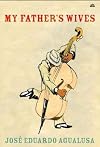
My Father's Wives
by Jose Eduardo Agualusa
On This Page
Description
Longlisted for the 2009 Independent Foreign Fiction Prize. When the celebrated Angolan musician Faustino Manso dies, his youngest daughter Laurentina journeys to Angola to trace the story of the father she never knew. Setting out to find the 7 wives and 18 children he left scattered across southern Africa, the fictional account of Laurentina's journey runs parallel with the author's chronicle of the novel's genesis. As the characters and their creator travel the southern African coast-from show more Angola through Namibia and South Africa to Mozambique-they meet extraordinary people and, along the way, discover Faustino's secrets. Long-listed for the Independent Foreign Fiction Prize, this beguiling story heralds the rebirth of Africa, a continent beset by adversity but blessed with musical riches, the ever-renewed strength of its women, and the secret powers of ancient gods. show lessTags
Recommendations

















Member Reviews
At her mother's deathbed, Laurentina finds out that she is not her parents' child. In the maternity hospital in Mozambique, her mother gave birth to a stillborn baby, and then adopted the child of the unmarried woman who gave birth in the next room. Her father was a mulatto Angolan musician named Faustino Manso.
Laurentina promptly takes off for Angola to trace her roots, taking her boyfriend Mandume (born to Angolan parents but identifying as Portuguese). She arrives just in time for Faustino's funeral, but there she is able to meet her extended family, including Bartolomeu, a writer and filmmaker who is so light-skinned that his ID card classes him as 'white', although his full brother is classified 'black'. Bartolomeu persuades her to show more travel with him and make a documentary of Faustino's life, interviewing his friends, the musicians who played with him, and above all his seven wives and eighteen children, in various cities across southern Africa.
The story is narrated in turn by different people - Laurentina, Mandume, Bartolomeu, their driver Pouca Sorte (a man with a mysterious past of his own) and an unnamed speaker who is travelling around southern Africa writing Laurentina's story.
You might already be able to tell from this synopsis that one of the themes of this book is identity - how your skin colour, race, places of birth and residence, parentage and family history influence how you see yourself and how others see you. Another is the way that stories are created from different elements of truth (elements from the writer's adventure find their way into Laurentina's).
There are a lot of interesting things in this book relating to the first theme. Unusually, it portrays migration as being something that went in all directions, rather than simply towards Europe. People in this book end up in all sorts of places different from where they started, or perhaps they go one way and then come back another. It's also good on the contingency of identity in different situations. One of the people that Laurentina talks to for the film tells the story of his wife, "a mestiça like him - chose to get herself classified as white and abandoned him with four children in his arms. I was struck by a phrase he used several times: 'after my wife became white'. He'd say it without irony, with the same tone you might use to say, 'after my wife put on weight'. It was just the statement of a fact." Laurentina and Mandume too are challenged in the way they see themselves in the course of their journey, for many different reasons.
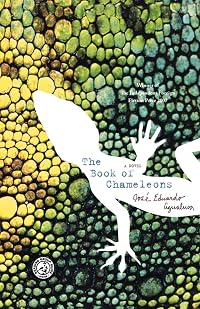
The second theme, however, I found less successful. It did fit with the first theme, but the way that it was used made the story feel very fragmentary, and this made it much harder to engage with the story. It's a pity, since there is such a lot of interesting stuff within the narrative. I will keep this book and probably read it again, but I didn't enjoy it in the way that I enjoyed Agualusa's The Book Of Chameleons, which was one of my favourite reads of 2008. show less
Laurentina promptly takes off for Angola to trace her roots, taking her boyfriend Mandume (born to Angolan parents but identifying as Portuguese). She arrives just in time for Faustino's funeral, but there she is able to meet her extended family, including Bartolomeu, a writer and filmmaker who is so light-skinned that his ID card classes him as 'white', although his full brother is classified 'black'. Bartolomeu persuades her to show more travel with him and make a documentary of Faustino's life, interviewing his friends, the musicians who played with him, and above all his seven wives and eighteen children, in various cities across southern Africa.
The story is narrated in turn by different people - Laurentina, Mandume, Bartolomeu, their driver Pouca Sorte (a man with a mysterious past of his own) and an unnamed speaker who is travelling around southern Africa writing Laurentina's story.
You might already be able to tell from this synopsis that one of the themes of this book is identity - how your skin colour, race, places of birth and residence, parentage and family history influence how you see yourself and how others see you. Another is the way that stories are created from different elements of truth (elements from the writer's adventure find their way into Laurentina's).
There are a lot of interesting things in this book relating to the first theme. Unusually, it portrays migration as being something that went in all directions, rather than simply towards Europe. People in this book end up in all sorts of places different from where they started, or perhaps they go one way and then come back another. It's also good on the contingency of identity in different situations. One of the people that Laurentina talks to for the film tells the story of his wife, "a mestiça like him - chose to get herself classified as white and abandoned him with four children in his arms. I was struck by a phrase he used several times: 'after my wife became white'. He'd say it without irony, with the same tone you might use to say, 'after my wife put on weight'. It was just the statement of a fact." Laurentina and Mandume too are challenged in the way they see themselves in the course of their journey, for many different reasons.
The second theme, however, I found less successful. It did fit with the first theme, but the way that it was used made the story feel very fragmentary, and this made it much harder to engage with the story. It's a pity, since there is such a lot of interesting stuff within the narrative. I will keep this book and probably read it again, but I didn't enjoy it in the way that I enjoyed Agualusa's The Book Of Chameleons, which was one of my favourite reads of 2008. show less
143/2020. This novel with five main narrators is structured as a road trip travelogue about paternity, paternalism, and patriarchy. The paternity is mostly biological without the parenting of fatherhood. The paternalism is mostly destructive colonialism and its fallout. The patriarchy is all-pervasive and in this story, which is sold as being about a woman seeking her paternity, the four main male characters all have distinctive internal lives while the one woman is rarely herself but is used as way of relating to other characters and as a vehicle for their appearances in the narrative. If she'd been less of a cipher and more of a character then I might have given this four stars. Nevertheless, if you want to read a travelogue and music show more themed novel spanning Angola, Namibia, South Africa, and Mozambique then this is a better than average book.
Best quotes
The Canjala road: "It still had many thousands of fierce potholes, preserved intact, perhaps the largest collection in the world. That evening they were ravenous. They flung themselves at us with the voraciousness of piranhas."
Ageing and happiness: "From a certain age we're only happy through an effort of forgetting. This doesn't stop me loving life and thinking it's beautiful." show less
Best quotes
The Canjala road: "It still had many thousands of fierce potholes, preserved intact, perhaps the largest collection in the world. That evening they were ravenous. They flung themselves at us with the voraciousness of piranhas."
Ageing and happiness: "From a certain age we're only happy through an effort of forgetting. This doesn't stop me loving life and thinking it's beautiful." show less
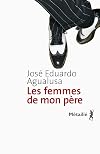
My Father's Wives by Angolese writer José Eduardo Agualusa, about Laurentina, a Mozambican girl living in Portugal, who finds out her father is actually a famous star musician with matching lifestyle, and sets out to find him.
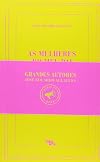
Faustino Manso, famoso compositor angolano, deixou ao morrer sete viúvas e dezoito filhos. A filha mais nova, Laurentina, realizadora de cinema tenta reconstruir a atribulada vida do falecido músico. Em As Mulheres do Meu Pai, realidade e ficção correm lado a lado, a primeira alimentando a segunda. Nos territórios que José Eduardo Agualusa atravessa, porém, a ficção participa da realidade. As quatro personagens do romance que o autor escreve, enquanto viaja, vão com ele de Luanda, capital de Angola, até Benguela e Namibe. Cruzam as areias da Namíbia e as suas povoações-fantasma, alcançando finalmente Cape Town, na África do Sul. Continuam depois, rumo a Maputo, e de Maputo a Quelimane, junto ao rio dos Bons Sinais, e show more dali até à ilha de Moçambique. Percorrem, nesta deriva, paisagens que fazem fronteira com o sonho, e das quais emergem, aqui e ali, as mais estranhas personagens. show less
Aug 9, 2007Portuguese
Ratings
Members
- Recently Added By
Lists

Books Read in 2014
2,343 works; 87 members

Books Set In Africa
81 works; 4 members
Author Information

53+ Works 2,193 Members
José Eduardo Agualusa was born on December 13, 1960 in Huambo, Angola. He studied agronomy and silviculture in Lison, Portugal. He has worked as a journalist for the Portuguese magazine LER, the Brazilian newspaper O Globo, and the Angolan portal Rede Angola. He is also the host of a radio program A Horas das Cigarras on the RDP Africa channel. show more He is an award-winning writer whose work has been translated into multiple languages. Those translated to English include Creole, winner of the Portuguese Grand Prize for Literature; The Book of Chameleons, which won the Independent Foreign Fiction Prize; My father's wives, and Rainy Season. He has written four plays W generation, O monologo, Chovem amores na Rua do Matador (written with Mia Couto), and A Caixa Preta (written with Mia Couto). His work also includes novellas, short stories, and poetry. His recent novels include A educacao sentimental dos passaros, A Vida no Ceu, and A Rainha Ginga, and a book of short stories O Livro dos Camaleoes. (Bowker Author Biography) show less
Some Editions
Awards and Honors
Notable Lists
Common Knowledge
- Canonical title
- My Father's Wives
- Original publication date
- 2008
- Important places
- Angola; Namibia; South Africa; Mozambique
- Quotations
- It still had many thousands of fierce potholes, preserved intact, perhaps the largest collection in the world. That evening they were ravenous. They flung themselves at us with the voraciousness of piranhas.
From a certain age we're only happy through an effort of forgetting. This doesn't stop me loving life and thinking it's beautiful. - Original language
- Portuguese
Classifications
- Genres
- Fiction and Literature, General Fiction, Romance
- DDC/MDS
- 869.342 — Literature & rhetoric Spanish Literature Literatures of Portuguese and Galician languages Portuguese fiction 20th Century 1945-1999
- LCC
- PQ9929 .A39 .M8513 — Language and Literature French, Italian, Spanish and Portuguese literatures Portuguese literature Provincial, local, colonial, etc.
- BISAC
Statistics
- Members
- 121
- Popularity
- 269,236
- Reviews
- 4
- Rating
- (3.57)
- Languages
- 6 — Dutch, English, French, German, Italian, Portuguese (Portugal)
- Media
- Paper
- ISBNs
- 11
- ASINs
- 1