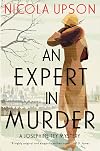
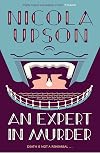
On This Page
Description
March 1934. Revered mystery writer Josephine Tey is traveling from Scotland to London for the final week of her play Richard of Bordeaux, the surprise hit of the season, with pacifist themes that resonate in a world still haunted by war. But joy turns to horror when her arrival coincides with the murder of a young woman she had befriended on the train ride—and Tey is plunged into a mystery as puzzling as any in her own works.Detective Inspector Archie Penrose is convinced that the killing show more is connected to the play, and that Tey herself is in danger of becoming a victim of her own success. In the aftermath of a second murder, the writer and the policeman must join together to stop a ruthless killer who will apparently stop at nothing.
. show less
Tags
Recommendations





Member Recommendations
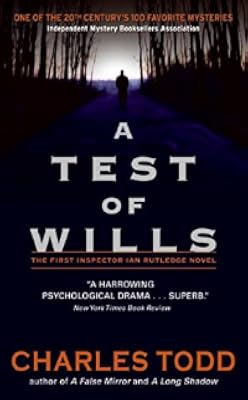
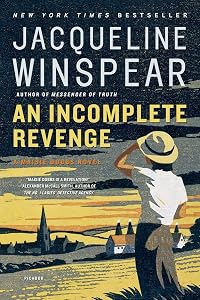
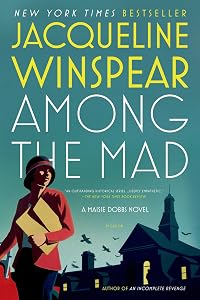
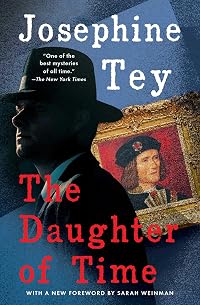
lahochstetler Female detectives solve mysteries centering on the devastating consequences of WWI.
Member Reviews
First Line: Had she been superstitious, Josephine Tey might have realised the odds were against her when she found that her train, the early-morning express from the Highlands, was running an hour and a half late.
No one could be more surprised than Josephine Tey that her play, Richard of Bordeaux, is the hit of the 1934 theatre season in London. She boards the train from Inverness to London to attend the play's final week and strikes up a conversation with a very personable young girl in the same compartment. To Josephine's shock, the young girl is murdered shortly after the train reaches London.
A friend of Josephine's, Detective Inspector Archie Penrose, is convinced that the murder is connected to the play, and that Josephine herself show more is in danger. When a second murder occurs, the policeman and the playwright find themselves working together to catch a killer.
Author Nicola Upson has done a marvelous job of blending fact and fiction in the character of Josephine Tey. (I don't read many "classic" or "golden age" mysteries, but even I know about Josephine Tey and her wonderful books. She is a very under-appreciated writer.) Upson's historical detail isn't at all overwhelming, and sets just the right tone in transporting a reader into the 1930s.
I had managed to identify the killer and a cohort, but I did not deduce the Why of it all because I was enjoying the characters, the setting, and the twists and turns of the plot so much. I look forward to reading the other books in the series, and would recommend them to anyone who has enjoyed reading Jacqueline Winspear's Maisie Dobbs series, the Bess Crawford series written by Charles Todd, or the books of Suzanne Arruda. show less
No one could be more surprised than Josephine Tey that her play, Richard of Bordeaux, is the hit of the 1934 theatre season in London. She boards the train from Inverness to London to attend the play's final week and strikes up a conversation with a very personable young girl in the same compartment. To Josephine's shock, the young girl is murdered shortly after the train reaches London.
A friend of Josephine's, Detective Inspector Archie Penrose, is convinced that the murder is connected to the play, and that Josephine herself show more is in danger. When a second murder occurs, the policeman and the playwright find themselves working together to catch a killer.
Author Nicola Upson has done a marvelous job of blending fact and fiction in the character of Josephine Tey. (I don't read many "classic" or "golden age" mysteries, but even I know about Josephine Tey and her wonderful books. She is a very under-appreciated writer.) Upson's historical detail isn't at all overwhelming, and sets just the right tone in transporting a reader into the 1930s.
I had managed to identify the killer and a cohort, but I did not deduce the Why of it all because I was enjoying the characters, the setting, and the twists and turns of the plot so much. I look forward to reading the other books in the series, and would recommend them to anyone who has enjoyed reading Jacqueline Winspear's Maisie Dobbs series, the Bess Crawford series written by Charles Todd, or the books of Suzanne Arruda. show less
"An Expert In Murder" is a well-written, rigorously-plotted, character-driven novel with a perfect period feel that I loved most for its empathy and compassion.
I'm a fan of Josephine Tay. I think "Brat Farrar" is exceptional. So, when I saw that someone had written a series of mysteries with Josephine Tay as the central character, I was intrigued and had to try one.
I think combining fictional characters and real characters in an historical setting is very challenging. It's in danger of becoming either a dumping ground for research or an appropriation of the real people involved or the interpolation of inappropriately modern perspectives. When one is writing about a writer, there's also the challenge of getting the tone of the writing show more right.
Nicola Upson meets all of these challenges with great skill and manages to produce a compelling novel with strong characters.
"An Expert In Murder" is set in London in the 1930s and revolves around deaths associated with a production of Josephine Tays most successful play.
The first thing that struck me about the book was that that tone of the writing was a good fit for the period, without becoming a pastiche. The period was presented in a way that felt authentic and unromanticised. I was given an insight into the emotional state of a generation haunted by The Great War and already standing in the shadow of the next one. It spoke to the unbridgeable divide between those who'd experienced the trenches and the tunnels those who hadn't. It conveyed the sense of loss on such a scale that no-one was left untouched.
Theatrical life was drawn with energy and realism and what seems to be a deep knowledge of what the London stage was like in the thirties when John Guilgood was the lead in Tey's play (he doesn't appear by name in the book).
The plot is complicated and surprising and has evil at its heart. There is a suspect-rich environment with many people keeping secrets. The characters are strong and their relationships and moods shift in realistic ways.
By the end of the novel, the strongest impression I was left with was not a clever mystery puzzle but of a deeply compassionate story about the damage done to men by the war, the vulnerability of women and how the theatre could help them achieve independence and the small ways in which we all fail ourselves and each other.
I enjoyed this novel and I'll definitely be reading more in the series.
If you think you'd enjoy it too, I strongly recommend that audiobook version. Sandra Duncan's narration is outstanding. show less
I'm a fan of Josephine Tay. I think "Brat Farrar" is exceptional. So, when I saw that someone had written a series of mysteries with Josephine Tay as the central character, I was intrigued and had to try one.
I think combining fictional characters and real characters in an historical setting is very challenging. It's in danger of becoming either a dumping ground for research or an appropriation of the real people involved or the interpolation of inappropriately modern perspectives. When one is writing about a writer, there's also the challenge of getting the tone of the writing show more right.
Nicola Upson meets all of these challenges with great skill and manages to produce a compelling novel with strong characters.
"An Expert In Murder" is set in London in the 1930s and revolves around deaths associated with a production of Josephine Tays most successful play.
The first thing that struck me about the book was that that tone of the writing was a good fit for the period, without becoming a pastiche. The period was presented in a way that felt authentic and unromanticised. I was given an insight into the emotional state of a generation haunted by The Great War and already standing in the shadow of the next one. It spoke to the unbridgeable divide between those who'd experienced the trenches and the tunnels those who hadn't. It conveyed the sense of loss on such a scale that no-one was left untouched.
Theatrical life was drawn with energy and realism and what seems to be a deep knowledge of what the London stage was like in the thirties when John Guilgood was the lead in Tey's play (he doesn't appear by name in the book).
The plot is complicated and surprising and has evil at its heart. There is a suspect-rich environment with many people keeping secrets. The characters are strong and their relationships and moods shift in realistic ways.
By the end of the novel, the strongest impression I was left with was not a clever mystery puzzle but of a deeply compassionate story about the damage done to men by the war, the vulnerability of women and how the theatre could help them achieve independence and the small ways in which we all fail ourselves and each other.
I enjoyed this novel and I'll definitely be reading more in the series.
If you think you'd enjoy it too, I strongly recommend that audiobook version. Sandra Duncan's narration is outstanding. show less
"In both crimes there was a terrifying lack of humanity, a mockery of the dead which chilled him (Penrose) even more than the loss of life itself."
There is an old-style elegance to this richly atmospheric mystery set in the world of the theatre during the early 1930s. Mystery writer and playwright Josephine Tey is the central character in this story of a shocking murder aboard a train. The investigation slowly reveals a tangled web of events harking back to the Great War, the complexity of which is only illuminated at the end, revealing just about everyone involved to be a victim in the tragedy.
Nicola Upson has written a beautiful and involving mystery which transcends the genre. By framing her novel around Josephine Tey, it allows her show more to paint a vivid picture of the period, and the emotions still lingering after the Great War. You really feel like you are in Tey's era while reading this. While Tey could have become just a plot device in another author's hand, she becomes a real person, as do many of the other characters, including her romantic interest, Inspector Archie Penrose.
Tey's most successful play, which made Sir John Gieguld a star, is where danger lies. But it is on a train from Scotland to London where Josephine comes into contact with a special young woman full of life and simple charm. On her way to meet her boyfriend, Elspeth will meet evil, and not live long enough to know the reason why. Upson paints a sweet and romantic picture of the times themselves, and Elspeth, giving her murder a poignancy.
As Archie investigates and Josephine mingles, every character is fleshed out in a way we used to see during Tey's era of great mystery writers. Josephine takes a back seat during the middle portion of the book as we are treated to lovers and sickness, old wounds and bitterness. This has the reader wondering how any of this touched the far removed, adopted girl who closed her eyes for the last time aboard a train to London. Then a second particularly vile murder much closer to Josephine's play takes place.
Archie and Josephine begin to untangle the ties which led to the murders from different angles, in the last portion of the mystery. There is a rush to reach the end for the reader, by now aching to discover the entire twisting series of events that began in a tunnel during the war, and ended tragically on a train bound for London. There is a tenderness to the conclusion, showing the anguish and aftermath of the Great War and the many lives it took, some in ways unexpected and far reaching. Archie and Josephine's relationship does not go untouched by events either, giving the reader a thirst for more.
While it isn’t perfect, and at times leans toward literary fiction a bit too much to create genuine excitement, it is a fine and atmospheric mystery with much to offer those who love a period mystery, and/or Josephine Tey. show less
There is an old-style elegance to this richly atmospheric mystery set in the world of the theatre during the early 1930s. Mystery writer and playwright Josephine Tey is the central character in this story of a shocking murder aboard a train. The investigation slowly reveals a tangled web of events harking back to the Great War, the complexity of which is only illuminated at the end, revealing just about everyone involved to be a victim in the tragedy.
Nicola Upson has written a beautiful and involving mystery which transcends the genre. By framing her novel around Josephine Tey, it allows her show more to paint a vivid picture of the period, and the emotions still lingering after the Great War. You really feel like you are in Tey's era while reading this. While Tey could have become just a plot device in another author's hand, she becomes a real person, as do many of the other characters, including her romantic interest, Inspector Archie Penrose.
Tey's most successful play, which made Sir John Gieguld a star, is where danger lies. But it is on a train from Scotland to London where Josephine comes into contact with a special young woman full of life and simple charm. On her way to meet her boyfriend, Elspeth will meet evil, and not live long enough to know the reason why. Upson paints a sweet and romantic picture of the times themselves, and Elspeth, giving her murder a poignancy.
As Archie investigates and Josephine mingles, every character is fleshed out in a way we used to see during Tey's era of great mystery writers. Josephine takes a back seat during the middle portion of the book as we are treated to lovers and sickness, old wounds and bitterness. This has the reader wondering how any of this touched the far removed, adopted girl who closed her eyes for the last time aboard a train to London. Then a second particularly vile murder much closer to Josephine's play takes place.
Archie and Josephine begin to untangle the ties which led to the murders from different angles, in the last portion of the mystery. There is a rush to reach the end for the reader, by now aching to discover the entire twisting series of events that began in a tunnel during the war, and ended tragically on a train bound for London. There is a tenderness to the conclusion, showing the anguish and aftermath of the Great War and the many lives it took, some in ways unexpected and far reaching. Archie and Josephine's relationship does not go untouched by events either, giving the reader a thirst for more.
While it isn’t perfect, and at times leans toward literary fiction a bit too much to create genuine excitement, it is a fine and atmospheric mystery with much to offer those who love a period mystery, and/or Josephine Tey. show less
Something about the writing style of this book made it difficult for me to follow the plot. Mystery author Josephine Tey plays a role in the mystery although Archie Penrose, the detective, figures more prominently. The mystery set in London's theatrical world focuses on the death of a woman who rode the train with Tey but never made it off. A key figure in the play's production also meets his demise soon afterward. I didn't find the novel very engaging, and I doubt I'll read others in the series. I like Tey's novels, but I'm not a fan of Upson's work.
Author Josephine Tey is the central character in this first-in-series mystery. In 1934, the first of Tey's Alan Grant mysteries has been published; the play Richard of Bordeaux Tey wrote under the pseudonym Gordon Daviot is nearing the end of its London run. Tey travels from Scotland to London to be present for the play's final week and to participate in negotiations for the play's tour and a potential movie deal. The week is marred by a couple of murders seemingly connected to the play, and Tey's close friend, police inspector Archie Penrose, fears for Tey's safety.
This is a decent mystery, but it lacks the wit and sparkle of Tey's novels. The language and prose seems to me to reflect more modern sensibilities than one finds in Tey's show more own novels or in the work of her contemporaries. Even so, it's still a fitting tribute to a well-loved mystery novelist. Many of the characters deal with lingering psychological effects of World War I, so this book may appeal to fans of Jacqueline Winspear's Maisie Dobbs novels and of Charles Todd's Inspector Rutledge series as well as Tey fans. show less
This is a decent mystery, but it lacks the wit and sparkle of Tey's novels. The language and prose seems to me to reflect more modern sensibilities than one finds in Tey's show more own novels or in the work of her contemporaries. Even so, it's still a fitting tribute to a well-loved mystery novelist. Many of the characters deal with lingering psychological effects of World War I, so this book may appeal to fans of Jacqueline Winspear's Maisie Dobbs novels and of Charles Todd's Inspector Rutledge series as well as Tey fans. show less
Author Nicola Upson has not recreated the novels of Josephine Tey (one of the pseudonyms used by Scottish novelist and playwright Elizabeth MacKintosh). But An Expert in Murder remains a pretty serviceable historical mystery, even if both Tey and love-interest, Detective Inspector Archie Penrose, are a bit twee.
Despite that, the mystery at the heart of the novel is a gripping one. A girl traveling with Josephine Tey is murdered soon after the train arrives. Was she the intended victim? Or was Tey? The action takes place in the last few weeks of the year-long run of Tey’s biggest West End hit, Richard of Bordeaux, and readers will enjoy a thinly veiled version of Sir John Gielgud in his brash youth. I couldn’t put the book down show more until I found out the ending.
I’ve already begun the sequel. Yes, the novel was that good. Here’s to hoping that Upson improves on the characterization of Tey and Penrose in Angel with Two Faces. show less
Despite that, the mystery at the heart of the novel is a gripping one. A girl traveling with Josephine Tey is murdered soon after the train arrives. Was she the intended victim? Or was Tey? The action takes place in the last few weeks of the year-long run of Tey’s biggest West End hit, Richard of Bordeaux, and readers will enjoy a thinly veiled version of Sir John Gielgud in his brash youth. I couldn’t put the book down show more until I found out the ending.
I’ve already begun the sequel. Yes, the novel was that good. Here’s to hoping that Upson improves on the characterization of Tey and Penrose in Angel with Two Faces. show less
Very well-written, very evocative of England (and particularly London) between the wars, interesting info about Josephine Tey (whose books I enjoy). However, I'm not reading any more of these. This was way too grim and depressing for me. Every single character (except possibly Elspeth) had dark secrets, most of which were tangled with those of the other characters. A lot of apparent coincidences turned out to be engineered; those doing the engineering were (both, or all) rather obsessed with a single event years in the past and its consequences. "Josephine" is rather a side character, despite being there at at least one of the climaxes; she's mostly caught up in the engineering. She was a clearing-house for other characters to deposit show more information so that it got passed on, and did very little herself. And, of course, none of these events happened to the actual author (so most of the facts divulged about her are fictional, or marginally true). If you like dark mysteries, you might enjoy this very much; if you love Tey, it's eh. I prefer cozies and like Tey, so not for me. It did make me want to read Richard of Bordeaux, though. show less
Members
- Recently Added By
Lists

Crime and Mysteries to Read
746 works; 31 members

Survey of Mysteries and Crime Fiction
96 works; 17 members

British Mystery
469 works; 14 members

real people in fiction circumstances
74 works; 10 members

Books Read in 2014
2,344 works; 89 members

Writers as Characters in Fiction
120 works; 19 members

Books Read in 2025
4,128 works; 98 members
Author Information

17+ Works 3,020 Members
Some Editions
Awards and Honors
Awards
Notable Lists
Series

Common Knowledge
- Canonical title
- An Expert in Murder
- Original publication date
- 2008
- People/Characters
- Josephine Tey; Archie Penrose (DI); Lydia Beaumont (lead actress in Tey's play); Veronique Motley (Ronnie); Lettice Motley (sister of Ronnie); Marta Fox (show all 15); John Terry; Elliott Vintner; Sergeant Fallowfield; Hedley White; Elspeth Simmons (murder victim); Frank Simmons (uncle to Elspeth); Walter Simmons; Rafe Swinburne (aka Rafe Vintner); Bernard Aubrey
- Important places
- London, England, UK; Cambridge, Cambridgeshire, England, UK; Waverley Station, Edinburgh, Scotland, UK; King's Cross Station, London, England, UK; St. Martin's Lane, London, England, UK; The New Theatre, London, England, UK
- Dedication
- To Phyllis and to Irene, for their wisdom
and belief, with love from us both - First words
- Night was falling when at last he sat down, ready to write.
- Last words
- (Click to show. Warning: May contain spoilers.)In the distance, Archie replaced whatever he had taken up and walked on towards Derby Gate. Before he could more too far out of reach, she got up and went after him.
- Blurbers
- Fairstein, Linda; James, P.D.
Classifications
Statistics
- Members
- 882
- Popularity
- 30,816
- Reviews
- 54
- Rating
- (3.43)
- Languages
- English, French, German, Romanian
- Media
- Paper, Audiobook, Ebook
- ISBNs
- 24
- ASINs
- 11