On This Page
Description
The book that introduced the world to the intuitive, intelligent, and resourceful heroine Maisie Dobbs—one of literature's favorite sleuths!Maisie Dobbs entered domestic service in 1910 at thirteen, working for Lady Rowan Compton. When her remarkable intelligence is discovered by her employer, Maisie becomes the pupil of Maurice Blanche, a learned friend of the Comptons. In 1929, following an apprenticeship with Blanche, Maisie hangs out her shingle: M. Dobbs, Trade and Personal show more Investigations. She soon becomes enmeshed in a mystery surrounding The Retreat, a reclusive community of wounded World War I veterans. At first, Maisie only suspects foul play, but she must act quickly when Lady Rowan's son decides to sign away his fortune and take refuge there. Maisie hurriedly investigates, uncovering a disturbing mystery, which, in an astonishing denouement, gives Maisie the courage to confront a ghost that has haunted her for years.
. show less
Tags
Recommendations





Member Recommendations


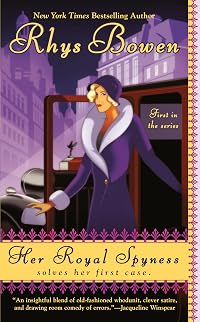
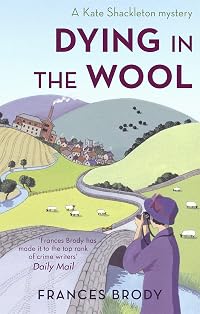
lahochstetler Female detectives solve mysteries centering on the devastating consequences of WWI.
vancouverdeb Both books/ series feature a strong female sleuth.Both sleuths served in some capacity in WW11 Britain. Wonderful cozy mysteries with a twist.


by cransell
Member Reviews
'Maisie Dobbs' turned out to be a piece of historical fiction which confronted the realities that faced the generation of men and women who suffered through the slaughter of World War I and had to live with its consequences. It engaged my emotions, increased my empathy for that doomed generation and made me recalibrate my picture of Britain in 1929 to take into account the grief, trauma and disappointment that so many people were living with.
Maisie Dobbs is a Private Investigator so, of course, the book is structured around her investigation into the deaths of wounded ex-servicemen, but Winspear hasn't written a pastiche of the early Christie stories. Dobbs isn't an egotistical puzzle solver, using her amazing powers of observation to show more find a murderer. Winspear doesn't set out to entertain the reader by engaging them in a game of 'Can you spot the red herring? Instead, she's using the structure of a detective story to engage the reader in the issues faced by English people a hundred years ago. Dobbs is an investigator but she is also a psychologist and her broad aim is not just to solve a mystery but to bring some resolution and perhaps healing to the people affected by the mystery.
The structure of the book is unusual. It starts with Maisie Dobbs opening her new Private Investigations agency in London in 1929 and shows the reader how she works and how she lives, letting us see the independent, quietly confident woman that Maisie Dobbs has become. Then the narrative breaks and we meet Maisie at fourteen, entering domestic service in the household of Lady Rowan Compton. Against the current fashion of intercut dual timelines, this book takes a different path and we follow Maisie through to adulthood, including her service as a nurse in France during the First World War, before returning to 1929. I enjoyed getting to stay in one timeline for long enough to settle in and get to know the characters rather than swapping between to amp up the suspense. It kept my attention on the people rather than the mystery and it gave the mystery a solid context.
Maisie's story pressed a lot of Class buttons for me and pulled to the surface a lot of my anger at how the world was organised back then and how we seem to be being pushed back to those structures today.
Maisie is the daughter of a widowed costermonger and enters domestic service in a wealthy, socially prominent household as a way of making ends meet. The mistress of the house, Lady Rowan Compton, realises how bright Maisie is and takes her on as a project and ultimately sponsors her education and helps her set up her own business. I found myself conflicted as I watched Maisie's education. I concede that it's better to see a bright mind fed than starved and I accept that her sponsors are well-intentioned but it all spoke to me of the way the upper classes unthinkingly assimilate the brightest as if they were a lost 'one of us' which annoys me because it supports the idea that upper class are 'upper' by merit rather than by privilege granted by ruthless grasping ancestors. I accept that Lady Rowan Compton is trying her best to make use of her privilege but that doesn't help me set aside my resentment at her being privileged in the first place.
Then we reached 1914 and watched the young men sign up to go to war. We hadn't even reached the slaughter and maiming of the battlefield yet and already, the measured, not quite dispassionate, storytelling was triggering my anger and sadness. I cannot forgive the English ruling class for what they did in World War I. Slaughtering a generation of men and destroying millions of families should have been the end of them, but they're still here.
For me, the most powerful section of the book took place in a battlefield hospital in France in 1917. It was deeply sad and affecting. Winspear managed to show the horrific waste of the war on a very human level, made all the more powerful for not splattering the screen of my imagination with blood. The pain and the suffering were overwhelming without being in any way sensationalised or romanticised. It wasn't a backdrop for a romance or a mystery. It was simply showing that who Maisie Dobbs is in 1929 and what she is trying to do, can only be understood in the context of the misery and loss and waste that she and the people around her lived through.
I was particularly struck by this line about the impact of the war:
"...they had all of them on both sides, lost their freedom. The freedom to think hopefully of the future."
That's a sense of loss that I can identify with.
When we returned to 1929 and watched Maisie solve the mystery of the wounded ex-servicemen who died while staying at a place of refuge and had only their first names on their gravestones, I realised that the real story was about recognising that, for those who fought in it and survived, the war didn't end in 1918 and that its consequences needed to be confronted and treated with compassion. show less
Maisie Dobbs is a Private Investigator so, of course, the book is structured around her investigation into the deaths of wounded ex-servicemen, but Winspear hasn't written a pastiche of the early Christie stories. Dobbs isn't an egotistical puzzle solver, using her amazing powers of observation to show more find a murderer. Winspear doesn't set out to entertain the reader by engaging them in a game of 'Can you spot the red herring? Instead, she's using the structure of a detective story to engage the reader in the issues faced by English people a hundred years ago. Dobbs is an investigator but she is also a psychologist and her broad aim is not just to solve a mystery but to bring some resolution and perhaps healing to the people affected by the mystery.
The structure of the book is unusual. It starts with Maisie Dobbs opening her new Private Investigations agency in London in 1929 and shows the reader how she works and how she lives, letting us see the independent, quietly confident woman that Maisie Dobbs has become. Then the narrative breaks and we meet Maisie at fourteen, entering domestic service in the household of Lady Rowan Compton. Against the current fashion of intercut dual timelines, this book takes a different path and we follow Maisie through to adulthood, including her service as a nurse in France during the First World War, before returning to 1929. I enjoyed getting to stay in one timeline for long enough to settle in and get to know the characters rather than swapping between to amp up the suspense. It kept my attention on the people rather than the mystery and it gave the mystery a solid context.
Maisie's story pressed a lot of Class buttons for me and pulled to the surface a lot of my anger at how the world was organised back then and how we seem to be being pushed back to those structures today.
Maisie is the daughter of a widowed costermonger and enters domestic service in a wealthy, socially prominent household as a way of making ends meet. The mistress of the house, Lady Rowan Compton, realises how bright Maisie is and takes her on as a project and ultimately sponsors her education and helps her set up her own business. I found myself conflicted as I watched Maisie's education. I concede that it's better to see a bright mind fed than starved and I accept that her sponsors are well-intentioned but it all spoke to me of the way the upper classes unthinkingly assimilate the brightest as if they were a lost 'one of us' which annoys me because it supports the idea that upper class are 'upper' by merit rather than by privilege granted by ruthless grasping ancestors. I accept that Lady Rowan Compton is trying her best to make use of her privilege but that doesn't help me set aside my resentment at her being privileged in the first place.
Then we reached 1914 and watched the young men sign up to go to war. We hadn't even reached the slaughter and maiming of the battlefield yet and already, the measured, not quite dispassionate, storytelling was triggering my anger and sadness. I cannot forgive the English ruling class for what they did in World War I. Slaughtering a generation of men and destroying millions of families should have been the end of them, but they're still here.
For me, the most powerful section of the book took place in a battlefield hospital in France in 1917. It was deeply sad and affecting. Winspear managed to show the horrific waste of the war on a very human level, made all the more powerful for not splattering the screen of my imagination with blood. The pain and the suffering were overwhelming without being in any way sensationalised or romanticised. It wasn't a backdrop for a romance or a mystery. It was simply showing that who Maisie Dobbs is in 1929 and what she is trying to do, can only be understood in the context of the misery and loss and waste that she and the people around her lived through.
I was particularly struck by this line about the impact of the war:
"...they had all of them on both sides, lost their freedom. The freedom to think hopefully of the future."
That's a sense of loss that I can identify with.
When we returned to 1929 and watched Maisie solve the mystery of the wounded ex-servicemen who died while staying at a place of refuge and had only their first names on their gravestones, I realised that the real story was about recognising that, for those who fought in it and survived, the war didn't end in 1918 and that its consequences needed to be confronted and treated with compassion. show less
This book is a MESS. Let me count (some of) the ways.
1. This isn't actually a mystery. You know what's going on from very early in the book, and the question is how Maisie will resolve it. That makes it a thriller.
2. It's a thriller where the majority of the action happens off the page, to someone other than the heroine, Maisie, while Maisie herself ... waits by the phone. That's not how thrillers work, and there's a really good reason for that: it's boring as hell.
3. The majority of the action Maisie does take in this book occurs in the very lengthy series of backstory flashbacks. And when I say "lengthy," I mean "fully half this book is flashback, and not of stuff we needed spelled out in this way." Winspear seems to believe her show more readers are absolute fools who need everything spoon fed to them with little airplane noises, so instead of filling in Maisie's backstory in pieces as she goes, we get a series of vignettes of key moments in her life. So, so many vignettes, not one of which makes an actual story or plot. This breaks the pacing of the book so effectively it's like she did it on purpose. (She didn't. The pacing is broken everywhere.)
4. And that's not the only place Winspear treats her audience like fools. Maisie is -- precognitive, I guess? She has "chills" when she encounters someone important or when something bad is about to happen, and these are never wrong (and Maisie never tries to avert the something bad, which is frustrating). Winspear uses this to highlight every single clue and foreshadow every development, and since the clues are not subtle and the developments are predictable, that is irritating and unnecessary.
5. You might now be thinking, "A precognitive detective in a non-speculative mystery thriller seems a little bit weird," and if you are, you're right, but the weird doesn't end there. Maisie, a white British woman in 1929, meditates her way to solving mysteries and focuses her energy to question people and in general is a strange combination of 1929 and woo-woo shit. (And that's not even considering her mentor, who is full woo-woo and also, uh, fairly annoying.)
6. Winspear's explanation for all that is that Maisie was trained by -- I am quite serious -- an elderly blind Indian mystic, who is also, as far as I could tell, the sole character of color in this entire book. He has no personality beyond being a mystic, so you guessed it: we have ourselves a Magical Negro, British style. Because apparently Winspear looked at this mess and went, "What I'm missing here is some racist stereotyping!" (No, honey. What you were missing was a PLOT.)
7.Maisie subdues the bad guy by, uh. Singing a song and then focusing her healing aura. That is her main on-page contribution to "solving" the "mystery." I read that and laughed in pure "what the fuck is happening here" disbelief.
And, look. I am a sucker for a WWI-era mystery, even if I am starting to think series where women were nurses in WWI are just plan cursed. I will read a second one of these to see if at least some of these flaws get better. But this was a weird as heck reading experience, and I only covered some of the weirdness in this review. This is definitely one of those books you read and go, "I could do so much better." show less
1. This isn't actually a mystery. You know what's going on from very early in the book, and the question is how Maisie will resolve it. That makes it a thriller.
2. It's a thriller where the majority of the action happens off the page, to someone other than the heroine, Maisie, while Maisie herself ... waits by the phone. That's not how thrillers work, and there's a really good reason for that: it's boring as hell.
3. The majority of the action Maisie does take in this book occurs in the very lengthy series of backstory flashbacks. And when I say "lengthy," I mean "fully half this book is flashback, and not of stuff we needed spelled out in this way." Winspear seems to believe her show more readers are absolute fools who need everything spoon fed to them with little airplane noises, so instead of filling in Maisie's backstory in pieces as she goes, we get a series of vignettes of key moments in her life. So, so many vignettes, not one of which makes an actual story or plot. This breaks the pacing of the book so effectively it's like she did it on purpose. (She didn't. The pacing is broken everywhere.)
4. And that's not the only place Winspear treats her audience like fools. Maisie is -- precognitive, I guess? She has "chills" when she encounters someone important or when something bad is about to happen, and these are never wrong (and Maisie never tries to avert the something bad, which is frustrating). Winspear uses this to highlight every single clue and foreshadow every development, and since the clues are not subtle and the developments are predictable, that is irritating and unnecessary.
5. You might now be thinking, "A precognitive detective in a non-speculative mystery thriller seems a little bit weird," and if you are, you're right, but the weird doesn't end there. Maisie, a white British woman in 1929, meditates her way to solving mysteries and focuses her energy to question people and in general is a strange combination of 1929 and woo-woo shit. (And that's not even considering her mentor, who is full woo-woo and also, uh, fairly annoying.)
6. Winspear's explanation for all that is that Maisie was trained by -- I am quite serious -- an elderly blind Indian mystic, who is also, as far as I could tell, the sole character of color in this entire book. He has no personality beyond being a mystic, so you guessed it: we have ourselves a Magical Negro, British style. Because apparently Winspear looked at this mess and went, "What I'm missing here is some racist stereotyping!" (No, honey. What you were missing was a PLOT.)
7.
And, look. I am a sucker for a WWI-era mystery, even if I am starting to think series where women were nurses in WWI are just plan cursed. I will read a second one of these to see if at least some of these flaws get better. But this was a weird as heck reading experience, and I only covered some of the weirdness in this review. This is definitely one of those books you read and go, "I could do so much better." show less
What a beautiful, heartbreaking, hopeful, amazing book. I have had it on my shelves for a number of years and many times I looked at it, thought about it, then put it back. Until now. And zowie! I am completely blown away by this book. The story covers the post-war years in England, then zips back with stunning clarity into the years just before the outbreak of the Great War, and wraps everything up in stunning fashion.
Maisie Dobbs has begun her own private investigation firm. Her first client is a gentleman of the upper classes who suspects his wife is having an affair, so hires Maisie to follow her. Which she does with great detail to present to her new client. And through the interactions Maisie has with this husband, and the show more caretaker of her building, and her internal conversations about her ever-cold feet, we begin to see that she has been impacted by the Great War.
When Maisie follows the young wife to a soldier's graveyard, the first hint that this book is different comes fully to light. Here we are in 1929, what America sees as the Roaring Twenties, watching two women tending the graves of the fallen soldiers in England. One no longer has a surname on his grave, and this leads to revelations about The Farm, where wounded and disfigured soldiers can go live in peace. To contemplate a situation wherein the shells were so powerful, faces were mutilated but the soldiers lived only to be shunned or receive "those" looks from their beloveds is heart-wrenching. And told with such compassion as the after-effects of the Great War.
The middle section details Maisie's growing up as a maid in service to a wealthy suffragette who thinks that maybe, just maybe, she can change the life of one person, even if she can't change the world. Well, she does. She recognizes the need Maisie has to read, to study, and enriches her mind by providing her with a tutor as well as the time she needs to study. And added to this idyllic reading time is the prevalent class consciousness of Britain that causes Maisie to doubt her own calling to education.
We do get to the War, and Maisie's service in Britain before finally being called to France, where she deepens her relationship with Simon, a gifted wartime doctor. And her life as a battlefield nurse, with the mud, the sleepless nights, the close quarters, the endless wounded, are so very well described. When they abruptly end and we are back in the modern era, there is still a mystery unfolding about The Farm and the repercussions of the battlefields, at home and abroad. show less
Maisie Dobbs has begun her own private investigation firm. Her first client is a gentleman of the upper classes who suspects his wife is having an affair, so hires Maisie to follow her. Which she does with great detail to present to her new client. And through the interactions Maisie has with this husband, and the show more caretaker of her building, and her internal conversations about her ever-cold feet, we begin to see that she has been impacted by the Great War.
When Maisie follows the young wife to a soldier's graveyard, the first hint that this book is different comes fully to light. Here we are in 1929, what America sees as the Roaring Twenties, watching two women tending the graves of the fallen soldiers in England. One no longer has a surname on his grave, and this leads to revelations about The Farm, where wounded and disfigured soldiers can go live in peace. To contemplate a situation wherein the shells were so powerful, faces were mutilated but the soldiers lived only to be shunned or receive "those" looks from their beloveds is heart-wrenching. And told with such compassion as the after-effects of the Great War.
The middle section details Maisie's growing up as a maid in service to a wealthy suffragette who thinks that maybe, just maybe, she can change the life of one person, even if she can't change the world. Well, she does. She recognizes the need Maisie has to read, to study, and enriches her mind by providing her with a tutor as well as the time she needs to study. And added to this idyllic reading time is the prevalent class consciousness of Britain that causes Maisie to doubt her own calling to education.
We do get to the War, and Maisie's service in Britain before finally being called to France, where she deepens her relationship with Simon, a gifted wartime doctor. And her life as a battlefield nurse, with the mud, the sleepless nights, the close quarters, the endless wounded, are so very well described. When they abruptly end and we are back in the modern era, there is still a mystery unfolding about The Farm and the repercussions of the battlefields, at home and abroad. show less
These days, detective fiction reminds me of that old tune from the musical "Gypsy," in which a stripper bemoans the public's constant craving for novelty: "You gotta have a gimmick/If you wanna have a chance." Maisie Dobbs' "gimmick" is two-fold: she an early 1900s gal who has escaped both her gender and her station in life (merchant class) by dint of her intelligence, a little luck, and one hell of a work ethic in order to set up practice as a consulting detective. Moreover, while she may not "do it with a horn," she does have a signature move: solving crimes by deploying a Freudian-like insight into human nature.
The foundational mystery is simple: is there (or is there not) something fishy going on at a retreat camp that claims to show more offer sanctuary for WWI vets with disfiguring wounds? In her investigations she is assisted by her building maintenance man/war veteran Billy, who appears poised to become a regular employee in the next volume.
But because this is the first novel in a series, this mystery keeps getting shunted aside by flashbacks which show us Maisie's humble beginnings as a motherless maid, followed by a happy accident that results in her being mentored by a wealthy heiress and educated by a sympathetic tutor, followed by a stint in the war as a nurse, followed by tragedy/heartbreak, followed by an apprenticeship at a detective agency before finally deciding to launch her own.
So, does the "gimmick" work? I'm going to say ... yes, for the most part. Despite some unrealistic plot devices and stereotypical characters, Maisie herself is believably (more or less) intelligent, strong, and resilient. The historical melieu of the novel feels spot-on. Most of all, Maisie's method of crime-solving makes a refreshing change from the usual "looking for clues" trope: more often than not, her most useful clues are derived from a careful observation of the people with whom she interacts and an understanding of the core emotions that drive human behaviour, particularly our craving for acceptance, love, and power. Finally, I like that the novel blends history, mystery, narrative, realism, and romance in a way that feels organic, not forced.
In a literary world full of detectives that cook, quilt, make wine, talk to their cats, have "second careers" as actual historical personages, etc., Maisie Dobbs' "gimmicks" may not dazzle; however, that may also explain why this novel comes off as refreshingly organic, original, empathetic, and engaging. Based on what's here, I'll gladly give #2 in the series a shot. show less
The foundational mystery is simple: is there (or is there not) something fishy going on at a retreat camp that claims to show more offer sanctuary for WWI vets with disfiguring wounds? In her investigations she is assisted by her building maintenance man/war veteran Billy, who appears poised to become a regular employee in the next volume.
But because this is the first novel in a series, this mystery keeps getting shunted aside by flashbacks which show us Maisie's humble beginnings as a motherless maid, followed by a happy accident that results in her being mentored by a wealthy heiress and educated by a sympathetic tutor, followed by a stint in the war as a nurse, followed by tragedy/heartbreak, followed by an apprenticeship at a detective agency before finally deciding to launch her own.
So, does the "gimmick" work? I'm going to say ... yes, for the most part. Despite some unrealistic plot devices and stereotypical characters, Maisie herself is believably (more or less) intelligent, strong, and resilient. The historical melieu of the novel feels spot-on. Most of all, Maisie's method of crime-solving makes a refreshing change from the usual "looking for clues" trope: more often than not, her most useful clues are derived from a careful observation of the people with whom she interacts and an understanding of the core emotions that drive human behaviour, particularly our craving for acceptance, love, and power. Finally, I like that the novel blends history, mystery, narrative, realism, and romance in a way that feels organic, not forced.
In a literary world full of detectives that cook, quilt, make wine, talk to their cats, have "second careers" as actual historical personages, etc., Maisie Dobbs' "gimmicks" may not dazzle; however, that may also explain why this novel comes off as refreshingly organic, original, empathetic, and engaging. Based on what's here, I'll gladly give #2 in the series a shot. show less
This book is the first book in the Maisie Dobbs series, and let me tell you, I can't wait to read the other ones. The book is set in England in the summer of 1929, but the flashbacks to Maisie's time in France as a nurse during the Great War run throughout the book. Maisie is a wonderful sleuth, bright, literate and a psychology major. Her past life experiences as the daughter of a greengrocer who drove a horse and cart around London delivering fresh vegetables, to her time as an in-between maid in a grand house in London, to her time spent in a women's university studying psychology to her time as a nurse in France during the Great War help her relate to her clients on a personal level now that she runs her own detective agency. And show more throughout we meet other wonderful characters. Her father Frankie is a delight and so proud of his brilliant daughter. Her mentor Maurice Blanche is also wonderful and he teaches Maisie everything she needs to know to be able to carry on his business after he retires. The horrors of the First World War are so achingly portrayed here. The devestation and the loss of life so incredibly high. No one that served in that war is ever the same again, even if they manage to come home afterwards. It's sometimes difficult to read the war tales because they are so realistic. And Maisie! What a wonderful and caring character she is. She is compassionate and genuine, but smart enough that nothing gets past her. Her first case on her own is to solve a seemingly straightforward infidelity case, but it turns out to be so much more than that by the time that Maisie and her employee Billy Beale get to the bottom of it. I can't recommend this book enough to anyone who loves historical mystery books. And if you happen to have a special place in your quest for knowledge about the Great War, this book is for you. show less
It's been a long time since I felt so invested in characters in a book. Maisie Dobbs is ostensibly a mystery, but, in truth it is a powerful story of the damage wrought on all of the men and women who served during World War I. If you're picking up this book solely for the mystery you may be disappointed, but if you're looking for strong characters and a gripping story, look no further.
I described this book as "charming" to the friend who recommended it, and it was at the beginning -- there's something inherently charming about 1920s England. She corrected me, though, and she was right. There is too much about the horrors of war and its aftermath to truly be "charming." Nevertheless, it was an engrossing mystery in a charming setting, and I enjoyed it immensely. My only quibble is that Maisie seemed too good to be true: so brilliant, so polite, such a good daughter and friend and pupil and boss, so hardworking it became a bit implausible. I look forward to seeing some flaws in future books.
Members
- Recently Added By
Published Reviews
ThingScore 75
A strong protagonist and a lively sense of time and place carry readers along, and the details lead to further thought and understanding about the futility and horror of war, as well as a desire to hear more of Maisie. This is the beginning of a series, and a propitious one at that.
added by khuggard
For a clever and resourceful young woman who has just set herself up in business as a private investigator, Maisie seems a bit too sober and much too sad.
added by y2pk
Lists

Best Female Detectives and "Cozy Mysteries"
23 works; 15 members

Favorite Series
238 works; 94 members

Best Downton Abbey-esqe books to read
17 works; 7 members

Historical Fiction
889 works; 90 members

Women in War
148 works; 30 members

Top Cops (Detectives in Fiction)
86 works; 24 members

World War I Fiction
94 works; 15 members

Best Historical Fiction authors
41 works; 9 members

In or About the 1930s
198 works; 27 members

Jean's 12in12 Mystery List TBR
10 works; 1 member

Female Protagonist
1,056 works; 57 members

Best Books Read for TIOLI
49 works; 14 members

Best books read in the first half of 2012
38 works; 6 members

Best Mysteries With a Historical Setting
292 works; 160 members

Gaslamp Mysteries
78 works; 4 members

The Hive Recommends
62 works; 2 members

Best books read in 2011
200 works; 51 members

Books Read in 2018
4,360 works; 110 members

Books Read in 2016
4,666 works; 198 members

Books about World War I
80 works; 14 members

Great Audiobooks
96 works; 10 members

Books discovered on LibraryThing
256 works; 36 members

Books We Discovered On LibraryThing
530 works; 130 members
Author Information

33+ Works 32,752 Members
Jacqueline Winspear was born in the county of Kent, England. She was educated at the University of London's Institute of Education. After graduation, she worked in academic publishing, in higher education, and in marketing communications in the UK. In 1990, she emigrated to the United States. She was working in business and as a show more personal/professional coach when she decided to try writing. Her first novel, Maisie Dobbs, won the Agatha Award for Best First novel, the Macavity Award for Best First Novel, and the Alex Award. She is the author of the Maisie Dobbs Mystery series. She has also won the Agatha Award for Best Novel, the inaugural Sue Feder/Macavity Award for Best Historical Mystery, and the Bruce Alexander Award for Best Historical Mystery. Her title, A Dangerous Place, made The New York Times High Profile titles list. Journey to Munich, a book in the Maisie Dobbs Series, made the New York Times bestseller list in 2016. (Bowker Author Biography) show less
Some Editions
Awards and Honors
Awards
Notable Lists
Series

Belongs to Publisher Series
Work Relationships
Is contained in
Has as a reference guide/companion
Common Knowledge
- Canonical title
- Maisie Dobbs
- Original title
- Maisie Dobbs
- Original publication date
- 2003-07-01
- People/Characters
- Maisie Dobbs; Billy Beale; Lady Rowan Compton; Maurice Blanche; Francis "Frankie" Dobbs; Christopher Davenham (show all 15); Celia Davenham; Lord Julian Compton; Vincent Weathershaw; Captain Simon Lynch; Priscilla Evernden; Iris Rigson; Enid; Mr. Carter; Mrs. Crawford
- Important places
- Belgravia, London, England, UK; South Downs, England, UK; Rouen, Seine-Maritime, Normandy, France; Sevenoaks, Kent, England, UK; Girton, Cambridgeshire, England, UK
- Important events
- World War I
- Epigraph
- Now, he will spend a few sick years in institutes,
And do what things the rules consider wise,
And take whatever pity may dole.
Tonight he noticed how the women's eyes
Passed from him to the strong men that were w... (show all)hole.
How cold and late it is! Why don't they come
And put him to bed? Why don't they come?
Final verse "Disabled" by Wilfred Owen. It was drafted at Craiglockhart, a hospital for shell-shocked officers, in October 1917. Owen was killed on November 4, 1918, just one week before the armistice. - Dedication
- This book is dedicated to the memory of my paternal grandfather and my maternal grandmother.
JOHN "JACK" WINSPEAR sustained serious leg wounds during the Battle of the Somme in July 1916. Following convalescence, he r... (show all)eturned to his work as a costermonger in southeast London.
CLARA FRANCES CLARK, nee Atterbury, was a munitions worker at the Woolwich Arsenal during the First World War. She was partially blinded in an explosion that killed several girls working in the same section alongside her. Clara later married and became the mother of ten children. - First words
- Even if she hadn't been the last person to walk through the turnstile at Warren Street tube station, Jack Barker would have noticed the tall, slender woman in the navy blue, thigh-length jacket with a matching pleated skirt s... (show all)hort enough to reveal a well-turned ankle.
- Quotations
- In seeking to fill your mind, I omitted to instruct you in the opposite exercise. This small book is for your daily writings, when the day is newborn and before you embark upon the richness of study and intellectual encounter... (show all). My instruction, Maisie, is to simply write a page each day. There is no set subject, save that which the waking mind has held close in sleep.
"Lord Compton has received word from the War Office that our horses are to be inspected for service this week.... I *cannot* let them go. I don't want to be unpatriotic, but they are my hunters." ... "Lady Compton. Our sympat... (show all)hies. The country needs one hundred and sixty-five thousand horses, but we need them to be fit, strong and able to be of service on the battlefield."
... the veil that was lifted in the early hours, of the all-seeing eye that was open before the day was awake. The hours before dawn were the sacred time, before the intellect rose from slumber. At this time one's inner voice... (show all) could be heard. (p. 25)
... consider the nature of a mask. We all have our masks ... (p. 223) - Last words
- (Click to show. Warning: May contain spoilers.)"Well then, Billy - let's get on with it!"
- Blurbers
- Corrigan, Maureen; George, Elizabeth; Todd, Charles
- Original language*
- Inglese
- Disambiguation notice
- This Work is the first volume of Jacqueline Winspears' "Maisie Dobbs" Series (2003). Please distinguish it from Winspear's "Mysterious Profile" of the title character, which shares the Maisie Dobbs title but was writte... (show all)n exclusively for the Mysterious Bookshop (#25 in a Series) and published in limited, numbered or lettered editions.
*Some information comes from Common Knowledge in other languages. Click "Edit" for more information.
Classifications
Statistics
- Members
- 5,417
- Popularity
- 2,474
- Reviews
- 296
- Rating
- (3.82)
- Languages
- 10 — Danish, English, Finnish, French, German, Hungarian, Italian, Spanish, Swedish, Portuguese (Portugal)
- Media
- Paper, Audiobook, Ebook
- ISBNs
- 58
- ASINs
- 20