On This Page
Description
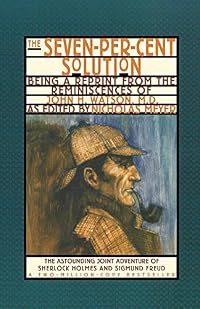
Back in print to tie-in with The Canary Trainer, this "rediscovered" Sherlock Holmes adventure recounts the unique collaboration of Holmes and Sigmund Freud in the solution of a mystery on which the lives of millions may depend.Tags
Recommendations







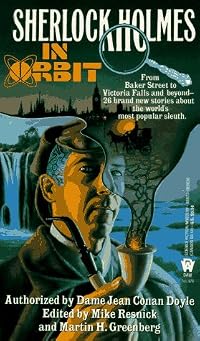
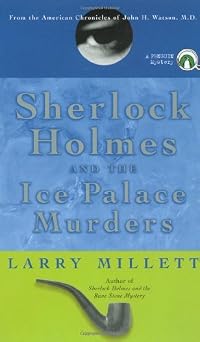

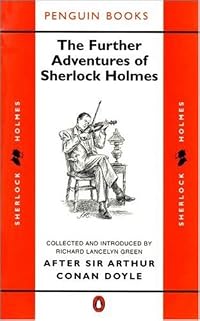
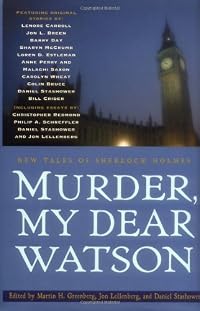












Member Recommendations


Member Reviews
Billed as “a reprint from the reminiscences of John H. Watson, MD, as edited by Nicholas Meyer”, this book tells the real story of “The Final Problem”, and this story involves a collaboration between Sherlock Holmes and Sigmund Freud. This was utterly delightful and imaginative, and it really captures the tone of the Holmes stories. It has a nice balance of thoughtful deduction and cinema-worthy action pieces (the scene on the steam train comes to mind). This makes me want to read the originals again! I will also look for more of Meyer’s pastiches.
In this pastiche on Sherlock Holmes stories, we learn that a lost manuscript reveals that the events of "The Final Problem" and "The Empty House" were fabricated by Dr. John Watson. Instead of confronting Professor James Moriarity, allegedly dying in a fall, and then returning to London three years later, Holmes is having delusions brought on by his addiction to cocaine. Moriarity is far from the Napoleon of Crime, but simply Holmes' childhood tutor.
With the help of Mycroft Holmes and the unwilling participation of Moriarity, Watson leads Holmes to Vienna. Now I don't know if this will be a spoiler for anyone else, but through all the setup of an Austrian psychiatrist who can help patients recover from addictions, I had no idea that it show more was going to be Sigmund Freud! It seems so obvious in retrospect. In addition to recovering from his addiction, Holmes is restored by a case where one of Freud's patients is abducted. They learn the plot involves members of the aristocracy and could result in war breaking out across Europe (two decades before it actually did).
Meyer's novel is an entertaining modern take on Sherlockiana and a good character study. show less
With the help of Mycroft Holmes and the unwilling participation of Moriarity, Watson leads Holmes to Vienna. Now I don't know if this will be a spoiler for anyone else, but through all the setup of an Austrian psychiatrist who can help patients recover from addictions, I had no idea that it show more was going to be Sigmund Freud! It seems so obvious in retrospect. In addition to recovering from his addiction, Holmes is restored by a case where one of Freud's patients is abducted. They learn the plot involves members of the aristocracy and could result in war breaking out across Europe (two decades before it actually did).
Meyer's novel is an entertaining modern take on Sherlockiana and a good character study. show less
As a self-professed Sherlock maniac, I've read many pastiches in many anthologies, but I had never read an entire novel (except the four in the original canon). I was engulfed in this romp that almost bordered on comedy in some scenes. Having Sherlock meet another "real" famous person who's responsible for helping Holmes quit cocaine was ingenious and fun. The voice of Watson also rings true; Meyer definitely wrote with Watson's complete voice in mind, and to me, it worked. Having Meyer be the "editor" is another genius touch--similar to Doyle being the publisher of the "real" adventures of Holmes as chronicled by Watson. I found this to be more of a character study than a true puzzle that needed solving. The last third of the book was show more an intense chase scene on trains. We didn't even need Holmes to explain everything to us at the end like he usually does in the canon stories. The fun is in the history and the thoughts/actions of the characters themselves. show less
As a self-professed Sherlock maniac, I've read many pastiches in many anthologies, but I had never read an entire novel (except the four in the original canon). I was engulfed in this romp that almost bordered on comedy in some scenes. Having Sherlock meet another "real" famous person who's responsible for helping Holmes quit cocaine was ingenious and fun. The voice of Watson also rings true; Meyer definitely wrote with Watson's complete voice in mind, and to me, it worked. Having Meyer be the "editor" is another genius touch--similar to Doyle being the publisher of the "real" adventures of Holmes as chronicled by Watson. I found this to be more of a character study than a true puzzle that needed solving. The last third of the book was show more an intense chase scene on trains. We didn't even need Holmes to explain everything to us at the end like he usually does in the canon stories. The fun is in the history and the thoughts/actions of the characters themselves. show less
Nicholas Meyer's Sherlock Holmes pastiche, The Seven-Per-Cent Solution retroactively changes Sir Arthur Conan Doyle's "The Final Problem" while confronting Holmes's cocaine addiction and explaining what drives the man. To this end, Meyer dethrones Moriarty and recasts him as Holmes's childhood math tutor who became the focus of Holmes's cocaine addled delusions, for which Watson took the detective to Austria in order to receive the aid of Sigmund Freud. Meyer, like many authors of Holmes pastiche, presents the narrative as a recently discovered manuscript of Watson's writing and, in presenting it in this manner, he adds the occasional footnote with references to other Holmes works or scholarly works based on Sherlockiana as if it were show more an annotated manuscript. Though Freud is a problematic individual historically, Meyer uses him and his theories in a manner that fits with some of the other pseudoscience in Doyle's original stories. The climactic train chase and sword fight make for a fun action scene. Overall, Meyer's Holmes pastiche entertains and replicates the tone of some of Doyle's writing so that it will entertain fans of the originals. show less
The Sherlock pastiche that paved the way for all the Sherlock vs Cthulhu nonsense we have today; this is actually well done, respectfully in the style of the originals, but still departing from Doyle enough to be its own thing. The central conceit of pairing Holmes with Freud is spoiled on the cover - it's an interesting take that ends up undoing some canon. It's never quite good enough to be fantastic in its own right. Meyer is clearly well read on Holmes but ends up being making some of the story apologia for incongruence and mistakes that Holmes-fans have criticised Doyle for (such as explaining why Holmes & Watson rise Hansom cabs rather than use the underground, or why Watson appears dumber than he is - for effect in the telling as show more we learn).
This book in turn seems to have coloured a lot of Holmes interpretations, like the excellent Jeremy Brett series, leaning into the Holmes-as-addict as well as melancholic with a troubled past.
I was led to this from the The Cambridge Companion to Sherlock Holmes, a good source of general criticism and views on Holmes, including on this book. show less
This book in turn seems to have coloured a lot of Holmes interpretations, like the excellent Jeremy Brett series, leaning into the Holmes-as-addict as well as melancholic with a troubled past.
I was led to this from the The Cambridge Companion to Sherlock Holmes, a good source of general criticism and views on Holmes, including on this book. show less
Well this was a real pleasure to read. In "editing" the reminiscences of Dr. Watson, Meyer perfectly captures the cadences of Conan Doyle's prose and the premise of the book is both original and intriguing. Positing that Holmes didn't fake his own death at the hands of Professor Moriaty at the Reichenbach Falls, Meyer instead spins a tale of a detective in the grip of Cocaine paranoia who is saved by the actions of the faithful Watson and none other than Sigmund Freud himself!
Set mainly in Vienna, this is supposedly a long lost case that Watson had promised not to reveal until all the protagonists were dead. It is brilliantly done, featuring not only Watson but also Mycroft and the real Professor Moriarty (who is quite different to show more Doyle's villain). Holmes's long road back to recovery involves both analysis by Freud and his stumbling upon a case that features kidnapping, Bavarian Aristocracy and a break-neck pursuit by steam train. All tremendous fun.
As an alternative history of a significant part of the great detective's life it is immense fun and certainly a better read than the more recent House of Silk, which was, in hindsight, pretty humourless and whose subject matter left a bad taste in the mouth.
I shall be tracking down Meyer's other two Holmes novels, because if they are half as good as this they will be well worth reading. Recommended. show less
Set mainly in Vienna, this is supposedly a long lost case that Watson had promised not to reveal until all the protagonists were dead. It is brilliantly done, featuring not only Watson but also Mycroft and the real Professor Moriarty (who is quite different to show more Doyle's villain). Holmes's long road back to recovery involves both analysis by Freud and his stumbling upon a case that features kidnapping, Bavarian Aristocracy and a break-neck pursuit by steam train. All tremendous fun.
As an alternative history of a significant part of the great detective's life it is immense fun and certainly a better read than the more recent House of Silk, which was, in hindsight, pretty humourless and whose subject matter left a bad taste in the mouth.
I shall be tracking down Meyer's other two Holmes novels, because if they are half as good as this they will be well worth reading. Recommended. show less
Members
- Recently Added By
Lists

Favorite Books Based on Sherlock Holmes Stories
20 works; 10 members

501 Must-Read Books
508 works; 71 members

Read the book and saw the movie
1,170 works; 193 members

Crime and Mysteries to Read
746 works; 31 members

Top 100 Mystery Novels of All Time
98 works; 9 members

Crime Writers' Association Daggers
76 works; 4 members

real people in fiction circumstances
74 works; 10 members

Detective Stories
343 works; 5 members

Swinging Seventies
255 works; 18 members

Books Read in 2016
4,666 works; 199 members

Books With Numbers in the Title
308 works; 13 members

Books Read in 2019
4,052 works; 110 members

Gaslamp Mysteries
78 works; 4 members
Publisher's Weekly Bestsellers - Part II - 1940 - 1979
355 works; 5 members

Books Read in 2024
4,623 works; 126 members
Author Information

39+ Works 6,189 Members
Some Editions
Awards and Honors
Awards
Distinctions
Series
Belongs to Publisher Series
Work Relationships
Is a (non-series) sequel to
Has the adaptation
Common Knowledge
- Canonical title
- The Seven-Per-Cent Solution
- Original title
- The Seven-Per-Cent Solution
- Alternate titles
- The Seven-Per-Cent Solution: Being a Reprint From the Reminiscences of John H. Watson, M.D., as Edited by Nicholas Meyer
- Original publication date
- 1974
- People/Characters
- Sigmund Freud; Sherlock Holmes; Mycroft Holmes; John H. Watson; Professor James Moriarty; Mary Morstan (show all 7); Mrs. Hudson
- Important places
- London, England, UK; Vienna, Austria; 221B Baker Street, London, England, UK
- Related movies
- The Seven-Per-Cent Solution (1976 | IMDb)
- Dedication
- For Sally
- First words
- Introduction:
For many years it was my good fortune to witness, chronicle, and in some instances to assist my friend, Mr. Sherlock Holmes, in a number of the cases which were submitted to him in his unique capacity a... (show all)s a consulting detective.
The discovery of an unpublished manuscript by John H. Watson may well engender in the world of letters as much skepticism as surprise.
As I stated in the preamble to "The Final Problem," my marriage and my subsequent start in private practise wrought a subtle but definite alteration in the pattern of my friendship with Sherlock Holmes. - Last words
- (Click to show. Warning: May contain spoilers.)And it will surprise no one to learn that when it came to write down what had occurred, I followed Sherlock Holmes's advice to the letter.
(Click to show. Warning: May contain spoilers.)And it will surprise no one to learn that when it came to wrdown what had occurred,I followed Sherlock Holmes 's advice to the letter. - Disambiguation notice
- This is the book The Seven-per-cent Solution. It should not be combined with the film; do not be misled by the fact that the author of this book also wrote the film's screenplay.
Classifications
- Genres
- Fiction and Literature, Mystery, Historical Fiction
- DDC/MDS
- 813.54 — Literature & rhetoric American literature in English American fiction in English 1900-1999 1945-1999
- LCC
- PZ4 .M6135 — Language and Literature Fiction and juvenile belles lettres Fiction and juvenile belles lettres Fiction in English
- BISAC
Statistics
- Members
- 2,017
- Popularity
- 10,315
- Reviews
- 52
- Rating
- (3.74)
- Languages
- 12 — Chinese, Czech, Danish, Dutch, English, Finnish, French, German, Italian, Norwegian (Bokmål), Spanish, Swedish
- Media
- Paper, Audiobook, Ebook
- ISBNs
- 39
- UPCs
- 1
- ASINs
- 46