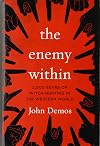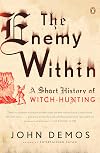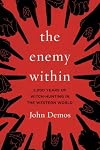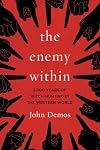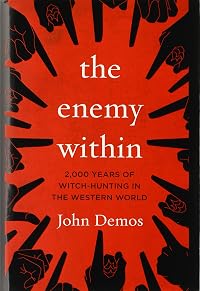
The Enemy Within: 2,000 Years of Witch-Hunting in the Western World
by John Demos
On This Page
Description
A cultural history of witch-hunting, from the Romans through McCarthy. The term witch-hunt is used today to describe everything from political scandals to school board shake-ups. But its origins are far from trivial. Long before the Salem witch trials, women and men were rounded up by neighbors, accused of committing horrific crimes using supernatural powers, scrutinized by priests and juries, and promptly executed. The belief in witchcraft--and the deep fear of evil it instilled in show more communities--led to a cycle of accusation, anger, and purging that has occurred repeatedly in the West for centuries. show lessTags
Recommendations
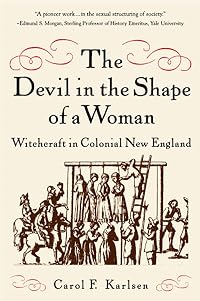
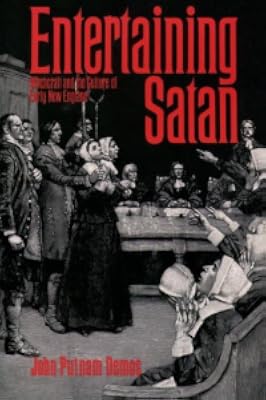
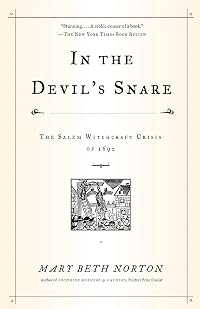
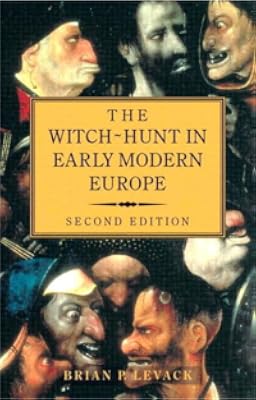

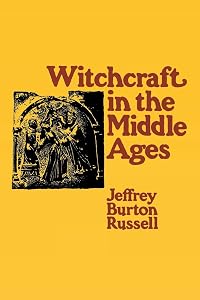
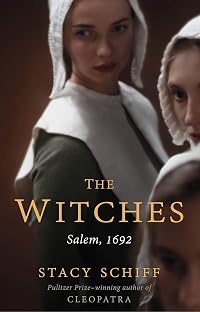
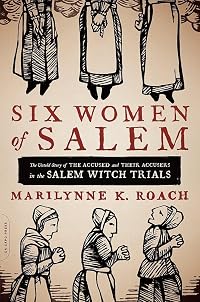

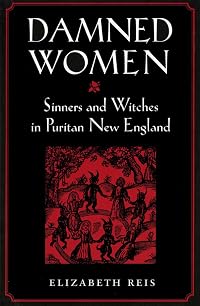





Member Recommendations
Member Reviews
Looking back from the vantage point of the world today, it seems almost inconceivable that such things as witch-crazes and mass witch-hunting could still occur and the fact that they did occur is often puzzling. Yet if we delve a little deeper at what witch-hunting truly means and its role in society, it becomes clear that not only is it imaginable but also that it could reappear at any time. Witch-hunting is not simply the hunting of witches; it is the ousting of the other in our midst and the affirmation of what the current culture deems appropriate and desirable. Viewed in this way, we can see modern day examples of witches and their hunters by another name.
John Demos, a renowned history scholar, is particularly well-suited to show more process and synthesize the history of knowledge on witch-hunting and the more recent incarnations of the practice. Hunting witches, he tells readers, begins closest to home, and accusers are often neighbors of the accused. In a way, to designate someone as a witch is a simple way to call attention to their behaviors that are undesirable. To execute them is to execute that behavior found offensive.
The author chronicles the history of witch-hunting through this lens of extracting the other and establishing standards of society, and it becomes increasingly clear how these hunts and executions could have happened. After the Enlightenment, we may have moved away from using the term witch to castigate, but the practice of hunting down and ousting remains in many forms to the present time. Demos illustrates his point through more modern day hunts of the Freemasons, Bavarian Illuminati, Haymarket activism, the Great Red Scare, McCarthyism, and child sex-abuse cases. In the witch-hunting cases of the past as well as with the more modern examples, there are recurring themes that emerge that help us to make sense of these incidents: conspiracy, secrecy, large scope, fundamentally subversive ends, hidden contaminating means, apocalyptic danger, and negative emotional repercussions. show less
John Demos, a renowned history scholar, is particularly well-suited to show more process and synthesize the history of knowledge on witch-hunting and the more recent incarnations of the practice. Hunting witches, he tells readers, begins closest to home, and accusers are often neighbors of the accused. In a way, to designate someone as a witch is a simple way to call attention to their behaviors that are undesirable. To execute them is to execute that behavior found offensive.
The author chronicles the history of witch-hunting through this lens of extracting the other and establishing standards of society, and it becomes increasingly clear how these hunts and executions could have happened. After the Enlightenment, we may have moved away from using the term witch to castigate, but the practice of hunting down and ousting remains in many forms to the present time. Demos illustrates his point through more modern day hunts of the Freemasons, Bavarian Illuminati, Haymarket activism, the Great Red Scare, McCarthyism, and child sex-abuse cases. In the witch-hunting cases of the past as well as with the more modern examples, there are recurring themes that emerge that help us to make sense of these incidents: conspiracy, secrecy, large scope, fundamentally subversive ends, hidden contaminating means, apocalyptic danger, and negative emotional repercussions. show less
Distinguished Yale historian John Demos tries his hand at popular history with The Enemy Within: 2,000 Years of Witch-Hunting in the Western World (just out from Viking). In his preface, Demos calls this a "broad-gauge summary and synthesis of the entire subject," noting "synthesis itself was an unfamiliar process for me. I have previously made my way as a historian of very specific times, places, and events. My aim in all my other projects has been depth more than breadth. Those priorities are reversed here; the coverage is nothing if not broad."
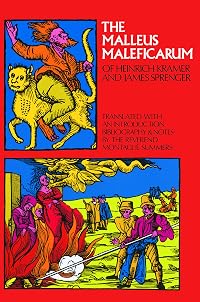
That's certainly true. In four large sections, Demos examines various phases of witchcraft history and witch-hunting: Europe in the early modern era, the American colonies prior to Salem, the show more Salem events themselves, and America in modern times. Each of those sections contains a broad overview chapter, bookended by vignettes focusing on specific cases, characters, or objects (Cotton Mather and Rebecca Nurse or profiled, for example, as is the Malleus Maleficarum).
Through the first three segments of the book, Demos is on firm ground as he surveys the general trends in witch-hunting across the centuries through the crisis at Salem. His historiographical analysis of that phenomenon is fascinating, although it suffered much from the lack of scholarly apparatus in the text (just because a book is being written for a popular audience doesn't mean it can't have footnotes, I say, for the umpteenth time - or at least a thorough bibliography).
In the final section, Demos extends the witch-hunting metaphor to the present day, testing various possible "witch-hunts" (the Anti-Masonic movement, the Red Scare, McCarthyism, &c.) against its criteria to see which fit. As final chapters often do, this part of the book seemed forced and somewhat strained: even Demos admits that not all of his examples work well. His conclusions, at least, do work: for all that the reality of witches may be more "fictive than actual," the psychological impulses at the root of witch-hunting are "all too real. More than anything else," he concludes, "this constitutes the enemy which has through the centuries exacted such a terrible toll. To reduce its power is no easy task. Yet by deepening knowledge of both self and society, we create at least an opening for change. To that most important process 'history' offers its own hopeful, if uncertain, contribution."
Like Demos as a writer, as a reader I tend to prefer narrower studies to works of broad synthesis - I think much of my (minor) discomfort with this book stems directly from that mindset. That said, this is fundamentally a strong book, by one of the foremost authorities in witchcraft scholarship. I think it does just what it's meant to do.
http://philobiblos.blogspot.com/2008/09/book-review-enemy-within.html show less
That's certainly true. In four large sections, Demos examines various phases of witchcraft history and witch-hunting: Europe in the early modern era, the American colonies prior to Salem, the show more Salem events themselves, and America in modern times. Each of those sections contains a broad overview chapter, bookended by vignettes focusing on specific cases, characters, or objects (Cotton Mather and Rebecca Nurse or profiled, for example, as is the Malleus Maleficarum).
Through the first three segments of the book, Demos is on firm ground as he surveys the general trends in witch-hunting across the centuries through the crisis at Salem. His historiographical analysis of that phenomenon is fascinating, although it suffered much from the lack of scholarly apparatus in the text (just because a book is being written for a popular audience doesn't mean it can't have footnotes, I say, for the umpteenth time - or at least a thorough bibliography).
In the final section, Demos extends the witch-hunting metaphor to the present day, testing various possible "witch-hunts" (the Anti-Masonic movement, the Red Scare, McCarthyism, &c.) against its criteria to see which fit. As final chapters often do, this part of the book seemed forced and somewhat strained: even Demos admits that not all of his examples work well. His conclusions, at least, do work: for all that the reality of witches may be more "fictive than actual," the psychological impulses at the root of witch-hunting are "all too real. More than anything else," he concludes, "this constitutes the enemy which has through the centuries exacted such a terrible toll. To reduce its power is no easy task. Yet by deepening knowledge of both self and society, we create at least an opening for change. To that most important process 'history' offers its own hopeful, if uncertain, contribution."
Like Demos as a writer, as a reader I tend to prefer narrower studies to works of broad synthesis - I think much of my (minor) discomfort with this book stems directly from that mindset. That said, this is fundamentally a strong book, by one of the foremost authorities in witchcraft scholarship. I think it does just what it's meant to do.
http://philobiblos.blogspot.com/2008/09/book-review-enemy-within.html show less
As a newbie to all of this witchcraft stuff (the only book I’ve read with “Crucible” in the title was about the Bauhaus) I found this book quite engaging. Of course these days I find anything within the genre of NOT Architecture engaging (barring, of course, the Kaplan study guides for the Architectural Registration Exams. These definitely fall under the NOT Architecture category, but they’re about as engaging as invasive colonoscopy). To me this was a consistently interesting read – a page turner even – and I guess my only criticism revolves around what I sensed to be a forced inclusion of such “modern” episodes as the anti-Free Mason initiative and even the “witch hunting” during the two main Red Scares. The show more example of the daycare scandals of the mid 80s to early 90s, his main contemporary comparison to the sundry “pre-modern” witch trials, did seem a relevant inclusion for a book that purports to weave a narrative of witch-hunting regardless of actual alleged “witches” over that last 2,000 years.
I suppose my feeling is that, as everything post-Salem is condensed into the last quarter of the book, he undermines his objective a bit. Indeed one might flippantly counter that the last 300 years should technically only fill 15% of a book covering two millennia to create a balanced portrayal. But at base, Demos attempts to establish how the chronologically and geographically sporadic, yet fundamentally consistent pattern of “pre-modern” witch-hunting also emerges in various non-clergy-induced “modern” forms. Because of brevity I think he falls short. However, as the somewhat annoying, italicized questions concluding each contemporary example never failed to disrupt the flow (”So…was it a witch-hunt…the missing parts are, as before, misogyny and overtly religious/moral sponsorship…” So…maybe?), perhaps too much speculative equivalencies would have pushed his star rating from 4 to 2.25. I dunno, I liked the book overall. show less
I suppose my feeling is that, as everything post-Salem is condensed into the last quarter of the book, he undermines his objective a bit. Indeed one might flippantly counter that the last 300 years should technically only fill 15% of a book covering two millennia to create a balanced portrayal. But at base, Demos attempts to establish how the chronologically and geographically sporadic, yet fundamentally consistent pattern of “pre-modern” witch-hunting also emerges in various non-clergy-induced “modern” forms. Because of brevity I think he falls short. However, as the somewhat annoying, italicized questions concluding each contemporary example never failed to disrupt the flow (”So…was it a witch-hunt…the missing parts are, as before, misogyny and overtly religious/moral sponsorship…” So…maybe?), perhaps too much speculative equivalencies would have pushed his star rating from 4 to 2.25. I dunno, I liked the book overall. show less
It is hard to believe a book about witch hunts could be so incredibly dry and boring.
The last chapter, about "modern witch hunts," is highly problematic as he addresses topics in a few pages that have had their own whole tomes written (Red Scare, McCarthyism, Satanic child abuse in day cares scare). As a result, all nuance is lost and even the accuracy of some claims seemed questionable.
Much better books have been written on this topic. Look elsewhere.
The last chapter, about "modern witch hunts," is highly problematic as he addresses topics in a few pages that have had their own whole tomes written (Red Scare, McCarthyism, Satanic child abuse in day cares scare). As a result, all nuance is lost and even the accuracy of some claims seemed questionable.
Much better books have been written on this topic. Look elsewhere.
A very solid history of witchcraft in America. In spite of the subtitle, the first 1600+ years of witch hunting are only lightly treated. Most of the focus of the book is on American witch hunting. The author does do a reasonably thorough treatment of the most famous, the Salem witch trials, but spends a good deal of time on earlier (and a few later) trials and "panics", as well. He is an entertaining writer, able to bring personality to the individuals involved, rather than just a dry recitation of details. He wraps up the account by looking at some more modern day "witch hunts", and evaluating where they converge and where they diverge from traditional witch hunts. Overall, an enjoyable read and a valuable history lesson.
Very accessible and thought-provoking history of our tendency across centuries to create scapegoats--even when the danger is purely imaginary. In his attempt to make the book accessible to mainstream history fans, Demos may have made his scope a little too broad and too general. The middle section, which focuses on the New England witch trials, and Salem in particular, is almost TOO detailed, with a surplus of factual detail compared to analysis. The final section, which traces the witch-hunting mentality through the next four centuries often feels very rushed on the detail-level. Still, the book is well worth reading, if only for the excellent comparison of the Salem witch trials to the Fells Acres Day School trials four hundred years show more later. show less
Having spent most of my life in Massachusetts, I have always been fascinated by witch trials (Salem) and the psychology behind the persecution of witches. This book doesn't address actual witchcraft but instead delves into that very psychology. The author's research is meticulous, his writing clear and easy to follow. The book isn't dragged out and I found no part of it in the least bit boring. I would suggest this book to anyone with an interest in the history and psychology behind witch hunts.
Members
- Recently Added By
Author Information
9+ Works 1,041 Members
Common Knowledge
- Canonical title
- The Enemy Within: 2,000 Years of Witch-Hunting in the Western World
- Alternate titles
- The Enemy Within: A Short History of Witch-Hunting
- People/Characters
- James Truslow Adams; John Quincy Adams; John Alden; James Allen; Thomas Allen; Gerald Amirault (show all 210); Violet Amirault; Daniel Andrew; James Bailey; Elizabeth Ballard; George Bancroft; Mary Bartlett; Samuel Bartlett; Robert A. Barton; George M. Beard; Victor Berger; Betty Negro; Bridget Bishop; Margaret Bliss; Thomas Bliss; Jean Bodin; Isaac Borenstein; Paul Boyer; Mary Bradbury; William Bradford; Katherine Branch; Thomas Brattle; James Bridgman; Sarah Bridgman; Gershom Bulkeley; George Burroughs; Ann Burt; George Busher; Robert Calef; Laurie Winn Carlson; Ann Carr; George Carr; Martha Carrier; Elizabeth Cary; Nathaniel Cary; Ernest Caulfield; Ezekiel Cheever; Henry Clay; Rachel Clinton; Peter Cloyce; Eunice Cole; Sarah Cole; Giles Corey; Martha Corey; Jonathan Corwin; John Cotton; Robert Cushman; Thomas Danforth; Eugene V. Debs; Martin Del Rio; Mary deRich; Elizabeth Dolan; Sir Francis Drake; Mary Dyer; Dwight D. Eisenhower; Philip English; Kai T. Erikson; John Evelyn; John Floyd; Ann Foster; Benjamin Franklin; Charles Fried; Klaus Fuchs; Gerald Broussard Gardner; Lydia Gilbert; Thomas Gilbert; Alice Glasscock; Hannah Glover; Peletiah Glover; John Godfrey; Elizabeth Godman; Peter Godson; Dorcas Good; Sarah Good; Martha Goodwin; Jack Gottlieb; Ursula Gotz; Katherine Grady; Larry Gragg; Rebecca Greensmith; Charles Guiteau; John Hale; Mary Hall; Ralph Hall; Chadwick Hansen; Katherine Harrison; Scott Harshbarger; John Hathorne; Greta Hendrickson; Jane Hawkins; Ann Hibbens; William Hibbens; Frances Hill; Alger Hiss; Dorcas Hoar; Abigail Hobbs; Deliverance Hobbs; Peter Charles Hoffer; Matthew Hopkins; Elizabeth Howe; Elizabeth Hubbard; William Hubbard; Anne Hutchinson; Thomas Hutchinson; Jane James; John Indian; Mary Johnson; Margaret Jones; Carol Karlsen; Elizabeth Knapp; Wolfgang Kolb; Heinrich Kramer; Alice Kyteler; Deodat Lawson; Mary Lee; Mercy Lewis; Clayton Lusk; Richard Lyman; Richard Manship; George C. Marshall; Susannah Martin; Cotton Mather; Increase Mather; Maria Mather; Richard Mather; Mary Mattosian; Margaret Mattson; Thomas Maule; Jacob Melyen; Arthur Miller; Perry Miller; Walter Mondale; Tom Mooney; Samuel Eliot Morison; Jedediah Morse; William Morgan; Joseph Moxon; Stephen Nissenbaum; Mary Beth Norton; Nicholas Noyes; Francis Nurse; Rebecca Nurse; Sarah Osborne; A. Mitchell Palmer; Alice Parker; Vernon L. Parrington; Betty Parris; Samuel Parris; Hugh Parsons; Mary Parsons; Abigail Phillips; William Phips; Elizabeth Porter; Israel Porter; Powhatan; Elizabeth Proctor; John Proctor; Edward Putnam; Nathaniel Putnam; Dorothy Rabinowitz; Wilmot Redd; Tom Reilly; Nicholas Remy; Jane Rookins; Bernard Rosenthal; Margaret Rule; Reginald Scot; Margaret Scott; Samuel Sewall; Stephen Sewall; William Henry Seward; Robert Shilleto; Mercy Short; Nicholas P. Spanos; Jakob Sprenger; Marion l. Starkey; John Stearns; Thaddeus Stephens; Robert T. Stevens; Henry Stiles; William Stoughton; Josiah Strong; Paul Sullivan; Montague Summers; Jane Swift; Theodosius; Tituba; Robert Toothaker; Johannah Towne; William Towne; Charles W. Upham; Mary Walcott; John Warham; Mary Watkins; Thurlow Weed; Johann Weyer; Alexander Whitaker; Sarah Wilds; Samuel Willard; Abigail Williams; Roger Williams; William Wirt; Joan Wright; Alice Young; John Young
- Important places
- Andover, Massachusetts, USA; Bakersfield, California, USA; Holy Roman Empire; University of Ingolstadt [Germany]; Lyons, France; Malden, Massachusetts, USA (show all 9); Roman Empire; Salem, Massachusetts, USA; Winnipeg, Manitoba, Canada
- Important events
- Alien and Sedition Acts of 1798; American Revolution; Black Death; Espionage Act; French Revolution; Glorious Revolution (show all 23); Great Depression; Haymarket Riot; King Philip's War; King William's War; Korean War; New Deal; Parliamentary Act of 1736; Progressive movement; Protestant Reformation; Sacco-Vanzetti trial; Seattle General Strike (1919); Sedition Act of 1918; Smith Act; Vagrancy Act of 1824; Assassination of William McKinley; Assassination of James A. Garfield; Death of Joseph Stalin
- Dedication
- To Pen and Tom
- First words
- June 1582. In the English town of Chelmsford, half a dozen elderly matrons carefully undress a sawyer's wife named Alice Glasscock and begin a search of her body for "the marks of a witch".
- Last words
- (Click to show. Warning: May contain spoilers.)To that most important process "history" offers its own hopeful, if uncertain, contribution.
- Original language
- English
Classifications
- Genres
- Nonfiction, History, Religion & Spirituality, General Nonfiction, Anthropology
- DDC/MDS
- 133.4309 — Philosophy & psychology Parapsychology & occultism Specific topics in parapsychology and occultism Demonology and witchcraft Magic and witchcraft Standard subdivisions History, geographic treatment, biography
- LCC
- BF1566 .D46 — Philosophy, Psychology and Religion Psychology Occult sciences Witchcraft
- BISAC
Statistics
- Members
- 276
- Popularity
- 116,766
- Reviews
- 11
- Rating
- (3.26)
- Languages
- English
- Media
- Paper, Ebook
- ISBNs
- 4
- ASINs
- 5