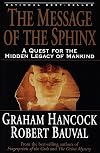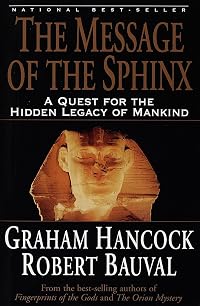
The Message of the Sphinx: A Quest for the Hidden Legacy of Mankind
by Graham Hancock (Author), Robert Bauval (Author)
On This Page
Description
An historical and scientific study of the Great Sphinx of Egypt, using computer simulations of ancient skies and examining archaic rebirth texts, myths, and scriptures, to uncover what the authors call an "astronomical language," that reveal who and what the Sphinx really is.Tags
Recommendations








Member Reviews
First, an explanation of my bias. I loved Zahi Hawass from his first appearances on Nat Geo, because he's so charismatic and he reminded me of my father. Like him, I hated von Daniken and those Ancient Aliens guys, in my case because they have so deficient a sense of the relation between claim and evidence that even if their claims were true I couldn't accept them, because they haven't really been argued. I'm reminded of trying to submit algebra homework with the right answers but no proofs.
Then, down with flu and napping through HuluPlus, I clicked on The Pyramid Code. Episode one, still skeptical. Episode two, socks knocked off. Remaining episodes, becoming skeptical again about some bits but moved to inquire further into others. show more Found one lecture by Bauval and one by Hancock, also on Hulu. Then, still bedridden, I ordered Laird Scranton's The Science of the Dogon for my Kindle. As soon as I could get up, I headed for the library and borrowed Hancock's Fingerprints of the Gods and The Message of the Sphinx, co-authored by Hancock and Bauval.
There's a lot of astronomy in Message, more than even I needed, so to me it's a less breathtaking read than Fingerprints. But both writers present compelling--I mean that literally--evidence for their claims, enough evidence in fact to make orthodox archaeology look about as scientific as the Ancient Alien guys, to make it look less like a theory than like a belief system.
As for claims, Hancock and Bauval are restrained. If they believe in alien visitations, they're careful not to show it. But if you would like to consider the possibility of an antediluvian culture that got lost, here are some facts and arguments. show less
Then, down with flu and napping through HuluPlus, I clicked on The Pyramid Code. Episode one, still skeptical. Episode two, socks knocked off. Remaining episodes, becoming skeptical again about some bits but moved to inquire further into others. show more Found one lecture by Bauval and one by Hancock, also on Hulu. Then, still bedridden, I ordered Laird Scranton's The Science of the Dogon for my Kindle. As soon as I could get up, I headed for the library and borrowed Hancock's Fingerprints of the Gods and The Message of the Sphinx, co-authored by Hancock and Bauval.
There's a lot of astronomy in Message, more than even I needed, so to me it's a less breathtaking read than Fingerprints. But both writers present compelling--I mean that literally--evidence for their claims, enough evidence in fact to make orthodox archaeology look about as scientific as the Ancient Alien guys, to make it look less like a theory than like a belief system.
As for claims, Hancock and Bauval are restrained. If they believe in alien visitations, they're careful not to show it. But if you would like to consider the possibility of an antediluvian culture that got lost, here are some facts and arguments. show less
Pseodoscience can be identified by the aggrieved tone of the author whose theory is not accepted by academia. Not all of this is demonstrably wrong: there are unanswered questions about why the flanks of the sphinx bear anomalous weathering but the authors' assertion that it is water from a pre-Ice Age climate seems less likely than those proposed by more orthodox scholars. The openess of my mind towards Bauval's theories snapped shut when he deduced the age of of the Great Sphinx to be the time when the Mesopotamian zodiacal symbol of Leo (unknown in Egypt until over a millennium after the pyramids were built) was rising on the eyeline of the statue some 12.5 millennia ago. I admire the creativity behind this book but there is too much show more defensive argument here and I find that I do not know what to trust. show less
Probably one of the most believable and brain-altering books you can read about Egypt. Hancock and Bauval will no longer let the old paradigm of Egypt take over this new generation of Egyptologists.
Even if you don't agree with it, it's fascinating reading. Not a UFO in sight.
Even if you don't agree with it, it's fascinating reading. Not a UFO in sight.
Le tesi di Bauval e di Hancock sono note, affascinanti ed accattivanti. Sostengono che la sfinge esiste da migliaia di anni prima di quanto sostengono gli archeologi e che le piramidi non sono soltanto tombe di faraoni ma la ricostruzione sul terreno di una costellazione stellare.
Libro affascinante e più intriganti di un romanzo.
Libro affascinante e più intriganti di un romanzo.
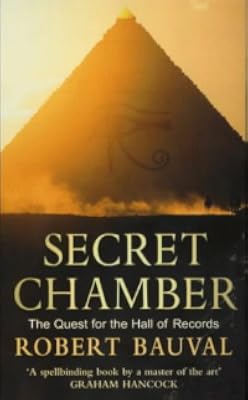
This is the second book on Egypt that I have read by Robert Bauval. I would recommend reading the first, The Orion Mystery, before starting this as it occassionally references back to topics written there, and I found it very helpful to have the background on the pyramids discussed in The Orion Mystry.
The Message of the Sphinx moves away from the Great Pyramids a bit and centers on the meaning, purpose and age of the Great Sphinx. Newer theories (1996) suggest that the Sphinx is much older than originally thought and also suggest a new purpose for the anciet monument. These discoveries are based in science and lead to a very compelling argument for the writers' theories.
If you are interested in Egyptology, this book should be on your show more must read book. Even if we choose not to believe the authors' theories, it shows a new picture of the ancients that helps piece together how and when they lived, specifically their religion and funeral rites. The writing gets a littel overly scientific for easy reading so I've been picking it up on and off all year.
4/5 show less
The Message of the Sphinx moves away from the Great Pyramids a bit and centers on the meaning, purpose and age of the Great Sphinx. Newer theories (1996) suggest that the Sphinx is much older than originally thought and also suggest a new purpose for the anciet monument. These discoveries are based in science and lead to a very compelling argument for the writers' theories.
If you are interested in Egyptology, this book should be on your show more must read book. Even if we choose not to believe the authors' theories, it shows a new picture of the ancients that helps piece together how and when they lived, specifically their religion and funeral rites. The writing gets a littel overly scientific for easy reading so I've been picking it up on and off all year.
4/5 show less
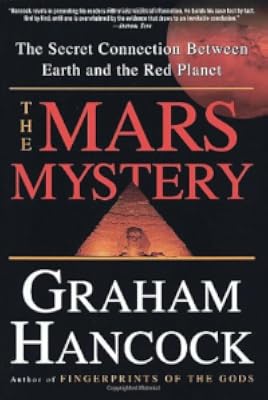
Not quite as good as Sign or Fingerprints, but interesting nevertheless. Hancock begins to get kooky with this book, culminating in the rancid Mars Mystery. He is rich though.
Like Egypt but confused by who's who in the Pharoah's Alist - then this is the book for you ! Stick with it you'll find it fascinating
Members
- Recently Added By
Author Information


Robert Bauval is an author, lecturer, and Ancient Egypt researcher, best known for his Orion Correlation Theory. Bauval was born in Alexandria, Egypy. He attended the Franciscan College in Buckinghamshire, England. He has spent most of his engineering career living and working in the Middle East and Africa as a construction engineer. In late 1992 show more Bauval contacted Adrian Gilbert; they went on to write The Orion Mystery together, which became an international bestseller. He has also co-authored three books with Graham Hancock, Breaking The Mirror Of Heaven: The Conspiracy To Suppress The Voice Of Ancient Egypt with Ahmed Osman and 2 books with Thomas Brophy including Imhotep the African: Architect of the Cosmos. (Bowker Author Biography) show less
Common Knowledge
- Canonical title
- The Message of the Sphinx: A Quest for the Hidden Legacy of Mankind
- Original title
- Keeper of Genesis: A Quest for the Hidden Legacy of Mankind; Keeper of Genesis - Volume # 1
- Alternate titles
- The Message of the Sphinx: A Quest for the Hidden Legacy of Mankind
- Original publication date
- 1996
- Important places
- Atlantis; Giza Plateau, Egypt; Ancient Egypt
- Epigraph
- 'There is scarcely a person in the civilized world who is unfamiliar with the form and features of the great man-headed lion that guards the eastern approach to the Giza pyramids.' -Ahmed Fakhry, THE PYRAMIDS, 1961
- Dedication
- To the memory of my father Gaston Bauval who rests in the land of Egypt.- Robert G. Bauval
To my friend, John Anthony West, for his twenty years of courageous work to prove the geological antiquity of the Sphinx, and for the vast implications of the evidence that he has put before the public. 'The truth is great an... (show all)d mighty,' as the ancient texts say. 'It hath never been broken since the time of Osiris.' - Graham Hancock - First words
- A gigantic statue with lion body and the head of a man, gazes east along the thirtieth parallel.
- Last words
- (Click to show. Warning: May contain spoilers.)In the land of Egypt Osiris breaths...
- Canonical DDC/MDS
- 930.18
Classifications
Statistics
- Members
- 836
- Popularity
- 33,046
- Reviews
- 11
- Rating
- (3.32)
- Languages
- 9 — Chinese, Dutch, English, Estonian, French, German, Hungarian, Italian, Japanese
- Media
- Paper, Audiobook, Ebook
- ISBNs
- 26
- ASINs
- 11