
Graham Phillips (1) (1953–)
Author of King Arthur: The True Story
For other authors named Graham Phillips, see the disambiguation page.
About the Author
A former radio journalist and BBC broadcaster, Graham Phillips is a historical investigator and author of 13 books, including The Templars and the Ark of the Covenant, Merlin and the Discovery of Avalon in the New World, The Chalice of Magdalene, and The End of Eden. He lives in England.
Works by Graham Phillips
The Chalice of Magdalene: The Search for the Cup That Held the Blood of Christ (1996) 122 copies, 1 review
The Templars and the Ark of the Covenant: The Discovery of the Treasure of Solomon (2002) 87 copies, 1 review
The Lost Tomb of King Arthur: The Search for Camelot and the Isle of Avalon (2016) 62 copies, 1 review
Wisdomkeepers of Stonehenge: The Living Libraries and Healers of Megalithic Culture (2019) 12 copies
Tagged
Common Knowledge
Members
Reviews

What a strange place to be in, someone like Graham Phillips, to (a) say the Bible isn't true or fact or anything, and (b) then use scores of random, cherry-picked verses that you declare to be true because it fits YOUR theory of what is REALLY the true fact. Weird.
So, for instance. The Bible can't be believed, it wasn't written till the 500s, but, since Phillips is positing that there were TWO Moseses, i.e., Moses was a composite of two real people, Phillips notes that the same Bible you show more can't trust give two names for Moses's father-in-law. Two fathers-in-law, two Moseses. Believe the Bible, just here. Weird.
Anyway, Phillips (who can't trust the Bible or its chronology), believes implicitly in the chronology of whatever the last book of Egyptology says the chronology of Egypt was. He says one Moses was Kamose, a priest under Thutmose III, and one Moses was Prince Thutmose, elder brother of Akhenaten. Get it, KaMOSE, ThutMOSE, MOSEs.
He goes stranger, though, claiming that Edomites were an original tribe of Hebrews, that the northern kingdom of Israel's Bethel temple to Baal/calf god was the real, original religion of Moses and the Hebrews and was actually at Petra in Edom. Oh, and Bethel is Mt. Sinai. Oh, and the original religion was just the Kabbalah. And God is a moon god sun god hermaphrodite snake god calf god of some sort. And "Yahweh" just means "my Lord" and Baal "Lord" so they were one and the same.... And, believe him because he has a copy of the Book of Jasher published in 1995 in Philadelphia (listed in his notes, but not in his bibliography!). A book NOBODY else has. No library, no Library of Congress, nobody. From a professor nobody's ever heard of. Oh, and, I tracked down the quotes from this Book of Jasher. It's from a book commonly called "Pseudo-Jasher," attributed to Alcuin, but really printed in 1750 and a forgery by one Jacob Ilive. It's Pseudo-Jasher with, interestingly enough, just the additions Phillips needs to "prove" his theories. It calls Edom a tribe, seems to place Mt. Sinai/Bethel at Petra, etc.
What a sad pseudo-historical work. I had seen Phillips in television documentaries and thought him interesting, if unconventional. Having finally read a work by him I find him unconvincing and shady. show less
So, for instance. The Bible can't be believed, it wasn't written till the 500s, but, since Phillips is positing that there were TWO Moseses, i.e., Moses was a composite of two real people, Phillips notes that the same Bible you show more can't trust give two names for Moses's father-in-law. Two fathers-in-law, two Moseses. Believe the Bible, just here. Weird.
Anyway, Phillips (who can't trust the Bible or its chronology), believes implicitly in the chronology of whatever the last book of Egyptology says the chronology of Egypt was. He says one Moses was Kamose, a priest under Thutmose III, and one Moses was Prince Thutmose, elder brother of Akhenaten. Get it, KaMOSE, ThutMOSE, MOSEs.
He goes stranger, though, claiming that Edomites were an original tribe of Hebrews, that the northern kingdom of Israel's Bethel temple to Baal/calf god was the real, original religion of Moses and the Hebrews and was actually at Petra in Edom. Oh, and Bethel is Mt. Sinai. Oh, and the original religion was just the Kabbalah. And God is a moon god sun god hermaphrodite snake god calf god of some sort. And "Yahweh" just means "my Lord" and Baal "Lord" so they were one and the same.... And, believe him because he has a copy of the Book of Jasher published in 1995 in Philadelphia (listed in his notes, but not in his bibliography!). A book NOBODY else has. No library, no Library of Congress, nobody. From a professor nobody's ever heard of. Oh, and, I tracked down the quotes from this Book of Jasher. It's from a book commonly called "Pseudo-Jasher," attributed to Alcuin, but really printed in 1750 and a forgery by one Jacob Ilive. It's Pseudo-Jasher with, interestingly enough, just the additions Phillips needs to "prove" his theories. It calls Edom a tribe, seems to place Mt. Sinai/Bethel at Petra, etc.
What a sad pseudo-historical work. I had seen Phillips in television documentaries and thought him interesting, if unconventional. Having finally read a work by him I find him unconvincing and shady. show less
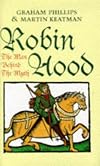
Too complicated.
That is the only description I can offer as a summary of the thesis -- or, rather, the very many theses -- in this book.
Be it stated that I have studied the origins of the Robin Hood legend at great length, and have my own opinions. So I perhaps have a "conflict of interest" here. But I am also a folklorist, and I know how these things work. There is a core legend, arising perhaps from some minstrel tale, around which details accumulate. In the case of Robin Hood, we don't show more know what the core was like. But there almost certainly was one.
Yet Phillips and Keatman posit that there were three original inspirations for the Robin Hood legend, all real but poorly documented: Robert Hood of Wakefield, Robert Fitz Odo of Loxley, and Fulk FitzWarren.
Some of this makes sense. The single most important source for the Robin Hood legend, the "Gest of Robyn Hode" (probably printed at least five times by 1520), unquestionably shares many elements with the legendary story of Fulk. And many references in the "Gest," including a mention of "Edward our comely king," place us in the reign of Edward II (1307-1327), when Robert Hood of Wakefield was alive.
But the whole Robert Fitz Odo business is a red herring to explain references to "Loxley." There are no references to Loxley in the early Robin Hood ballads. Even the links to Fulk FitzWarren look like strap-on elements, not source material. Every indication is that tales of an outlaw named Robin Hood were in circulation by the early thirteenth century. By the late fourteenth century, these were probably reaching a somewhat settled form consisting of several ballads. In the fifteenth century, some unknown poet took these materials and collated them together. He or, more likely, some earlier poet had brought in materials from the story of Fulk, and of other legendary characters such as Gamelin and Hereward the Wake and Eustace the Monk. The result was the "Gest."
A century after that, a hack writer by the name of Anthony Munday took the materials known to him and rewrote again, taking Robin Hood the yeoman archer and converting him to Robin Hood the displaced nobleman. He also took Robin Hood the bachelor and gave him a wife, and stuck him, most improbably, in the reigns of Richard I and John -- before the longbow was even in use!
To understand the Robin Hood legend requires understanding legends in general, and the way they grow and change. Phillips and Keatman make some interesting points, but their thesis just doesn't make folkloric sense. And it's much too complicated. If you want some interesting notes about the evolution of the legend, there is good material here. But the whole is less than the sum of its parts. show less
That is the only description I can offer as a summary of the thesis -- or, rather, the very many theses -- in this book.
Be it stated that I have studied the origins of the Robin Hood legend at great length, and have my own opinions. So I perhaps have a "conflict of interest" here. But I am also a folklorist, and I know how these things work. There is a core legend, arising perhaps from some minstrel tale, around which details accumulate. In the case of Robin Hood, we don't show more know what the core was like. But there almost certainly was one.
Yet Phillips and Keatman posit that there were three original inspirations for the Robin Hood legend, all real but poorly documented: Robert Hood of Wakefield, Robert Fitz Odo of Loxley, and Fulk FitzWarren.
Some of this makes sense. The single most important source for the Robin Hood legend, the "Gest of Robyn Hode" (probably printed at least five times by 1520), unquestionably shares many elements with the legendary story of Fulk. And many references in the "Gest," including a mention of "Edward our comely king," place us in the reign of Edward II (1307-1327), when Robert Hood of Wakefield was alive.
But the whole Robert Fitz Odo business is a red herring to explain references to "Loxley." There are no references to Loxley in the early Robin Hood ballads. Even the links to Fulk FitzWarren look like strap-on elements, not source material. Every indication is that tales of an outlaw named Robin Hood were in circulation by the early thirteenth century. By the late fourteenth century, these were probably reaching a somewhat settled form consisting of several ballads. In the fifteenth century, some unknown poet took these materials and collated them together. He or, more likely, some earlier poet had brought in materials from the story of Fulk, and of other legendary characters such as Gamelin and Hereward the Wake and Eustace the Monk. The result was the "Gest."
A century after that, a hack writer by the name of Anthony Munday took the materials known to him and rewrote again, taking Robin Hood the yeoman archer and converting him to Robin Hood the displaced nobleman. He also took Robin Hood the bachelor and gave him a wife, and stuck him, most improbably, in the reigns of Richard I and John -- before the longbow was even in use!
To understand the Robin Hood legend requires understanding legends in general, and the way they grow and change. Phillips and Keatman make some interesting points, but their thesis just doesn't make folkloric sense. And it's much too complicated. If you want some interesting notes about the evolution of the legend, there is good material here. But the whole is less than the sum of its parts. show less

In this book we are invited first to look at the traditional evidence for the existence of King Arthur. And what a ragbag it is, as any researcher knows. At the centre is a yawning black hole, sucking in the unwary. A sensible approach therefore to the historical problem of who Arthur might have been is to fix, by logical deduction, the time and place in which he might have flourished.
The time suggested is the late 5th/early 6th century. This seems uncontroversial, so no Brythonic god, show more first-century Roman, Sutton Hoo warrior or Atlantean avatar here, it would seem. The first half of the book sifts through Romantic preconceptions through to the ghost chronology dimly perceived from the difficult documentary evidence we possess. Thus far, there is little to quibble about.
But now the authors make a leap into the dark, and the 'possible', the 'probable', the 'could be' and the 'surely' all rear their several heads. It is 'possible' that Arthur came from the ruling family of Gwynedd; it is 'probable' that he was the 'Bear' who ruled Powys before the 6th-century Cuneglasus; Viriconium, the Roman predecessor of Wroxeter, 'could be' Arthur's capital, Camelot if you like; and so 'surely' the likely candidate for Arthur is the father of Cuneglasus, Owain Ddantgwyn ('Whitetooth').
But, but, but, but! Owain Ddantgwyn (or Owein Danwyn in an alternative reading) is only known from one 10th-century document. This is a very slender thread on which to hang an identification. Nor would many scholars agree with the assertion that, despite its present archaeological status, Viriconium in the early 5th century became 'the most important city in Britain'. And, attractive as the theory may be, there is no way of proving that Arthur is the 'Bear' mentioned by the 6th-century monk Gildas. And it is merely rampant speculation to suggest that Arthur, if he really existed, was related to a ruling family; he may equally not have been.
One problem with this book is that there are no differentiated weightings given to the various possibilities raised by the authors. For them, all considerations are valid provided they support the thesis. For example, they suggest that the name Arthur derives from a combination of Brythonic 'arth' and Latin 'ursus', both meaning bear, thereby somehow symbolising a conscious espousal of both nationistic and imperialist causes. On linguistic ground this is, frankly, unlikely; it is merely clutching at straws. They also resurrect Beram Saklatvala's discredited theory that Arthur's drawing of the sword from the stone was based on a confusion between 'ex saxo' (from a stone) and 'ex saxone' (out of a Saxon). They even seem to propose that the 'name affix Cun-' is peculiar to the descendants of Cunedda (news perhaps to dwellers further afield in Lowland Roman Britain such as Cunobelinus, Cunospectus, Cunoarda, Cunobarrus and Cunomaglos).
Simple solecisms like this do not bode well. And yet possible circumstantial evidence for their hypothesis seems to have been disregarded. Would not Geoffrey Ashe's identification of Riothamus as Arthur (back in 1985) taken together with the tales of the giant Retho on Snowdon have been good ammunition for their arguments on North Walian locations? And what about the supposed son of Maximus, Owen, who had a missile fight with a giant near Dinas Emrys, also in Gwynedd? There are also the theories that the growth of Arthurian tales in Cornwall are the result of relocated Cornovians from the Welsh Marches taking their folklore with them to the southwest of the island. Phillips and Keatman seem to be unaware of these admittedly equally speculative theories, showing a very limited familiarity with Arthurian Studies in their widest sense.
It's worth pointing out here that both authors are also known as "psychic archaeologists", that is, investigators who use non-scientific methods to validate their conclusions, and this speculative modus operandi effectively underpins their approach in this book. Personally, I instinctively mistrust any book which includes the word "true", "truth" or “the real” in the title (typically, Rodney Castleden’s King Arthur: the Truth behind the Legend, Steve Blake and Scott Lloyd’s The Keys to Avalon: The True Location of Arthur’s Kingdom Revealed and Adrian Gilbert’s The Holy Kingdom: the Quest for the Real King Arthur).
The authors seem to have tried their best with some very intractable material, but they are not comfortably at home with the various disciplines--archaeology, linguistics, history, literature, placenames and so on--needed to sort the wheat from the chaff. In particular, their attempt not only to identify an Arthur-type figure but a whole host of contemporaries is both over-ambitious and unsuccessful. And the final section of their "Research Update" is a blatant attempt at commercialisation. This is really a book only for the completist. Or the gullible.
http://calmgrove.wordpress.com/2012/09/13/gullible/ show less
The time suggested is the late 5th/early 6th century. This seems uncontroversial, so no Brythonic god, show more first-century Roman, Sutton Hoo warrior or Atlantean avatar here, it would seem. The first half of the book sifts through Romantic preconceptions through to the ghost chronology dimly perceived from the difficult documentary evidence we possess. Thus far, there is little to quibble about.
But now the authors make a leap into the dark, and the 'possible', the 'probable', the 'could be' and the 'surely' all rear their several heads. It is 'possible' that Arthur came from the ruling family of Gwynedd; it is 'probable' that he was the 'Bear' who ruled Powys before the 6th-century Cuneglasus; Viriconium, the Roman predecessor of Wroxeter, 'could be' Arthur's capital, Camelot if you like; and so 'surely' the likely candidate for Arthur is the father of Cuneglasus, Owain Ddantgwyn ('Whitetooth').
But, but, but, but! Owain Ddantgwyn (or Owein Danwyn in an alternative reading) is only known from one 10th-century document. This is a very slender thread on which to hang an identification. Nor would many scholars agree with the assertion that, despite its present archaeological status, Viriconium in the early 5th century became 'the most important city in Britain'. And, attractive as the theory may be, there is no way of proving that Arthur is the 'Bear' mentioned by the 6th-century monk Gildas. And it is merely rampant speculation to suggest that Arthur, if he really existed, was related to a ruling family; he may equally not have been.
One problem with this book is that there are no differentiated weightings given to the various possibilities raised by the authors. For them, all considerations are valid provided they support the thesis. For example, they suggest that the name Arthur derives from a combination of Brythonic 'arth' and Latin 'ursus', both meaning bear, thereby somehow symbolising a conscious espousal of both nationistic and imperialist causes. On linguistic ground this is, frankly, unlikely; it is merely clutching at straws. They also resurrect Beram Saklatvala's discredited theory that Arthur's drawing of the sword from the stone was based on a confusion between 'ex saxo' (from a stone) and 'ex saxone' (out of a Saxon). They even seem to propose that the 'name affix Cun-' is peculiar to the descendants of Cunedda (news perhaps to dwellers further afield in Lowland Roman Britain such as Cunobelinus, Cunospectus, Cunoarda, Cunobarrus and Cunomaglos).
Simple solecisms like this do not bode well. And yet possible circumstantial evidence for their hypothesis seems to have been disregarded. Would not Geoffrey Ashe's identification of Riothamus as Arthur (back in 1985) taken together with the tales of the giant Retho on Snowdon have been good ammunition for their arguments on North Walian locations? And what about the supposed son of Maximus, Owen, who had a missile fight with a giant near Dinas Emrys, also in Gwynedd? There are also the theories that the growth of Arthurian tales in Cornwall are the result of relocated Cornovians from the Welsh Marches taking their folklore with them to the southwest of the island. Phillips and Keatman seem to be unaware of these admittedly equally speculative theories, showing a very limited familiarity with Arthurian Studies in their widest sense.
It's worth pointing out here that both authors are also known as "psychic archaeologists", that is, investigators who use non-scientific methods to validate their conclusions, and this speculative modus operandi effectively underpins their approach in this book. Personally, I instinctively mistrust any book which includes the word "true", "truth" or “the real” in the title (typically, Rodney Castleden’s King Arthur: the Truth behind the Legend, Steve Blake and Scott Lloyd’s The Keys to Avalon: The True Location of Arthur’s Kingdom Revealed and Adrian Gilbert’s The Holy Kingdom: the Quest for the Real King Arthur).
The authors seem to have tried their best with some very intractable material, but they are not comfortably at home with the various disciplines--archaeology, linguistics, history, literature, placenames and so on--needed to sort the wheat from the chaff. In particular, their attempt not only to identify an Arthur-type figure but a whole host of contemporaries is both over-ambitious and unsuccessful. And the final section of their "Research Update" is a blatant attempt at commercialisation. This is really a book only for the completist. Or the gullible.
http://calmgrove.wordpress.com/2012/09/13/gullible/ show less
En investigación histórica nunca se puede decir que se ha escrito la última palabra. La Historia es un relato y, como tal, la Historia es una historia. Cuando se tienen numerosos testigos, ya textuales o arqueológicos, cada historiador se ve impelido a reescribir la Historia desde su criterio y época. Por otro lado, cuando los testimonios son escasos o conforman una leyenda, buena parte del trabajo histórico es especulativo. Sin embargo la crítica textual, la historia comparada y el show more cotejo de relatos dispares con hechos suficientemente confirmados pueden aportar luz a episodios de los que poco se sabe con certeza, y lo poco que se conoce puede resultar contradictorio. Éste ha sido el trabajo de Graham Philips y Martin Keatman en torno a la leyenda de Robin Hood, uno de los mitos medievales más conocidos y recurrentes hasta nuestros días. A salvo de algún nuevo documento que pudiera aparecer, posible pero poco probable, los autores desmenuzan los datos de la Gesta, la relacionan con otras leyendas, exponen convincentemente sobre la posible historicidad de algunos personajes y apuntan a las tres figuras que pudieron ser la base histórica para la leyenda de Robin más allá del arquetipo mítico que pueda representar.
Los tres apéndices que completan el volumen son realmente flojos siendo uno de ellos una simple guía turística.
Seguro que los autores no han escrito la última palabra sobre Robin Hood, ejemplo de ello es la película de Ridley Scott del año 2010 donde el realizador juega con la idea del suplantador ofreciendo una arista más a la poliédrica figura del personaje y al desarrollo del mito, pero desde la historiografía han aportado una sólida argumentación que habrá de servir de base a posibles futuras investigaciones. show less
Los tres apéndices que completan el volumen son realmente flojos siendo uno de ellos una simple guía turística.
Seguro que los autores no han escrito la última palabra sobre Robin Hood, ejemplo de ello es la película de Ridley Scott del año 2010 donde el realizador juega con la idea del suplantador ofreciendo una arista más a la poliédrica figura del personaje y al desarrollo del mito, pero desde la historiografía han aportado una sólida argumentación que habrá de servir de base a posibles futuras investigaciones. show less
You May Also Like


Associated Authors
Statistics
- Works
- 17
- Members
- 1,051
- Popularity
- #24,523
- Rating
- 3.3
- Reviews
- 16
- ISBNs
- 85
- Languages
- 6