
Lynn Picknett
Author of The Templar Revelation: Secret Guardians of the True Identity of Christ
About the Author
Lynn Picknett is an experienced writer and journalist, and editor of the weekly publication The Royal Family Clive Prince is a full-time writer, researcher and lecturer specialising in historical mysteries Stephen Prior is a historian who specialises in Intelligence Robert Brydon is a military show more historian who has written many film treatments and scripts for historical documentaries show less
Works by Lynn Picknett
The Templar Revelation: Secret Guardians of the True Identity of Christ (1997) 1,147 copies, 13 reviews
The Stargate Conspiracy: The Truth about Extraterrestrial life and the Mysteries of Ancient Egypt (1999) 229 copies, 7 reviews
Turin Shroud: In Whose Image? the Truth Behind the Centuries-Long Conspiracy of Silence (1994) 181 copies, 3 reviews
The Sion Revelation: The Truth About the Guardians of Christ's Sacred Bloodline (2006) 177 copies, 1 review
The Secret History of Lucifer: And the Meaning of the True Da Vinci Code (2005) 147 copies, 2 reviews
The Forbidden Universe: The Occult Origins of Science and the Search for the Mind of God (2011) 103 copies, 2 reviews
The Masks of Christ: Behind the Lies and Cover-ups About the Life of Jesus (Touchstone Books) (2008) 59 copies, 1 review
When God Had a Wife: The Fall and Rise of the Sacred Feminine in the Judeo-Christian Tradition (2019) 52 copies
Tajemstvà templáÅů : tajnà strážcové pravdy o skuteÄné totožnosti JežÃÅ¡e Krista (2006) 2 copies
La missione del Priorato di Sion. La verità sui custodi della stirpe di Cristo. Ediz. illustrata (2006) 1 copy
Spiknutí Hvězdná brána : odhalení pravdy o kontaktu s mimozemšťany, vojenské tajné službě a záhadách starověkého Egypta (2003) 1 copy
Il complotto Stargate 1 copy
Associated Works
Fortean Times 101 — Contributor — 1 copy
Tagged
Common Knowledge
- Birthdate
- 1947
- Gender
- female
- Relationships
- Prince, Clive (co-author)
- Short biography
- Lynn Picknett is a writer, researcher, and lecturer on historical and religious mysteries. Her seminal book, written with Clive Prince, The Templar Revelation: Secret Guardians of the True Identity of Christ, inspired the New York Times bestsellers The Da Vinci Code and The Secret Supper. They are also the authors of The Sion Revelation: The Truth About the Guardians of Christ's Sacred Bloodline. She lives in London, England.
- Nationality
- UK
- Birthplace
- Folkestone, Kent, England, UK
- Places of residence
- London, England, UK
- Associated Place (for map)
- England, UK
Members
Reviews
The Secret History of Lucifer: The ancient path to knowledge and the real Da Vinci Code by Lynn Picknett
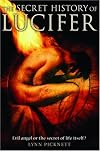
I would read this as entertainment because it sure ain't coherent history. It is part of a peculiar genre that mixes an author's ideological commitment to seeing the world in a different and subversive way with elaborate and largely unsustainable claims about history.
This is a shame because the subversive intent is not a bad idea. Unfortunately, the technique of piling up notes from entirely separate incidents in history into a narrative with a weak evidential basis merely discredits the show more intent. The book offers some catharsis for the powerless (especially women) and no doubt is moderately profitable for the author but it is no call for action and little to understanding.
The central early claim of this potboiler appears to be that power struggles within the very early Christian Church were lost, by a sexually open spiritual tradition, to the sexually repressed Pauline Church. The original practice of Christ was a form of sexual spirituality led by St. John the Baptist who was nothing like the picture presented by the Church in subsequent centuries.
The book then meanders into the highways and byways of history until it ends with praise of Lucifer and a condemnation of those who dabble with the Satanic. This, of course, refers to Lucifer the Light-Bringer, who must definitely not be confused with Satan, positioned as the positive force behind science, sexual freedom, tolerance and the Enlightenment.
The meandering takes us from ancient times through the usual tales of ancient spirituality, Cathar-Templar suffering, witch-burning, John Dee and Edward Kelley (why? we ask, as we are reading it), masonic lore, gobbets from the history of spiritualism and, of course, Crowley and LaVey to become yet another chapter in the attempt to create an alternative historical reality. There is certainly no necessary connection between one tale and the next - or even between components within each narrative.
As entertainment this is all is amusing enough but as a factual basis for understanding history, forget it. A cursory reading of the useful Wikipedia entries on the persecution of 'witches' and the Inquisition, studied alongside the relevant chapter in the book, will tell you that it is not wholly reliable. The book is riddled with polemic, selective facts, lots of 'mays' and 'could it be thats', odd etymologies, conflation of events from different times and circumstances and extremely doubtful 'evidence' (though we have no doubt this is due to weak judgement rather than malice aforethought).
The claims about the Johannite tradition in the West and the 'secret' messages in the art of a subversive Leonardo Da Vinci may excite Dan Brown enthusiasts - and may even be 'true' up to a point - but they are not adequately evidenced or contextualised here.
We, who do believe that 'resistance' to elites and prevailing culture has been much more widespread in the past than we have been allowed to believe, must, nevertheless, accept the fact that the victors write the history of past times. But, just because no evidence exists of our 'resistance proposition', this does not mean that we can make something up out of the gaps or make massive deductive leaps from what does exist.
The best approach is deep scepticism about all authorities' claims about the past rather than to make attempts to prove our own expectations. Better, perhaps we should decide not to make any claims for liberation in or on the past but just concentrate our demands on the present (our current condition) and on the future (how we believe we should be allowed to live our lives).
Yes, the book is footnoted. Yes, the authors have read widely. No, the sources are not considered contextually or critically. This is a shame because the passion in the polemic does hit its target sometimes.
The underlying message of the book is about the intrinsic evil of institutionalised religion in its effects on Western culture over nearly two thousand years (Picknett is not alone in this and a better book in this respect might be Reay Tannahill's 'Sex in History' also reviewed on this website). This proposition bears serious consideration in the year when the Church of Rome in Ireland finally was forced to admit not only that child abuse was rampant in its organisation but that successive prelates had covered it up deliberately in order to protect the reputation of their morally questionable institution.
There is a genuine and righteous anger in the book about how the human race can develop a collective will to malice, often manipulated by sick psychopaths under cover of religion. I like her for this. It makes her somewhat more worthy as passionate myth-spreader than the dry truth-telling academic who refuses to take a moral stand and who seeks to objectify us out of our anger by suggesting that 'that was then'. We must not look on past crimes as if they mean nothing in judging the conduct today of modern successor organisations, whether Crown or Church.
Picknett is also trying to make an important point about the sexual oppression of women (as a sex-positive feminist, no doubt) - not by men in general (as less sex-positive feminists try to do) but by the institutions of men who oppress all equally. Here, she is pushing at an open door with this reader.
It is quite possible that she will drive many women to righteous anger not only at 'authority' but at a culture that denies full female sexual expression - but what a shame that this matter cannot be argued on its merits based on a considered assessment of the facts rather than through a mythic narrative that is no more reliable than the nonsense perpetrated by her opponents. A war of myths is not what we need at this time in our history.
But, unless you just want an entertainment from within this now widely published genre (and, why not, if it whiles away a train journey or two without lasting harm), don't bother ... just say to yourself that you don't need to be told how to run your life by anyone and, if you are one of those people who like to spiritualise your sexuality, don't get angry about how people were treated in the past, just go do it today. show less
This is a shame because the subversive intent is not a bad idea. Unfortunately, the technique of piling up notes from entirely separate incidents in history into a narrative with a weak evidential basis merely discredits the show more intent. The book offers some catharsis for the powerless (especially women) and no doubt is moderately profitable for the author but it is no call for action and little to understanding.
The central early claim of this potboiler appears to be that power struggles within the very early Christian Church were lost, by a sexually open spiritual tradition, to the sexually repressed Pauline Church. The original practice of Christ was a form of sexual spirituality led by St. John the Baptist who was nothing like the picture presented by the Church in subsequent centuries.
The book then meanders into the highways and byways of history until it ends with praise of Lucifer and a condemnation of those who dabble with the Satanic. This, of course, refers to Lucifer the Light-Bringer, who must definitely not be confused with Satan, positioned as the positive force behind science, sexual freedom, tolerance and the Enlightenment.
The meandering takes us from ancient times through the usual tales of ancient spirituality, Cathar-Templar suffering, witch-burning, John Dee and Edward Kelley (why? we ask, as we are reading it), masonic lore, gobbets from the history of spiritualism and, of course, Crowley and LaVey to become yet another chapter in the attempt to create an alternative historical reality. There is certainly no necessary connection between one tale and the next - or even between components within each narrative.
As entertainment this is all is amusing enough but as a factual basis for understanding history, forget it. A cursory reading of the useful Wikipedia entries on the persecution of 'witches' and the Inquisition, studied alongside the relevant chapter in the book, will tell you that it is not wholly reliable. The book is riddled with polemic, selective facts, lots of 'mays' and 'could it be thats', odd etymologies, conflation of events from different times and circumstances and extremely doubtful 'evidence' (though we have no doubt this is due to weak judgement rather than malice aforethought).
The claims about the Johannite tradition in the West and the 'secret' messages in the art of a subversive Leonardo Da Vinci may excite Dan Brown enthusiasts - and may even be 'true' up to a point - but they are not adequately evidenced or contextualised here.
We, who do believe that 'resistance' to elites and prevailing culture has been much more widespread in the past than we have been allowed to believe, must, nevertheless, accept the fact that the victors write the history of past times. But, just because no evidence exists of our 'resistance proposition', this does not mean that we can make something up out of the gaps or make massive deductive leaps from what does exist.
The best approach is deep scepticism about all authorities' claims about the past rather than to make attempts to prove our own expectations. Better, perhaps we should decide not to make any claims for liberation in or on the past but just concentrate our demands on the present (our current condition) and on the future (how we believe we should be allowed to live our lives).
Yes, the book is footnoted. Yes, the authors have read widely. No, the sources are not considered contextually or critically. This is a shame because the passion in the polemic does hit its target sometimes.
The underlying message of the book is about the intrinsic evil of institutionalised religion in its effects on Western culture over nearly two thousand years (Picknett is not alone in this and a better book in this respect might be Reay Tannahill's 'Sex in History' also reviewed on this website). This proposition bears serious consideration in the year when the Church of Rome in Ireland finally was forced to admit not only that child abuse was rampant in its organisation but that successive prelates had covered it up deliberately in order to protect the reputation of their morally questionable institution.
There is a genuine and righteous anger in the book about how the human race can develop a collective will to malice, often manipulated by sick psychopaths under cover of religion. I like her for this. It makes her somewhat more worthy as passionate myth-spreader than the dry truth-telling academic who refuses to take a moral stand and who seeks to objectify us out of our anger by suggesting that 'that was then'. We must not look on past crimes as if they mean nothing in judging the conduct today of modern successor organisations, whether Crown or Church.
Picknett is also trying to make an important point about the sexual oppression of women (as a sex-positive feminist, no doubt) - not by men in general (as less sex-positive feminists try to do) but by the institutions of men who oppress all equally. Here, she is pushing at an open door with this reader.
It is quite possible that she will drive many women to righteous anger not only at 'authority' but at a culture that denies full female sexual expression - but what a shame that this matter cannot be argued on its merits based on a considered assessment of the facts rather than through a mythic narrative that is no more reliable than the nonsense perpetrated by her opponents. A war of myths is not what we need at this time in our history.
But, unless you just want an entertainment from within this now widely published genre (and, why not, if it whiles away a train journey or two without lasting harm), don't bother ... just say to yourself that you don't need to be told how to run your life by anyone and, if you are one of those people who like to spiritualise your sexuality, don't get angry about how people were treated in the past, just go do it today. show less
Stargate Conspiracy: Revealing the truth behind extraterrestrial contact, military intelligence and the mysteries of ancient Egypt by Lynn Picknett
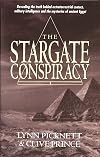
Before the Millennium, publishers piled in to exploit cultural paranoia about the event as they were to do with the Mayan nonsense before 2012 and no doubt will do when Apophis cames hurtling around in 2029. This book is part of that first wave.
It is relatively rational, doing a superb knife job on the New Egyptology idiocy that seduces the half-educated out of their lunch money, but only to replace one set of truly demented conspiracies with another one involving a sinister manipulation of show more the public by the intelligence community.
I judge the coherence of such books by the number of 'could' sentences. Some have long strings of 'could' sentences such as 'could Joseph of Arimathea be the last of the Lemurian Hidden Masters?'. This scores quite well with relatively few to chuckle at but that's about as far as it goes.
Still, the investigation of the links between the strange denizens of the pseudo-historical world is worth noting even if I see no scary conspiracy but rather a lot of cynical marketing cloaked in a historical context of nutters who seem to have persuaded Congress to part with its money.
The real story here is probably that, in paranoid terror of threats, some not enormously bright elected officials poured such vast sums into the pockets of not enormously bright military networks that some inevitably got skimmed into cultural scams and 'experiments'.
Given the well known link between people attracted to intelligence work and an interest in oddball theory and magick, it is no surprise to see overlaps of personnel. If the population are being gulled here, it is only in believing that there are threats against which their taxes should be poured.
Investing in remote viewing, hidden masters and Atlantean eschatological prophecies is probably a less harmful way of spending those dollars than on nuclear weaponry and the sums were probably chicken feed by military-industrial complex standards. The Soviets were doing much the same.
But the sound argumentation here about bad science and strange links, in the undergrowth of the pseudo-sciences between elites and nut jobs, is lost in an alternative model of mass manipulation that suggests we are stupider than we are and that 'they' are cleverer than they are.
The 'mysteries' then re-enter the story with the suggestion that there 'could be' genuine demonic forces at work manipulating the people who are manipulating us. By the end of the book, one is frustrated that some clearly intelligent authors have lost their own plot.
This is just another offensive in a 'magickal war' which Picknett and Prince at least have the gumption to understand as fundamentally about meme manipulation and culture rather than any genuinely supernatural powers - though they leave a large crack open in the door for such.
Picknett and Prince might be considered the 'left' (or right hand path in the inverted inversion of normality to be found in this sort of literature) of the ideological struggle against the Crowleian elitist 'right' (or left hand path).
The authors are for the people against elites. They still see themselves as part of the Enlightenment. They still try to hang on to some semblance of reason and scientific method. Unfortunately, the genre really is not designed for such a progressive position.
They certainly pull out the antisemitic, racist, neo-Nazi, sometimes implicitly genocidal, anti-female and all round anti-progressive underpinnings of their opposition's sources. But, again, I see no serious political project in place today, just an eagerness to sell books to muggles.
In the end, the book comes out for the more rational and decent side of New Age nonsense but nonsense is still what it is. I longed for a disciplined investigation of the links between government agents, Atlantean loons, rascally authors, archaeology, space science and private money.
I am sure there is a story there and when it is told, the authors' work might prove to have given us some important foundation stones but I will give a solid bet that the whole thing will tell us more about human gullibility and manipulation for profit than about governments and great mysteries.
All credit to the authors though for discrediting much of the machinery behind such a-historical nonsense as the age of the Sphinx, the Cydonian face on Mars, the hall of records at Giza and the role of Sirius in Egyptian culture ... and raising some awkward questions.
As books in this genre go, this is one of the better ones but if there was a conspiracy, it strikes this reader as a pretty maladroit one that ended with a whisper than a bang. But as a strike in the magickal wars, it remains quite effective within that context. show less
It is relatively rational, doing a superb knife job on the New Egyptology idiocy that seduces the half-educated out of their lunch money, but only to replace one set of truly demented conspiracies with another one involving a sinister manipulation of show more the public by the intelligence community.
I judge the coherence of such books by the number of 'could' sentences. Some have long strings of 'could' sentences such as 'could Joseph of Arimathea be the last of the Lemurian Hidden Masters?'. This scores quite well with relatively few to chuckle at but that's about as far as it goes.
Still, the investigation of the links between the strange denizens of the pseudo-historical world is worth noting even if I see no scary conspiracy but rather a lot of cynical marketing cloaked in a historical context of nutters who seem to have persuaded Congress to part with its money.
The real story here is probably that, in paranoid terror of threats, some not enormously bright elected officials poured such vast sums into the pockets of not enormously bright military networks that some inevitably got skimmed into cultural scams and 'experiments'.
Given the well known link between people attracted to intelligence work and an interest in oddball theory and magick, it is no surprise to see overlaps of personnel. If the population are being gulled here, it is only in believing that there are threats against which their taxes should be poured.
Investing in remote viewing, hidden masters and Atlantean eschatological prophecies is probably a less harmful way of spending those dollars than on nuclear weaponry and the sums were probably chicken feed by military-industrial complex standards. The Soviets were doing much the same.
But the sound argumentation here about bad science and strange links, in the undergrowth of the pseudo-sciences between elites and nut jobs, is lost in an alternative model of mass manipulation that suggests we are stupider than we are and that 'they' are cleverer than they are.
The 'mysteries' then re-enter the story with the suggestion that there 'could be' genuine demonic forces at work manipulating the people who are manipulating us. By the end of the book, one is frustrated that some clearly intelligent authors have lost their own plot.
This is just another offensive in a 'magickal war' which Picknett and Prince at least have the gumption to understand as fundamentally about meme manipulation and culture rather than any genuinely supernatural powers - though they leave a large crack open in the door for such.
Picknett and Prince might be considered the 'left' (or right hand path in the inverted inversion of normality to be found in this sort of literature) of the ideological struggle against the Crowleian elitist 'right' (or left hand path).
The authors are for the people against elites. They still see themselves as part of the Enlightenment. They still try to hang on to some semblance of reason and scientific method. Unfortunately, the genre really is not designed for such a progressive position.
They certainly pull out the antisemitic, racist, neo-Nazi, sometimes implicitly genocidal, anti-female and all round anti-progressive underpinnings of their opposition's sources. But, again, I see no serious political project in place today, just an eagerness to sell books to muggles.
In the end, the book comes out for the more rational and decent side of New Age nonsense but nonsense is still what it is. I longed for a disciplined investigation of the links between government agents, Atlantean loons, rascally authors, archaeology, space science and private money.
I am sure there is a story there and when it is told, the authors' work might prove to have given us some important foundation stones but I will give a solid bet that the whole thing will tell us more about human gullibility and manipulation for profit than about governments and great mysteries.
All credit to the authors though for discrediting much of the machinery behind such a-historical nonsense as the age of the Sphinx, the Cydonian face on Mars, the hall of records at Giza and the role of Sirius in Egyptian culture ... and raising some awkward questions.
As books in this genre go, this is one of the better ones but if there was a conspiracy, it strikes this reader as a pretty maladroit one that ended with a whisper than a bang. But as a strike in the magickal wars, it remains quite effective within that context. show less
Stargate Conspiracy: Revealing the truth behind extraterrestrial contact, military intelligence and the mysteries of ancient Egypt by Lynn Picknett
I remember buying this book years ago when looking for something outlandish to read, but when I finally got around to reading it, I realised that I'd misjudged it - well, partly. The authors don't hide the fact that they are open to many of the subjects discussed - alien contact, the pyramids of Mars, Atlantis - but most of the book adopts quite an agnostic approach to these central questions. However, it's most interesting aspect is that it provides a fascinating account of how various show more intelligence agencies, cults and organisations have manipulated - perhaps even created - the so-called New Age for their own agenda (sometimes 'spiritual', but often political or even military). Furthermore, the links it makes between these various individuals and organisations are often not conjectural, but documented fact - which is quite worrying, really. Do people in high places really think that aliens built the pyramids, or created life on Earth? Or is it all just some elaborate social experiment to road-test a new means of social control? The authors, to their credit, remain relatively open minded - which was, for someone with a sceptical disposition, something of a pleasant surprise for me! Saying that, their tracing of the endless and intricate web of connections may leave some readers cold.
Gareth Southwell is a philosopher, writer and illustrator. show less
Gareth Southwell is a philosopher, writer and illustrator. show less
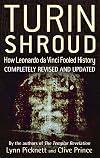
This book is devoted to exposing the myth of the Turin Shroud, and it proves it to be far more interesting than just another medieval fake relic. The authors demonstrate that the Shroud is most likely the earliest example of photography that we know, and that the originator - and quite possibly, the model - is none other than Leonardo da Vinci. Truth, as ever, is more astonishing than fiction.
Lists
You May Also Like


Associated Authors
Statistics
- Works
- 33
- Also by
- 3
- Members
- 2,596
- Popularity
- #9,897
- Rating
- 3.2
- Reviews
- 33
- ISBNs
- 124
- Languages
- 11
- Favorited
- 3