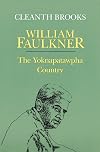
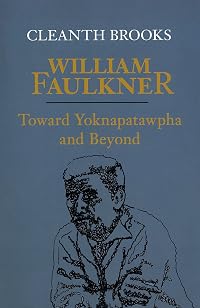
William Faulkner: The Yoknapatawpha Country
by Cleanth Brooks
On This Page
Description
Hailed by critics and scholars as the most valuable study of Faulkner's fiction, Cleanth Brooks's William Faulkner: The Yoknapatawpha Country explores the Mississippi writer's fictional county and the commanding role it played in so much of his work. Brooks shows that Faulkner's strong attachment to his region, with its rich particularity and deep sense of community, gave him a special vantage point from which to view the modern world. Brooks's consideration of such novels as Light in show more August, The Unvanquished, As I Lay Dying, and Intruder in the Dust shows the ways in which Faulkner used Yoknapatawpha County to examine the characteristic themes of the twentieth century. Contending that a complete understanding of Faulkner's writing cannot be had without a thorough grasp of fictional detail, Brooks gives careful attention to "what happens: In the Yoknapatawpha novels. He also includes useful genealogies of Faulkner's fictional clans and a character index. show lessTags
Recommendations

















Member Reviews
My rating of this book is based on what I've read of it (btwn a third and half); I can only say that I wish I'd had it to hand when I slogged my way through Absalom, Absalom! (by choice, no less: I wasn't assigned it for a class), or even through some of Faulkner's other, not quite as dense works. Brooks' book helped me through the latter half of the Snopes Trilogy (The Hamlet, The Town, The Mansion; The Long Hot Summer comes from The Hamlet), and informed and instructed me in the other novels I read about. The "Notes" section at the back of the book includes such useful material as a chronology of the events in Sanctuary, discrepancies between it and its sequel, Requiem For a Nun, five pages (including 3 pages of diagrams) explaining show more "How Ratliff Outsmarted Flem" in the Snopes Trilogy, a chronology of the events in The Mansion, and several pages of tables listing fact-checking and conjectures about Thomas Sutpen and his children from Absalom, Absalom!.
I've read 9 Faulkner novels at this point (8 set in Yoknapatawpha County, plus The Wild Palms) and will doubtless read more (and re-read some of what I've read); but one novel that I can almost guarantee that I won't read is The Reivers, unless Brooks' chapter on it magically convinces me otherwise. show less
I've read 9 Faulkner novels at this point (8 set in Yoknapatawpha County, plus The Wild Palms) and will doubtless read more (and re-read some of what I've read); but one novel that I can almost guarantee that I won't read is The Reivers, unless Brooks' chapter on it magically convinces me otherwise. show less
this was my "go to" reference before I read any of Faulkner's books. Helped me understand better what the books were trying to tell me...gave me insights I would have missed on my own. I believe I read 16 Faulkner novels + numerous short stories:)
Ratings
Members
- Recently Added By
Author Information

58+ Works 2,002 Members
Cleanth Brooks was born in Murray, Kentucky on October 16, 1906. He was educated at Vanderbilt, Tulane, and Oxford universities. From 1932 to 1947, he taught English at Louisiana State University and then moved on to Yale University. At Yale, he helped to articulate the principles of New Criticism, which dominated literary studies in the 1940s and show more 1950s. He coedited the journal Southern Review with Robert Penn Warren. He also wrote several titles in collaboration with Warren, including Understanding Poetry and Understanding Fiction. A third work Understanding Drama was written in collaboration with Robert Heilman. His other works included The Well Wrought Urn: Studies in the Structure of Poetry and Modern Poetry and the Tradition. He died on May 10, 1994. (Bowker Author Biography) show less
Common Knowledge
- Canonical title
- William Faulkner: The Yoknapatawpha Country
- Original publication date
- 1963
- Dedication
- To Robert Penn Warren
- First words
- "Most readers associate William Faulkner with the South quite as automatically as they associate Thomas Hardy with Wessex, Robert Frost with northern New England, and William Butler Yeats with Ireland..."
- Last words
- (Click to show. Warning: May contain spoilers.)Main text: "For Faulkner's work speaks ultimately of the possibilities and capacities of the human spirit for finding and embodying meaning."
----------------
Notes: "As a small boy I used to hunt with Dad and Uncle Horace and I remember hearing the story." - Blurbers
- Hicks, Granville; Millgate, Michael
Classifications
- Genres
- Nonfiction, Literature Studies and Criticism, Fiction and Literature
- DDC/MDS
- 813.52 — Literature & rhetoric American literature in English American fiction in English 1900-1999 1900-1945
- LCC
- PS3511 .A86 .Z64 — Language and Literature American literature American literature Individual authors 1900-1960
- BISAC
Statistics
- Members
- 153
- Popularity
- 213,994
- Reviews
- 3
- Rating
- (4.12)
- Languages
- English, French
- Media
- Paper
- ISBNs
- 3
- ASINs
- 4