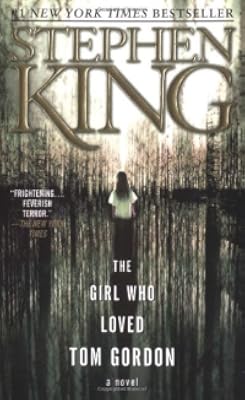
The Girl Who Loved Tom Gordon
by Stephen King
On This Page
Description
During a six-mile hike on the Maine-New Hampshire branch of the Appalachian Trail, nine-year-old Trisha McFarland quickly tires of the constant bickering between her older brother and her recently divorced mother. But when Trisha briefly wanders off by herself, she becomes lost in a wilderness maze full of peril and terror. As night falls, Trisha has only her ingenuity as a defense against the elements, and only her courage and faith to withstand her mounting fears. For solace, she tunes her show more headphones to broadcasts of Boston Red Sox baseball games and follows the gritty performances of her hero, relief pitcher Tom Gordon. And when the reception begins to fade, Trisha imagines that Tom Gordon is right there with her--the protector from an enemy who may or may not be imagined ... one who is watching her, waiting for her in the dense, dark woods ... show lessTags
Recommendations






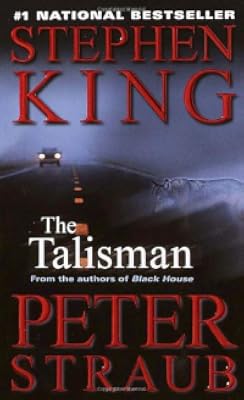
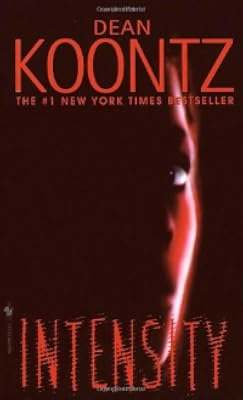
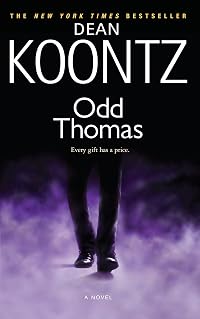
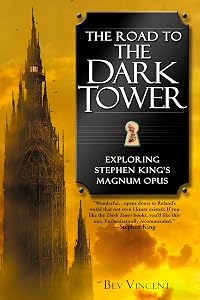
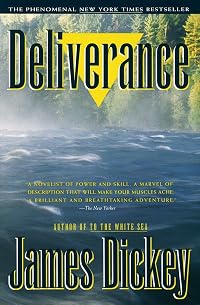
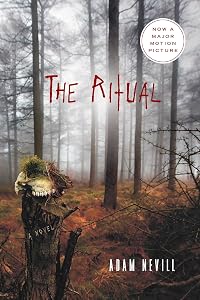
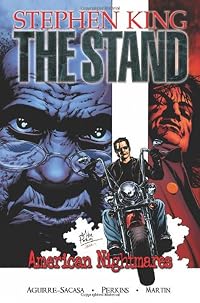
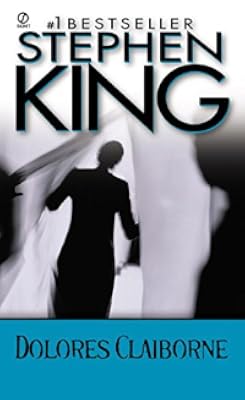













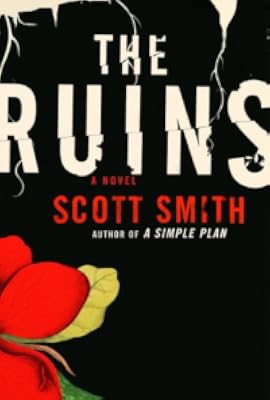
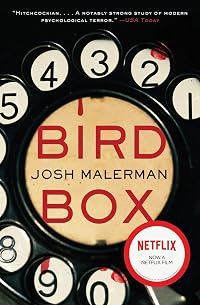
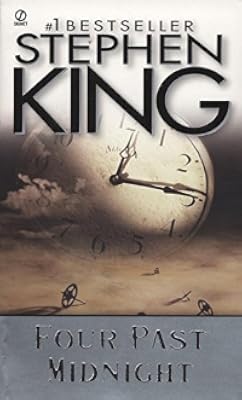
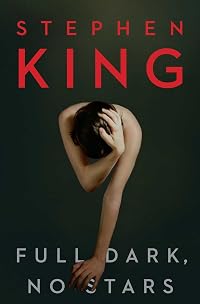
Member Recommendations

by anonymous user

Member Reviews
This concept is genius. King manages to accurately capture the mind of a child through not only the infatuation with a famous person, but also the terrifying reality of getting lost. I never felt like I was reading an adult pretending to be a child. This was convincing.
And it was terrifying in a real way. After reading Carrie, I knew Stephen King knew how to write supernatural horror. But this is purely natural horror, something that happens to people, and yes, children, every year. It is an awful thought to ponder.
I've been on a King kick recently, and this was the cherry on top.
And it was terrifying in a real way. After reading Carrie, I knew Stephen King knew how to write supernatural horror. But this is purely natural horror, something that happens to people, and yes, children, every year. It is an awful thought to ponder.
I've been on a King kick recently, and this was the cherry on top.
Stephen King is always a great storyteller. He has a talent for the linking the things that make us most human to the things we most dread and making us care as much as we fear. During the course of his (usually long) books, he slowly lures us into the places where the supernatural is so close, we can smell the rotting flesh of its last meal on its breath.
I'd expected him to do that again with “The Girl Who Loved Tom Gordon”. I’d thought I’d get a tense story about the bad things that happen to little girls who get lost in the woods, invoking all the things that lurk in the deep dark and remind us what it feels like to be prey.
Instead, Stephen King did something quite different and wonderful: he narrowed his focus down to the show more internal dialogue that drives Trish, nine years old, almost ten and big for age, to persist in struggling not to die in vast Maine woods that she is alone and lost in.
In some ways, this is a book in which nothing much happens. Trish gets separated from her mother and brother and finds herself lost in the woods and does her best to find a way to walk out again. Yet, from the beginning, I kept wanting to know what happened next and by the end I cared passionately about whether Trish would survive.
Trish is brave and resourceful and unyielding. She’s also, as she tells us from time to time, just a kid. She’s afraid. She’s furious at the unfairness of her situation. She cries. She throws tantrums. Then she persists.
Following along with Trisha, we learn about her (recently divorced) parents, her brother, her best friend and her favourite boy bands. We share her triumphs, her setbacks, her hallucinations and her growing awareness, as the days pass, that death is stalking her.
Trisha has two prized possessions with her, her Red Sox baseball cap, signed by Tom Gordon, her favourite player, and a Sony Walkman that allows her to listen to distance Sox games when the forest night surrounds her. The games become her anchor, a symbol of her hope, a connection to the world she is trying to get back to. Tom Gordon, who is the Sox closer, brought in at the end of the game to close down the other team, becomes the emblem of her courage and the means by which she explains to herself her relationship with growing probability to of her own death. From him she learns that you may be beaten by the other team but you should never be beaten by yourself.
The writing is wonderful, simple on the surface but with flowing rhythms beneath the entrance the ear and build meanings on simple phrases until a verbal Fibonacci Sequence unfolds. Stephen King can take a radio jingle, “Who do you call when your windscreen ‘s busted” and turn it into a leitmotiv for the desire for rescue. The pace is perfectly controlled and cleverly structured around the innings of a baseball game.
I recommend the audiobook version of “The Girl Who Loved Tom Gordon”. It’s performed by Anne Hech, who does a superb job of making Trisha real and made this an even better read. show less
I'd expected him to do that again with “The Girl Who Loved Tom Gordon”. I’d thought I’d get a tense story about the bad things that happen to little girls who get lost in the woods, invoking all the things that lurk in the deep dark and remind us what it feels like to be prey.
Instead, Stephen King did something quite different and wonderful: he narrowed his focus down to the show more internal dialogue that drives Trish, nine years old, almost ten and big for age, to persist in struggling not to die in vast Maine woods that she is alone and lost in.
In some ways, this is a book in which nothing much happens. Trish gets separated from her mother and brother and finds herself lost in the woods and does her best to find a way to walk out again. Yet, from the beginning, I kept wanting to know what happened next and by the end I cared passionately about whether Trish would survive.
Trish is brave and resourceful and unyielding. She’s also, as she tells us from time to time, just a kid. She’s afraid. She’s furious at the unfairness of her situation. She cries. She throws tantrums. Then she persists.
Following along with Trisha, we learn about her (recently divorced) parents, her brother, her best friend and her favourite boy bands. We share her triumphs, her setbacks, her hallucinations and her growing awareness, as the days pass, that death is stalking her.
Trisha has two prized possessions with her, her Red Sox baseball cap, signed by Tom Gordon, her favourite player, and a Sony Walkman that allows her to listen to distance Sox games when the forest night surrounds her. The games become her anchor, a symbol of her hope, a connection to the world she is trying to get back to. Tom Gordon, who is the Sox closer, brought in at the end of the game to close down the other team, becomes the emblem of her courage and the means by which she explains to herself her relationship with growing probability to of her own death. From him she learns that you may be beaten by the other team but you should never be beaten by yourself.
The writing is wonderful, simple on the surface but with flowing rhythms beneath the entrance the ear and build meanings on simple phrases until a verbal Fibonacci Sequence unfolds. Stephen King can take a radio jingle, “Who do you call when your windscreen ‘s busted” and turn it into a leitmotiv for the desire for rescue. The pace is perfectly controlled and cleverly structured around the innings of a baseball game.
I recommend the audiobook version of “The Girl Who Loved Tom Gordon”. It’s performed by Anne Hech, who does a superb job of making Trisha real and made this an even better read. show less
Stephen King knows how to tell you a story, and tell it masterfully. After just a few lines, there you are, lost in the woods together with Trisha (who is awesome).
The woods are real, as well as the fear, the panic, the hunger, things hiding and watching you in the dark. Slowly, the outside world disappears and Walkman radio is the only link to the rest of humanity.
I believe that I’ve read very few books that follow a single character, have a relatively small scope, and don’t let you catch your breath. How was this done? The power of the writing is impressive. I liked the descriptions of nature, various details, and Trisha's inner monologues.
I liked that the reader was free to choose both rational and supernatural explanations for show more things that happen in the woods. I found myself somewhere in the middle.
The ending was a catharsis. Thanks to Nataliya for letting me know this book existed :) show less
The woods are real, as well as the fear, the panic, the hunger, things hiding and watching you in the dark. Slowly, the outside world disappears and Walkman radio is the only link to the rest of humanity.
I believe that I’ve read very few books that follow a single character, have a relatively small scope, and don’t let you catch your breath. How was this done? The power of the writing is impressive. I liked the descriptions of nature, various details, and Trisha's inner monologues.
I liked that the reader was free to choose both rational and supernatural explanations for show more things that happen in the woods. I found myself somewhere in the middle.
The ending was a catharsis. Thanks to Nataliya for letting me know this book existed :) show less
A haunting story about a nine year old girl who wanders off the trail while her family his hiking. She needs to pee, but she's also fed up with the constant bickering of her mother and brother. It feels like the don't even notice she's there, and so she resigns herself to being ignored and walks out of sight of the path. When she's done her business in the woods, she attempts to take a short cut back to the path but misses it and is soon terribly lost. The woods are dense and thick and she just keeps going deeper and deeper. This book recounts her struggle to survive and the strange visions she sees while alone, dehydrated, and starving in the forest. It is a novel of primal fear and
Holy hell. What a wild ride. I was sitting on the roof of my house with traffic from the road in the background and still got chills. I just don't understand why this book has poor reviews. Apart from being rich with description that just bursts forth from each page, this is a close look into the mind of someone clinging to sanity by a thread, a brave experiment by Stephen King to get inside the terrified mind of a child losing her grip on reality.
between 2.5 and 3, i guess. there's nothing actually wrong with this. and it's even pretty good and i generally didn't want to put it down when i was reading. it's just not quite as much as it could be. like in cujo, he puts in this entirely unnecessary supernatural element that ends up (in my opinion) detracting from the terrifying reality that he's describing. both of these books would be stronger with only the scary reality he creates, and adding something supernatural takes away from them both. that, though, it really my only real complaint about the book. other than just wanting a little more in general.
but the framing he uses of the baseball game and tom gordon in general is really well done. it works great and i loved this thread show more through the book and how "conversations" that trisha has with him early on come back into play later. it's a good device and works well. as is the aphorisms and phrases trisha says and then attributes to someone in her family. that was another nice thread.
i enjoyed this even as i was wishing for a little more out of it. but overall i really liked it. it even evoked some good memories around listening to radio broadcasts of baseball when i was young, and falling asleep listening to john miller and the orioles in the summer. her feeling about tom gordon mirrored mine about cal ripken and he depicted it well. show less
but the framing he uses of the baseball game and tom gordon in general is really well done. it works great and i loved this thread show more through the book and how "conversations" that trisha has with him early on come back into play later. it's a good device and works well. as is the aphorisms and phrases trisha says and then attributes to someone in her family. that was another nice thread.
i enjoyed this even as i was wishing for a little more out of it. but overall i really liked it. it even evoked some good memories around listening to radio broadcasts of baseball when i was young, and falling asleep listening to john miller and the orioles in the summer. her feeling about tom gordon mirrored mine about cal ripken and he depicted it well. show less
Book on CD performed by Anne Heche
A young girl who loves baseball (and particularly one Red Sox player) takes a few steps off the path when on a hike through the Appalachian Trail with her mother and older brother. In the blink of an eye, she is lost and trying very hard not to be terrified.
King is a master craftsman and he is never better than when playing on all our childhood (and adult) fears, magnifying them tenfold and letting his (and our) imagination carry us away.
I loved Trisha McFarland! She’s resilient, intelligent, and brave. She’s also young and makes some wrong decisions which get her farther into trouble. (Number one rule of being lost in the woods – STOP moving, stay put and wait for rescue … but if she’d show more followed that rule there wouldn’t be much to the novel.)
I grew up going camping with my family. We slept out in the open (no tent), though we usually had a tarp of some kind to keep off the rain. But I don’t think I could fare half so well as young Trisha did. She remembered a science class that helped her, and lessons her mother imparted on other nature hikes helped her forage for a few berries or edible ferns.
This is not to say that she had an easy time of it. The “tough tootsie” voice in her head definitely shoots holes in each theory and idea Trisha has, filling her with doubt and increasing her fears. The noises and violence of nature can be frightening and shocking to anyone, let alone a nine-year-old town girl, not accustomed to such experiences. It’s easy to imagine boogie men and monsters lurking in the dark (not to mention the real dangers of snakes, poisonous plants and predators). The best thing she did, however, was keep her spirits up by relying on her beloved Tom Gordon, the Red Sox “closer.” It was those “conversations,” and using her Walkman to listen to the ball games, that sustained her and gave her hope and courage.
Anne Heche did a marvelous job of performing the audio version. She knocked it out of the park! 5**** for her narration. show less
A young girl who loves baseball (and particularly one Red Sox player) takes a few steps off the path when on a hike through the Appalachian Trail with her mother and older brother. In the blink of an eye, she is lost and trying very hard not to be terrified.
King is a master craftsman and he is never better than when playing on all our childhood (and adult) fears, magnifying them tenfold and letting his (and our) imagination carry us away.
I loved Trisha McFarland! She’s resilient, intelligent, and brave. She’s also young and makes some wrong decisions which get her farther into trouble. (Number one rule of being lost in the woods – STOP moving, stay put and wait for rescue … but if she’d show more followed that rule there wouldn’t be much to the novel.)
I grew up going camping with my family. We slept out in the open (no tent), though we usually had a tarp of some kind to keep off the rain. But I don’t think I could fare half so well as young Trisha did. She remembered a science class that helped her, and lessons her mother imparted on other nature hikes helped her forage for a few berries or edible ferns.
This is not to say that she had an easy time of it. The “tough tootsie” voice in her head definitely shoots holes in each theory and idea Trisha has, filling her with doubt and increasing her fears. The noises and violence of nature can be frightening and shocking to anyone, let alone a nine-year-old town girl, not accustomed to such experiences. It’s easy to imagine boogie men and monsters lurking in the dark (not to mention the real dangers of snakes, poisonous plants and predators). The best thing she did, however, was keep her spirits up by relying on her beloved Tom Gordon, the Red Sox “closer.” It was those “conversations,” and using her Walkman to listen to the ball games, that sustained her and gave her hope and courage.
Anne Heche did a marvelous job of performing the audio version. She knocked it out of the park! 5**** for her narration. show less
Members
- Recently Added By
Published Reviews
ThingScore 75
As the narrator puts it: "The world had teeth and it could bite you with them anytime it wanted. She knew that now. She was only 9, but she knew it, and she thought she could accept it."
Thanks to King's gruesome imagination, you as a reader feel the sharpness of those teeth.
Thanks to King's gruesome imagination, you as a reader feel the sharpness of those teeth.
added by Shortride
Lists

Best Horror Books
281 works; 85 members
Top 5 Books by Stephen King
27 works; 18 members
Stephen King Bibliography
77 works; 3 members

New England Books
101 works; 10 members

Best Psychological Suspense
33 works; 6 members

To Read - Horror
137 works; 14 members

Best Young Adult
413 works; 102 members

Books with a Character's Name as the Title
130 works; 10 members

Book Titles Mentioned In Newberry Medal And Honor Books
884 works; 3 members

Forest Books
15 works; 2 members

Books Read in 2024
4,727 works; 128 members

Sinister AudioTales
65 works; 1 member

Eerie eTales
192 works; 3 members

Books Read
30 works; 1 member

Books Read in 2021
5,361 works; 114 members

Top Five Books of 2012
55 works; 11 members

Books With Girls in Titles
27 works; 2 members

Fiction with Men's Given Names in the Title
302 works; 10 members
Books Read in 2012
816 works; 34 members

Adult Books for YA Readers
194 works; 6 members

Literature About Women and Girls
426 works; 41 members

Best middle grade books
130 works; 24 members
Female Protagonist
1,056 works; 57 members

Books About Girls
219 works; 17 members

Best Survival Stories
97 works; 15 members

Stephen King books
81 works; 1 member
Talk Discussions
Past Discussions
Jluy 2012's SK Flavor of the Month - The Girl Who Loved Tom Gordon in King's Dear Constant Readers (May 2013)
Author Information

Stephen King was born in Portland, Maine, on September 21, 1947. After graduating with a Bachelor's degree in English from the University of Maine at Orono in 1970, he became a teacher. His spare time was spent writing short stories and novels. King's first novel would never have been published if not for his wife. She removed the first few show more chapters from the garbage after King had thrown them away in frustration. Three months later, he received a $2,500 advance from Doubleday Publishing for the book that went on to sell a modest 13,000 hardcover copies. That book, Carrie, was about a girl with telekinetic powers who is tormented by bullies at school. She uses her power, in turn, to torment and eventually destroy her mean-spirited classmates. When United Artists released the film version in 1976, it was a critical and commercial success. The paperback version of the book, released after the movie, went on to sell more than two-and-a-half million copies. Many of King's other horror novels have been adapted into movies, including The Shining, Firestarter, Pet Semetary, Cujo, Misery, The Stand, and The Tommyknockers. Under the pseudonym Richard Bachman, King has written the books The Running Man, The Regulators, Thinner, The Long Walk, Roadwork, Rage, and It. He is number 2 on the Hollywood Reporter's '25 Most Powerful Authors' 2016 list. King is one of the world's most successful writers, with more than 100 million copies of his works in print. Many of his books have been translated into foreign languages, and he writes new books at a rate of about one per year. In 2003, he received the National Book Foundation Medal for Distinguished Contribution to American Letters. In 2012 his title, The Wind Through the Keyhole made The New York Times Best Seller List. King's title's Mr. Mercedes and Revival made The New York Times Best Seller List in 2014. He won the Edgar Allan Poe Award in 2015 for Best Novel with Mr. Mercedes. King's title Finders Keepers made the New York Times bestseller list in 2015. Sleeping Beauties is his latest 2017 New York Times bestseller. (Bowker Author Biography) Stephen King is the author of more than thirty books, all of them worldwide bestsellers. Among his most recent are "Hearts in Atlantis", "The Girl Who Loved Tom Gordon", "Bag of Bones", & "The Green Mile". "On Writing" is his first book of nonfiction since "Danse Macabre", published in 1981. He served as a judge for Prize Stories: The Best of 1999, The O. Henry Awards. He lives in Bangor, Maine with his wife, novelist Tabitha King. King's book, The Bazaar of Bad Dreams: Stories, made the 2015 New York Times bestseller list. (Publisher Provided) show less
All Editions
Some Editions
Awards and Honors
Awards
Distinctions
Series
Belongs to Publisher Series
Work Relationships
Has the adaptation
Is abridged in
Common Knowledge
- Canonical title
- The Girl Who Loved Tom Gordon
- Original title
- The Girl Who Loved Tom Gordon
- Alternate titles
- The Girl Who Loved Tom Gordon
- Original publication date
- 1999-04-06
- People/Characters
- Patricia "Trisha" McFarland; Tom Gordon; God of the Lost; Quilla
- Important places
- Appalachian Trail, USA
- Dedication
- This is for my son Owen, who ended up teaching me a lot more about the game of baseball than I ever taught him.
- First words
- The world had teeth and it could bite you with them anytime it wanted.
- Last words
- (Click to show. Warning: May contain spoilers.)Game over.
- Original language
- English
- Canonical DDC/MDS
- 813.54
- Canonical LCC
- PS3561.I483
Classifications
Statistics
- Members
- 10,651
- Popularity
- 900
- Reviews
- 175
- Rating
- (3.47)
- Languages
- 20 — Czech, Danish, Dutch, English, Finnish, French, German, Hungarian, Inuktitut, Italian, Norwegian (Bokmål), Norwegian, Polish, Portuguese, Russian, Croatian, Slovak, Spanish, Swedish, Turkish
- Media
- Paper, Audiobook, Ebook
- ISBNs
- 123
- UPCs
- 1
- ASINs
- 41