
The Real Life of Sebastian Knight
by Vladimir Nabokov
On This Page
Description
The Real Life of Sebastian Knight, the first novel Nabokov wrote in English, is a tantalizing literary mystery in which a writer's half brother searches to unravel the enigma of the life of the famous author of Albinos in Black, The Back of the Moon, and Doubtful Asphodel. A characteristically cunning play on identity and deception, the novel concludes " I am Sebastian, or Sebastian is I, or perhaps we both are someone whom neither of us knows." One of the twentieth century's master prose show more stylists, Vladimir Nabokov was born in St. Petersburg in 1899. He studied French and Russian literature at Trinity College, Cambridge, then lived in Berlin and Paris, where he launched a brilliant literary career. In 1940 he moved to the United States, and achieved renown as a novelist, poet, critic, and translator. He taught literature at Wellesley, Stanford, Cornell, and Harvard. In 1961 he moved to Montreux, Switzerland, where he died in 1977. "Witty and sad at the same time. Profound and dazzling." -- Chicago Sun-Times show lessTags
Recommendations




Member Recommendations


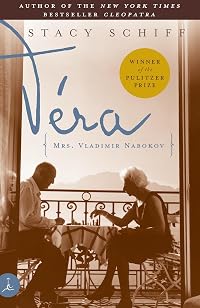
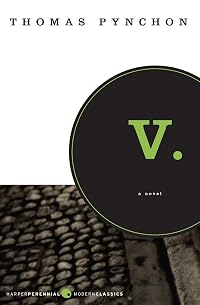
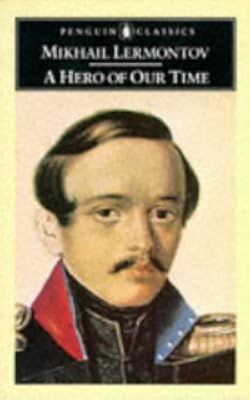
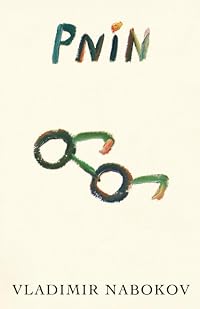
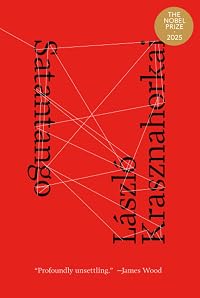
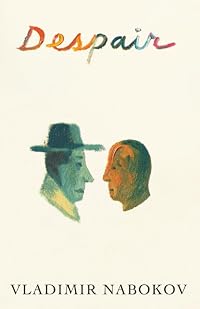
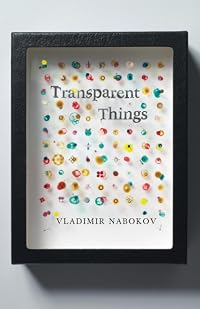
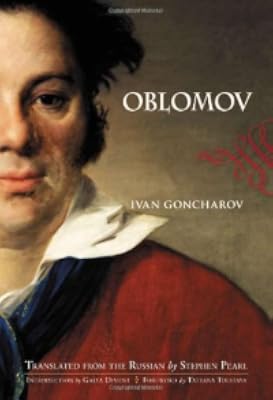
KayCliff Both novels feature antagonistic pairs of biographers writing of the same subject.
CGlanovsky a character seeks to understand the life of a recently deceased fictitious author whom he knew peripherally

KayCliff Both books feature two different men writing biographies of the same man.
KayCliff In both novels a biographer learns about his subject by reading his novels.
Member Reviews
Vladimir Nabokov's first book written entirely in English is this novel, a masterful, multi-layered literary detective tale. The book, which was finished in Paris in 1938 and released in 1941, is a masterwork of metafiction that presents a convoluted, puzzle-like story.
The narrator of the tale, simply referred to as "V.," chooses to write his definitive biography after the premature death of his estranged half-brother, Sebastian Knight, a renowned English novelist. V. sets out to rectify the record after Sebastian's former secretary, Mr. Goodman, published a trashy, hurried biography. V. travels throughout Europe with just a few letters and pieces of Sebastian's personal documents. In order to piece together his brother's true identity, show more he speaks with friends, acquaintances, and former flames. But the investigation becomes a maze of falsehoods, dead ends, and misleading recollections.
Early on in V., Nabokov cautions readers that there are three aspects to truth: that shaped by the teller, reshaped by the listener, and concealed from both by the dead man. You can't fully believe what V. discovers. It functions as a preliminary postmodern experiment, demonstrating how hard it is to fully capture the essence of another person's soul. Sebastian Knight's own fictional novels contain complex, perplexing plot structures that are exactly reflected in V.'s search. show less
The narrator of the tale, simply referred to as "V.," chooses to write his definitive biography after the premature death of his estranged half-brother, Sebastian Knight, a renowned English novelist. V. sets out to rectify the record after Sebastian's former secretary, Mr. Goodman, published a trashy, hurried biography. V. travels throughout Europe with just a few letters and pieces of Sebastian's personal documents. In order to piece together his brother's true identity, show more he speaks with friends, acquaintances, and former flames. But the investigation becomes a maze of falsehoods, dead ends, and misleading recollections.
Early on in V., Nabokov cautions readers that there are three aspects to truth: that shaped by the teller, reshaped by the listener, and concealed from both by the dead man. You can't fully believe what V. discovers. It functions as a preliminary postmodern experiment, demonstrating how hard it is to fully capture the essence of another person's soul. Sebastian Knight's own fictional novels contain complex, perplexing plot structures that are exactly reflected in V.'s search. show less
Far less emotionally disturbing than Lolita, less irritating and tricksy than Pale Fire, but almost as beautiful as the first and almost as clever as the second.
The Real Life has a lot in common with Pale Fire. It's putatively the biography of an author, as Pale Fire is putatively an annotated critical edition, while in fact both are more concerned with the relationship between the frame narrator and his subject. But where Pale Fire, in true critical-edition style, forces one to read in parallel a poem and 150 pages of endnotes and at every turn to choose between the continuity of the stories given in the one or in the other, The Real Life is, in structure at least, simple and linear.
That said, though, many of the same meta-level show more considerations make The Real Life fascinating: the narrator claims a degree of insight into the character of the author he writes about that we have good reason to doubt, which leaves us with a process of reconstruction of the real life underlying The Real Life.
The layering in fact goes on, since the biography itself is acknowledged as the result of a process of reconstruction; indeed, the frame story (the biography itself) is as concerned with its own research and creation as with its putative subject.
There's much more to this novel than just the modernist game of obscuring the story behind layers of unreliable reporters though. There's the usual brilliant Nabokov language, full of vivid and precise images and attention to the sounds of words:
“On second thought I cannot see any real necessity of complying with her anonymity. That she will ever read this book seems wildly improbable. Her name was and is Olga Olegovna Orlova -- an egg-like alliteration which it would have been a pity to withhold.” (Pg. 5)
Nabokov frequently takes advantage of the fact that the subject of the biography is himself an author, to indulge in little experiments, or to present a single striking image without integrating it in the text as a whole: the narrator can quote ‘a passage of Sebastien's I'm particularly fond of’ and Nabokov can have his fun. Borges famously takes this trick even further, saving himself the trouble of writing entire books by summarising and reviewing them instead. Sometimes the scraps Nabokov has chosen have the feel of passages that he was particularly fond of (particularly several successions of images in juxtaposition, another typically Borgesian move) but that simply won't work into the text in any other way. Douglas Adams wrote, of P.G. Wodehouse, “We may do the great man a disservice when we pull out our favourite quotes in public,” but what Nabokov has done is given himself the right to do precisely this with the work of Sebastian Knight. (The fact that Knight's voice is Nabokov's own is what makes the trick particularly tricksy.)
Again, there's more going on here than just self-indulgent literary playfulness. The frame story, the relationship between the narrator and his half-brother, is genuinely moving as well as frequently comic. The ending even manages to combine the two, a moment of bathos that is itself pathetic. And, as with Borges, a critical discussion of Knight's works lets Nabokov showcase some ideas for books which are more interesting than the books themselves would be.
All in all I recommend this one to anyone who hasn't read Nabokov but has been put off Lolita by the subject matter. In terms of use of language, Lolita outstrips The Real Life substantially, but it will also put you through an emotional wringer. I think the price is worth paying, but if you're not yet sure then The Real Life is a much safer bet, and still a lovely novel in its own right. show less
The Real Life has a lot in common with Pale Fire. It's putatively the biography of an author, as Pale Fire is putatively an annotated critical edition, while in fact both are more concerned with the relationship between the frame narrator and his subject. But where Pale Fire, in true critical-edition style, forces one to read in parallel a poem and 150 pages of endnotes and at every turn to choose between the continuity of the stories given in the one or in the other, The Real Life is, in structure at least, simple and linear.
That said, though, many of the same meta-level show more considerations make The Real Life fascinating: the narrator claims a degree of insight into the character of the author he writes about that we have good reason to doubt, which leaves us with a process of reconstruction of the real life underlying The Real Life.
The layering in fact goes on, since the biography itself is acknowledged as the result of a process of reconstruction; indeed, the frame story (the biography itself) is as concerned with its own research and creation as with its putative subject.
There's much more to this novel than just the modernist game of obscuring the story behind layers of unreliable reporters though. There's the usual brilliant Nabokov language, full of vivid and precise images and attention to the sounds of words:
“On second thought I cannot see any real necessity of complying with her anonymity. That she will ever read this book seems wildly improbable. Her name was and is Olga Olegovna Orlova -- an egg-like alliteration which it would have been a pity to withhold.” (Pg. 5)
Nabokov frequently takes advantage of the fact that the subject of the biography is himself an author, to indulge in little experiments, or to present a single striking image without integrating it in the text as a whole: the narrator can quote ‘a passage of Sebastien's I'm particularly fond of’ and Nabokov can have his fun. Borges famously takes this trick even further, saving himself the trouble of writing entire books by summarising and reviewing them instead. Sometimes the scraps Nabokov has chosen have the feel of passages that he was particularly fond of (particularly several successions of images in juxtaposition, another typically Borgesian move) but that simply won't work into the text in any other way. Douglas Adams wrote, of P.G. Wodehouse, “We may do the great man a disservice when we pull out our favourite quotes in public,” but what Nabokov has done is given himself the right to do precisely this with the work of Sebastian Knight. (The fact that Knight's voice is Nabokov's own is what makes the trick particularly tricksy.)
Again, there's more going on here than just self-indulgent literary playfulness. The frame story, the relationship between the narrator and his half-brother, is genuinely moving as well as frequently comic. The ending even manages to combine the two, a moment of bathos that is itself pathetic. And, as with Borges, a critical discussion of Knight's works lets Nabokov showcase some ideas for books which are more interesting than the books themselves would be.
All in all I recommend this one to anyone who hasn't read Nabokov but has been put off Lolita by the subject matter. In terms of use of language, Lolita outstrips The Real Life substantially, but it will also put you through an emotional wringer. I think the price is worth paying, but if you're not yet sure then The Real Life is a much safer bet, and still a lovely novel in its own right. show less
5. The Real Life of Sebastian Knight by Vladimir Nabokov
Introduction: Michael Dirda, 2008
published: 1941 (written January 1939)
format: 215-page paperback
acquired: October
read: Jan 24-30
time reading: 7 hr 44 min, 2.2 min/page
rating: 4½
locations: pre-Soviet St. Petersburg, 1920’s & 1930’s Cambridge, London, Paris, Berlin and other places throughout France, Germany and England
about the author: 1899 – 1977. Russia born, educated at Trinity College in Cambridge, 1922. Lived in Berlin (1922-1937), Paris, the US (1941-1961) and Montreux, Switzerland (1961-1977).
I'm reading through Nabokov's novels, and this was his first English language novel. My copy comes with an excellent introduction by [[Michael Dirda]], who explained that show more Nabokov wrote this novel in Paris, on a desk laid on a bidet, for a competition in England with a January 31, 1939 deadline. He got the manuscript sent off just in time and later regarded as a tour de force. But it didn't win, and didn't get him a position in England. It was later published in the, then, pre-war US in 1941, and may have been lost to history if Nabokov did not later become famous.
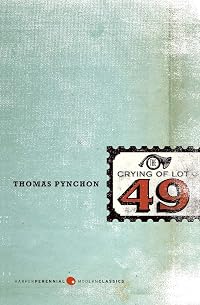
[[Thomas Pynchon]] fans should take note. Dirda also describes the book this way: "V. travels from England to Switzerland to Germany to France in his quest for the identity of the elusive femme fatale who wrecked his brother‘s life.” Fans of [V.] might be quite struck by that sentence. A little googling will show that Pynchon took classes from Nabokov at Cornell, and highly regarded this novel, which influenced all his work.
So, I knew all that before I had read the first word. And I knew this was a complex novel, an unreliable narrator writing a biography of his older half-brother, a Russian born English-language novelist who died young of a heart attack, and who has a few parallels to and a few key opposites from the life of Nabokov. And, Dirda emphasizes, it's a novel to reread.
I reread only chapter one. I did this when I was about half way through the novel and struggling to get in tune with a flow. (It did help) It's a difficult book to read, but also fascinating on many levels. Nabokov is playful and clown-y with language, structure, story, purpose, everything. Paragraphs end on topics completely different from where they began, routinely. Grammar is stretched, and playfully inconsistent. And nothing is as it seems. As readers we know our narrator, V., is unreliable. We aren't even sure he likes his older half-brother, his subject. We might doubt he is even actually who he says he is. So we aren't wondering whether to trust him, we are wondering what he is actually doing and why. What is V. actually searching for? And, maybe, what is wrong with him? Also I was left wanting to know more about this Sebastian Knight, author of several novels, all of which Nabokov goes into in some detail and all of which left me wishing they were real (and some elements were real). Mixed in all this play are a few notes on how this author thinks about writing...I mean, of course, maybe. How Sebastian Knight "used parody as a kind of springboard for leaping into the highest region of serious emotion", as if he was, "a clown with wings". Or later, V. commenting on all Knight's aspects, he says, "It's not the parts that matter, it is there combination". And he has interesting things to say on how an author struggles writing in English as second language, searching for words or expressions that he can't find or don't exist in the language. And the novel has moments of seriousness, but is quick to undermine them. The two most moving parts of the novel are each based on a humorous error. And they're still moving. This is a difficult but enjoyable novel.
Nabokov has a clear theme of having a character or narrator talk about what he's doing in way that makes sense to him, and that also thoroughly undermines him to the reader. It's a difficult trick he has kind of mastered, or was mastering. He touches on this in 3rd person in [Laughter in the Dark], and pushes it heavily when the narrator becomes a murderer in [Despair], or a pedophile in [The Enchanter]. It's where I'm expecting [Lolita] to go, which I hope to read for the first time this April.
2021
https://www.librarything.com/topic/328037#7406148 show less
Introduction: Michael Dirda, 2008
published: 1941 (written January 1939)
format: 215-page paperback
acquired: October
read: Jan 24-30
time reading: 7 hr 44 min, 2.2 min/page
rating: 4½
locations: pre-Soviet St. Petersburg, 1920’s & 1930’s Cambridge, London, Paris, Berlin and other places throughout France, Germany and England
about the author: 1899 – 1977. Russia born, educated at Trinity College in Cambridge, 1922. Lived in Berlin (1922-1937), Paris, the US (1941-1961) and Montreux, Switzerland (1961-1977).
I'm reading through Nabokov's novels, and this was his first English language novel. My copy comes with an excellent introduction by [[Michael Dirda]], who explained that show more Nabokov wrote this novel in Paris, on a desk laid on a bidet, for a competition in England with a January 31, 1939 deadline. He got the manuscript sent off just in time and later regarded as a tour de force. But it didn't win, and didn't get him a position in England. It was later published in the, then, pre-war US in 1941, and may have been lost to history if Nabokov did not later become famous.
[[Thomas Pynchon]] fans should take note. Dirda also describes the book this way: "V. travels from England to Switzerland to Germany to France in his quest for the identity of the elusive femme fatale who wrecked his brother‘s life.” Fans of [V.] might be quite struck by that sentence. A little googling will show that Pynchon took classes from Nabokov at Cornell, and highly regarded this novel, which influenced all his work.
So, I knew all that before I had read the first word. And I knew this was a complex novel, an unreliable narrator writing a biography of his older half-brother, a Russian born English-language novelist who died young of a heart attack, and who has a few parallels to and a few key opposites from the life of Nabokov. And, Dirda emphasizes, it's a novel to reread.
I reread only chapter one. I did this when I was about half way through the novel and struggling to get in tune with a flow. (It did help) It's a difficult book to read, but also fascinating on many levels. Nabokov is playful and clown-y with language, structure, story, purpose, everything. Paragraphs end on topics completely different from where they began, routinely. Grammar is stretched, and playfully inconsistent. And nothing is as it seems. As readers we know our narrator, V., is unreliable. We aren't even sure he likes his older half-brother, his subject. We might doubt he is even actually who he says he is. So we aren't wondering whether to trust him, we are wondering what he is actually doing and why. What is V. actually searching for? And, maybe, what is wrong with him? Also I was left wanting to know more about this Sebastian Knight, author of several novels, all of which Nabokov goes into in some detail and all of which left me wishing they were real (and some elements were real). Mixed in all this play are a few notes on how this author thinks about writing...I mean, of course, maybe. How Sebastian Knight "used parody as a kind of springboard for leaping into the highest region of serious emotion", as if he was, "a clown with wings". Or later, V. commenting on all Knight's aspects, he says, "It's not the parts that matter, it is there combination". And he has interesting things to say on how an author struggles writing in English as second language, searching for words or expressions that he can't find or don't exist in the language. And the novel has moments of seriousness, but is quick to undermine them. The two most moving parts of the novel are each based on a humorous error. And they're still moving. This is a difficult but enjoyable novel.
Nabokov has a clear theme of having a character or narrator talk about what he's doing in way that makes sense to him, and that also thoroughly undermines him to the reader. It's a difficult trick he has kind of mastered, or was mastering. He touches on this in 3rd person in [Laughter in the Dark], and pushes it heavily when the narrator becomes a murderer in [Despair], or a pedophile in [The Enchanter]. It's where I'm expecting [Lolita] to go, which I hope to read for the first time this April.
2021
https://www.librarything.com/topic/328037#7406148 show less
In his first English language novel Nabokov sticks to his common themes of identity and memory, essentially writing a novel about himself investigating himself. The book’s narrator is identified as “V.”, aligning with Nabokov’s pen name of “V. Sirin” when writing his previous nine Russian language novels. V is here attempting to write a biography of his recently deceased half-brother Sebastian Knight, who like Nabokov was a Russian emigre educated at Cambridge and a novelist.
Interestingly Nabokov writes of the issue encountered by Sebastian/himself when writing in English rather than his native Russian:
Nabokov may mourn the loss of writing in his native language, and be correct that equal mastery may never be attained in an adopted one, but that only shows what an incredible genius with language he was, since even in this beginning effort his skills in English are astonishing.
The pleasure of reading Nabokov’s prose and following his mind as it explores its themes is far greater than a recounting of plot could indicate, so let’s not be too concerned about its details. There’s a bit of a mystery and all that, which is well enough. Let’s leave it and get to the ending, the well quoted ending, “I am Sebastian, or Sebastian is I...”
Unlike some reviewers I do not think this is a possible indication that “V” and Sebastian could be the same person in the text. Within the strict bounds of the text, they are different people. It’s rather Nabokov being all postmodern, taking over the authorial voice directly from “V”, who is already one stand in for himself of course, and asking aloud what is the difference between author and character, who is another stand in for himself. To take the last lines a bit more fully:
“The bald little prompter shuts his book, as the light fades gently. The end, the end.” That’s Nabokov, speaking of himself bringing this novel to a close, not just “V” speaking in the text. “They all go back to their everyday life (and Clare goes back to her grave) - but the hero remains, for, try as I may, I cannot get out of my part: Sebastian’s mask clings to my face, the likeness will not be washed off. I am Sebastian, or Sebastian is I, or perhaps we both are someone whom neither of us knows.”
The “I” here is clearly Nabokov, the “bald little prompter”, the author, the hero, Sebastian’s creator, and Sebastian himself. Whoever that may be! show less
Interestingly Nabokov writes of the issue encountered by Sebastian/himself when writing in English rather than his native Russian:
I know, I know as definitely as I know we had the same father, I know Sebastian’s Russian was better and more natural toshow more
him than his English. I quite believe that by not speaking Russian for five years he may have forced himself into thinking he had forgotten it. But a language is a live physical thing which cannot be so easily dismissed... Let me add that I have in my possession a letter written by him not long before his death. And that short letter is couched in a Russian purer and richer than his English ever was, no matter what beauty of expression he attained in his books.
Nabokov may mourn the loss of writing in his native language, and be correct that equal mastery may never be attained in an adopted one, but that only shows what an incredible genius with language he was, since even in this beginning effort his skills in English are astonishing.
The pleasure of reading Nabokov’s prose and following his mind as it explores its themes is far greater than a recounting of plot could indicate, so let’s not be too concerned about its details. There’s a bit of a mystery and all that, which is well enough. Let’s leave it and get to the ending, the well quoted ending, “I am Sebastian, or Sebastian is I...”
Unlike some reviewers I do not think this is a possible indication that “V” and Sebastian could be the same person in the text. Within the strict bounds of the text, they are different people. It’s rather Nabokov being all postmodern, taking over the authorial voice directly from “V”, who is already one stand in for himself of course, and asking aloud what is the difference between author and character, who is another stand in for himself. To take the last lines a bit more fully:
“The bald little prompter shuts his book, as the light fades gently. The end, the end.” That’s Nabokov, speaking of himself bringing this novel to a close, not just “V” speaking in the text. “They all go back to their everyday life (and Clare goes back to her grave) - but the hero remains, for, try as I may, I cannot get out of my part: Sebastian’s mask clings to my face, the likeness will not be washed off. I am Sebastian, or Sebastian is I, or perhaps we both are someone whom neither of us knows.”
The “I” here is clearly Nabokov, the “bald little prompter”, the author, the hero, Sebastian’s creator, and Sebastian himself. Whoever that may be! show less
This was Nabokov's first novel written in English, and it's startling to learn that he only switched from Russian because he decided to enter it into a British literary competition. Famously, he wrote most of it perched on a bidet in his Paris apartment so as not to disturb his young son, a detail it is impossible to learn without trying to pin down a certain gushing, purgative quality to the prose…
It is, in fact, just as typically (if embryonically) Nabokovian as his later work, and in theme as well as language. Sebastian Knight is full of pre-echoes of the kind of things that will eventually dominate Nabokov's bigger, more famous books: identity, memory, literary pastiche, linguistic playfulness, formal games, and a direct, witty, show more elaborate narrative voice. It takes the form of a biography of a deceased writer (Sebastian Knight) written by his anonymous half-brother, identified only as ‘V.’ (recall that all of Nabokov's previous books had been written under the pen name of ‘V. Sirin’) – but it is quickly obvious that in fact we'll be hearing less about Knight himself than about V.'s attempts to research and write the book we are reading. The end result comes over as something like a cross between Tristram Shandy and Steve Aylett's Lint (though not as funny as either).
There are copious quotations from and comments on Knight's oeuvre (he was, we are told, the author of such bestsellers as Lost Property and The Doubtful Asphodel), and these allow Nabokov to outline a theory of literature from, as it were, a safe distance. Many of the effects Knight is credited with – words and phrases that almost mystically convey an impression of something, though you can't understand how – are effects that you can recognise in Nabokov's own writing, if not here then certainly later. Meanwhile a very funny subplot consists in our narrator's keen desire to rubbish the author of a previously-published biography of Knight which, V. insists, has got things all wrong. These sections allow for some sly pastiching of academic prose, as well as giving voice to Nabokov's distaste for the whole process of examining writers through their personal lives or their supposed relation to ‘world events’.
The bulk of the plot resides in those sections where the narrator is chasing down leads in the real world, trying to locate women that his brother had been involved with, and these sections at times play with the conventions of detective fiction. Sebastian Knight and the narrator, like Nabokov himself, grew up in Russia and had to flee after the Revolution, and there are some beautiful early descriptive passages that deal with St Petersberg:
the pure luxury of a cloudless sky designed not to warm the flesh, but solely to please the eye; the sheen of sledge-cuts on the hard-beaten snow of spacious streets with a tawny tinge about the middle tracks due to a rich mixture of horse-dung; the brightly coloured bunch of toy-balloons hawked by an aproned pedlar; the soft curve of a cupola, its gold dimmed by the bloom of powdery frost; the birch trees in the public gardens, every tiniest twig outlined in white; the rasp and tinkle of winter traffic…
But ultimately Nabokov is never very interested in plot, and nor am I when I read him – what I'm interested in are the aesthetic effects. There are plenty here, but they still feel like they're looking forward to what's to come. Partisans of this novel say, a little defensively, that it can be enjoyed for its own sake and not just as an early curiosity, but I couldn't help feeling that the most interesting aspects of Sebastian Knight are things seen to more triumphant effect in Pale Fire, Lolita or Ada. But Nabokov being Nabokov, there is still lots to enjoy and to be suspicious of – the stress on mistaken identity and authorial secrecy make you wonder if, perhaps, Sebastian Knight and ‘V.’ are really one and the same, engaged in a perpetual game of mirrors that ultimately points back to the puppeteer behind both of them, hunched gleefully on his bidet in 1930s Paris… show less
It is, in fact, just as typically (if embryonically) Nabokovian as his later work, and in theme as well as language. Sebastian Knight is full of pre-echoes of the kind of things that will eventually dominate Nabokov's bigger, more famous books: identity, memory, literary pastiche, linguistic playfulness, formal games, and a direct, witty, show more elaborate narrative voice. It takes the form of a biography of a deceased writer (Sebastian Knight) written by his anonymous half-brother, identified only as ‘V.’ (recall that all of Nabokov's previous books had been written under the pen name of ‘V. Sirin’) – but it is quickly obvious that in fact we'll be hearing less about Knight himself than about V.'s attempts to research and write the book we are reading. The end result comes over as something like a cross between Tristram Shandy and Steve Aylett's Lint (though not as funny as either).
There are copious quotations from and comments on Knight's oeuvre (he was, we are told, the author of such bestsellers as Lost Property and The Doubtful Asphodel), and these allow Nabokov to outline a theory of literature from, as it were, a safe distance. Many of the effects Knight is credited with – words and phrases that almost mystically convey an impression of something, though you can't understand how – are effects that you can recognise in Nabokov's own writing, if not here then certainly later. Meanwhile a very funny subplot consists in our narrator's keen desire to rubbish the author of a previously-published biography of Knight which, V. insists, has got things all wrong. These sections allow for some sly pastiching of academic prose, as well as giving voice to Nabokov's distaste for the whole process of examining writers through their personal lives or their supposed relation to ‘world events’.
The bulk of the plot resides in those sections where the narrator is chasing down leads in the real world, trying to locate women that his brother had been involved with, and these sections at times play with the conventions of detective fiction. Sebastian Knight and the narrator, like Nabokov himself, grew up in Russia and had to flee after the Revolution, and there are some beautiful early descriptive passages that deal with St Petersberg:
the pure luxury of a cloudless sky designed not to warm the flesh, but solely to please the eye; the sheen of sledge-cuts on the hard-beaten snow of spacious streets with a tawny tinge about the middle tracks due to a rich mixture of horse-dung; the brightly coloured bunch of toy-balloons hawked by an aproned pedlar; the soft curve of a cupola, its gold dimmed by the bloom of powdery frost; the birch trees in the public gardens, every tiniest twig outlined in white; the rasp and tinkle of winter traffic…
But ultimately Nabokov is never very interested in plot, and nor am I when I read him – what I'm interested in are the aesthetic effects. There are plenty here, but they still feel like they're looking forward to what's to come. Partisans of this novel say, a little defensively, that it can be enjoyed for its own sake and not just as an early curiosity, but I couldn't help feeling that the most interesting aspects of Sebastian Knight are things seen to more triumphant effect in Pale Fire, Lolita or Ada. But Nabokov being Nabokov, there is still lots to enjoy and to be suspicious of – the stress on mistaken identity and authorial secrecy make you wonder if, perhaps, Sebastian Knight and ‘V.’ are really one and the same, engaged in a perpetual game of mirrors that ultimately points back to the puppeteer behind both of them, hunched gleefully on his bidet in 1930s Paris… show less
probably the most straightforwardly readable and immediately pleasurable Nabokov I've read yet. this book would be an ideal introduction to VN's work - it contains in miniature some of the themes that would be addressed in more complex form in his masterpiece Pale Fire; and while it's full of Nabokov's usual paradoxes (both wonderfully clear and maddeningly obscure, both crystalline in its structured perfection and hazily ambiguous in its ultimate conclusions - and replete with language which is powerfully emotionally rich and yet never, never sentimental), it presents them in a friendlier way than one might expect. highly recommended!
Nabokov has a habit of pulling the wool over his reader's eyes, to the point where it's something one should be expecting from the start. Yet this novel, his first book originally written in English, we have an example of a narrative that's so naturally compelling that the deception comes as a complete surprise when it finally happens.
A man named only V. narrates his struggle to understand the mysterious life of his author half-brother, the dead title character, by investigating what few threads Sebastian left behind. V. tries admirably to remain impartial, but as his undying praise of his brother and the intensity of his investigations increase, the reader eventually realizes that this novel is not much about Sebastian at all.
It seems show more a thinly-veiled way for Nabokov to reconcile the change to writing in English, but he also challenges the notions of legacy and identity in fresh ways.
What is most interesting is Nabokov's use of pacing, not merely in the length of paragraphs (as opposed to the length of chapters, which are mostly uniform) but in the constantly-shifting tone and voice of the work. He masterfully draws out descriptions of Sebastian's texts to a snail's pace, allowing us to enjoy the synopses as if they were real, existing novels; at the same time, the novel's late dialogue races by, much like it races too fast through V.'s consciousness.
There's less depth here than in other Nabokov works, but the investment required to enter Sebastian Knight's life is minimal and well worth it. show less
A man named only V. narrates his struggle to understand the mysterious life of his author half-brother, the dead title character, by investigating what few threads Sebastian left behind. V. tries admirably to remain impartial, but as his undying praise of his brother and the intensity of his investigations increase, the reader eventually realizes that this novel is not much about Sebastian at all.
It seems show more a thinly-veiled way for Nabokov to reconcile the change to writing in English, but he also challenges the notions of legacy and identity in fresh ways.
What is most interesting is Nabokov's use of pacing, not merely in the length of paragraphs (as opposed to the length of chapters, which are mostly uniform) but in the constantly-shifting tone and voice of the work. He masterfully draws out descriptions of Sebastian's texts to a snail's pace, allowing us to enjoy the synopses as if they were real, existing novels; at the same time, the novel's late dialogue races by, much like it races too fast through V.'s consciousness.
There's less depth here than in other Nabokov works, but the investment required to enter Sebastian Knight's life is minimal and well worth it. show less
Members
- Recently Added By
Lists

Excessive, Maximalist, Encyclopedic
10 works; 1 member

2015 Reading challenge
18 works; 1 member

Books Read in 2018
4,360 works; 110 members
Author Information

432+ Works 96,379 Members
Vladimir Vladimirovich Nobokov was born April 22, 1899 in St. Petersburg, Russia to a wealthy family. He attended Trinity College, Cambridge. When he left Russia, he moved to Paris and eventually to the United States in 1940. He taught at Wellesley College and Cornell University. Nobokov is revered as one of the great American novelists of the show more 20th Century. Before he moved to the United States, he wrote under the pseudonym Vladimir Serin. Among those titles, were Mashenka, his first novel and Invitation to a Beheading. The first book he wrote in English was The Real Life of Sebastian Knight. He is best know for his work Lolita which was made into a movie in 1962. In addition to novels, he also wrote poetry and short stories. He was a finalist for the National Book Award for Fiction seven times, but never won it. Nabokov died July 2, 1977. show less
Some Editions
Series
Belongs to Publisher Series
Work Relationships
Common Knowledge
- Canonical title
- The Real Life of Sebastian Knight
- Original title
- The Real Life of Sebastian Knight
- Original publication date
- 1941; 1945
- People/Characters
- V; Sebastian Knight
- Important places*
- San Pietroburgo, Russia; Russia; Parigi, Francia; Francia; Londra, Inghilterra, Regno Unito; Inghilterra, Regno Unito (show all 7); Regno Unito
- Dedication
- To Véra
- First words
- Sebastian Knight was born on the thirty-first of December, 1899, in the former capital of my country.
- Quotations
- [Writers' common struggle with words]: the bridging of the abyss lying between expression and thought; the maddening feeling that the right words, the only words are awaiting you on the opposite bank in the misty distance, an... (show all)d the shudderings of the still unclothed thought clamouring for them on this side of the abyss.
A language is a live physical thing which cannot be so easily dismissed. - Last words
- (Click to show. Warning: May contain spoilers.)I am Sebastian, or Sebastian is I, or perhaps we both are someone whom neither of us knows.
- Original language
- English
*Some information comes from Common Knowledge in other languages. Click "Edit" for more information.
Classifications
Statistics
- Members
- 1,466
- Popularity
- 15,994
- Reviews
- 24
- Rating
- (3.86)
- Languages
- 19 — Catalan, Dutch, English, Finnish, French, German, Greek, Hungarian, Italian, Japanese, Lithuanian, Polish, Portuguese, Romanian, Russian, Spanish, Swedish, Turkish, Ukrainian
- Media
- Paper, Audiobook, Ebook
- ISBNs
- 52
- ASINs
- 26