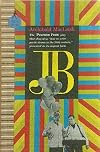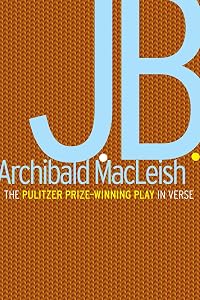
J.B.: A Play in Verse
by Archibald MacLeish
On This Page
Description
Based on the story of Job, this drama in verse tells the story of a twentieth-century American banker and millionaire whom God commands be stripped of his family and wealth, but who refuses to turn his back on God. J.B. won the Pulitzer Prize for drama in 1959 and the Tony Award for best play. More important, the play sparked a national conversation about the nature of God, the meaning of hope, and the role of the artist in society.Tags
Recommendations



















Member Reviews
This retelling of the Biblical story of Job was written while the horrors of World War Two, especially the destruction of Hiroshima, were still fresh. It holds up well today. MacLeish does a fine balancing act between recounting and questioning the original tale. In particular, the “happy end” of the original is placed in a bitter light. “Mrs.” Job, a one-dimensional figure in the original, becomes a believable character. As Sarah, she neatly counterpoints J.B.’s expansive postwar American outlook. Their dialogue deftly delineates the two branches that developed out of New England Puritanism. I also liked the device of having God and the adversary who tempts him into flinging J.B. into incomprehensible suffering played by two show more has-been actors who don masks for their parts, reminiscent of the personae of Greek tragedy. show less
“We have no choice but to be guilty. God is unthinkable if we are innocent.”
In a playhouse, a story of J.B. and Sarah is performed – a pious family who suffers and grieves when all five of their children are killed. But above in the rafters, looking on, are two veteran and world-weary actors supplying the deliberations, by proxy, of God and Satan. It’s a retelling of the book of Job, obviously, but its examination of the pathos and ethics of theodicy takes a highly different strategy. Job is no longer isolated and in opposition to the rest of the world: instead, his family is equally affected and given the respect of being subjects rather than objects of Job’s suffering. The children’s deaths are not a static circumstance show more that establishes Job’s suffering at the outset (in the book of Job, the children’s deaths can be resolved wryly with “His children die, but it’s okay, he gets new ones!”), but an ongoing source of grief through which to struggle. The portrayal of suffering as not an individual struggle but rather one that breaks down relationships makes the ethics of the situation even more insurmountable: would a God who is good give us love and then give us circumstances whose anguish is only heightened by love’s loss?
The story’s setting within the rehearsal of a playhouse also shifted the tone in a really interesting dynamic. In the book of Job, while God and Satan have a greater perspective, Job’s “on the ground” circumstances leave him with a sense of divine inevitability (ie, God is God, what are you going to do about it). But for J.B., the play is artificial, and when it’s over he goes back to…life? The real world? The tension raised by the recognition that these are actors portraying one circumstance of tragedy, while in the greater world a variety of equally moving tragedies are actually affecting people’s lives, heightens the indirect confrontation of God. Job isn’t extraordinary or specially hand-selected: rather, exactly the opposite, he is ordinary and among the vast company of humanity enduring hardships. And in the end, the theatricality is undercut, as there is no whirlwind, no confrontation of God, and no restoration.
The character and power of God is diminished in this retelling of Job because, as Sarah says, “God is unthinkable if we are innocent.” By bringing humanity and relationship to the forefront, the story is steadfast about the value of human life, human goodness, and human innocence: therefore God remains accused and the sympathies of the audience remain with humanity. show less
In a playhouse, a story of J.B. and Sarah is performed – a pious family who suffers and grieves when all five of their children are killed. But above in the rafters, looking on, are two veteran and world-weary actors supplying the deliberations, by proxy, of God and Satan. It’s a retelling of the book of Job, obviously, but its examination of the pathos and ethics of theodicy takes a highly different strategy. Job is no longer isolated and in opposition to the rest of the world: instead, his family is equally affected and given the respect of being subjects rather than objects of Job’s suffering. The children’s deaths are not a static circumstance show more that establishes Job’s suffering at the outset (in the book of Job, the children’s deaths can be resolved wryly with “His children die, but it’s okay, he gets new ones!”), but an ongoing source of grief through which to struggle. The portrayal of suffering as not an individual struggle but rather one that breaks down relationships makes the ethics of the situation even more insurmountable: would a God who is good give us love and then give us circumstances whose anguish is only heightened by love’s loss?
The story’s setting within the rehearsal of a playhouse also shifted the tone in a really interesting dynamic. In the book of Job, while God and Satan have a greater perspective, Job’s “on the ground” circumstances leave him with a sense of divine inevitability (ie, God is God, what are you going to do about it). But for J.B., the play is artificial, and when it’s over he goes back to…life? The real world? The tension raised by the recognition that these are actors portraying one circumstance of tragedy, while in the greater world a variety of equally moving tragedies are actually affecting people’s lives, heightens the indirect confrontation of God. Job isn’t extraordinary or specially hand-selected: rather, exactly the opposite, he is ordinary and among the vast company of humanity enduring hardships. And in the end, the theatricality is undercut, as there is no whirlwind, no confrontation of God, and no restoration.
The character and power of God is diminished in this retelling of Job because, as Sarah says, “God is unthinkable if we are innocent.” By bringing humanity and relationship to the forefront, the story is steadfast about the value of human life, human goodness, and human innocence: therefore God remains accused and the sympathies of the audience remain with humanity. show less
Reading this was fine and good and hard, just like Job is. But seeing it -- there is just something about it. I loved it. I loved all the questions it raises and does not answer. Why is life so hard? Why do bad things happen to good people? Why do good things happen to bad people? What are we to do after we suffer and suffer and suffer? Can we ask questions? Must we curse God and die? Can we not just choose to live? The ultimate to be or not to be, this ancient story made modern so that I can grasp it just a little better.
This was my first Broadway play. Directed by Elia Kazan, with Raymond Massey as Mr. Zuss and a young Christopher Plummer as Nickles, it simply blew my mind. Ironically, as an undergraduate the year before, I had determined to write a modern version of the book of Job for production by the drama club on our campus. As a pre-ministerial student (that was a long time ago!), I knew I had to come to terms with the book of Job before I could proceed with pastoral duties. I didn't realize that it would take another ten years and the discovery of William Blake's illustrations for me even to begin to find my way out of Job's dilemma. So, as an undergraduate, I failed at playwrighting.
Archibald MacLeish had already provided my favorite critical show more adage: "A poem must not mean but be." Here, now, he also gave me a modern Job: delightful, imaginative, then provocative, moving, and (though not triumphant!) consoling.
I recently re-read the play. I wish it were still being produced. I still think Nickles steals the show. But, after all, it's J.B.'s wife Sara who steals one's heart. When the fresh forsythia of spring prevents her abandoning life, she returns in love to J.B., and together they face survival. Job forgives God, and Sara forgives Job. At least that's one way to read the ending. Probably Mr. Zuss's way, not Nickles'. show less
Archibald MacLeish had already provided my favorite critical show more adage: "A poem must not mean but be." Here, now, he also gave me a modern Job: delightful, imaginative, then provocative, moving, and (though not triumphant!) consoling.
I recently re-read the play. I wish it were still being produced. I still think Nickles steals the show. But, after all, it's J.B.'s wife Sara who steals one's heart. When the fresh forsythia of spring prevents her abandoning life, she returns in love to J.B., and together they face survival. Job forgives God, and Sara forgives Job. At least that's one way to read the ending. Probably Mr. Zuss's way, not Nickles'. show less
J.B.
By Archibald MacLeish
Pulitzer Prize winning Play
The world sucks. I could say worse but right now that is all I have strength for – the world sucks.
However – two ways to look at that world – however. However there is a silver lining or however damn it there is a silver lining.
I wrote a poem in January of 2012 – “My Job Days,” it was well received in my writers group. Rod – really great guy, brought me the play J.B. the next writers group meeting and told me to read it.
Brilliant – a brilliant play and just as frustrating as the book of Job itself.
We all have our causes – poverty, worker’s rights, anti-slavery, anti sex trafficking – so many harms in this world, so many disasters. It is hard to take when show more personal tragedy is answered by a question.
As a matter of fact it is mind bending.
I’ve finished J.B., and it has nearly finished me.
Nearly.
Of course it ended in a humanistic flare – he repented of nothing –he accepted that he is not God – but that was not what redeemed - the love of human for human redeemed.
And it is funny now, that has been my biggest sin – love of man, the desire to be loved by a creature that does not know me. How can he? Did man create me – make me move away from death, instill in me self-preservation? Oh damn – another question.
But the answer is no – no, he, he, he, he, he, he, nor will he ever replace HE.
You know, maybe man wasn’t meant to be saved at all – but the second, the warrior who struck back verbally at the serpent, maybe it was she who was meant to be saved – and he, he, he, he, is saved by default.
And it is mostly men reading this, scoffing at the word, “saved,” well you would, wouldn’t you – you don’t need to be saved from this world – she does. And blindly she, she, she, she, she, comes back, just like Sarah to J.B. She comes back to be human rather than seek her own whirl wind. And why wouldn’t she, built as she is – the lure of sex, the contentment and afterglow of orgasms, the feeling of partnership after God has dealt His tremendous blows. Ah deception, deception works in wonderful, wonderful ways – and the result – she would rather be a slave than be alone.
J.B. is brilliant – yeah I said that already – but it is true – it is brilliant. show less
By Archibald MacLeish
Pulitzer Prize winning Play
The world sucks. I could say worse but right now that is all I have strength for – the world sucks.
However – two ways to look at that world – however. However there is a silver lining or however damn it there is a silver lining.
I wrote a poem in January of 2012 – “My Job Days,” it was well received in my writers group. Rod – really great guy, brought me the play J.B. the next writers group meeting and told me to read it.
Brilliant – a brilliant play and just as frustrating as the book of Job itself.
We all have our causes – poverty, worker’s rights, anti-slavery, anti sex trafficking – so many harms in this world, so many disasters. It is hard to take when show more personal tragedy is answered by a question.
As a matter of fact it is mind bending.
I’ve finished J.B., and it has nearly finished me.
Nearly.
Of course it ended in a humanistic flare – he repented of nothing –he accepted that he is not God – but that was not what redeemed - the love of human for human redeemed.
And it is funny now, that has been my biggest sin – love of man, the desire to be loved by a creature that does not know me. How can he? Did man create me – make me move away from death, instill in me self-preservation? Oh damn – another question.
But the answer is no – no, he, he, he, he, he, he, nor will he ever replace HE.
You know, maybe man wasn’t meant to be saved at all – but the second, the warrior who struck back verbally at the serpent, maybe it was she who was meant to be saved – and he, he, he, he, is saved by default.
And it is mostly men reading this, scoffing at the word, “saved,” well you would, wouldn’t you – you don’t need to be saved from this world – she does. And blindly she, she, she, she, she, comes back, just like Sarah to J.B. She comes back to be human rather than seek her own whirl wind. And why wouldn’t she, built as she is – the lure of sex, the contentment and afterglow of orgasms, the feeling of partnership after God has dealt His tremendous blows. Ah deception, deception works in wonderful, wonderful ways – and the result – she would rather be a slave than be alone.
J.B. is brilliant – yeah I said that already – but it is true – it is brilliant. show less
A look at the story of Job, told through the eyes of two actors, Mr. Zuss and Nickles, who take on the roles of God and Satan respectively. J.B. loses everything, but still refuses to curse God. That much is well known; the interest in this play lies in the modernization of the play, and also in the biting wit with which the author addresses his topic. Philosophical questions of life, death, and justice are examined, but answers are not easily dispensed. The audience is left to sort that out for themselves.
This is a play that provides a contemporary version of the book of Job from the Bible. I'm still in the process of deciding what I think of it. One conclusion from the play is that, "If God is God, God is not good; and if God is good, God is not God." Also, it is obvious that Job's wife's return and declaration of human love provides far better solace that anything that God or the intellectual and religious "comforters" provided.
Members
- Recently Added By
Lists

Books You Read During High School (For School)
301 works; 53 members

Plays I Like
230 works; 31 members

1964 College Preparatory Reading List
202 works; 8 members

Five star books
1,767 works; 110 members
My Play Collection
769 works; 3 members
Author Information

83+ Works 1,740 Members
Awards and Honors
Awards
Distinctions
Series
Belongs to Publisher Series
Sentry Editions (4)
Work Relationships
Is contained in
Is a retelling of
Has the adaptation
Has as a supplement
Has as a student's study guide
Common Knowledge
- Original publication date
- 1958
- People/Characters
- Mr. Nickles; Mr. Zuss; J. B.; Sarah, Mrs. J.B.
- First words
- The scene throughout is a corner inside an enormous circus tent where a side show of some kind has been set up.
- Last words
- (Click to show. Warning: May contain spoilers.)The light increases, plain white daylight from the door, as they work. CURTAIN
- Original language
- English
Classifications
Statistics
- Members
- 992
- Popularity
- 26,502
- Reviews
- 14
- Rating
- (3.80)
- Languages
- English
- Media
- Paper
- ISBNs
- 7
- UPCs
- 1
- ASINs
- 38