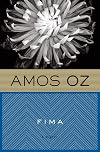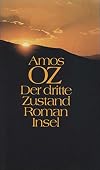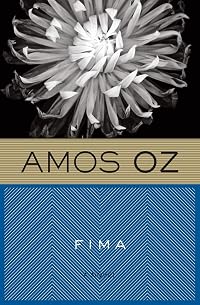
Fima
by Amos Oz 
On This Page
Description
Fima lives in Jerusalem, but feels he ought to be somewhere else. In his life he has had secret love affairs, good ideas, and written a book of poems that aroused expectations. He has thought about the purpose of the universe and where the country lost its way. He has felt longings of all sorts, and the constant desire to pen a new chapter. And here he is now, in his early fifties in a shabby apartment on a gloomy wet morning, engaged in a humiliating struggle to release his shirt from the show more zipper of his fly. With wit and insight, Amos Oz portrays a man--and a generation--dreaming noble dreams but doing nothing. show lessTags
Recommendations

























Member Reviews
Amos Oz's most frustrating, inane, gross, boring, and conceited novel may also be his most brilliant, erudite, funny, and deeply profound work.
Let me be frank: this book is absolutely tortuous to get through at times, actually, for most of its length it seems to be everything a book shouldn't be. The protagonist is almost completely unsympathetic sometimes being so self-obsessed and condescending to those around him that you want spit on the page just to spite him. And the few spots of potential evolution and even personal redemption planted throughout the text serve only to cause more frustration as he, inevitably and (kind of spoiler I guess) falls right back into the same annoying character patterns that the reader has come to know show more and scream at.
The eponymous protagonist Ephraim "Fima" is surrounded by characters equally unappealing as each, in turn, serve only to enable and exacerbate Fima's issues while simultaneously using him as a distraction in their own misguided and frustrated lives. Fima to them is basically the dumb ass clown who, they do admit, is smarter than most if not all of them with the potential to be 'better' but is kept from being so by his numerous failings, namely his lack of direction and near pathological apathy.
On the surface the story drags and drags. Similar to Joyce's "Portrait of the Artist as a Young Man" Fima, for thirty chapters, alternates between rising and falling actions. Fima fails, usually because of himself and even despite his infinitesimal and occasional efforts, but unlike Joyce's book the victories and defeats depicted in the story are almost all universally mundane and apparently meaningless. From the trials of a filthy apartment with dead bugs, spoiled food, and dirty laundry, all the way up to the biggest issues regarding the state of Israel's involvement with the 'territories' and how these issues affect the way people act, dress, and even speak, down to the most minute changes in the language used to describe both it and simple everyday life, Fima lives as a slug, observing and commenting but doing nothing otherwise despite his stated (and well described) boundless potential.
The intellectual analyses running throughout the story serve as commentary both for the main character and the various situations he finds himself in, but are all crushed under the inherent apathy and disappointment of not only the inaction and frustrated confusion of the aging 'modern' generation of Israelis but of the condescending and sanctimonious attitude of the previous generation of 'founders' who seem to now exist only to be disappointed.
Now, the story is clearly more than just the basic story. The metaphor between Fima and his friends and family as both characters and concepts is well shown, and Oz navigates the cast admirably.
But where this book not only shines but eventually explodes in literary incandescence (and I only really felt this way after finishing the last page though there were pangs and tremors of this feeling brewing from a little after the first quarter or so of the book) is in its depiction of the liberation of a tired intellect from the atrophied confines of disinterest, disappointment, and frustration. Fima's mind goes from being mired and listless in a purgatorial swamp to (after repeated attempts both half hearted and otherwise) being forcefully pulled out of the sludge and the quicksand (I can't help but think of a bright and glorious star somehow being magnificently pulled by a man barehanded from the deepest foulest most filthy and disgusting pit and being placed in the heavens) not only finally accepting responsibility for the future of both the individual (Fima) and the nation (Israel) but also to acceptance of both man's limitless potential seemingly counterbalanced by some ineffable negative truths about the human condition, namely the before mentioned pit falls of apathy and ennui along with a shattering evaluation of both what the achieving of the Zionist dream accomplished along with not only what it failed to do but what it was doomed to failing at before the whole enterprise even started.
At first I thought this book was just an established author trying something 'a little different' and would be just a quiet and enjoyable bit of literature from a man who, I feel, is a "writer's writer". But, whether intentionally or not, Amos Oz has produced a work that through the struggle of not only the mind of the reader but of the main character himself, has successfully navigated the pitfalls of the most popular understanding of nihilism and emerged from that pit, wearied, near dead from exhaustion, but infinitely brighter in every sense of the word. Think of a man battling the world of Camus' "The Stranger" with Dylan Thomas' 'Do Not Go Gently into that Good Night'as an, at first, quiet refrain, but eventual warriors call to victory.
A mammoth frustration but a brilliant and mandatory read for all lovers of fine literature. show less
Let me be frank: this book is absolutely tortuous to get through at times, actually, for most of its length it seems to be everything a book shouldn't be. The protagonist is almost completely unsympathetic sometimes being so self-obsessed and condescending to those around him that you want spit on the page just to spite him. And the few spots of potential evolution and even personal redemption planted throughout the text serve only to cause more frustration as he, inevitably and (kind of spoiler I guess) falls right back into the same annoying character patterns that the reader has come to know show more and scream at.
The eponymous protagonist Ephraim "Fima" is surrounded by characters equally unappealing as each, in turn, serve only to enable and exacerbate Fima's issues while simultaneously using him as a distraction in their own misguided and frustrated lives. Fima to them is basically the dumb ass clown who, they do admit, is smarter than most if not all of them with the potential to be 'better' but is kept from being so by his numerous failings, namely his lack of direction and near pathological apathy.
On the surface the story drags and drags. Similar to Joyce's "Portrait of the Artist as a Young Man" Fima, for thirty chapters, alternates between rising and falling actions. Fima fails, usually because of himself and even despite his infinitesimal and occasional efforts, but unlike Joyce's book the victories and defeats depicted in the story are almost all universally mundane and apparently meaningless. From the trials of a filthy apartment with dead bugs, spoiled food, and dirty laundry, all the way up to the biggest issues regarding the state of Israel's involvement with the 'territories' and how these issues affect the way people act, dress, and even speak, down to the most minute changes in the language used to describe both it and simple everyday life, Fima lives as a slug, observing and commenting but doing nothing otherwise despite his stated (and well described) boundless potential.
The intellectual analyses running throughout the story serve as commentary both for the main character and the various situations he finds himself in, but are all crushed under the inherent apathy and disappointment of not only the inaction and frustrated confusion of the aging 'modern' generation of Israelis but of the condescending and sanctimonious attitude of the previous generation of 'founders' who seem to now exist only to be disappointed.
Now, the story is clearly more than just the basic story. The metaphor between Fima and his friends and family as both characters and concepts is well shown, and Oz navigates the cast admirably.
But where this book not only shines but eventually explodes in literary incandescence (and I only really felt this way after finishing the last page though there were pangs and tremors of this feeling brewing from a little after the first quarter or so of the book) is in its depiction of the liberation of a tired intellect from the atrophied confines of disinterest, disappointment, and frustration. Fima's mind goes from being mired and listless in a purgatorial swamp to (after repeated attempts both half hearted and otherwise) being forcefully pulled out of the sludge and the quicksand (I can't help but think of a bright and glorious star somehow being magnificently pulled by a man barehanded from the deepest foulest most filthy and disgusting pit and being placed in the heavens) not only finally accepting responsibility for the future of both the individual (Fima) and the nation (Israel) but also to acceptance of both man's limitless potential seemingly counterbalanced by some ineffable negative truths about the human condition, namely the before mentioned pit falls of apathy and ennui along with a shattering evaluation of both what the achieving of the Zionist dream accomplished along with not only what it failed to do but what it was doomed to failing at before the whole enterprise even started.
At first I thought this book was just an established author trying something 'a little different' and would be just a quiet and enjoyable bit of literature from a man who, I feel, is a "writer's writer". But, whether intentionally or not, Amos Oz has produced a work that through the struggle of not only the mind of the reader but of the main character himself, has successfully navigated the pitfalls of the most popular understanding of nihilism and emerged from that pit, wearied, near dead from exhaustion, but infinitely brighter in every sense of the word. Think of a man battling the world of Camus' "The Stranger" with Dylan Thomas' 'Do Not Go Gently into that Good Night'as an, at first, quiet refrain, but eventual warriors call to victory.
A mammoth frustration but a brilliant and mandatory read for all lovers of fine literature. show less
this was a slow read for me, but probably i should have read it even slower. it's a very deliberate book, even when it seems to be rambling. the main character is this man who spouts off about so many things, and talks and talks and talks, boring people but having flashes of brilliance. the book is much the same, except the flashes are more frequent if you're paying attention. it wasn't a fun read, although i did laugh at least a handful of times. it's just a really unusual, interesting book. i very much wonder about his other books, if they're anything like this at all, or if this is just a strange little gem that's kind of hard to get through. also, i think that probably the translation was a great one - as intentional as all the show more language is in this book, i think the translator had to find something allegorical or somehow equivalent in english, and i don't think that was an easy task. show less
Fima seems to symbolize everything in life that is irritating - he is like a wasp, busily and pointlessly moving about one's plate on a summer day, seemingly uninterested in the food on it, but reluctant to fly away. Everyone around Fima seems to feel this and they generally want to get rid of his company, but they also give in to his constant chatter which seems to hypnotise them after a while. They even start worrying about him and his ways. The reading was rather slow, because I strongly disliked the Fima character, and because of the constant detailed reference to political goings on in Israel. The latter was difficult to follow at times. At the same time there was something about the writing I enjoyed, so I kept going. I do not show more know whether I am altogether happy with my decision.
Quote:
"The Cheerokees have a law that you mustn't throw anything away. Even a broken pot they kept in a wigwam. Anything you've ever used you mustn't get rid of. It might still need you." (usitupe cha zamani - Tanzania) show less
Quote:
"The Cheerokees have a law that you mustn't throw anything away. Even a broken pot they kept in a wigwam. Anything you've ever used you mustn't get rid of. It might still need you." (usitupe cha zamani - Tanzania) show less
9788432247026
Fimi is een twijfelaar, steeds vol goede voornemens waar niets van terecht komt. Het liefst is hij in "de derde toestand", een soort licht, ook van binnen, tussen slapen en waken in. Hij weet precies hoe het met de politiek in Israël moet en hoe er vrede kan komen met de Arabieren, schrijft ingezonden brieven en debatteert tot diep in de nacht met zijn vrienden. Het blijft bij woorden. Hij komt er zelfs niet toe om zijn flat enigszins netjes te houden. Zijn vader stopt hem vaak wat geld toe en die onverwachte briefjes in zijn zak behoeden hem er dikwijls voor dat hij boodschappen, bus of eten niet kan betalen. Aan het eind van het boek overlijdt zijn vader. Fimi erft bijna alles van hem, ook de cosmeticafabriek. Als het boek uit is show more blijf je achter met het gevoel van "hoe moet het met die erfenis, de fabriek, het huis, etc., als Fimi dat allemaal moet beheren...". show less
Feb 7, 2015Dutch
Ratings
Members
- Recently Added By
Lists

Jewish Books
367 works; 24 members
Author Information

119+ Works 12,296 Members
Amos Oz was born Amos Klausner in Jerusalem on May 4, 1939. As a young teenager, he moved to Kibbutz Hulda, where he completed his secondary education and worked on a farm. After he completed mandatory military service in 1961, the kibbutz assembly sent him to study at the Hebrew University of Jerusalem, where he received a B.A. in philosophy and show more literature. After graduation, he moved back to Hulda, where he wrote, did farm work, did guard and dining-room duty, and taught in the kibbutz high school. He fought in the 1967 and 1973 wars and spent a year as a visiting fellow at Oxford University. He wrote novels, collections of short fiction, works of nonfiction, and essays. His novels included My Michael, Black Box, and The Gospel According to Judas. His memoir, A Tale of Love and Darkness, was adapted into a movie in 2016. His last book, Dear Zealot, was made up of three essays on the theme of fanaticism. He was an advocate for peace and believed in a two-state solution, meaning the establishment of a Palestinian state alongside Israel. In the late 1970s, he helped found Peace Now. He received several awards including the Goethe Prize, the French Knight's Cross of the Légion D'Honneur, and the Israel Prize. He died after a short battle with cancer on December 28, 2018 at the age of 79. (Bowker Author Biography) show less
Amos Oz is a LibraryThing Author, an author who lists their personal library on LibraryThing.
Some Editions
Awards and Honors
Notable Lists
Series
Belongs to Publisher Series
Work Relationships
Is contained in
Common Knowledge
- Canonical title*
- Fima
- Original title
- המצב השלישי (Hamatsav hasjlisji) (Hamatsav hasjlisji)
- Original publication date
- 1991
- People/Characters
- Efraim Fima Nisan
- Important places
- Israel
- First words
- Five nights before the sad event, Fima had a dream which he recorded at half past five in the morning in his dream book, a brown notebook that always lay beneath an untidy heap of old newspapers and magazines on the floor at ... (show all)the foot of his bed.
- Blurbers
- Augenbraum, Harold
*Some information comes from Common Knowledge in other languages. Click "Edit" for more information.
Classifications
- Genres
- Fiction and Literature, General Fiction
- DDC/MDS
- 892.4 — Literature & rhetoric Literatures of other languages Afro-Asiatic literatures Jewish, Israeli, and Hebrew
- LCC
- PJ5054 .O9 .M3513 — Language and Literature Oriental languages and literatures Oriental philology and literature Hebrew Literature Individual authors and works
- BISAC
Statistics
- Members
- 463
- Popularity
- 65,812
- Reviews
- 6
- Rating
- (3.76)
- Languages
- 18 — Czech, Danish, Dutch, English, Finnish, French, German, Hebrew, Hungarian, Italian, Malayalam, Norwegian (Bokmål), Polish, Portuguese, Russian, Spanish, Swedish, Turkish
- Media
- Paper, Audiobook, Ebook
- ISBNs
- 46
- ASINs
- 8