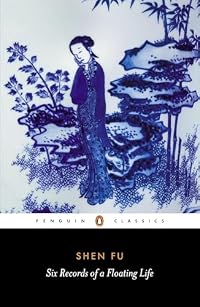
Six Records of a Floating Life
by Shen Fu
On This Page
Description
Six Records of a Floating Life(1809) is an extraordinary blend of autobiography, love story and social document written by a man who was educated as a scholar but earned his living as a civil servant and art dealer. In this intimate memoir, Shen Fu recounts the domestic and romantic joys of his marriage to Yun, the beautiful and artistic girl he fell in love with as a child. He also describes other incidents of his life, including how his beloved wife obtained a courtesan for him and show more reflects on his travels through China. Shen Fu's exquisite memoir shows six parallel 'layers' of one man's life, loves and career, with revealing glimpses into Chinese society of the Ch'ing Dynasty. show lessTags
Recommendations

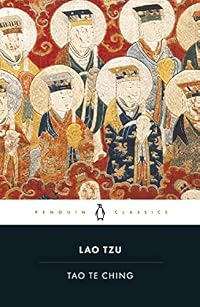
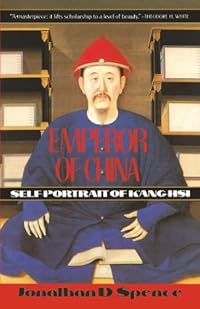
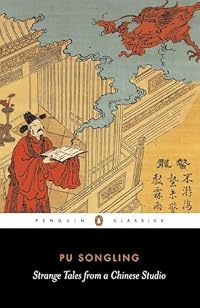
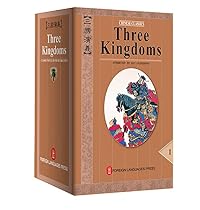





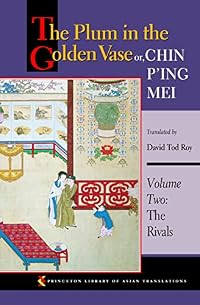

Member Recommendations

baobab This is a massive, wonderful multi-volume novel of upper-class Chinese life from a time earlier in the Ching Dynasty than Six Records of a Floating Life.
Member Reviews
Of the four of Shen Fu's records which have passed down to us, the first three recount his life with his adorable wife Yün, whose sweet nature was subject to anxiety and depression, sensitive to the harsh judgements of her in-laws, and prone to ill health, which we know from early on will sunder the loving couple. Shen's grief at her death is palpable and moving.
The couple live an aesthetic life, troubled by precarious employment, poverty and family dissensions, through which their joy in nature, art and literature is sustaining.
Several of the blurbs I read make much of Yün's search for a concubine for Shen, but this takes up only a small part of the account and is, I assume, a prurient sales-pitch as, again, it's done rather sweetly show more and was culturally appropriate, and not mentioned was Yün's own interest in having a same-sex relationship within the domestic home. Also not mentioned in blurbs are Shen's visits to sex workers, which somehow seems a double-standard. His description of these experiences is honest and humanises the women he spends time with without romanticising the reality of their lives.
The last record is a travel memoir and, while interesting on its own account, lacks much of the intimate nature of the preceding sections, not least because Yün is largely absent and Shen attention is more on the external than internal experience.
Overall, 4½⭐ show less
The couple live an aesthetic life, troubled by precarious employment, poverty and family dissensions, through which their joy in nature, art and literature is sustaining.
Several of the blurbs I read make much of Yün's search for a concubine for Shen, but this takes up only a small part of the account and is, I assume, a prurient sales-pitch as, again, it's done rather sweetly show more and was culturally appropriate, and not mentioned was Yün's own interest in having a same-sex relationship within the domestic home. Also not mentioned in blurbs are Shen's visits to sex workers, which somehow seems a double-standard. His description of these experiences is honest and humanises the women he spends time with without romanticising the reality of their lives.
The last record is a travel memoir and, while interesting on its own account, lacks much of the intimate nature of the preceding sections, not least because Yün is largely absent and Shen attention is more on the external than internal experience.
Overall, 4½⭐ show less
“Every time the wind would rustle the bamboo trees in the yard, or the moon would shine through the leaves of the banana tree outside my window, I would look out and miss her so terribly that dreams of her took possession of my soul.”
Shěn Fù lays out the events that shaped his life in poetic prose quite unexpected from a writer of his era or his circumstances.
His mesmerisingly articulated reflections -upon the alluring architecture, the natural world, and upon moments of the sublime spent in the company of his beloved- leave one with a sense of lightheartedness at knowing that the life of a man who lived in such a distant time and place, wasn't all that different from one's own. The countenance of the sky, harrowing dawns, and show more the beauty of the mountains on a hazy winter dusk have always brought delight to the human heart; we've always experienced the feeling of pure awe in the face of things larger than ourselves.
Another thing by which reading this book can be regarded as pleasant is Fù and his wife's stoicism, and their resilience through the hardships life threw their way. It gave one a feeling of solace and peacefulness that lingers for some time after one has completed the reading.
However it was, one cannot escape the sensation that a lot of what one is reading was going straight over one's head because of the very limited knowledge on the writers environment and the literary background of the Chinese. It should also be noted that the book ends quite abruptly, since two of the six records were lost to time, and one never gets to know the conditions under which the marvellous life of the writer came to an end. show less
Shěn Fù lays out the events that shaped his life in poetic prose quite unexpected from a writer of his era or his circumstances.
His mesmerisingly articulated reflections -upon the alluring architecture, the natural world, and upon moments of the sublime spent in the company of his beloved- leave one with a sense of lightheartedness at knowing that the life of a man who lived in such a distant time and place, wasn't all that different from one's own. The countenance of the sky, harrowing dawns, and show more the beauty of the mountains on a hazy winter dusk have always brought delight to the human heart; we've always experienced the feeling of pure awe in the face of things larger than ourselves.
Another thing by which reading this book can be regarded as pleasant is Fù and his wife's stoicism, and their resilience through the hardships life threw their way. It gave one a feeling of solace and peacefulness that lingers for some time after one has completed the reading.
However it was, one cannot escape the sensation that a lot of what one is reading was going straight over one's head because of the very limited knowledge on the writers environment and the literary background of the Chinese. It should also be noted that the book ends quite abruptly, since two of the six records were lost to time, and one never gets to know the conditions under which the marvellous life of the writer came to an end. show less
This was written in the late 1700s and early 1800s by a Chinese man who drifted between various clerical and artistic jobs.
Only four of the original six chapters exist, and it makes a very different style of storytelling: each chapter is thematic, and chronological within, but the book overall is not chronological, so some episodes are described in different chapters, in different ways (layers of floating records). It works very well, though the various notes, maps and appendices in this edition are very helpful too.
The four chapters concern his courtship and marriage; their hobbies and pastimes (mainly horticultural); the problems that beset them (ill health, un(der)employment, financial woes), and the author's travels. The last one show more is particularly good if you're familiar with Suzhou/Shanghai area, but perhaps less engaging if you're not.
It gives a fascinating insight into real lives of the period, because it is an authentic voice of that time. Very different from reading a modern historical novel, however well researched. Shen Fu isn't entirely likeable (though you have to admire his honesty), but his wife is delightful: bright, cheeky, slightly rebellious yet happy to help him find a concubine.
I read it in a day and whilst I wasn't rushing (it's pretty short), there is a beauty to it that really justifies a more leisurely approach.
After this, read The Red Thread by Nicholas Jose, in which a contemporary art dealer tracks down the missing chapters and notices echoes between the book and his life. See https://www.goodreads.com/review/show/35951482. show less
Only four of the original six chapters exist, and it makes a very different style of storytelling: each chapter is thematic, and chronological within, but the book overall is not chronological, so some episodes are described in different chapters, in different ways (layers of floating records). It works very well, though the various notes, maps and appendices in this edition are very helpful too.
The four chapters concern his courtship and marriage; their hobbies and pastimes (mainly horticultural); the problems that beset them (ill health, un(der)employment, financial woes), and the author's travels. The last one show more is particularly good if you're familiar with Suzhou/Shanghai area, but perhaps less engaging if you're not.
It gives a fascinating insight into real lives of the period, because it is an authentic voice of that time. Very different from reading a modern historical novel, however well researched. Shen Fu isn't entirely likeable (though you have to admire his honesty), but his wife is delightful: bright, cheeky, slightly rebellious yet happy to help him find a concubine.
I read it in a day and whilst I wasn't rushing (it's pretty short), there is a beauty to it that really justifies a more leisurely approach.
After this, read The Red Thread by Nicholas Jose, in which a contemporary art dealer tracks down the missing chapters and notices echoes between the book and his life. See https://www.goodreads.com/review/show/35951482. show less
Shen Fu’s Six Records of a Floating Life is more than an autobiography; it is a life composed from poetry and flower petals. Somewhere between the beauty of the words is also found a glimpse into a moment in time that few Westerners understand, much less know of. It is inside these words that can be discovered new concepts and previously unknown ideals. Concepts foreign to Western society take on stiff definitions based on incomplete knowledge and broad stereotypes. In Six Records of a Floating Life, Shen Fu presents to the reader some alternate outcomes and ideas of what may be preconceived Western notions about certain truths in Qing Dynasty China.
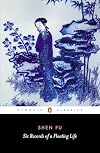
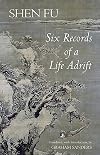
I have the annotated Penguin Classics edition of this book. It's a relatively slim read, 180 pages altogether but about 1/3 of that is the intro, notes, maps, etc etc. It's a peek on the life of a late 18th/early 19th-century man who comes from a decent family but deals with bouts of poverty. It would have been interesting to see more, as this is not a complete bio, simply six parts/mini-memoirs collected together.
The author's name is actually Fu Shen, not Sanbai Shen.
This is a wonderful book written around 1800. It's a memoir, essentially, and gives a fascinating picture of life among a certain social class in and around Suzhou, which is about 80 kilometres west of Shanghai and was for a long time a centre of culture. Today there are many classical gardens in Suzhou which once belonged to rich and highly cultured families. Fu Shen and his wife, Yun, lived on the margins of this social class. He was a scholar, but moved from job to job in various government offices and never achieved any financial stability. His real interests, and Yun's, were in poetry and art. They lived a kind of bohemian life of genteel and literary poverty. Shen's account of show more his love for Yun, and then of her illness and death, are very touching.
For anyone familiar with Suzhou, the book is filled with interesting comments on various places in the area, as well as fascinating accounts of his travels further afield as he was forced to go here and there to work.
Six Chapters of a Floating Life was discovered in a bookshop in Suzhou in 1877 and published in Chinese, but only four of the six chapters were found. Lin Yu-tang translated it in the 1930s, hoping that the final two chapters would be discovered in someone's private library someday, but so far to my knowledge they have not been found. Lin's translation is a bit old-fashioned, but I prefer it nonetheless to a more modern version that I have seen. show less
This is a wonderful book written around 1800. It's a memoir, essentially, and gives a fascinating picture of life among a certain social class in and around Suzhou, which is about 80 kilometres west of Shanghai and was for a long time a centre of culture. Today there are many classical gardens in Suzhou which once belonged to rich and highly cultured families. Fu Shen and his wife, Yun, lived on the margins of this social class. He was a scholar, but moved from job to job in various government offices and never achieved any financial stability. His real interests, and Yun's, were in poetry and art. They lived a kind of bohemian life of genteel and literary poverty. Shen's account of show more his love for Yun, and then of her illness and death, are very touching.
For anyone familiar with Suzhou, the book is filled with interesting comments on various places in the area, as well as fascinating accounts of his travels further afield as he was forced to go here and there to work.
Six Chapters of a Floating Life was discovered in a bookshop in Suzhou in 1877 and published in Chinese, but only four of the six chapters were found. Lin Yu-tang translated it in the 1930s, hoping that the final two chapters would be discovered in someone's private library someday, but so far to my knowledge they have not been found. Lin's translation is a bit old-fashioned, but I prefer it nonetheless to a more modern version that I have seen. show less
"Six Records of a Floating Life" follows author Shen Fu and his wife Yün through early 19th Century China. A smart woman, Yün asks Shen Fu to teach her to read and write, which he happily does. Their life is both simple and difficult, spending days discussing art and poetry while at the same time trying to earn a decent living as a civil servant and as an art dealer. The book begins as a memoir capturing the love and companionship between Shen Fu and Yün, but also provides a glimpse into the customs and societal views during early 19th Century China. Shen Fu displays the inner workings of their family, how traditions and customs affect everyday life (such as when Yün obtains a courtesan for him because it is expected by society), show more and also describes the sights and wonders of China from a foot travelers perspective. show less
Members
- Recently Added By
Lists

The China Project Book List
100 works; 2 members

Books Read in 2024
4,623 works; 126 members
Author Information
3 Works 839 Members
As Lin Yutang has characterized it, Six Chapters of a Floating Life is "one of the tenderest accounts of wedded love . . . ever come across in literature." And it is also one of the most delightful examples of the genre of hsiao p'in ("little pieces") that flourished in the last years of the Ming and throughout the Ch'ing dynasties---a partly show more autobiographical little essay that mixes in observations and comments on the art of living, random sketches of scenic places visited, and impressionistic criticism of poems and paintings. Of the author Shen Fu we know little except what he tells us in the course of the story of his marriage to his cousin Yun---that he was born in November of 1763 near the Ts'ang-lang Pavilion in Soochow into a scholar's family. And we know from other sources that Shen at one time was secretary to a close friend of the brother-in-law of Kao E, the author or editor of the final chapters of Story of the Stone, or Dream of the Red Chamber (the earlier chapters were written by Ts'ao Chan). Although there were originally six chapters in Shen's account, we now have only four. These were discovered in 1877 in a secondhand bookshop and published by Yang Yinch'uan, whose brother-in-law remembered having seen the book in his childhood in Soochow. Three of the four extant chapters deal with Shen's betrothal and wedding, the couple's early married life of enjoyment together, their sorrows after Shen's mother became critical of her daughter-in-law, and of Yun's untimely death. The fourth chapter is about various scenic spots that Shen had visited. Apparently the two lost chapters dealt with a trip Shen made to the island of Formosa (Taiwan) and some general reflections on life. Ultimately, Shen's biography apart from what is revealed in the Six Chapters is unimportant, because we get such an intimate feel for his character from his incidental sketches of daily life. Much less studied and self-conscious than a structured autobiography, the hsiao p'in genre gives us more a feeling of having glimpsed into an open window of a neighboring house on various occasions, or having overheard someone absent-mindedly talking to himself or to a close friend. (Bowker Author Biography) show less
Some Editions
Awards and Honors
Notable Lists
Series
Belongs to Publisher Series
Work Relationships
Common Knowledge
- Canonical title
- Six Records of a Floating Life
- Original title
- 浮生六記
- Original publication date
- 1877 (original Chinese) (original Chinese); 1935 (English: Yutang) (English: Yutang); 1966 (French: Ryckmans [Simon Leys]) (French: Ryckmans [Simon Leys]); 1983 (English: Pratt & Chiang) (English: Pratt & Chiang)
- People/Characters
- Shen Fu; Chen Yün; Chia-fu; Chi-tang
- Important places
- Suzhou, Jiangsu, China (Soochow); China; Pavilion of the Waves, Suzhou, Jiangsu, China (Soochow)
- Epigraph
- Now the heavens and earth are the hostels of creation; and time has seen a full hundred generations. Ah, this floating life, like a dream... True happiness is so rare! -- Li Po, "On a Banquet with my Cousins on a Spring Nigh... (show all)t in the Peach Garden"
- First words
- I was born in the winter of the 27th year of the reign of the Emperor Chien Lung, on the second and twentieth day of the eleventh month.
- Last words
- (Click to show. Warning: May contain spoilers.)I never got to see the so-called mirage of Tengchou after all.
- Original language
- Chinese
Classifications
- Genre
- Biography & Memoir
- DDC/MDS
- 895.144 — Literature & rhetoric Literatures of other languages Literatures of East and Southeast Asia Chinese Chinese essays Song, Yuan, Ming, Qing dynasties 960–1912
- LCC
- PL2724 .H4 .Z465 — Language and Literature Languages and literatures of Eastern Asia, Africa, Oceania Languages of Eastern Asia, Africa, Oceania Chinese language and literature Chinese literature Individual authors and works
- BISAC
Statistics
- Members
- 590
- Popularity
- 49,393
- Reviews
- 10
- Rating
- (3.81)
- Languages
- 9 — Chinese, traditional, English, French, German, Hebrew, Italian, Korean, Russian, Spanish
- Media
- Paper, Ebook
- ISBNs
- 30
- ASINs
- 7