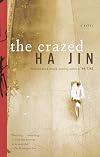
The Crazed
by Ha Jin
On This Page
Description
Ha Jin's seismically powerful new novel is at once an unblinking look into the bell jar of communist Chinese society and a portrait of the eternal compromises and deceptions of the human state. When the venerable professor Yang, a teacher of literature at a provincial university, has a stroke, his student Jian Wan is assigned to care for him. Since the dutiful Jian plans to marry his mentor's beautiful, icy daughter, the job requires delicacy. Just how much delicacy becomes clear when Yang show more begins to rave. Are these just the outpourings of a broken mind, or is Yang speaking the truth-about his family, his colleagues, and his life's work? And will bearing witness to the truth end up breaking poor Jian's heart? Combining warmth and intimacy with an unsparing social vision, The Crazed is Ha Jin's most enthralling book to date. show lessTags
Recommendations



Member Reviews
This story turned out to be really interesting although I had no idea to where it was headed even halfway through the book. It started out when a soon-to-be PhD student began caring for his professor Yang who fell ill with a stroke. The student, Jian Wan, was engaged to Professor Yang's daughter Meimei who at the time was studying in Beijing for medical school entrance exams. While caring for Professor Yang and listening to his crazy talk as a stroke victim, Jian Wan made some decisions which would turn out to alter his relationship with Meimei and ultimately have him in Beijing at the time of the student uprising in Tiananmen Square.
"It's personal interests that motivate the individual and therefore generate the dynamics of show more history."
In this story we see how Jian Wan's actions lead him to become accused of being a counterrevolutionary, although it is personal gain by others that is really the issue.
The story of Jian Wan gives a lot of food for thought. I'm up for more books by this author based on the way this particular story is told. show less
"It's personal interests that motivate the individual and therefore generate the dynamics of show more history."
In this story we see how Jian Wan's actions lead him to become accused of being a counterrevolutionary, although it is personal gain by others that is really the issue.
The story of Jian Wan gives a lot of food for thought. I'm up for more books by this author based on the way this particular story is told. show less
The Crazed by Ha Jin is a masterful book. Engaging. Carefully detailed. Excellent characterization. Well plotted. The setting is China at the time of the Tiananmen Square movement in 1989.
Briefly, it is about a college professor, Mr. Yang, who after suffering a stroke, is cared for by his star student and soon-to-be son-in-law, Jian Wan. On his sickbed, Mr. Yang recalls things from his past in a rambling disjointed way. At times he is lucid and at times, not. As Yang reveals secrets from his past, Jian Wan, the narrator, begins to see Yang's life in a new and different light, realizing that this is not a life he wants to follow.
I loved how Jian Wan's growth is revealed. As he comes to new realizations, he seeks and discovers what is show more true and important and what is not. He discovers his true passions do not lie in academia; he learns of the 'tricks of the academic game.' As he questions his life to that point, the reader begins to see shifts in his ideology and a transformed purpose. Jian Wan's awakening is the story of his generation and his coming of age story parallels that of China's.
In a discussion with Mr. Yang, Jian Wan's true thoughts begin to unfold:
'Have you read Dante?' he asked me in a nasal voice... 'No, I haven't.' Unable to say yes, I was somewhat embarrassed. 'You should read The Divine Comedy. After you finish it, you will look at the world differently.'So I borrowed all three books of the poem from the library and went through them in two weeks, but I didn't enjoy the poem and felt the world remained the same.' (p. 71)
I loved this quote: Yang recalling his experience as a scholar in the West says this: 'Oh, you should have seen the libraries at Berkeley, absolutely magnificent. You can go to the stacks directly, see what's on them, and can even check out some rare books. Frankly, I would die happy if I could work as a librarian in a place like that all my life.' (p. 105)
The tension that Jian Wan feels is revealed when another professor asks Yang: 'Why should we look down on ourselves so? We're both intellectuals, aren't we?' Yang replies, 'No, we're not. Who is an intellectual in China? Ridiculous, anyone with a college education is called an intellectual. The truth is that all people in the humanities are clerks and all people in the sciences are technicians. Tell me, who is a really independent intellectual, has original ideas and speaks the truth? None that I know of. We're all dumb laborers kept by the state--a retrograde species.' (p. 153) While this is a conversation between another professor and Yang, Jian Wan takes it to heart and acts on it.
The final quote from the book is this: 'Ever since I boarded the train back, a terrible vision had tormented me. I saw China in the form of an old hag so decrepit and brainsick that she would devour her children to sustain herself. Insatiable, she had eaten many tender lives before, was gobbling new flesh and blood now, and would surely swallow more.' (p. 315)
A worthy read. One of the best books I've read this year. show less
Briefly, it is about a college professor, Mr. Yang, who after suffering a stroke, is cared for by his star student and soon-to-be son-in-law, Jian Wan. On his sickbed, Mr. Yang recalls things from his past in a rambling disjointed way. At times he is lucid and at times, not. As Yang reveals secrets from his past, Jian Wan, the narrator, begins to see Yang's life in a new and different light, realizing that this is not a life he wants to follow.
I loved how Jian Wan's growth is revealed. As he comes to new realizations, he seeks and discovers what is show more true and important and what is not. He discovers his true passions do not lie in academia; he learns of the 'tricks of the academic game.' As he questions his life to that point, the reader begins to see shifts in his ideology and a transformed purpose. Jian Wan's awakening is the story of his generation and his coming of age story parallels that of China's.
In a discussion with Mr. Yang, Jian Wan's true thoughts begin to unfold:
'Have you read Dante?' he asked me in a nasal voice... 'No, I haven't.' Unable to say yes, I was somewhat embarrassed. 'You should read The Divine Comedy. After you finish it, you will look at the world differently.'So I borrowed all three books of the poem from the library and went through them in two weeks, but I didn't enjoy the poem and felt the world remained the same.' (p. 71)
I loved this quote: Yang recalling his experience as a scholar in the West says this: 'Oh, you should have seen the libraries at Berkeley, absolutely magnificent. You can go to the stacks directly, see what's on them, and can even check out some rare books. Frankly, I would die happy if I could work as a librarian in a place like that all my life.' (p. 105)
The tension that Jian Wan feels is revealed when another professor asks Yang: 'Why should we look down on ourselves so? We're both intellectuals, aren't we?' Yang replies, 'No, we're not. Who is an intellectual in China? Ridiculous, anyone with a college education is called an intellectual. The truth is that all people in the humanities are clerks and all people in the sciences are technicians. Tell me, who is a really independent intellectual, has original ideas and speaks the truth? None that I know of. We're all dumb laborers kept by the state--a retrograde species.' (p. 153) While this is a conversation between another professor and Yang, Jian Wan takes it to heart and acts on it.
The final quote from the book is this: 'Ever since I boarded the train back, a terrible vision had tormented me. I saw China in the form of an old hag so decrepit and brainsick that she would devour her children to sustain herself. Insatiable, she had eaten many tender lives before, was gobbling new flesh and blood now, and would surely swallow more.' (p. 315)
A worthy read. One of the best books I've read this year. show less
Set during the Tiananmen Square uprising of 1989, this book explores the relationship between a prominent Chinese university professor who suffers a brain injury and Jien Wen, a favorite student and future son-in-law who becomes his caretaker. Over time and under the influence of his professor's rantings, Jien starts thinking differently about life and decides to abort his pursuit of his Ph.D. As a result, Meimei, his fiancée, promptly discards him. Unconnected from Meimei and school, Jien joins the student movement.
This book is very reflective, and much of the action occurs within Jien Wen as a result of his teacher's rantings. I found the time and place to be expertly and heartbreakingly evoked, but parts of the plot were a bit slow.
This book is very reflective, and much of the action occurs within Jien Wen as a result of his teacher's rantings. I found the time and place to be expertly and heartbreakingly evoked, but parts of the plot were a bit slow.
Ha Jin is subtle. He doesn't beat us over the head with an overview of the Chinese Cultural Revolution. So the non-Chinese reader can be a little lost here without that background. (The best preparation I can think of is Nien Cheng's horrendous LIFE AND DEATH IN SHAGHAI.) The Cultural Revolution was a world turned upside down. Anyone subject to foreign influences---intellectuals, officials, students, artists and dissidents---were labeled "rightists" or "counterrevolutionaries." They were humiliated, imprisoned, demoted and fired from their positions. They were sent to labor and re-education camps where they were tortured and killed. The impact on the lives of innocent Chinese is almost beyond imagination. In their biography, MAO, show more authors Chang and Halliday claim that 70 million Chinese were killed by Mao in peacetime due to his various wrong-headed policies.
In the case of the novel's Professor Yang, it is clear that his life has been utterly destroyed by the Cultural Revolution, and that the stroke he has 12 years later is merely its long term result. Sent to a re-education camp during the period--roughly 1966-76--Yang drifts away from his wife, who takes up with another man to get by in Chinese society. Yang may understand the practicality of that move on some level, but after the stroke, when we come upon him in the hospital, out pours all his humiliation and invective in an almost nonstop torrent of abuse. Narrator Jian, Yang's student, watches over him while arrangements are made for Yang's family members to care for him. During this time he pieces together the tragedy of his teacher's life, and he becomes determined not to repeat it. He realizes his own life must change after a last minute trip to Tiananmen Square. It is 1989, just before the Red Army cracks down on the the student movement. Ha Jin presents the reader with a pattern: Prof. Yang's life destroyed by the Cultural Revolution, and now the threat of Tiananmen on narrator Jian's, who becomes hunted as a "counterrevolutionary." The cycle of history repeats itself. Jian admits:
"I saw China in the form of an old hag so decrepit and brainsick that she would devour her children to sustain herself. Insatiable, she had eaten many tender lives before, was gobbling up new flesh and blood now, and would surely swallow more. Unable to suppress the horrible vision, all day I said to myself, 'China is an old bitch that eats her own puppies!' How my head throbbed, and how my heart writhed and shuddered! With the commotion of two nights ago still in my ears, I feared I was going to lose my mind."
Thus Jian becomes one of the "crazed," too. There are, Jin implies, millions like him. China has learned nothing from its own past since it possesses no genuine tradition of historical inquiry. In the Santayanan sense then it is doomed to repeat its worst mistakes. But Jian sees the pattern, and he is determined not to be devoured. show less
In the case of the novel's Professor Yang, it is clear that his life has been utterly destroyed by the Cultural Revolution, and that the stroke he has 12 years later is merely its long term result. Sent to a re-education camp during the period--roughly 1966-76--Yang drifts away from his wife, who takes up with another man to get by in Chinese society. Yang may understand the practicality of that move on some level, but after the stroke, when we come upon him in the hospital, out pours all his humiliation and invective in an almost nonstop torrent of abuse. Narrator Jian, Yang's student, watches over him while arrangements are made for Yang's family members to care for him. During this time he pieces together the tragedy of his teacher's life, and he becomes determined not to repeat it. He realizes his own life must change after a last minute trip to Tiananmen Square. It is 1989, just before the Red Army cracks down on the the student movement. Ha Jin presents the reader with a pattern: Prof. Yang's life destroyed by the Cultural Revolution, and now the threat of Tiananmen on narrator Jian's, who becomes hunted as a "counterrevolutionary." The cycle of history repeats itself. Jian admits:
"I saw China in the form of an old hag so decrepit and brainsick that she would devour her children to sustain herself. Insatiable, she had eaten many tender lives before, was gobbling up new flesh and blood now, and would surely swallow more. Unable to suppress the horrible vision, all day I said to myself, 'China is an old bitch that eats her own puppies!' How my head throbbed, and how my heart writhed and shuddered! With the commotion of two nights ago still in my ears, I feared I was going to lose my mind."
Thus Jian becomes one of the "crazed," too. There are, Jin implies, millions like him. China has learned nothing from its own past since it possesses no genuine tradition of historical inquiry. In the Santayanan sense then it is doomed to repeat its worst mistakes. But Jian sees the pattern, and he is determined not to be devoured. show less
brilliant; mixes the political with the personal; narrator (Jian) is crazed, dying Mr. Yang is crazed, China is, society is; each detail of life is so personal, but each life so clearly overlaps with Tiananmen Square-era China
A new to me author, who's book has been sitting on my TBR way too long.
But today I finally finished it. Finally not because I dislike it, but because it's taken me so long to start.
Loved the book. The ramblings of professor Yang, the impact they have on the people that hear them, the actions that are a result of them... All very interesting to read.
And amidst all the party and revolutionary talk (it's the time of the uprising of the students, Tiananmen) I found it surpising to learn about the growing of one individual, one person who took his truth out of his professor's words and deducted the reasons for other people's actions and made a decision.
Wholeheartedly recommended!
But today I finally finished it. Finally not because I dislike it, but because it's taken me so long to start.
Loved the book. The ramblings of professor Yang, the impact they have on the people that hear them, the actions that are a result of them... All very interesting to read.
And amidst all the party and revolutionary talk (it's the time of the uprising of the students, Tiananmen) I found it surpising to learn about the growing of one individual, one person who took his truth out of his professor's words and deducted the reasons for other people's actions and made a decision.
Wholeheartedly recommended!
This is a novel about the problems and predicaments in China, specifically PRC. It's written by a 1st generation immigrant, so this book presented a believable China (in contrast to the "China" presented by non-natives.) It's written in English and with no Chinese translation version available to the Chinese audience, probably due to political concerns. But after finishing the book, I think a reader familiar with China and its problems will get so much more out of it than someone who didn't have that background. It's unfortunate that circumstances prevent an easy access.
This is not a book with interesting characters or engaging plot. It's just one mundane event after another that serves to reveal the different ailments of PRC. The show more story presents a middle-age literature professor who had a stroke in the spring of 1989 and became mentally unstable. In his delirium he revisited his younger days as his country went through the Korean War, Cultural Revolution, reeducation camps, ....etc. In his delirium he also relived his recent clashes and struggles with departmental politics, how his life as an academic in China was merely that of a "clerk." The professor's prize student, after hearing his mentor's rantings, decided not to pursue a career in academia anymore. The student tried to find his way. He visited rural China and witnessed plight of the extreme poor and how this nation's political and economical hardship took a toil on its people's morality. He set off for Beijing for a change of scenery, away from the departmental politics and distress. He arrived in Beijing on the night of June 3, 1989. Everything wrong with China so far depicted in the book culminated in what happened a couple of hours after that, with what is known to western countries today as the Tiananmen massacre. The student didn't actually get into the Tiananmen Square that night. The author wrote about what he experienced on his way there, on the streets. It's so, so sad.
This is a good book, but it's not a book I would want to read again soon. It's so bleak. But I guess it's good to be sad sometimes, because it helps us remember. Something happened on June 4, 1989, and it was not right. show less
This is not a book with interesting characters or engaging plot. It's just one mundane event after another that serves to reveal the different ailments of PRC. The show more story presents a middle-age literature professor who had a stroke in the spring of 1989 and became mentally unstable. In his delirium he revisited his younger days as his country went through the Korean War, Cultural Revolution, reeducation camps, ....etc. In his delirium he also relived his recent clashes and struggles with departmental politics, how his life as an academic in China was merely that of a "clerk." The professor's prize student, after hearing his mentor's rantings, decided not to pursue a career in academia anymore. The student tried to find his way. He visited rural China and witnessed plight of the extreme poor and how this nation's political and economical hardship took a toil on its people's morality. He set off for Beijing for a change of scenery, away from the departmental politics and distress. He arrived in Beijing on the night of June 3, 1989. Everything wrong with China so far depicted in the book culminated in what happened a couple of hours after that, with what is known to western countries today as the Tiananmen massacre. The student didn't actually get into the Tiananmen Square that night. The author wrote about what he experienced on his way there, on the streets. It's so, so sad.
This is a good book, but it's not a book I would want to read again soon. It's so bleak. But I guess it's good to be sad sometimes, because it helps us remember. Something happened on June 4, 1989, and it was not right. show less
Members
- Recently Added By
Lists

Best Fiction Set in China
43 works; 27 members

Top Five Books of 2020
982 works; 348 members
Author Information

34+ Works 10,455 Members
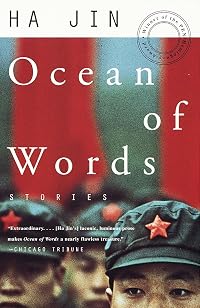
Ha Jin left his native China in 1985 and is now a professor of English at Emory University. He is author of, among other works, two short-story collections: Ocean of Words, which won the PEN/Hemingway Award, and Under the Red Flag, which won the Flannery O'Connor Award for short fiction. His novel Waiting won the National Book Award for fiction in show more 1999. He lives in Atlanta. (Bowker Author Biography) show less
Awards and Honors
Common Knowledge
- Original publication date
- 2002
- People/Characters
- Jian Wan; Professor Yang; Meimei Yang
- Important places
- China; Shanning, China; Beijing, China
- Important events
- Tiananmen Square Protests and Massacre
- Dedication
- For Lisha
- First words
- Everybody was surprised when Professor Yang suffered a stroke in the spring of 1989.
- Quotations
- Despite not enjoying Japanese, which sounded to me like ducks’ quacking...
...I realized how people had humanized animals and animalized human beings.
The realization made me see how essential personal motives were in political activities.
It’s personal interests that motivate the individual and therefore generate the dynamics of history.
Classifications
Statistics
- Members
- 861
- Popularity
- 31,603
- Reviews
- 15
- Rating
- (3.53)
- Languages
- 7 — Dutch, English, French, German, Italian, Portuguese, Spanish
- Media
- Paper, Audiobook, Ebook
- ISBNs
- 23
- ASINs
- 7