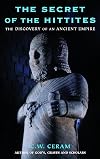
The Secret of the Hittites: The Discovery of an Ancient Empire
by C. W. Ceram
On This Page
Description
The author of the acclaimed Gods, Graves, and Scholars tells the dramatic tale of the Hittites, an Indo-European people who became a dominant power in the Middle East. Their struggle in Egypt with Ramses II for control of Syria led to one of the greatest battles of the ancient world. The fall of the Hittite empire was sudden, and historical records were scarce--until the discovery of cuneiform tablets yielded a rich store of information on which this work is based. "...a saga richly charged show more with dramatic twists and with enthralling accounts of scholarly detective work."--The Atlantic. show lessTags
Recommendations




















Member Recommendations

timspalding Ceram's most famous and most exciting work.
20

Member Reviews
Ceram is one of the classic German scholars who writes with patience and excitement. This is his second volume on aspects of the unfinished story of the discovery of this Empire, with its multicultural richness, its rise and fall.
One of the few battles to have really shaped the future of mankind, Kadesh [165]. Muwatallis faced the mightiest ruler of antiquity, Ramses II rising out of Egypt to dispute the Syrian border at the Orontes river [167]. For three thousand years even the scholars have fallen for the "propaganda" written by Egyptian sycophants concerning this war, which still eludes us. But there can be no doubt about the actual outcome. The biggest armies ever before assembled in the field up to that time, approximately 20,000 show more on each side. Using Bedouin allies, and Ramses own high opinion of himself, Mutawallis deceived Ramses into believing he had withdrawn. And then after Rameses was drawn into a long line of march unprepared for battle, the Hittite made a river crossing, struck at the divided center of the leading corp, and enveloped the remnants with light chariots in pursuit.
According to the Egyptian poet, Ramses is left entirely alone in his chariot on the battlefield, and prays to Amon, the "lord of victory, who loves strength". Inscriptions show the Hittites driven into the river and drowning. He must have attacked the Hittite encirclement where it was weakest in an attempt to break out. The poet clearly states that Rameses defeated the Hittite singlehandedly. Actually, he did manage to escape with the remnants of his army to a geographical rampart near Damascus [184]. At that point, whatever the facts, Ramses the Great and Muwatallis, King of the Hittites, signed a treaty of friendship. This averted further major conflicts. The Egyptian never again stepped near the frontier border.
And the Jews and Arabs formed the tribal values they have passed on to the world, within this contested frontier, which have blessed and cursed the world to this day.
In 1945 a small group of travelers crossed the Taurus Mountains hunting for traces of the Anatolian civilization in what is now almost trackless waste. [219] Someone told them about a "lion stone" -- the lion is one of the symbolic beasts of the Hittites....at Karatepe. There, Helmut T. Bossert, a German Professor whose books were burned by the Nazis, discovered Semitic writing on a Hittite Temple sculpture. [227] Could this provide a Rosetta-key? Helmuth T. Bossert and his assistant Halet Cambel were the discoverers, as the first interpreters, and "Brave Rainbow" Bahadir Alkim, the polyglot they brought in to perform the translating. [230] Of course this was on Domuztepe, the "mountain of the swine", in the Black Mountain slopes. Beneath Roman ruins, the Hittite citadel was discovered, and we have been able to read the Code ever since. A remarkable literature and history has been re-opened.
The last Hittite was absorbed into the Assyrian Empire about 700 BC. [239] Until 70 years ago, they had been forgotten entirely. [254] Schools still teach about Egypt and Mesopotamia, Greece and Rome. This people is one of the bridges between them all. show less
One of the few battles to have really shaped the future of mankind, Kadesh [165]. Muwatallis faced the mightiest ruler of antiquity, Ramses II rising out of Egypt to dispute the Syrian border at the Orontes river [167]. For three thousand years even the scholars have fallen for the "propaganda" written by Egyptian sycophants concerning this war, which still eludes us. But there can be no doubt about the actual outcome. The biggest armies ever before assembled in the field up to that time, approximately 20,000 show more on each side. Using Bedouin allies, and Ramses own high opinion of himself, Mutawallis deceived Ramses into believing he had withdrawn. And then after Rameses was drawn into a long line of march unprepared for battle, the Hittite made a river crossing, struck at the divided center of the leading corp, and enveloped the remnants with light chariots in pursuit.
According to the Egyptian poet, Ramses is left entirely alone in his chariot on the battlefield, and prays to Amon, the "lord of victory, who loves strength". Inscriptions show the Hittites driven into the river and drowning. He must have attacked the Hittite encirclement where it was weakest in an attempt to break out. The poet clearly states that Rameses defeated the Hittite singlehandedly. Actually, he did manage to escape with the remnants of his army to a geographical rampart near Damascus [184]. At that point, whatever the facts, Ramses the Great and Muwatallis, King of the Hittites, signed a treaty of friendship. This averted further major conflicts. The Egyptian never again stepped near the frontier border.
And the Jews and Arabs formed the tribal values they have passed on to the world, within this contested frontier, which have blessed and cursed the world to this day.
In 1945 a small group of travelers crossed the Taurus Mountains hunting for traces of the Anatolian civilization in what is now almost trackless waste. [219] Someone told them about a "lion stone" -- the lion is one of the symbolic beasts of the Hittites....at Karatepe. There, Helmut T. Bossert, a German Professor whose books were burned by the Nazis, discovered Semitic writing on a Hittite Temple sculpture. [227] Could this provide a Rosetta-key? Helmuth T. Bossert and his assistant Halet Cambel were the discoverers, as the first interpreters, and "Brave Rainbow" Bahadir Alkim, the polyglot they brought in to perform the translating. [230] Of course this was on Domuztepe, the "mountain of the swine", in the Black Mountain slopes. Beneath Roman ruins, the Hittite citadel was discovered, and we have been able to read the Code ever since. A remarkable literature and history has been re-opened.
The last Hittite was absorbed into the Assyrian Empire about 700 BC. [239] Until 70 years ago, they had been forgotten entirely. [254] Schools still teach about Egypt and Mesopotamia, Greece and Rome. This people is one of the bridges between them all. show less
The focus of this book is culture. Good for explanations of various issues of the Hittite civilization like language, location, politics, customs, kingship, etc. Easy reading. The problem: many texts quoted, but few referenced! We just have to trust he isn't making things up as he goes along. Read this in conjuction with "The Kingdom of the Hittites".
Het Indiana Jones-gehalte van dit boek ligt aanzienlijk lager dan dat van Goden, Graven en Geleerden en dat lijkt de auteur zelf soms te spijten. Hij doet in elk geval zijn best om de meest avontuurlijke anekdotes op te rakelen uit het leven van de archeologen die de geschiedenis van het Hettietenrijk wisten te ontrafelen. Ceram weet in elk geval de treffende details te schetsen, niet alleen uit hun leven, maar ook uit het archeologisch onderzoek zelf. Zijn uiteenzettingen over de ontcijfering van taal en schrift alleen al maken het boek lezenswaardig.
Ceram beperkt zich niet tot een geschiedenis van het archeologisch onderzoek - een geschiedenis die hij liet doorlopen tot aan de verschijningsdatum van het boek. Hij geeft ook een show more beknopt overzicht van de geschiedenis en de cultuur van de Hettieten. Daarbij beperkt hij zich tot de hoogdagen van het rijk in het tweede millennium voor onze jaartelling. De slag bij Kadesh - ironisch genoeg alleen bekend uit Egyptische bronnen - krijgt daarbij een prominente plaats, onder meer omdat het daarop volgende vredesverdrag bekend is uit Egyptische en Hettietische bronnen. In zijn beschrijvingen toont hij zich niet geheel onpartijdig. Hij is niet geïnteresseerd in het voortleven van de Hettietische cultuur na de val van het rijk. Over die cultuur heeft hij ook geen hoge pet op.
Ruim zestig jaar na verschijnen, nog altijd een lezenswaardig boek. show less
Ceram beperkt zich niet tot een geschiedenis van het archeologisch onderzoek - een geschiedenis die hij liet doorlopen tot aan de verschijningsdatum van het boek. Hij geeft ook een show more beknopt overzicht van de geschiedenis en de cultuur van de Hettieten. Daarbij beperkt hij zich tot de hoogdagen van het rijk in het tweede millennium voor onze jaartelling. De slag bij Kadesh - ironisch genoeg alleen bekend uit Egyptische bronnen - krijgt daarbij een prominente plaats, onder meer omdat het daarop volgende vredesverdrag bekend is uit Egyptische en Hettietische bronnen. In zijn beschrijvingen toont hij zich niet geheel onpartijdig. Hij is niet geïnteresseerd in het voortleven van de Hettietische cultuur na de val van het rijk. Over die cultuur heeft hij ook geen hoge pet op.
Ruim zestig jaar na verschijnen, nog altijd een lezenswaardig boek. show less
Feb 17, 2018Dutch
„Secretul hitiților: descoperirea unui imperiu antic” de C.W. Ceram este o lucrare care prezintă descoperirea și studiul civilizației hitite, explorând istoria, cultura și realizările unui imperiu adesea uitat în istoria Antichității.
📖 Despre autor
a) C.W. Ceram (pseudonim al lui Kurt Wilhelm Marek, 1915–1972) a fost arheolog și scriitor german, specializat în popularizarea descoperirilor arheologice.
b) Este cunoscut pentru cărțile sale accesibile publicului larg despre civilizațiile antice.
c) Stilul său combină rigurozitatea științifică cu narațiunea captivantă.
📚 Despre volum
a) Cartea urmărește redescoperirea și decodificarea istoriei hitiților.
b) Analizează societatea, religia și cultura acestui show more imperiu antic.
c) Include aspecte arheologice, epigrafice și istorice privind interacțiunile cu alte civilizații.
🔎 Teme principale
a) Descoperirea și cercetarea civilizației hitiților.
b) Structura politică, religia și viața socială a hitiților.
c) Relațiile și conflictele cu Egiptul și alte imperii contemporane.
d) Metode arheologice și interpretarea artefactelor și inscripțiilor.
e) Moștenirea culturală și istorică a hitiților.
⚖️ Semnificație
a) Cartea aduce la lumină o civilizație mai puțin cunoscută, evidențiind importanța studiilor arheologice.
b) Relevanța sa constă în înțelegerea diversității și complexității lumii antice.
c) Este utilă pentru studiul arheologiei, istoriei antice și istoriei Orientului Apropiat. show less
📖 Despre autor
a) C.W. Ceram (pseudonim al lui Kurt Wilhelm Marek, 1915–1972) a fost arheolog și scriitor german, specializat în popularizarea descoperirilor arheologice.
b) Este cunoscut pentru cărțile sale accesibile publicului larg despre civilizațiile antice.
c) Stilul său combină rigurozitatea științifică cu narațiunea captivantă.
📚 Despre volum
a) Cartea urmărește redescoperirea și decodificarea istoriei hitiților.
b) Analizează societatea, religia și cultura acestui show more imperiu antic.
c) Include aspecte arheologice, epigrafice și istorice privind interacțiunile cu alte civilizații.
🔎 Teme principale
a) Descoperirea și cercetarea civilizației hitiților.
b) Structura politică, religia și viața socială a hitiților.
c) Relațiile și conflictele cu Egiptul și alte imperii contemporane.
d) Metode arheologice și interpretarea artefactelor și inscripțiilor.
e) Moștenirea culturală și istorică a hitiților.
⚖️ Semnificație
a) Cartea aduce la lumină o civilizație mai puțin cunoscută, evidențiind importanța studiilor arheologice.
b) Relevanța sa constă în înțelegerea diversității și complexității lumii antice.
c) Este utilă pentru studiul arheologiei, istoriei antice și istoriei Orientului Apropiat. show less
Sep 24, 2025Romanian
Interesante y ameno relato sobre el descubrimiento de la civilización hitita.
Jul 6, 2026Spanish
G-3
Sep 18, 2020Catalan
Cuenta la historia de los hititas, un pueblo indoeuropeo que se convirtio en una potencia dominante en Medio Oriente. Su enfrentamiento en Egipto con Ramses II por el control de Siria dio lugar a una de las mayores batallas del mundo antiguo. La caida del imperio hitita fue repentina y sus registros historicos escasos hasta que el descubrimiento de las tabillas cuneiformes que proprocionaron una rica fuente de informacion en la que se basa este trabajo del autor
Jul 18, 2022Spanish
Members
- Recently Added By
Author Information

Awards and Honors
Distinctions
Series
Belongs to Publisher Series
rororo sachbuch (6627)
Common Knowledge
- Canonical title*
- Enge Schlucht und schwarzer Berg : Entdeckung des Hethiter-Reiches
- Original title
- Enge Schlucht und schwarzer Berg : Entdeckung des Hethiter-
- Original publication date
- 1955
- People/Characters
- Hittites
- Important places
- Anatolia, Turkey; Hattusa, Anatolia
- Last words*
- (Click to show. Warning: May contain spoilers.)Ganz natürlich spannte sich der Entwicklungsbogen von der frühesten bis zur neuesten Entdeckung, vom Jahre 1834, da Charles Texier ahnungslos auf den Ruinen von Boghazköy stand, bis zum Jahre 1947, da die Bilingue auf dem Karatepe gefunden wurde, die den letzten notwendigen Schlüssel zur Erkenntnis dieses Volkes und dieses Reichesw geliefert hat - von der "Engen Schlucht" zum "Schwarzen Berg".
- Original language
- German
*Some information comes from Common Knowledge in other languages. Click "Edit" for more information.
Classifications
Statistics
- Members
- 398
- Popularity
- 78,640
- Reviews
- 11
- Rating
- (3.94)
- Languages
- 9 — Dutch, English, French, German, Hungarian, Italian, Portuguese, Spanish, Swedish
- Media
- Paper
- ISBNs
- 13
- ASINs
- 29