On This Page
Description
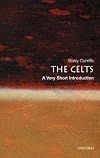
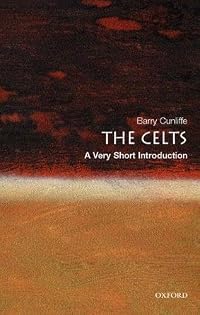
In this guide Barry Cunliffe sheds light on the Celtic race using a range of evidence and explores subjects such as trade migration and the evolution of Celtic traditions.Tags
Recommendations











Member Reviews
Celts, Gauls, Galatians - different names, used in different places and at different times, but they all mean the same - a population of peoples who rose somewhere in Central Europe during the Neolithic and then dispersed in all directions, mixing with local populations, creating separate groups and ending up as a mystery for most of the world. Some of these names indicate a single group, some of them are more generic but a lot of ancient authors used them interchangeably at one time or another and there are archeological and other evidence to support the connection so we know that group existed. But who they were? And why Central Europe when everyone knows that these are Western European (and British Islands) people? Well... about show more that... popular culture and actual history have a different opinion on these.
There probably was no better author for this book than Cunliffe - while not everyone agrees with him on every topic, he is an archaeologist who spent spent his life excavating the English countryside (apparently there is more to it than murders and mayhem as the crime authors will make you believe) and writing extensively on Iron Age Britain and Europe. Which is where the Celts come into the picture - they match his period.
The story he tells has multiple distinctive parts - from the first remains of the peoples, to the development of what will be known as Proto-Celtic language (that's one of the topics where a lot of the current scientists disagree with him - where did the language arise actually: the book explains his theory on the topic although it does mention that there are other theories - but then what can you do in a book of 145 pages), the dispersal of the tribes which made up the initial centers and their mixing with the locals they found elsewhere (all of that seen mainly through pottery - pre-history and early history deals with a lot of pots). But then as time progresses, the authors of the classic period start mentioning them (well, not always in a very nice light) and more and more artifacts start pointing to the history and how it goes (they even made it into the Bible as the Galatians, following one of the known dispersal waves to the East).
And they kept moving and mixing; somehow managing to keep their legends and a language group alive (and somewhat well with four continuously living languages (Breton, Irish, Scottish Gaelic and Welsh)) - and the linguists can say a lot about these movements because of how the languages developed and are used today. And that's where it gets a bit convoluted because the Celts of these ancient times had mixed so thoroughly with everyone that these days the Celts are defined as the speakers of the Celtic languages -- which makes the question of where these languages developed and how they dispersed a very hot topic indeed.
Once Cunliffe is done with the pre-history and the Roman empire, things get even more complicated in his narrative because more and more people are moving across Europe (and the British islands), displacing populations, mixing with whoever they find and pushing the old inhabitants (some of which were once the new ones) to the corners. Probably one of the most ironic fact around the whole situation in the middle ages is that it was Julius Caesar's "The Gallic Wars", republished in 1469 and made public in Venice in 1511, that reminded everyone of the whole Celts/Gauls situation, which led to histories that were not rooted into the Bible and the emerging states of Western Europe started using that history to write their own histories - and the ancient Celts and Gauls showed up back on the map - reinvented and adding the stamp if secular antiquity into the story of the new nations. Cunliffe gives an overview of how that developed in the 16th century and beyond, leading to the current Celtic mania - from books in Latin early on through the universal histories which followed them to the first festivals and congresses of and for Celtic culture to the early 21st century where "Celtic" art and culture is everywhere - not always meaning the same for everyone and not always connected to the historical roots of the peoples.
So who were the Celts? That really depends on why you want to know that - the answer may surprise you anyway you look at it.
The one thing I really disliked about the book is that Cunliffe forgot that he was writing a short book. So every few (short) chapters, he will have an "interlude/review" chapter which added almost nothing new (it did some synthesis but... as dense as the text is, there is just not enough material to require that). But that is a minor gripe.
As usual, there is a "Further Reading" section, which is heavily curated to include mainly works in English with lengthy bibliographies (and skipping the "lunatic fringe"). show less
There probably was no better author for this book than Cunliffe - while not everyone agrees with him on every topic, he is an archaeologist who spent spent his life excavating the English countryside (apparently there is more to it than murders and mayhem as the crime authors will make you believe) and writing extensively on Iron Age Britain and Europe. Which is where the Celts come into the picture - they match his period.
The story he tells has multiple distinctive parts - from the first remains of the peoples, to the development of what will be known as Proto-Celtic language (that's one of the topics where a lot of the current scientists disagree with him - where did the language arise actually: the book explains his theory on the topic although it does mention that there are other theories - but then what can you do in a book of 145 pages), the dispersal of the tribes which made up the initial centers and their mixing with the locals they found elsewhere (all of that seen mainly through pottery - pre-history and early history deals with a lot of pots). But then as time progresses, the authors of the classic period start mentioning them (well, not always in a very nice light) and more and more artifacts start pointing to the history and how it goes (they even made it into the Bible as the Galatians, following one of the known dispersal waves to the East).
And they kept moving and mixing; somehow managing to keep their legends and a language group alive (and somewhat well with four continuously living languages (Breton, Irish, Scottish Gaelic and Welsh)) - and the linguists can say a lot about these movements because of how the languages developed and are used today. And that's where it gets a bit convoluted because the Celts of these ancient times had mixed so thoroughly with everyone that these days the Celts are defined as the speakers of the Celtic languages -- which makes the question of where these languages developed and how they dispersed a very hot topic indeed.
Once Cunliffe is done with the pre-history and the Roman empire, things get even more complicated in his narrative because more and more people are moving across Europe (and the British islands), displacing populations, mixing with whoever they find and pushing the old inhabitants (some of which were once the new ones) to the corners. Probably one of the most ironic fact around the whole situation in the middle ages is that it was Julius Caesar's "The Gallic Wars", republished in 1469 and made public in Venice in 1511, that reminded everyone of the whole Celts/Gauls situation, which led to histories that were not rooted into the Bible and the emerging states of Western Europe started using that history to write their own histories - and the ancient Celts and Gauls showed up back on the map - reinvented and adding the stamp if secular antiquity into the story of the new nations. Cunliffe gives an overview of how that developed in the 16th century and beyond, leading to the current Celtic mania - from books in Latin early on through the universal histories which followed them to the first festivals and congresses of and for Celtic culture to the early 21st century where "Celtic" art and culture is everywhere - not always meaning the same for everyone and not always connected to the historical roots of the peoples.
So who were the Celts? That really depends on why you want to know that - the answer may surprise you anyway you look at it.
The one thing I really disliked about the book is that Cunliffe forgot that he was writing a short book. So every few (short) chapters, he will have an "interlude/review" chapter which added almost nothing new (it did some synthesis but... as dense as the text is, there is just not enough material to require that). But that is a minor gripe.
As usual, there is a "Further Reading" section, which is heavily curated to include mainly works in English with lengthy bibliographies (and skipping the "lunatic fringe"). show less
A short but very illuminating book about the "Celts".
The author does an excellent job of presenting the various aspects of evidence that points towards there being a broadly defined Celtic culture, from written sources, archaeological evidence and surviving languages. He present the case for the concept of a "Celtic" people being the construct of outsiders until recently, whether ancient Greeks or Romans in the sixth to first century BC or the revival of the term in the seventeenth century by antiquarians.
He notes that no one in Britain or Ireland is recorded to have called themselves a “Celt” or “Celtic” before 1700’ and that the Welsh, Scots, Irish and other peoples have only come to describe themselves and their ancestors show more as Celts since the eighteenth century.
He then persuasively argues that the concept of a "Celtic" people was used by nationalists (Breton, Welsh, Scottish, Irish, Manx) to assert their history as separate from that of their larger neighbours (France or England).
The author is also conscious of the romantic notion of the Celt, quoting J R R Tolkien as writing that ‘anything is possible in the fabulous Celtic twilight, which is not so much a twilight of the gods as of the reason’, whilst going on to say that the scholar David Ellis Evans pointed out that Tolkien’s aside was meant specifically to make fun of certain extreme linguistic entomologies and not to be all embracing.
The author wears his learning lightly and although this is a short book that cannot provide rigorous detail, it does achieve its objective of a very readable introduction.
When summarising in his conclusion, he notes that "If we were to take a tough purist line we might be prepared to admit that present-day Bretons could claim to be descendants of Celts, in that Caesar said that the inhabitants of central and western Gaul called themselves Celts, that their language and culture probably survived the Roman interlude, and that there has been comparatively little population change since then."
However, he goes on to say:
"But many would find this definition unnecessarily restrictive, arguing instead that all those regions where Celtic languages are regularly spoken today may claim some relationship to Celtic roots in the prehistoric period. This does not mean that they were descended from Hallstatt aristocracies or La Tène elites but that they are the inheritors of an Atlantic culture and language that is far more ancient."
I have read this prior to going to the British Museum exhibition on the Celts and feel that I now have a far better understanding of the historical background, both in the period to about 600AD, when one can perhaps most clearly talk about a Celtic culture, and the Celtic revival from the seventeenth century for more nationalist purposes. show less
The author does an excellent job of presenting the various aspects of evidence that points towards there being a broadly defined Celtic culture, from written sources, archaeological evidence and surviving languages. He present the case for the concept of a "Celtic" people being the construct of outsiders until recently, whether ancient Greeks or Romans in the sixth to first century BC or the revival of the term in the seventeenth century by antiquarians.
He notes that no one in Britain or Ireland is recorded to have called themselves a “Celt” or “Celtic” before 1700’ and that the Welsh, Scots, Irish and other peoples have only come to describe themselves and their ancestors show more as Celts since the eighteenth century.
He then persuasively argues that the concept of a "Celtic" people was used by nationalists (Breton, Welsh, Scottish, Irish, Manx) to assert their history as separate from that of their larger neighbours (France or England).
The author is also conscious of the romantic notion of the Celt, quoting J R R Tolkien as writing that ‘anything is possible in the fabulous Celtic twilight, which is not so much a twilight of the gods as of the reason’, whilst going on to say that the scholar David Ellis Evans pointed out that Tolkien’s aside was meant specifically to make fun of certain extreme linguistic entomologies and not to be all embracing.
The author wears his learning lightly and although this is a short book that cannot provide rigorous detail, it does achieve its objective of a very readable introduction.
When summarising in his conclusion, he notes that "If we were to take a tough purist line we might be prepared to admit that present-day Bretons could claim to be descendants of Celts, in that Caesar said that the inhabitants of central and western Gaul called themselves Celts, that their language and culture probably survived the Roman interlude, and that there has been comparatively little population change since then."
However, he goes on to say:
"But many would find this definition unnecessarily restrictive, arguing instead that all those regions where Celtic languages are regularly spoken today may claim some relationship to Celtic roots in the prehistoric period. This does not mean that they were descended from Hallstatt aristocracies or La Tène elites but that they are the inheritors of an Atlantic culture and language that is far more ancient."
I have read this prior to going to the British Museum exhibition on the Celts and feel that I now have a far better understanding of the historical background, both in the period to about 600AD, when one can perhaps most clearly talk about a Celtic culture, and the Celtic revival from the seventeenth century for more nationalist purposes. show less
At least for someone who possesses but a passing knowledge of these subjects, this brief volume seems to have done a great job at giving me a sense of who the Celtic people(s) were and are. Of course, the length of the book necessitates superficiality, but Cunliffe manages to cover the different aspects that one would care about---social structures, languages, arts---without getting carried away with simply listing the results of archaeological excavations; a sufficient amount of overarching summary succeeds in assuring me why I ought to care about these archaeological finds. And as always, I very much appreciate the curated list of further readings.
Savage and bloodthirsty, or civilized and peaceable? The Celts have long been a subject of enormous fascination, speculation, and misunderstanding. From the ancient Romans to the present day, their real nature has been obscured by a tangled web of preconceived ideas and stereotypes. Barry Cunliffe seeks to reveal this fascinating people for the first time, using an impressive range of evidence, and exploring subjects such as trade, migration, and the evolution of Celtic traditions. Along the way, he exposes the way in which society's needs have shaped our visions of the Celts, and examines such colourful characters as St Patrick, Cu Chulainn, and Boudica.
The term 'Celtic' is enormously evocative; but the images it evokes are highly diverse and confusing. What exactly do we mean by 'Celtic', and who, past and present, can reasonably be called 'Celts'? Part of the problem is that 'Celtic' is a term with many meanings.
In this densely packed little book, Barry Cunliffe explores evidence for the myriad of tribes and cultures that have been associated with term 'Celt' from the time the term was applied by the Greeks to their neighbours, through the nationalist movements of the 1700s and ending with the modern day adoption by various groups. Mr Cunliffe sifts through the fields of archaeology, history, literature for the latest research into the cultural identity of the 'Celts'.
I liked this show more little book a lot. Packed full of information with helpful maps, though I admit to printing off one or two extra from the net, so that you could see the areas being discussed. The tone of the book was accesssible; a degree in archaeology, literature, anthropology, history or languages was not required in order to make sense of what was being presented. Mr Cunliffe did offer a limited bibliography with the qualification that the bibliographies of the books mentioned will provide more food for thought.
All in all, this book provides what it says on the cover. I'm off to read Mr Cunliffe's more extensive book: "The Ancient Celts". show less
In this densely packed little book, Barry Cunliffe explores evidence for the myriad of tribes and cultures that have been associated with term 'Celt' from the time the term was applied by the Greeks to their neighbours, through the nationalist movements of the 1700s and ending with the modern day adoption by various groups. Mr Cunliffe sifts through the fields of archaeology, history, literature for the latest research into the cultural identity of the 'Celts'.
I liked this show more little book a lot. Packed full of information with helpful maps, though I admit to printing off one or two extra from the net, so that you could see the areas being discussed. The tone of the book was accesssible; a degree in archaeology, literature, anthropology, history or languages was not required in order to make sense of what was being presented. Mr Cunliffe did offer a limited bibliography with the qualification that the bibliographies of the books mentioned will provide more food for thought.
All in all, this book provides what it says on the cover. I'm off to read Mr Cunliffe's more extensive book: "The Ancient Celts". show less
This is a great book on art, history and language. It provides an Atlantic perspective rather than the typical north-south view of Europe.
This is an interesting, scholarly and rather superficial introduction to the Celts. The author focuses more on trying to identify what "Celtic" was in the past and what it means today, than in describing Celtic culture, history or language. The book was ok and provided "a very short introduction" to the subject matter, which is about all you can expect from this book.
Members
- Recently Added By
Author Information

112+ Works 5,259 Members
Barry Cunliffe, a professor of European archaeology at the University of Oxford, is the author of several books on the Romans and on Celtic and Iron Age Europe. He lives in Oxford, England. (Publisher Fact Sheets) Sir Barrington Windsor "Barry" Cunliffe is a British archaeologist and academic. He was Professor of European Archaeology at the show more University of Oxford. Cunliffe was born on December 10, 1939. He became a professor at an early age and became involved in the excavation of the Fishbourne Roman Palace in Sussex. Cunliffe was knighted on June 17, 2006. Some of his publications include: Fishbourne: A Roman Palace and Its Garden; The Celtic World; Facing the Ocean: The Atlantic and Its Peoples, 8000 BC to AD 1500; The Extraordinary Voyage of Pytheas the Greek: The Man Who Discovered Britain; and Britain Begins. (Bowker Author Biography) show less
Series

Common Knowledge
- Canonical title
- The Celts: A Very Short Introduction
- Original title
- The Celts: A Very Short Introduction
- Original publication date
- 2003
- People/Characters
- Cú Chulainn; Saint Patrick; Julius Caesar
- Important places
- Brittany, France; Ireland; Wales, UK
- First words
- Some years ago, after writing a book, The Celtic World, I received a letter from an American.
- Last words
- (Click to show. Warning: May contain spoilers.)This does not mean that they were descended from Hallstatt aristocracies or La Tène elites but that they are the inheritors of an Atlantic culture and language that is far more ancient.
- Original language
- English
Classifications
- Genres
- History, Nonfiction, Anthropology, General Nonfiction
- DDC/MDS
- 936.102 — History & geography History of ancient world (to ca. 499) Europe north and west of Italian Peninsula to ca. 499 British Isles to 410
- LCC
- D70 .C88 — History of Europe, Asia, Africa and Oceania History (General) Ancient history
- BISAC
Statistics
- Members
- 391
- Popularity
- 79,482
- Reviews
- 9
- Rating
- (3.82)
- Languages
- English, French
- Media
- Paper, Ebook
- ISBNs
- 7
- UPCs
- 1
- ASINs
- 1