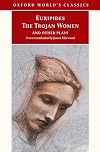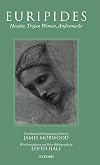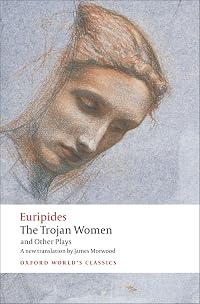
3 Plays: Andromache / Hecuba / Trojan Women
by Euripides
On This Page
Description
Hecuba The Trojan Women AndromacheIn the three great war plays contained in this volume Euripides subjects the sufferings of Troy's survivors to a harrowing examination.The horrific brutality which both women and children undergo evokes a response of unparalleled intensity in the playwright whom Aristotle called the most tragic of the poets. Yet the new battleground of the aftermath of war is one in which the women of Troy evince an overwhelming greatness ofspirit. We weep for the aged show more Hecuba in her name play and in The Trojan Women, yet we respond with an at times appalled admiration to her resilience amid unrelieved suffering. Andromache, the slave-concubine of her husband's killer, endures her existence in the victor's country with a Stoicnobility. Of their time yet timeless, these plays insist on the victory of the female spirit amid the horrors visited on them by the gods and men during war. show lessTags
Recommendations








Member Reviews
It is rather hard to believe that these plays were written over 2,400 years ago. They are easy to read and comprehend and are, in fact, very absorbing and captivating. I guess that is why they are still read a couple thousand years after they were written! The plays are all tragedies and pertain to the Trojan War and it's aftermath, which took place hundreds of years prior to the plays being written (if the war actually did occur). They all feature strong and forceful yet tragic female characters. To me, they are far more interesting and compelling than the male characters. It is interesting to note that many of the Greek tragedies have such strong female characters, since they were written by men, for a male only audience (women were show more not allowed to watch them), and acted in by males only. I have noticed that in the past few years there has been several new novels written that are based on Greek Mythology, and most of them seem to feature female leading characters. They are more engrossing, and let's face it, Achilles was an obnoxious jerk.
I liked all three of the plays in this collection, I did not really prefer one over the other, enjoying each in it's turn. And if you are thinking about popping the DVD of the movie "Troy" into your player, sit down and read some Euripides instead. He is far more entertaining and believable... show less
I liked all three of the plays in this collection, I did not really prefer one over the other, enjoying each in it's turn. And if you are thinking about popping the DVD of the movie "Troy" into your player, sit down and read some Euripides instead. He is far more entertaining and believable... show less
Full disclosure: I had to skim a good portion of the dialogue in each of these plays in order to not give up out of boredom. I think that a focus on monologues and having very little action was the style back in ancient Greece, but it does not translate well to modern America (my attention span is nil! entertain me!). The strongest feelings I had when reading these plays was when I stepped back and considered on my own what the characters were going through; I did not find the dialogue to be all that moving.
Of all the Euripides plays I've read, Trojan Women is definitely my favorite. I can't remember the last time I've read something so heart-wrenching.
Hecuba had it right when she said, "Nothing, no agony for us is missing." Absolutely nothing could have made it worse.
Hecuba had it right when she said, "Nothing, no agony for us is missing." Absolutely nothing could have made it worse.
Ratings
Members
- Recently Added By
Author Information

1,345+ Works 34,155 Members
Euripides was born in Attica, Greece probably in 480 B.C. He was the youngest of the three principal fifth-century tragic poets. In his youth he cultivated gymnastic pursuits and studied philosophy and rhetoric. Soon after he received recognition for a play that he had written, Euripides left Athens for the court of Archelaus, king of Macedonia. show more Fragments of about fifty-five plays survive. Among his best-known plays are Alcestis, Medea and Philoctetes, Electra, Iphigenia in Tauris, The Trojan Women, and Iphigenia in Aulis Iphigenia. He died in Athens in 406 B.C. (Bowker Author Biography) show less
Series
Belongs to Publisher Series
Work Relationships
Common Knowledge
- Canonical title
- 3 Plays: Andromache / Hecuba / Trojan Women
- Original language
- Greek (Ancient) (Ancient)
Classifications
- Genre
- Fiction and Literature
- DDC/MDS
- 822.01 — Literature & rhetoric English & Old English literatures English drama Drama of specific media, scope, kinds {only by more than one author}
- LCC
- PA3975 .A2 — Language and Literature Greek language and literature. Latin language and literature Greek literature Individual authors Euripedes
- BISAC
Statistics
- Members
- 184
- Popularity
- 176,863
- Reviews
- 3
- Rating
- (3.60)
- Languages
- English
- Media
- Paper, Ebook
- ISBNs
- 3
- ASINs
- 1