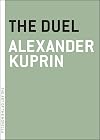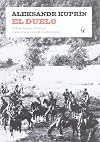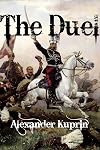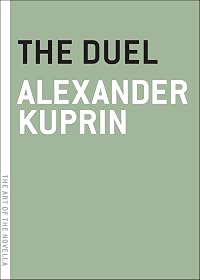
The Duel
by Alexander Kuprin
On This Page
Description
General Books publication date: 2009 Original publication date: 1916 Original Publisher: Macmillan Subjects: Russia Fiction / Literary Foreign Language Study / Yiddish History / Europe / RussiaTags
Recommendations




























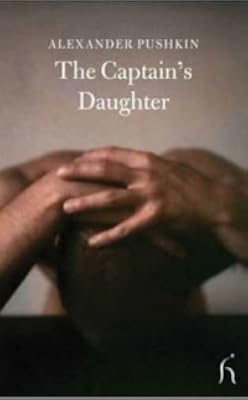
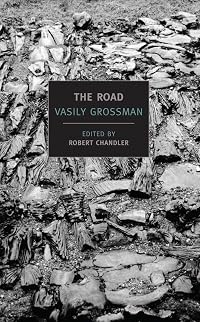
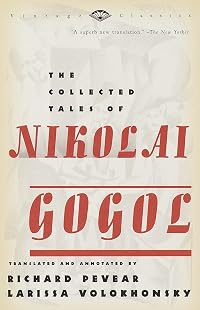
Member Recommendations

Member Reviews
The Duel (1905) is Russian author Aleksandr Kuprin's realist masterpiece, wining him literary fame and friendship with Anton Chekov, Maxim Gorky, Leonid Andreyev, Nobel Prize-winning Ivan Bunin and Leo Tolstoy. Kuprin was a born storyteller and has been compared with Kipling and Jack London. Like London, however, Kuprin "degenerated" later in life with the vices of women (prostitutes) and drink and his works similarly became sensational, like with the lurid account of prostitutes in The Pit (1915). But he reached a pinnacle of high art with The Duel.
The Duel explores "honor" in its many permutations. Honor in career, love, and the hypocrisy inherit. The main character, Romashov, is a 21 year old military officer in training in a show more backwater provincial town where everyone knows everyone and gossip spreads quickly. Kuprin's realistic portrayal of the horrors of Russian military life is a wonderfully rich portrait of an "odious and wanton liaison [of] gambling, drinking, soul-killing, monotonous regimental routine, with never a single inspiring word, never a ray of light in the black, hopeless darkness."
Romashov experiences a number of setbacks in his career and his romantic notions of being a hero to the Czar are shattered by cruel realities - on the brink of suicide (a common occurrence in his regiment) he undergoes a change when he discovers salvation through empathizing with the sufferings of others: "it was clear to [Romashov] at once how petty and insignificant was his own sorrow in comparison with [his friends] cruel fate." By rising above soul-crushing military doctrine of honor and violence, and finding instead sympathy with others, he finds freedom, "a proud, triumphant feeling of malicious joy and defiance."
To this end Romashov then discovers that most professions are based on "mistrust of the honor and morality of mankind.. supervisors and official, policemen, book-keepers, priests, etc.." and there are only two careers that are truly noble, science/art. and manual labor. Thus Romashov navigates his way through the world of honor in the sphere of his career, but he has a fatal flaw and that is love. In the end he is tricked by honor in love (or lack thereof) and it is his undoing. Kuprin was not entirely happy with the novels ending, and I tend to agree that its sensationalism mires it in the 19th century. It could have been a modernist novel had Romashov's duel ended in a different way, such as the alternative path suggested by his friend Nasanski. However it is still dramatic and satisfying.
The Duel is available online its original 1916 English trans.
--Review by Stephen Balbach, via CoolReading (c) 2008 cc-by-nd show less
The Duel explores "honor" in its many permutations. Honor in career, love, and the hypocrisy inherit. The main character, Romashov, is a 21 year old military officer in training in a show more backwater provincial town where everyone knows everyone and gossip spreads quickly. Kuprin's realistic portrayal of the horrors of Russian military life is a wonderfully rich portrait of an "odious and wanton liaison [of] gambling, drinking, soul-killing, monotonous regimental routine, with never a single inspiring word, never a ray of light in the black, hopeless darkness."
Romashov experiences a number of setbacks in his career and his romantic notions of being a hero to the Czar are shattered by cruel realities - on the brink of suicide (a common occurrence in his regiment) he undergoes a change when he discovers salvation through empathizing with the sufferings of others: "it was clear to [Romashov] at once how petty and insignificant was his own sorrow in comparison with [his friends] cruel fate." By rising above soul-crushing military doctrine of honor and violence, and finding instead sympathy with others, he finds freedom, "a proud, triumphant feeling of malicious joy and defiance."
To this end Romashov then discovers that most professions are based on "mistrust of the honor and morality of mankind.. supervisors and official, policemen, book-keepers, priests, etc.." and there are only two careers that are truly noble, science/art. and manual labor. Thus Romashov navigates his way through the world of honor in the sphere of his career, but he has a fatal flaw and that is love. In the end he is tricked by honor in love (or lack thereof) and it is his undoing. Kuprin was not entirely happy with the novels ending, and I tend to agree that its sensationalism mires it in the 19th century. It could have been a modernist novel had Romashov's duel ended in a different way, such as the alternative path suggested by his friend Nasanski. However it is still dramatic and satisfying.
The Duel is available online its original 1916 English trans.
--Review by Stephen Balbach, via CoolReading (c) 2008 cc-by-nd show less
Young Werther in the Russian army. A lot of romantic olfactory activity, senseless army training every other chapter, iconically, and love in a traditional dichotomy: dirty vs. lofty.
Two stars go to the language.
Two stars go to the language.
Перед Вами книга из серии "Классика в школе", в которую собраны все произведения, изучающиеся в начальной школе, средних и старших классах. Не тратьте время на поиски литературных произведений, ведь в этих книгах есть все, что необходимо прочесть по школьной программе: и для чтения в классе, и внеклассных заданий. Избавьте своего ребенка от длительных поисков и невыполненных уроков. В книгу включена show more повесть А.И.Куприна "Поединок", которую изучают в 11 классе. show less
Ratings
Members
- Recently Added By
Author Information

217+ Works 852 Members
Awards and Honors
Notable Lists
Series
Belongs to Publisher Series
Work Relationships
Is contained in
Common Knowledge
- Canonical title
- The Duel
- Original publication date
- 1905
- Original language*
- venäjä
*Some information comes from Common Knowledge in other languages. Click "Edit" for more information.
Classifications
- Genres
- Fiction and Literature, General Fiction
- DDC/MDS
- 891.733 — Literature & rhetoric Literatures of other languages East Indo-European and Celtic literatures Russian and East Slavic languages Russian fiction 1800–1917
- LCC
- PG3467 .K8 .P613 — Language and Literature Slavic languages and literatures. Baltic languages. Albanian language Slavic. Baltic. Albanian Russian literature Individual authors and works 1870-1917
- BISAC
Statistics
- Members
- 129
- Popularity
- 253,828
- Reviews
- 3
- Rating
- (3.76)
- Languages
- 8 — English, Finnish, French, Hungarian, Italian, Russian, Spanish, Turkish
- Media
- Paper, Audiobook, Ebook
- ISBNs
- 27
- ASINs
- 10