On This Page
Description
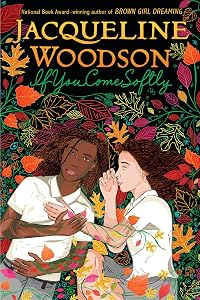
After meeting at their private school in New York, fifteen-year-old Jeremiah, who is black and whose parents are separated, and Ellie, who is white and whose mother has twice abandoned her, fall in love and then try to cope with people's reactions.Tags
Recommendations

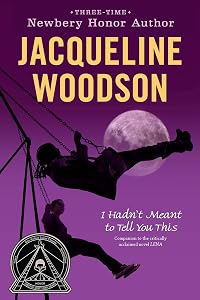
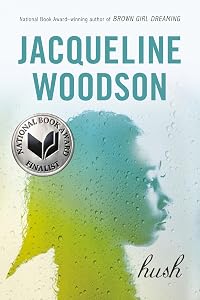
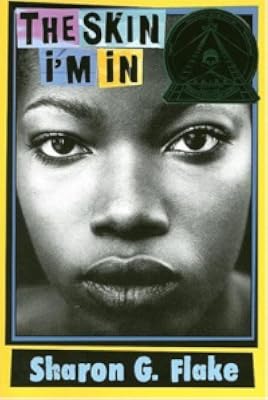
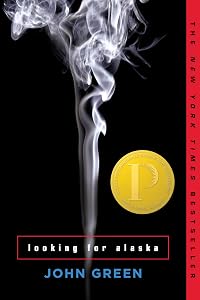
Member Recommendations
by anonymous user

Member Reviews
In If You Come Softly, Jacqueline Woodson tells the story of Elisha (Ellie), a Jewish girl living in Manhattan, and Jeremiah (Miah), an African American boy living in Brooklyn, who go to Percy prep school and fall in love. The story itself is loosely inspired by William Shakespeare’s Romeo and Juliet, with both Ellie and Miah coming from well-to-do families in their respective communities, the dualism of light and dark, Miah’s cousin Carlton loosely filling in the Benvolio role, and even a prologue that similarly summarizes the story’s significance for the reader before it begins. Those similarities aside, Woodson’s story easily stands on its own, telling a story that remains relevant twenty years after its first publication. show more The issues of race and Miah’s awareness of the weight it imparts, coupled with Ellie’s discussion of not noticing her own race as a result of white privilege, easily explains a concept that so many informed adults continue to struggle with. The way Miah code-switches depending on his location captures something that most writers might ignore but that adds believability to the story. While many English teachers continue to use Shakespeare’s Romeo and Juliet, I would argue that Woodson’s novel should take its place in the curriculum. She manages to evoke feelings with the minimum amount of description so that older readers find themselves recalling their first stirrings of love while younger readers will find the characters infinitely more relatable and understandable. The book, like Angie Thomas’s The Hate U Give, should be on every American’s reading list. show less
You know how sometimes the question goes around about the one book you'd want everyone to read?
This is it. This is my choice.
I first read this book in middle school and have never forgotten the impact it had on me. During this reread, I wasn't just reading it through an adult lens, but through the lens of my 13-year-old self.
Even though this time I knew what happens, this book punched me just as much as it did so many years ago. Woodson's utterly poetic writing pulls you in, wraps you tightly, makes your emotions soar, and drags them back down again.
This book deals with so many identities and dynamics: race, Jewishness, queerness, money, divorce, family, growing up, fitting in, the ways they all intersect. It explores so many show more relationships, multiple dimensions and types of each: siblings, parent/child, romantic couples, friends.
The more I think about it, the more I realize just how formative this book was to my younger self, especially on the stupidity and senselessness and wrongness of racism. Even when I was 13, I recognized the reality of the book's ending. I hated it, wished the story could have ended differently, but never did I think it wasn't realistic. And that's what bothered me the most. That's what still bothers me, because the depictions of racism are still staggeringly relevant today.
Woodson wrote a devastatingly impactful book that should be required reading for everyone. show less
This is it. This is my choice.
I first read this book in middle school and have never forgotten the impact it had on me. During this reread, I wasn't just reading it through an adult lens, but through the lens of my 13-year-old self.
Even though this time I knew what happens, this book punched me just as much as it did so many years ago. Woodson's utterly poetic writing pulls you in, wraps you tightly, makes your emotions soar, and drags them back down again.
This book deals with so many identities and dynamics: race, Jewishness, queerness, money, divorce, family, growing up, fitting in, the ways they all intersect. It explores so many show more relationships, multiple dimensions and types of each: siblings, parent/child, romantic couples, friends.
The more I think about it, the more I realize just how formative this book was to my younger self, especially on the stupidity and senselessness and wrongness of racism. Even when I was 13, I recognized the reality of the book's ending. I hated it, wished the story could have ended differently, but never did I think it wasn't realistic. And that's what bothered me the most. That's what still bothers me, because the depictions of racism are still staggeringly relevant today.
Woodson wrote a devastatingly impactful book that should be required reading for everyone. show less
somehow this is just so beautifully written. i don't even know what it is about it, but it's just lovely. this is a beautiful little book, that is much more powerful than it seems like it should be. and somehow, in spite of the world we live in, i didn't see the ending coming.
(and the audio readers were both excellent. i particularly liked the reader for jeremiah, but they both were so very good.)
(and the audio readers were both excellent. i particularly liked the reader for jeremiah, but they both were so very good.)
This beautiful book for Young Adults is about star-crossed first love between a black boy, fifteen-year-old Jeremiah (“Miah”), and a white girl of the same age, Ellie, who meet at Percy Prep School in New York City. In spite of coming from relatively privileged backgrounds, both kids are basically lonely until they find each other.
As their relationship blossoms, they put up with a steady stream of stares and obscene remarks. They talk about it, and decide they will treat it like rain:
"Miah: Let’s say it’s rain – the people who got problems with us being together – let’s call them and their problems rain.
Ellie nodded. “Okay, they’re rain.” She smiled. “So now what?”
Miah: “So it’s not always raining, is it? But show more when it’s not raining, we know the rain isn’t gone forever.”
Ellie sighed. “Well a drought would be a beautiful thing.”
But in the story, it just rains harder, until one day, the downpour doesn’t stop.
Evaluation: Get the Kleenex ready and read this book. Issues of black and white, of divorce and infidelity, even of gay and straight, are touched upon in this book, with sensitivity, realism, and love. Highly recommended. show less
As their relationship blossoms, they put up with a steady stream of stares and obscene remarks. They talk about it, and decide they will treat it like rain:
"Miah: Let’s say it’s rain – the people who got problems with us being together – let’s call them and their problems rain.
Ellie nodded. “Okay, they’re rain.” She smiled. “So now what?”
Miah: “So it’s not always raining, is it? But show more when it’s not raining, we know the rain isn’t gone forever.”
Ellie sighed. “Well a drought would be a beautiful thing.”
But in the story, it just rains harder, until one day, the downpour doesn’t stop.
Evaluation: Get the Kleenex ready and read this book. Issues of black and white, of divorce and infidelity, even of gay and straight, are touched upon in this book, with sensitivity, realism, and love. Highly recommended. show less
Elisha (Ellie) and Jeramiah (Miah) attend the same fancy prep school. They are both new to the school, and they literally bump into each other. They are instantly attracted to each other. Though their lives are outwardly very different, they are very much alike on the inside.
Ellie is white and her parents are still together, but no longer in love. Ellie has several older brothers and sisters who have all moved away from home. Miah is black, the only child of a celebrity couple who has recently divorced. Both feel misunderstood and out of place at home, but find understanding in each other.
Miah and Ellie quickly start spending all of their free time together and their relationship blossoms. Though no one says anything directly to the show more couple, their peers (and random strangers) stare and talk about them. Miah finally introduces Ellie to his mother. Just when Ellie gathers the courage to tell her parents about Miah, tragedy strikes.
The story is told with grace and Woodson gives us lots to think about. The ending was beautiful and sad. Though it was well-done, I was a bit disappointed, if only because I wanted something more for Miah and Ellie. show less
Ellie is white and her parents are still together, but no longer in love. Ellie has several older brothers and sisters who have all moved away from home. Miah is black, the only child of a celebrity couple who has recently divorced. Both feel misunderstood and out of place at home, but find understanding in each other.
Miah and Ellie quickly start spending all of their free time together and their relationship blossoms. Though no one says anything directly to the show more couple, their peers (and random strangers) stare and talk about them. Miah finally introduces Ellie to his mother. Just when Ellie gathers the courage to tell her parents about Miah, tragedy strikes.
The story is told with grace and Woodson gives us lots to think about. The ending was beautiful and sad. Though it was well-done, I was a bit disappointed, if only because I wanted something more for Miah and Ellie. show less
Reading this for the first time twenty-one years after its 1998 publication, the kids in If You Come Softly seemed impossibly, bittersweetly innocent to me in so many ways. Did they seem so then? It's hard for me to know. Still, their story (which Woodson says began as a modern reimagining of Romeo & Juliet) feels universal, and Woodson tells it in a beautiful, nuanced, perfectly paced way.
Colter Brantz
EDCI 4120/5120
Woodson, J. (1998) If you come softly. New York: Putnam’s.
Grade Levels: 7-9
Category: Realistic fiction
Read-Alouds: 12-32 (chapter 2, the meeting) 49-58 (chapter4, they come in all types) 168-172 (chapter 23, Then, nothing)
Summary: Ellie is Jewish girl from the Upper East Side of Manhattan and Jeremiah is a black boy from Brooklyn. Both kids come from affluent families, and parents who are no longer in love. Their parents decide to remove them from their respective public schools and place them in the prestigious, and expensive, Percy Academy where they meet and fall in love. Throughout their relationship it is painfully obvious that the vast majority of the society around them disapproves of their union, show more from Ellie’s supposedly liberal sister, to Jeremiah’s worldly father, to the elderly women that they pass on the streets. The two are forced to fight against the prejudice that lives within their families and the prejudice that they see in strangers, in order to maintain their love, which is born of an organic union of kindred souls. As the novel progresses it seems that the teens will be able to combat the social forces that conspire against them and live happily together. That is until the very force entrusted with the protection of society as a whole takes Jeremiah’s life for being a black kid running in a white neighborhood.
Themes: The obvious themes in this book are love and race, and what happens when love necessitates the union of supposedly disparate races. Love is shown to be a universal, regardless of race, and racial difference is shown to be a construction, but the recognition of these two facts does not eliminate the danger of false perception.
Discussion Questions:
Why does Ellie expect Anne to be understanding of her feelings for Jeremiah? What has Anne experienced that would give her a unique perspective? Why is Ellie disappointed in Anne’s reaction?
What role does Carleton play in this story? Why is his background significant to Jeremiah?
What did Jeremiah’s father mean when he said “never run in a white neighborhood”? What does this suggest about the way prejudice operates in this society?
Reader Response: I have read very few books that have had endings that elicited such an emotional response from me. The story is a valuable one, even though it does not really break any new ground, but the manner in which the story closes will ensure that it has a lasting effect on its readers. How could Woodson let Jeremiah die? She forces her reader to become so attached to both of the main characters that a real bond is developed, and then, she simply takes it all away. But, I think that this is the point. It is the opposite of what we want to happen, but sometimes it is the reality of what does happen. Black is still seen as criminal, and Woodson wants to make it perfectly clear that misconceptions about a whole group of people inevitably end tragically, and these misconceptions must be rectified in order to achieve a level of health in our society. I could not be any happier that I chose to read Jacqueline Woodson and be exposed to poignant social criticism that is backed by impeccable character development. show less
EDCI 4120/5120
Woodson, J. (1998) If you come softly. New York: Putnam’s.
Grade Levels: 7-9
Category: Realistic fiction
Read-Alouds: 12-32 (chapter 2, the meeting) 49-58 (chapter4, they come in all types) 168-172 (chapter 23, Then, nothing)
Summary: Ellie is Jewish girl from the Upper East Side of Manhattan and Jeremiah is a black boy from Brooklyn. Both kids come from affluent families, and parents who are no longer in love. Their parents decide to remove them from their respective public schools and place them in the prestigious, and expensive, Percy Academy where they meet and fall in love. Throughout their relationship it is painfully obvious that the vast majority of the society around them disapproves of their union, show more from Ellie’s supposedly liberal sister, to Jeremiah’s worldly father, to the elderly women that they pass on the streets. The two are forced to fight against the prejudice that lives within their families and the prejudice that they see in strangers, in order to maintain their love, which is born of an organic union of kindred souls. As the novel progresses it seems that the teens will be able to combat the social forces that conspire against them and live happily together. That is until the very force entrusted with the protection of society as a whole takes Jeremiah’s life for being a black kid running in a white neighborhood.
Themes: The obvious themes in this book are love and race, and what happens when love necessitates the union of supposedly disparate races. Love is shown to be a universal, regardless of race, and racial difference is shown to be a construction, but the recognition of these two facts does not eliminate the danger of false perception.
Discussion Questions:
Why does Ellie expect Anne to be understanding of her feelings for Jeremiah? What has Anne experienced that would give her a unique perspective? Why is Ellie disappointed in Anne’s reaction?
What role does Carleton play in this story? Why is his background significant to Jeremiah?
What did Jeremiah’s father mean when he said “never run in a white neighborhood”? What does this suggest about the way prejudice operates in this society?
Reader Response: I have read very few books that have had endings that elicited such an emotional response from me. The story is a valuable one, even though it does not really break any new ground, but the manner in which the story closes will ensure that it has a lasting effect on its readers. How could Woodson let Jeremiah die? She forces her reader to become so attached to both of the main characters that a real bond is developed, and then, she simply takes it all away. But, I think that this is the point. It is the opposite of what we want to happen, but sometimes it is the reality of what does happen. Black is still seen as criminal, and Woodson wants to make it perfectly clear that misconceptions about a whole group of people inevitably end tragically, and these misconceptions must be rectified in order to achieve a level of health in our society. I could not be any happier that I chose to read Jacqueline Woodson and be exposed to poignant social criticism that is backed by impeccable character development. show less
Members
- Recently Added By
Lists

Books Read in 2018
4,360 works; 110 members

The Books I've Read 2018
143 works; 1 member

Books Read in 2019
4,052 works; 109 members

Black Authors
386 works; 29 members

Must-Read Books by Black Authors
114 works; 92 members

New books December
15 works; 1 member

Vlogbrothers Book Recommendations
307 works; 4 members
Author Information

53+ Works 36,986 Members
Jacqueline Woodson was born in Columbus, Ohio on February 12, 1963. She received a B.A. in English from Adelphi University in 1985. Before becoming a full-time writer, she worked as a drama therapist for runaways and homeless children in New York City. Her books include The House You Pass on the Way, I Hadn't Meant to Tell You This, Lena, and The show more Day You Begin. She won the Coretta Scott King Award in 2001 for Miracle's Boys. After Tupac and D Foster, Feathers, and Show Way won Newbery Honors. Brown Girl Dreaming won the E. B. White Read-Aloud Award in 2015. Her other awards include the Margaret A. Edwards Award for lifetime achievement in writing for young adults, the Los Angeles Times Book Prize, and the 2018 Astrid Lindgren Memorial Award. She was also selected as the Young People's Poet Laureate in 2015 by the Poetry Foundation. (Bowker Author Biography) show less
Some Editions
Awards and Honors
Awards
Distinctions
Notable Lists
Series

Work Relationships
Is contained in
Common Knowledge
- Original publication date
- 1998
- People/Characters
- Ellie; Miah; Carlton; Marion
- Dedication
- For the ones like Jeremiah
The Alexander - Grossman Family - First words
- My mother calls to me from the bottom of the stairs, and I pull myself slowly from a deep sleep.
- Quotations
- If you come as softly
as the wind within the trees
You may hear what I hear
See what sorrow sees
And if you come I will be silent
Nor speak harsh words to you.
I will not ask you why, now.
Or how, or... (show all) what you do.
We shall sit here, softly
Beneath two different years
And the rich earth between us
Shall drink our tears
He wondered where that stuff went to, where love went to, how a person could just love someone one day and boom-- the next day love somebody else. - Last words
- (Click to show. Warning: May contain spoilers.)Then, long before we are reading, it moves on.
Classifications
- Genres
- Fiction and Literature, Tween, Kids, Teen, Young Adult
- DDC/MDS
- 813.54 — Literature & rhetoric American literature in English American fiction in English 1900-1999 1945-1999
- LCC
- PZ7 .W868 .I — Language and Literature Fiction and juvenile belles lettres Fiction and juvenile belles lettres Juvenile belles lettres
- BISAC
Statistics
- Members
- 1,251
- Popularity
- 19,652
- Reviews
- 52
- Rating
- (4.02)
- Languages
- Dutch, English, German, Swedish
- Media
- Paper, Audiobook, Ebook
- ISBNs
- 28
- ASINs
- 11