On This Page
Description
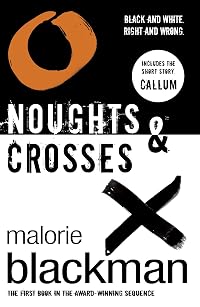
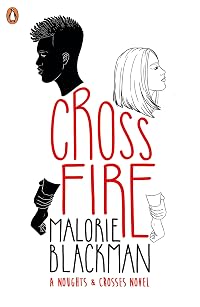
Sephy is a Cross – a member of the dark-skinned ruling class. Callum is a nought – a 'colourless' member of the underclass who were once slaves to the Crosses. The two have been friends since early childhood. But that's as far as it can go. Until the first steps are taken towards more social equality and a limited number of Noughts are allowed into Cross schools... Against a background of prejudice and distrust, intensely highlighted by violent terrorist activity by Noughts, a romance show more builds between Sephy and Callum – a romance that is to lead both of them into terrible danger.... show less
Tags
Recommendations

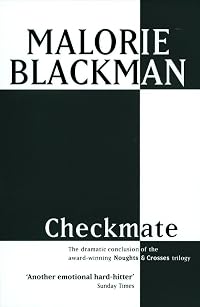


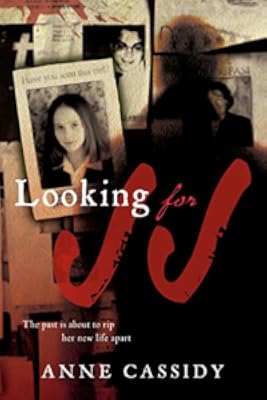
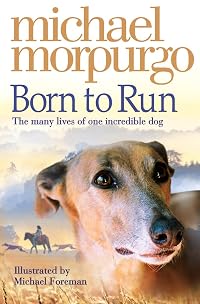
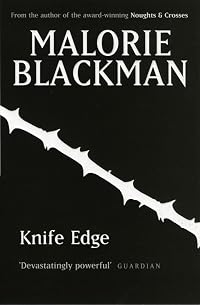
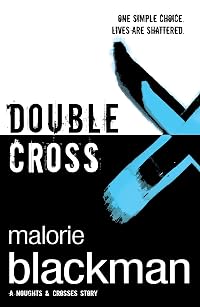
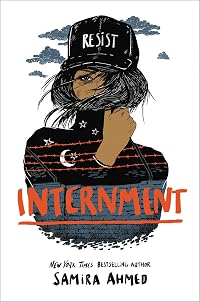
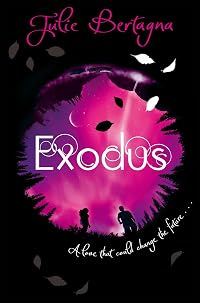
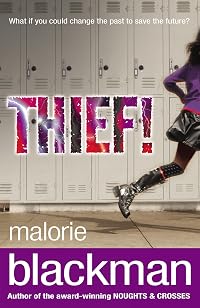
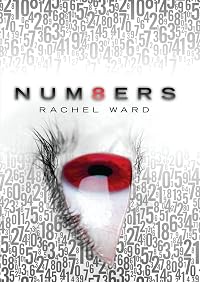


Member Recommendations
by anonymous user
Member Reviews
This is the story of Callum and Sephy (Persephone). One white the other black, separated by the system on racist grounds. Black is the dominant race with the white minority suffering racial prejudice. Right from the start you are struck by the racial injustice and loss of hope in the minority community, as gradually everything is taken away from them.. The integration of schools echoes the civil rights movement in sixties America. How standing up for what is right has unforeseen consequences and a price to pay.
Likening the story to Romeo and Juliet almost trivialises the bigger picture which goes far beyond two families. This book examines how institutions (school, justice, employment and politics), affect the individual and how show more socialisation reinforces and shapes the wider society. Why the use of language matters, not only in how we see ourselves, but how we view other people. The value of work and the denigration and loss imposed by society when it is absent or lost. The breakdown of relationships through poverty and hardship.
The pace of this novel is measured and dynamic, not letting up for a second, yet not feeling rushed either. Written alternatively from both Callum and Sephy’s point of view, we get a view of race from both sides. How family dynamics and loyalties cause friction on both sides, echoing the problems in wider society. It is interesting that Callum’s family is more united and separate than Sephy’s middle class ideal, with a father who pursues power, a mother who drinks and a sister who wants to escape the family home.
The characters are well drawn, both Callum and Sephy are relatable and although we do not see much of their parents, we do feel their concern for their children’s future. The siblings Jude and Minerva are both the older rebellious sister and brother who challenge the system on their terms. Sephy and Callum naively believe things can change through acts of will and non-violent means. Love conquers all.
The ending is logical and satisfying. It is not a miracle cure, it does not give false hope, like the rest of the book it just states the facts. The addition of the short story An Eye for an Eye really enhances the ending and I look forward to reading the rest of the series. show less
Likening the story to Romeo and Juliet almost trivialises the bigger picture which goes far beyond two families. This book examines how institutions (school, justice, employment and politics), affect the individual and how show more socialisation reinforces and shapes the wider society. Why the use of language matters, not only in how we see ourselves, but how we view other people. The value of work and the denigration and loss imposed by society when it is absent or lost. The breakdown of relationships through poverty and hardship.
The pace of this novel is measured and dynamic, not letting up for a second, yet not feeling rushed either. Written alternatively from both Callum and Sephy’s point of view, we get a view of race from both sides. How family dynamics and loyalties cause friction on both sides, echoing the problems in wider society. It is interesting that Callum’s family is more united and separate than Sephy’s middle class ideal, with a father who pursues power, a mother who drinks and a sister who wants to escape the family home.
The characters are well drawn, both Callum and Sephy are relatable and although we do not see much of their parents, we do feel their concern for their children’s future. The siblings Jude and Minerva are both the older rebellious sister and brother who challenge the system on their terms. Sephy and Callum naively believe things can change through acts of will and non-violent means. Love conquers all.
The ending is logical and satisfying. It is not a miracle cure, it does not give false hope, like the rest of the book it just states the facts. The addition of the short story An Eye for an Eye really enhances the ending and I look forward to reading the rest of the series. show less
Noughts & Crosses follows Sephy and Callum, from childhood friendship through to the ways a racially polarised society repeatedly forces them apart.
The book generated huge contemporary discussion and still feels painfully relevant. By reversing racial hierarchies, placing Black society in the position of power while white citizens remain marginalised and treated as second class, it shifts familiar injustices into a perspective many younger readers may not otherwise encounter so directly. What lingers most are often the smaller details, from the absence of plasters for white skin tones to the anger and alienation that pull Callum and his brother toward extremism. It is very clearly a novel designed to provoke discussion, particularly for show more younger readers, and it remains uncomfortable in ways that still resonate.
At the same time, some elements feel tied to the era in which it was written. The central romance leans heavily into fairly traditional gender dynamics, and the pregnancy storyline felt more familiar and inevitable than surprising.
Still well worth reading, even if parts now feel predictable. A difficult book at times, but one that remains strikingly relevant. show less
The book generated huge contemporary discussion and still feels painfully relevant. By reversing racial hierarchies, placing Black society in the position of power while white citizens remain marginalised and treated as second class, it shifts familiar injustices into a perspective many younger readers may not otherwise encounter so directly. What lingers most are often the smaller details, from the absence of plasters for white skin tones to the anger and alienation that pull Callum and his brother toward extremism. It is very clearly a novel designed to provoke discussion, particularly for show more younger readers, and it remains uncomfortable in ways that still resonate.
At the same time, some elements feel tied to the era in which it was written. The central romance leans heavily into fairly traditional gender dynamics, and the pregnancy storyline felt more familiar and inevitable than surprising.
Still well worth reading, even if parts now feel predictable. A difficult book at times, but one that remains strikingly relevant. show less
What a heartbreaking read this was. My heart bled for Sephy and Callum, two young people from opposite racial and social backgrounds who dared to be friends and gradually fall in love. Set in an alternate reality, the Noughts (the second-rate whites) were not allowed to intermingle with the Crosses (the dominating blacks. I loved how Blackman flipped history around and highlighted the absurdities of society, prejudice and racial hatred.
The story narrative switched between the two teenagers allowing the reader to understand their perspectives as they try to make sense of the world they live in. As the reader I felt their confusion, pain and anger, and shared their growing disillusionment. They showed that the power of love can mend show more bridges and change the world. Their romance was believable and so touching. Despite the pain, separation and heartache it caused, it remained strong and pure, right to the end. The last few pages were horrendous and just left me shattered. Even though I have read this book before, I was desperate for a different outcomes.
Beautifully and powerfully written, with complex characters and full of pain and love, "Noughts and Crosses" is a book that will resonate with me for a long time to come. show less
The story narrative switched between the two teenagers allowing the reader to understand their perspectives as they try to make sense of the world they live in. As the reader I felt their confusion, pain and anger, and shared their growing disillusionment. They showed that the power of love can mend show more bridges and change the world. Their romance was believable and so touching. Despite the pain, separation and heartache it caused, it remained strong and pure, right to the end. The last few pages were horrendous and just left me shattered. Even though I have read this book before, I was desperate for a different outcomes.
Beautifully and powerfully written, with complex characters and full of pain and love, "Noughts and Crosses" is a book that will resonate with me for a long time to come. show less
"Brutal" is the word for "Naughts & Crosses." Even if you see where the story is headed (or perhaps especially if you do), it's grueling to watch the characters move inexorably towards their respective fates.
The story is set in a sort of alternate reality where dark-skinned people ("crosses") are the upper class and light-skinned people ("naughts") are the lower class. The naughts used to be the slaves of the crosses; now they're free, but their lives haven't improved much. And now the son of a naught and the daughter of a cross have dared to overturn social convention by falling in love.
The premise sounds like it could be cheesy, but the author actually pulls it off pretty well, largely because she makes every main character at least a show more little sympathetic. So even though you don't agree with the naughts who have turned terrorist and the crosses who are pulling the strings to maintain the status quo, you at least understand their motivations.
One of the advantages of a story like this where the history of race relations is turned on its head is that it allows the reader to examine the ways in which different races interact with a degree of impartiality, since this fictional world both is and isn't the same as our own.
I came away from this book determined to be a better person, which is a bigger effect than most books have on me. show less
The story is set in a sort of alternate reality where dark-skinned people ("crosses") are the upper class and light-skinned people ("naughts") are the lower class. The naughts used to be the slaves of the crosses; now they're free, but their lives haven't improved much. And now the son of a naught and the daughter of a cross have dared to overturn social convention by falling in love.
The premise sounds like it could be cheesy, but the author actually pulls it off pretty well, largely because she makes every main character at least a show more little sympathetic. So even though you don't agree with the naughts who have turned terrorist and the crosses who are pulling the strings to maintain the status quo, you at least understand their motivations.
One of the advantages of a story like this where the history of race relations is turned on its head is that it allows the reader to examine the ways in which different races interact with a degree of impartiality, since this fictional world both is and isn't the same as our own.
I came away from this book determined to be a better person, which is a bigger effect than most books have on me. show less
A book with an interesting premise - Sephy is a cross and Callum is a nought. Can they overcome society’s prejudices and be together? Unfortunately the story becomes progressively more ridiculous and problematic as it goes on, resulting in a very disappointing exploration of an interesting idea.
Anyone who claims this book is “original” clearly doesn’t live in the same universe I do. And yeah, I get it. It’s a reversal. It’s making people– white people– the tragic past and present of black people, and the discrimination they face on a daily basis. You’re supposed to read this book and be furious about that happens to Callum so that you can take a step back and realize that the prejudice in this book exists in your world too, albeit in a different form. But when I read it, all I felt was bored.
Two reasons I didn't like this book:
First off, the relationship between Callum and Sephy. If I wasn’t told repeatedly that they’re best friends and that they love each other, I never would have known. There was zero show more chemistry. They didn’t get along, they had nothing in common, they didn’t understand each other at all. But but but they were childhood friends! Yeah and big deal. I grew apart from my friends, and by all means, they really should have grown apart too. Hell, the story would have been ONE HUNDRED times better if they grew apart and ended up hating each other and then were thrust back together when the plot required it. Boring and uninspired. That’s what I would call their relationship. The romance was sloppy, the characters annoying at best, and uuuuuuuuuuuuuuuuuuuuuuuuuuuuugh. A forced romance, used only to make the plot work. The worst crime you could commit against your characters.
And second– the writing is atrocious. At first, I was willing to forgive it. “Oh,” I said to myself, “it sounds like a 13 year old wrote this because Sephy is thirteen! It’s meant to highlight how young and immature they are!” And I think I was partially right, because as the characters age, the writing does improve– slightly. But boy oh boy, is it ever immature. It’s so sophisticated, and it makes me wonder if anyone ever sat the author down and told her she’s not a very good writer. It’s a lot of exclamation points– including in internal thoughts– and a lot of dumb questions and a lot of “yeuck!” “as if!” “haha, funny one, Sephy!” type stuff. I wanted to pull my hair out. The writing not only took me away from the story, but it made me dislike the characters, and it made every emotionally scene fizzle away.
I didn’t hate this book. I really, really disliked it, but I didn’t hate it. I appreciate its attempts to explain race, and I appreciate its accessibility. I probably would have loved the hell out of this book if I was 13 (except I would have hated the Thing that happens at the end– not the very end, but the Thing that leads to the very end). But I’m not 13. I’ve lived in this world, and I’ve read some good books.
Enough to decide that this one is not very good. show less
Two reasons I didn't like this book:
First off, the relationship between Callum and Sephy. If I wasn’t told repeatedly that they’re best friends and that they love each other, I never would have known. There was zero show more chemistry. They didn’t get along, they had nothing in common, they didn’t understand each other at all. But but but they were childhood friends! Yeah and big deal. I grew apart from my friends, and by all means, they really should have grown apart too. Hell, the story would have been ONE HUNDRED times better if they grew apart and ended up hating each other and then were thrust back together when the plot required it. Boring and uninspired. That’s what I would call their relationship. The romance was sloppy, the characters annoying at best, and uuuuuuuuuuuuuuuuuuuuuuuuuuuuugh. A forced romance, used only to make the plot work. The worst crime you could commit against your characters.
And second– the writing is atrocious. At first, I was willing to forgive it. “Oh,” I said to myself, “it sounds like a 13 year old wrote this because Sephy is thirteen! It’s meant to highlight how young and immature they are!” And I think I was partially right, because as the characters age, the writing does improve– slightly. But boy oh boy, is it ever immature. It’s so sophisticated, and it makes me wonder if anyone ever sat the author down and told her she’s not a very good writer. It’s a lot of exclamation points– including in internal thoughts– and a lot of dumb questions and a lot of “yeuck!” “as if!” “haha, funny one, Sephy!” type stuff. I wanted to pull my hair out. The writing not only took me away from the story, but it made me dislike the characters, and it made every emotionally scene fizzle away.
I didn’t hate this book. I really, really disliked it, but I didn’t hate it. I appreciate its attempts to explain race, and I appreciate its accessibility. I probably would have loved the hell out of this book if I was 13 (except I would have hated the Thing that happens at the end– not the very end, but the Thing that leads to the very end). But I’m not 13. I’ve lived in this world, and I’ve read some good books.
Enough to decide that this one is not very good. show less
OMIGOD this is such a good book. It moves along interestingly at first but not so terribly differently than many another good YA, but it sneaks up on you and is powerful in its stealth. So glad I read it.
Members
- Recently Added By
Published Reviews
ThingScore 100
There are flaws. The white family sounds like a black one. The novel is told in alternate voices, with stretches of dialogue that make it seem more like a screenplay than a novel, and the characters are archetypes rather than particular, individuated people. In the end, it doesn't matter, because the story is so gripping and the world of Pangea so nightmarishly vivid.
added by Katya0133
Lists

BBC Big Read
191 works; 46 members

1001 Children's Books You Must Read Before You Grow Up
774 works; 101 members

YA science fiction and fantasy by chromatic writers
22 works; 1 member

Recommended AltHist
24 works; 1 member

Illumicrates 100 Best Sci-Fi, Fantasy & Horror Books of the 21st Century
27 works; 1 member

Hazel & Katniss & Harry & Starr Podcast
195 works; 1 member

.
184 works; 1 member

BBC World Book Club
267 works; 5 members

Female Author
1,234 works; 65 members

Books Read in 2020
4,379 works; 124 members

Black Authors
386 works; 28 members

Puffin Books 70th anniversary handbook recommendations
537 works; 10 members

Biggest Disappointments
606 works; 168 members

The Guardian's 100 best books of the 21st century
100 works; 21 members

Books Read in 2015
3,299 works; 126 members

BBC Radio 4 Bookclub
341 works; 13 members

World Book Club (BBC World Service)
212 works; 1 member

BBC's 100 Novels That Shaped Our World
100 works; 22 members
Talk Discussions
Past Discussions
Noughts and Crosses Signed on the Website for £75 in Folio Society Devotees (January 2025)
Author Information

107+ Works 8,564 Members
Some Editions
Awards and Honors
Series

Work Relationships
Is contained in
Has the adaptation
Is abridged in
Has as a reference guide/companion
Common Knowledge
- Canonical title
- Noughts and Crosses
- Alternate titles
- Black and White; Naughts and Crosses
- Original publication date
- 2001
- People/Characters
- Callum McGregor; Persephone Hadley (Sephy); Jude McGregor; Minerva Hadley (Minnie); Jasmine Hadley
- Important places
- London, Albion
- Related movies
- Noughts + Crosses (2020 | IMDb)
- Epigraph
- 'That's just the way it is. Some things will never change. That's just the way it is. But don't you believe them.' - Bruce Hornsby and the Range
'That's just the way it is.
Some things will never change.
That's just the way it is.
But don't you believe them.'
Bruce Hornsby and the Range - Dedication
- This book is dedicated with love to my husband, Neil, And to our daughter, Elizabeth.
- First words
- 'Honestly, Mrs Hadley,' said Meggie McGregor, wiping her eyes.
'Honestly, Mrs Hadley,' said Meggie McGregor, wiping her eyes. 'That sense of humour of yours will be he death of me yet!' - Last words
- (Click to show. Warning: May contain spoilers.)Dear God, please let him have heard me. Please.
Please.
If you're up there.
Somewhere. - Original language
- English
- Canonical DDC/MDS
- 823.92
- Canonical LCC
- PR6053.L346
- Disambiguation notice
- The audiobook narrated by Nina Sosanya & Nigel Greaves is an abridged version (ASIN B000HDWW38); the unabridged audiobook (ASIN B004OVBSO8) is narrated by Syan Blake & Paul Chequer.
Classifications
Statistics
- Members
- 2,558
- Popularity
- 7,499
- Reviews
- 74
- Rating
- (3.80)
- Languages
- 8 — Dutch, English, French, German, Italian, Portuguese, Russian, Spanish
- Media
- Paper, Audiobook, Ebook
- ISBNs
- 52
- ASINs
- 11