On This Page
Description
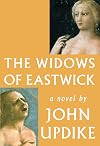
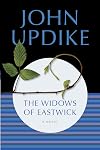
Alexandra, Jane, and Sukie return to the old Rhode Island seaside town where they indulged in wicked mischief under the influence of the diabolical Darryl Van Horne. Darryl is gone, and their lovers of the time have aged or died, but enchantment remains in the familiar streets and scenery of the village, where they enjoyed their lusty primes as free and empowered women. And, among the local citizenry, there are still those who remember them, and wish them ill. How they cope with the show more lingering traces of their evil deeds, the shocks of a mysterious counterspell, and the advancing inroads of old age are at the heart of Updike's delightful, ominous sequel.--From publisher description. show lessTags
Recommendations










Member Reviews
Quick Take: An okay conclusion to The Witches of Eastwick. These widows are more whiny than witchy, though.
For all the malevolent adjectives John Updike uses to describe his widows (forsaken, wicked, wanton, etc.), I found them merely... old. Even Jane, the darkest witch, comes across as just another frustrated old bag: "There's only a splash of vermouth left! That cellist was a measure behind! The microwave oven scares me!"
Despite what the townspeople may remember, these witches aren't evil: they're sad and scared and lonely. Just like everybody else. By playing up their essential humanity, Updike crafts a reasonably engaging story of atonement and reflection, memory and redemption. This in spite of the widows' incessant complaining, show more which I found grating—I'll take evil over petulant any day.
Updike's greatest success is that his sequel doesn't ham-handedly rehash the original; nor does it leave an uninitiated reader feeling as though they've been left out of an inside joke. He strikes a fair balance between old and new, and there's a nice parallel between the original (divided into The Coven - Malifica - Guilt) and the successor (The Coven Reconstituted - Malifica Revisited - Guilt Assuaged). show less
For all the malevolent adjectives John Updike uses to describe his widows (forsaken, wicked, wanton, etc.), I found them merely... old. Even Jane, the darkest witch, comes across as just another frustrated old bag: "There's only a splash of vermouth left! That cellist was a measure behind! The microwave oven scares me!"
Despite what the townspeople may remember, these witches aren't evil: they're sad and scared and lonely. Just like everybody else. By playing up their essential humanity, Updike crafts a reasonably engaging story of atonement and reflection, memory and redemption. This in spite of the widows' incessant complaining, show more which I found grating—I'll take evil over petulant any day.
Updike's greatest success is that his sequel doesn't ham-handedly rehash the original; nor does it leave an uninitiated reader feeling as though they've been left out of an inside joke. He strikes a fair balance between old and new, and there's a nice parallel between the original (divided into The Coven - Malifica - Guilt) and the successor (The Coven Reconstituted - Malifica Revisited - Guilt Assuaged). show less
After reading the Witches earlier this year, had to do the sequel too...it's 30+ years since the trio afflicted rival Jenny with terminal cancer, and rode off into the sunset, each with a new man.
But while Updike's books are full of sex and sin, he always introduces a note of "God will not be mocked" ...and here the three all find themselves widows, and, eventually, return to Eastwick for the summer.
There are sundry faces from the past; and the witches - no longer (quite) the playful minxes of yesteryear, but troubled with old lady complaints - find that their crimes still exact punishment.
Did it finish a tad up in the air? It was still a darn good read and John Updike remains unquestionably my favourite author.
But while Updike's books are full of sex and sin, he always introduces a note of "God will not be mocked" ...and here the three all find themselves widows, and, eventually, return to Eastwick for the summer.
There are sundry faces from the past; and the witches - no longer (quite) the playful minxes of yesteryear, but troubled with old lady complaints - find that their crimes still exact punishment.
Did it finish a tad up in the air? It was still a darn good read and John Updike remains unquestionably my favourite author.
I read Witches after ripping through the Rabbit Angstrom books at the age of 16 or so. Rabbit, Run was assigned reading in one of my high school classes. These books are so preoccupied with sexual liberation and power; about people choking on the yoke of gender roles. Did anybody else read them at that age? The Rabbit books shifted the ground under my feet. Maybe it’s better to read them before reaching marriage, kids and full-blown, irreversible adulthood. Or maybe not? Updike’s language is so ripe, so honestly horny (and yes: chauvinistic, misogynistic, etc.). Nothing much has changed twenty-odd years later except the preoccupation this time is with death rather than sex.
In their prime, fully in tune & blessed by Nature, the three young & sexually vibrant witches explored their powers freely. But not even these witches could halt the passage and effects of time.
With conjured-up husbands they went on with their post Daryl Van Horne lives. Time/fate/Nature brings them together after the deaths of their husbands. Alexandra, Jane & Sukie head off on world travels and sight seeing – to forget or to remember? They can’t forget the deeds of their past and Alexandra especially is pricked by remorse over the death of Jenny Gabriel.
Though they decide to “return to the scene of our primes”, the Eastwick that they return to is not the Eastwick that they left – people have died, aged and left, children show more have grown and the townsfolk memories of the witches’ vengeful deeds has not faded. Instead, the women’s connection with Nature has diminished with the passage of time and they are no longer able to unite to summon the magic that their younger, sexual selves did.
These witches are not the impulsive, imaginative & carelessly vengeful ladies that we knew and readers who were expecting more of that joie-de-vivre will be disappointed – not in the writing, Updike’s prose and story-telling draws the reader in and compels you to finish the journey, but in the characters. And the question is raised – can making amends make amends? show less
With conjured-up husbands they went on with their post Daryl Van Horne lives. Time/fate/Nature brings them together after the deaths of their husbands. Alexandra, Jane & Sukie head off on world travels and sight seeing – to forget or to remember? They can’t forget the deeds of their past and Alexandra especially is pricked by remorse over the death of Jenny Gabriel.
Though they decide to “return to the scene of our primes”, the Eastwick that they return to is not the Eastwick that they left – people have died, aged and left, children show more have grown and the townsfolk memories of the witches’ vengeful deeds has not faded. Instead, the women’s connection with Nature has diminished with the passage of time and they are no longer able to unite to summon the magic that their younger, sexual selves did.
These witches are not the impulsive, imaginative & carelessly vengeful ladies that we knew and readers who were expecting more of that joie-de-vivre will be disappointed – not in the writing, Updike’s prose and story-telling draws the reader in and compels you to finish the journey, but in the characters. And the question is raised – can making amends make amends? show less
 This review was written for LibraryThing Early Reviewers.
This has been on my bookshelf for years and perhaps I should have just left it there. For two-thirds of the book, I couldn't see where the book is going. At times, it felt like a travelogue with its extensive descriptions of Canada, Egypt, and China. There's also something about Nature I didn't understand. The book made more sense later, or at least I found some reason for reading the book when the witches shared their fears of aging and sickness, and Alexandra found some family warmth. Minus the witchcraft, it's just about three lonely women.
Throughout this book, Updike appears to be confronting his own mortality. It is, in fact, more than anything else, a meditation on aging and the ending of life and it is interesting that Updike chose to revisit his "witches" and provide readers with a woman's perspective of this poignant, and sometimes bitter, closure.
As the book opens, all three of the witches have become widows. They are alone, each one uniquely confronting the fear and solitude of life's closing. During the early part of the book, they travel together, becoming reacquainted with one another. Updike's commentary on the frustrations and disappointments often associated with travel are sometimes entertaining but, frankly, often seem irrelevant. Ultimately, the witches show more return to Eastwick and find it, like all else in life, changed in a way that leaves them isolated, out of touch and largely ignored. Updike's writing is so very fine that it is easy to lose sight of the fact that this is far from his best work. Even so, it is, in my opinion, worth reading. He was a remarkable writer. show less
As the book opens, all three of the witches have become widows. They are alone, each one uniquely confronting the fear and solitude of life's closing. During the early part of the book, they travel together, becoming reacquainted with one another. Updike's commentary on the frustrations and disappointments often associated with travel are sometimes entertaining but, frankly, often seem irrelevant. Ultimately, the witches show more return to Eastwick and find it, like all else in life, changed in a way that leaves them isolated, out of touch and largely ignored. Updike's writing is so very fine that it is easy to lose sight of the fact that this is far from his best work. Even so, it is, in my opinion, worth reading. He was a remarkable writer. show less
This sequel to The Witches of Eastwick explores many of the same themes as much of Updike's later work, such as looking back at one's life during old age, and traveling abroad. The latter feels a bit forced, and takes up the first half of the novel---Alexandra visits the Canadian Rockies, then Alexandra and Jane go to Egypt together, then Sukie joins them for a trip to China. Unfortunately, Updike's fictional forays into foreign travel don't live up to the American tradition of Mark Twain or, say, Sinclair Lewis in Dodsworth.
Finally, the three women return to Eastwick for a summer. At this point, it looks like the novel might pick up, and maybe even have some sort of plot for once as it seems the witches may at last get their show more comeuppance for their evil deeds of thirty years ago. But no, this is avoided by means so ridiculous that I won't detail them here, not so much to avoid spoilers as because you wouldn't believe me anyway. Oh all right, let's just say it has to do with an elderly woman seducing a younger gay man. See? I told you you wouldn't believe it. Oh yes, and there's a sci-fi element that relies on a half-baked interpretation of quantum physics, which would have been better left out entirely. show less
Finally, the three women return to Eastwick for a summer. At this point, it looks like the novel might pick up, and maybe even have some sort of plot for once as it seems the witches may at last get their show more comeuppance for their evil deeds of thirty years ago. But no, this is avoided by means so ridiculous that I won't detail them here, not so much to avoid spoilers as because you wouldn't believe me anyway. Oh all right, let's just say it has to do with an elderly woman seducing a younger gay man. See? I told you you wouldn't believe it. Oh yes, and there's a sci-fi element that relies on a half-baked interpretation of quantum physics, which would have been better left out entirely. show less
Members
- Recently Added By
Author Information

342+ Works 53,725 Members
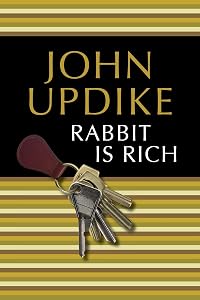
American novelist, poet, and critic John Updike was born in Reading, Pennsylvania on March 18, 1932. He received an A.B. degree from Harvard University, which he attended on a scholarship, in 1954. After graduation, he accepted a one-year fellowship to study painting at the Ruskin School of Drawing and Fine Art in Oxford, England. After returning show more from England in 1955, he worked for two years on the staff of The New Yorker. This marked the beginning of a long relationship with the magazine, during which he has contributed numerous short stories, poems, and book reviews. Although Updike's first published book was a collection of verse, The Carpentered Hen and Other Tame Creatures (1958), his renown as a writer is based on his fiction, beginning with The Poorhouse Fair (1959). During his lifetime, he wrote more than 50 books and primarily focused on middle-class America and their major concerns---marriage, divorce, religion, materialism, and sex. Among his best-known works are the Rabbit tetrology---Rabbit, Run (1960), Rabbit Redux (1971), Rabbit Is Rich (1981), and Rabbit at Rest (1988). Rabbit, Run introduces Harry "Rabbit" Angstrom as a 26-year-old salesman of dime-store gadgets trapped in an unhappy marriage in a dismal Pennsylvania town, looking back wistfully on his days as a high school basketball star. Rabbit Redux takes up the story 10 years later, and Rabbit's relationship with representative figures of the 1960s enables Updike to provide social commentary in a story marked by mellow wisdom and compassion in spite of some shocking jolts. In Rabbit Is Rich, Harry is comfortably middle-aged and complacent, and much of the book seems to satirize the country-club set and the swinging sexual/social life of Rabbit and his friends. Finally, in Rabbit at Rest, Harry arrives at the age where he must confront his mortality. Updike won the Pulitzer Prize for both Rabbit Is Rich and Rabbit at Rest. Updike's other novels range widely in subject and locale, from The Poorhouse Fair, about a home for the aged that seems to be a microcosm for society as a whole, through The Court (1978), about a revolution in Africa, to The Witches of Eastwick (1984), in which Updike tries to write from inside the sensibilities of three witches in contemporary New England. The Centaur (1963) is a subtle, complicated allegorical novel that won Updike the National Book Award in 1964. In addition to his novels, Updike also has written short stories, poems, critical essays, and reviews. Self-Consciousness (1989) is a memoir of his early life, his thoughts on issues such as the Vietnam War, and his attitude toward religion. He was elected to the American Academy of Arts and Letters in 1977. He died of lung cancer on January 27, 2009 at the age of 76. (Bowker Author Biography) John Updike was born in 1932, in Shillington, Pennsylvania. Since 1957 he has lived in Massachusetts. His novels have won the Pulitzer Prize, the National Book Award, the National Book Critics Circle Award, & the Howells Medal. (Publisher Provided) John Updike was born in 1932 and attended Harvard College and the Ruskin School of Drawing and Fine Art in Oxford, England. Form 1955 to 1957 he was a staff member of The New Yorker, which he contributed numerous writings. Updike's art criticism has appeared in publications including Arts and Antiques, The New Republic, The New York Times Book Review, and Realites, among many others. He is the author of such best-selling novels as Rabbit Run and Rabbit is Rich. His many works of fiction, poetry and criticism have been awarded the Pulitzer Prize, the National Book Award, the American Book Award, and the National Book Critics Circle Award. For the past 40 years he has lived in Massachusetts. (Publisher Provided) John Updike is the author of some 50 books, including collections of short stories, poems, & criticism. His novels have won the Pulitzer Prize, the National Book Award, the National Book Critics Circle Award, & the Howells Medal. Born in Shillington, Pennsylvania, in 1932, he has lived in Massachusetts since 1957. (Publisher Provided) show less
Some Editions
Awards and Honors
Awards
Distinctions
Notable Lists
Series

Belongs to Publisher Series
Seuil, Points (P2661)
Common Knowledge
- Canonical title*
- Les veuves d'Eastwick
- Original title
- The Widows of Eastwick
- Original publication date
- 2008-10
- People/Characters
- Alexandra Spofford; Jane Smart; Sukie Rougemont
- Important places
- Canada; Egypt; China; Eastwick, Rhode Island, USA; Rhode Island, USA
- Epigraph
- And then (they say) no Spirit can walke abroad,
The nights are wholsome, then no Planets strike,
No Faiery talkes, nor Witch hath power to Charme:
So hallow'd, and so gracious is the time.
—Hamlet, Act... (show all) I, Scene I - First words
- Those of us acquainted with their sordid and scandalous story were not surprised to hear, by way of rumors from the various localities where the sorceresses had settled after fleeing our pleasant town of Eastwick, Rhode, Isla... (show all)nd, that the husbands whom the three Godforsaken women had by their dark arts concocted for themselves did not prove durable.
- Last words
- (Click to show. Warning: May contain spoilers.)"Well," Alexandra answered, pleased, "Where shall we go together this year?"
- Publisher's editor
- Jones, Judith
- Original language*
- Anglais (Etats-Unis) (Etats-Unis)
*Some information comes from Common Knowledge in other languages. Click "Edit" for more information.
Classifications
Statistics
- Members
- 867
- Popularity
- 31,356
- Reviews
- 28
- Rating
- (3.06)
- Languages
- 5 — English, French, German, Italian, Portuguese
- Media
- Paper, Audiobook, Ebook
- ISBNs
- 29
- ASINs
- 8