Sins of the House of Borgia
by Sarah Bower
On This Page
Description
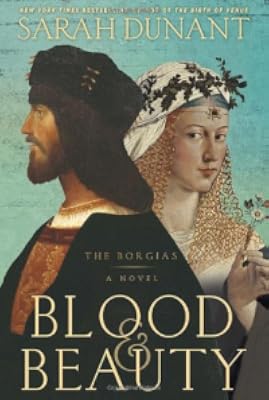
In the vein of Sarah Dunant's New York Times bestseller, Blood and Beauty, Sarah Bower reveals the burning heart of the Borgia family.A Notorious Duke
An Infamous Duchess
An Innocent Girl
Violante isn't supposed to be here, in one of the grandest courts of Renaissance Italy. She isn't supposed to be a lady-in-waiting to the beautiful Lucrezia Borgia. But the same secretive politics that pushed Lucrezia's father to the Vatican have landed Violante deep in a lavish landscape of passion and show more ambition.
Violante discovers a Lucrezia unknown to those who see only a scheming harlot, and all the whispers about her brother, Cesare Borgia, never revealed the soul of the man who dances close with Violante.
But those who enter the House of Borgia are never quite the same when they leave-if they leave at all. Violante's place in history will test her heart and leave her the guardian of dangerous secrets she must carry to the grave.
What Readers Are Saying
"Glittering, gorgeous, compelling, and stunning."
"A richly satisfying historical novel. It deserves prizes."
. show less
Tags
Recommendations









Member Reviews
Historical novels with actual historical figures can be a hit or miss, depending on how much fiction (or changes!) an author decides to add to the life of an historical figure. This novel is told from the POV of a servant of the infamous Lucrezia Borgia.
As far as a work of historical fiction goes in showing what life was like in a certain time period or location, the author does a pretty great job of showing what things were like, and how the mores of the times would in sometimes drastically different ways affect certain things that would have been seen as a much milder sin/offense today.
It would have been nice if the author had focused more on original characters instead of making up a bunch of fiction about the Borgia family to pad show more what is actually known about them. show less
As far as a work of historical fiction goes in showing what life was like in a certain time period or location, the author does a pretty great job of showing what things were like, and how the mores of the times would in sometimes drastically different ways affect certain things that would have been seen as a much milder sin/offense today.
It would have been nice if the author had focused more on original characters instead of making up a bunch of fiction about the Borgia family to pad show more what is actually known about them. show less
I am a serious lover of historical fiction & setting them in Ferrara is usually a bonus & increases the odds I'll love a book. Not here. It's well written & has a lot of detail but it has one glaring problem that cannot be overlooked or discounted. The narrator. First, she has three names going over the course of this story. We meet her as Esther, she converts to Catholicism & is then Donata, she then is nicknamed Violante by Cesare & so we go with that as well.
Now possibly this wouldn't bother me so much but sadly, this is about the most interesting thing about her. You'd think that for all this reinvention she'd be riveting but she isn't. And that takes a lot of the enjoyment out of the story because we rely on her to give color & show more patina to everything. Often times I was annoyed because it was clear that I had figured out what Esther/Donata/Violante had not (the big reveal at the end didn't astonish me). Not only was she not very self-aware, she had no clue what was going on around her. Even granting that the main character is young, over the course of 500 pages, one does expect to see some character growth. I gave up on her around 75% in and just remained to find our how it all ended. I wouldn't have believed it possible, but she made the Borgias tedious.
And the "relationship" between Esther/Donata/Violante was a complete waste of time. That's because it wasn't much of a relationship. Cesare displayed no qualities that telegraphed "love" for her so who knows why this was an issue that garnered so much attention in the book (I could have lived with just Cesare & La Fiametta trysting). It was a lot of Esther/Donata/Violante pining & fantasizing, some interaction with Cesare, more pining & fantasizing, sparse hook-up, fantasizing & pining. Wash. Rinse. Repeat... while you strike yourself with your Kindle over & over again. She spent the great majority of the story in make-believe & hoping one day it would all come true. Even sickness & childbirth didn't wake her up. It made her seem a simpering twit & not sympathetic. Honestly, if all that had been left out, it may have been a tighter & better told story.
I will say that in spite of everything I've said, other characters did come across well (Angela, Donna Lucrezia, the brothers of the House of Este & Gideon especially) but it becomes an annoyance as you don't spend nearly enough time with them & of course can't get away from the narrator. In the end, this was just okay and I am left a bit disappointed. I had expected a perceptive & sharp telling by a lady in waiting but apparently Esther/Donata/Violante wasn't that person to begin with. She was as disconnected in court as she was with the family she left behind. I suppose there's something to consistency but I wanted more from her. show less
Now possibly this wouldn't bother me so much but sadly, this is about the most interesting thing about her. You'd think that for all this reinvention she'd be riveting but she isn't. And that takes a lot of the enjoyment out of the story because we rely on her to give color & show more patina to everything. Often times I was annoyed because it was clear that I had figured out what Esther/Donata/Violante had not (the big reveal at the end didn't astonish me). Not only was she not very self-aware, she had no clue what was going on around her. Even granting that the main character is young, over the course of 500 pages, one does expect to see some character growth. I gave up on her around 75% in and just remained to find our how it all ended. I wouldn't have believed it possible, but she made the Borgias tedious.
And the "relationship" between Esther/Donata/Violante was a complete waste of time. That's because it wasn't much of a relationship. Cesare displayed no qualities that telegraphed "love" for her so who knows why this was an issue that garnered so much attention in the book (I could have lived with just Cesare & La Fiametta trysting). It was a lot of Esther/Donata/Violante pining & fantasizing, some interaction with Cesare, more pining & fantasizing, sparse hook-up, fantasizing & pining. Wash. Rinse. Repeat... while you strike yourself with your Kindle over & over again. She spent the great majority of the story in make-believe & hoping one day it would all come true. Even sickness & childbirth didn't wake her up. It made her seem a simpering twit & not sympathetic. Honestly, if all that had been left out, it may have been a tighter & better told story.
I will say that in spite of everything I've said, other characters did come across well (Angela, Donna Lucrezia, the brothers of the House of Este & Gideon especially) but it becomes an annoyance as you don't spend nearly enough time with them & of course can't get away from the narrator. In the end, this was just okay and I am left a bit disappointed. I had expected a perceptive & sharp telling by a lady in waiting but apparently Esther/Donata/Violante wasn't that person to begin with. She was as disconnected in court as she was with the family she left behind. I suppose there's something to consistency but I wanted more from her. show less
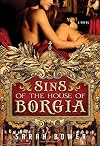
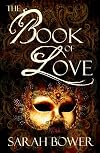
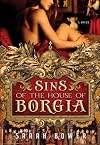
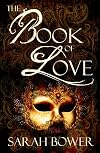
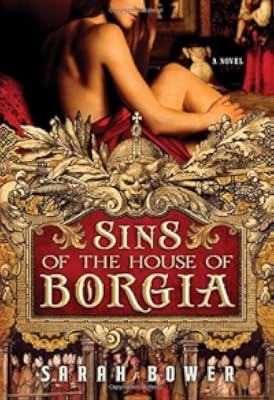
It's official. The Borgias are the new Tudors. Not just in the TV world, but in the historical fiction world as well. The promise of Borgia gold led publishers to bring Sarah Bower's novel of the Borgias to the U.S. Originally published last year in the U.K. as The Book of Love, the title was changed (more obvious connection to the Borgias) and the cover was given a makeover (way more scandalous) prior to localization. Frankly, I wasn't too interested in this title at first, mostly for the fleshy cover that screamed "READ ME! I'M A TIE-IN TO THE TV SHOW!" when, of course, it's not. I ended up entering an online giveaway purely on a whim and, somehow, won.
So, here I am with a thick tome of a book with a cover that I'd be embarrassed to show more take anywhere in public (I do a good chunk of my reading at the gym, so this was a no-go there). Not to mention the charged title...so I wasn't sure what to do. Read it or let it gather dust on my bookshelf. It's nearly impossible (okay, impossible) for me to do the latter, so I did the former.
Sins of the House of Borgia explores the scandalous, notorious and sometimes downright diabolical world of the Borgias in Renaissance-era Italy. After being expelled from Spain for being a Jew, young Esther becomes a lady-in-waiting to Lucrezia Borgia, daughter of Pope Alexander VI. It isn't long until Esther is pulled into the dark and political world of the Borgia family, and her innocence is corrupted. She becomes attracted to Lucrzia's brother, Cesare, even though he would just toss her aside afterwards, befriends Angela, a cousin of the Borgia family, and must deal with the web of lies, dark secrets and corruption.
The first thing you'll notice about Sins is that the writing is beautiful. As in, amazing and borderline poetic. As in, Renaissance poetry drenched in detail and soap opera-like history that readers will eat up. I was truly intiruged from the beginning, especially seeing how the family influenced Esther...and changed her. Esther's character growth felt honest and real, though it seems like she never fully realized what her relationship with this notorious family did to her -plus the second half of the book is much slower than the first.
At times a little dense, Sins is a great companion to the Showtime series and a beautifully written novel about the loss of innocence. Ideal for fans of The Borgias, The Tudors and other historical novels with a touch of soap opera.
(Note: has some highly explicit material -more than the average novel in this genre) show less
So, here I am with a thick tome of a book with a cover that I'd be embarrassed to show more take anywhere in public (I do a good chunk of my reading at the gym, so this was a no-go there). Not to mention the charged title...so I wasn't sure what to do. Read it or let it gather dust on my bookshelf. It's nearly impossible (okay, impossible) for me to do the latter, so I did the former.
Sins of the House of Borgia explores the scandalous, notorious and sometimes downright diabolical world of the Borgias in Renaissance-era Italy. After being expelled from Spain for being a Jew, young Esther becomes a lady-in-waiting to Lucrezia Borgia, daughter of Pope Alexander VI. It isn't long until Esther is pulled into the dark and political world of the Borgia family, and her innocence is corrupted. She becomes attracted to Lucrzia's brother, Cesare, even though he would just toss her aside afterwards, befriends Angela, a cousin of the Borgia family, and must deal with the web of lies, dark secrets and corruption.
The first thing you'll notice about Sins is that the writing is beautiful. As in, amazing and borderline poetic. As in, Renaissance poetry drenched in detail and soap opera-like history that readers will eat up. I was truly intiruged from the beginning, especially seeing how the family influenced Esther...and changed her. Esther's character growth felt honest and real, though it seems like she never fully realized what her relationship with this notorious family did to her -plus the second half of the book is much slower than the first.
At times a little dense, Sins is a great companion to the Showtime series and a beautifully written novel about the loss of innocence. Ideal for fans of The Borgias, The Tudors and other historical novels with a touch of soap opera.
(Note: has some highly explicit material -more than the average novel in this genre) show less
"Violante isn't supposed to be here, in one of the grandest courts of Renaissance Italy. " and I couldn't agree more. I, like many, failed to connect with the main character - whom I found to be just a tad too unbelievable. There is no way she would have such an intimate entree into Borgia politics.
Where I feel the story may have gained more credence was if the tale was told from the viewpoint of Angela Borgia (who undoubtedly had the family connections) with La Violante as a secondary character - or maybe just a different title, as the current one gives the impression of more of a journey into the lives of the Borgias whereas the book fails to live up to it.
Where I feel the story may have gained more credence was if the tale was told from the viewpoint of Angela Borgia (who undoubtedly had the family connections) with La Violante as a secondary character - or maybe just a different title, as the current one gives the impression of more of a journey into the lives of the Borgias whereas the book fails to live up to it.
I enjoyed every bit of this book. I was not familiar with this part of history and the family of the Borgias. It was fascinating to read about the lives of the powerful families of the Italian Renaissance.
This book is told from the point of view of Ester, a lady in waiting to Lucrezia Borgia. She grew up Jewish, but converts to the Catholic faith and is renamed Donata. She falls in love with Cesaer Borgia and what follows is the story of the rise and fall of the Borgia clan. But mostly it is about Ester, eventually nicknamed Violante. She tragically falls in love with Cesaer who is unable to love her in return.
I was a bit confused in the beginning of the story because of all the different names of the characters. Occasionally, some of show more the same characters are referred to by more than one name. So that took some getting used to.
If you enjoy historical fiction, then this would be a book to add to your to read list. It can meander a bit, but I enjoyed the writing and the plot throughout! show less
This book is told from the point of view of Ester, a lady in waiting to Lucrezia Borgia. She grew up Jewish, but converts to the Catholic faith and is renamed Donata. She falls in love with Cesaer Borgia and what follows is the story of the rise and fall of the Borgia clan. But mostly it is about Ester, eventually nicknamed Violante. She tragically falls in love with Cesaer who is unable to love her in return.
I was a bit confused in the beginning of the story because of all the different names of the characters. Occasionally, some of show more the same characters are referred to by more than one name. So that took some getting used to.
If you enjoy historical fiction, then this would be a book to add to your to read list. It can meander a bit, but I enjoyed the writing and the plot throughout! show less
The Book of Love is set in the early 16th century, in the world of the Borgias. Esther, a Jew who is nicknamed Violante, becomes a conversa so that she might become a lady-in-waiting to Lucrezia Borgia. Very soon, Violante finds herself thrust into a world of danger, romance, and intrigue, as she falls in love with Lucrezia’s brother Cesare.
Bower recreates the world of the early 16th century unfailingly; the historical details of this novel are exquisite. She uses the theme of the “innocent abroad” to tell the story of the Borgias through an impartial viewpoint. One of the strengths of the novel are the characters: Cesare Borgia is easily the most compelling, though I didn’t like how Bower portrayed Lucrezia—I thought her show more character could have been more diabolical. The plot drags in the middle, and the sex scenes are a bit crude, but it’s what you might expect from a story about one of history’s most infamous families. But otherwise, this is an enjoyable novel. show less
Bower recreates the world of the early 16th century unfailingly; the historical details of this novel are exquisite. She uses the theme of the “innocent abroad” to tell the story of the Borgias through an impartial viewpoint. One of the strengths of the novel are the characters: Cesare Borgia is easily the most compelling, though I didn’t like how Bower portrayed Lucrezia—I thought her show more character could have been more diabolical. The plot drags in the middle, and the sex scenes are a bit crude, but it’s what you might expect from a story about one of history’s most infamous families. But otherwise, this is an enjoyable novel. show less
This story follows a young Jewish conversa who becomes a trusted handmaiden of Lucrezia Borgia. There's a lot of fun stuff here, though it's not quite as trashy as the cover might seem to indicate.
However, although it's an enjoyable read, I also found it a frustrating one at times. We're talking about a time period and cast of characters dominated by political intrigue, and the POV character is not a main player in any of that. On the contrary, she's a naive young woman who spends the majority of the book blindly and stupidly in love with Cesare Borgia, and there're no spoilers involved in saying it is obvious all along that he does not love her in return. The whole affair is really fairly horrible - which is not to say it's show more unbelievable; sadly, it really is - but it can be frustrating, as I said, to follow the travails of a dumbass for nearly 600 pages.
It also creates an awkward situation for the author, because one gets to the end of the story and since the POV character was an ignoramus, you don't know What Was Really Going On All That Time. So the author ties things up with an extended narrative confessional by Lucrezia, which stretched my suspension of disbelief.
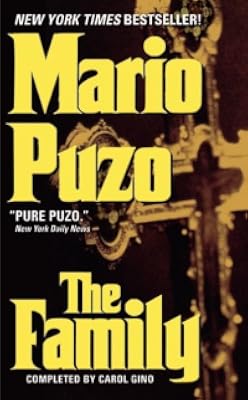
I do think the fact that I'm currently following the TV show The Borgias enhanced my enjoyment of the story; although it does give away some historical spoilers! I'm all into the time period right now; so I'm also planning on re-reading the truly excellent "Duchess of Milan" and I've ordered Puzo's "The Family" on an internet recommendation. show less
However, although it's an enjoyable read, I also found it a frustrating one at times. We're talking about a time period and cast of characters dominated by political intrigue, and the POV character is not a main player in any of that. On the contrary, she's a naive young woman who spends the majority of the book blindly and stupidly in love with Cesare Borgia, and there're no spoilers involved in saying it is obvious all along that he does not love her in return. The whole affair is really fairly horrible - which is not to say it's show more unbelievable; sadly, it really is - but it can be frustrating, as I said, to follow the travails of a dumbass for nearly 600 pages.
It also creates an awkward situation for the author, because one gets to the end of the story and since the POV character was an ignoramus, you don't know What Was Really Going On All That Time. So the author ties things up with an extended narrative confessional by Lucrezia, which stretched my suspension of disbelief.
I do think the fact that I'm currently following the TV show The Borgias enhanced my enjoyment of the story; although it does give away some historical spoilers! I'm all into the time period right now; so I'm also planning on re-reading the truly excellent "Duchess of Milan" and I've ordered Puzo's "The Family" on an internet recommendation. show less
Members
- Recently Added By
Author Information
2 Works 449 Members
Common Knowledge
- Original publication date
- 2011-03-01
- People/Characters
- Esther "Violante" Sarfati; Lucrezia Borgia; Cesare Borgia; Angela Borgia; Alfonso I d'Este
- Important places
- Italy
Classifications
Statistics
- Members
- 247
- Popularity
- 131,801
- Reviews
- 13
- Rating
- (3.05)
- Languages
- English, Italian, Portuguese
- Media
- Paper, Ebook
- ISBNs
- 12
- UPCs
- 1
- ASINs
- 4