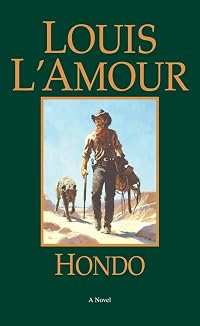
Hondo
by Louis L'Amour
On This Page
Description
Fiction. Western. Thriller. Historical Fiction. He was etched by the desert's howling winds, a big, broad-shouldered man who knew the ways of the Apache and the ways of staying alive. She was a woman alone raising a young son on a remote Arizona ranch. And between Hondo Lane and Angie Lowe was the warrior Vittoro, whose people were preparing to rise against the white men. Now the pioneer woman, the gunman, and the Apache warrior are caught in a drama of love, war, and honor.Tags
Recommendations




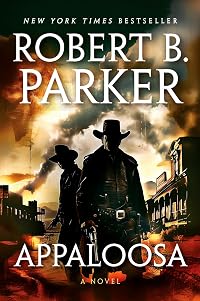
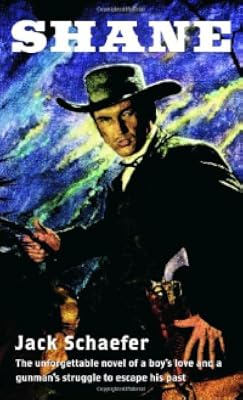

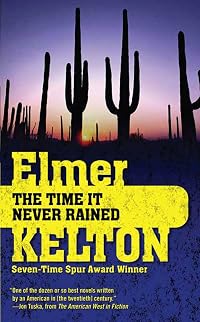
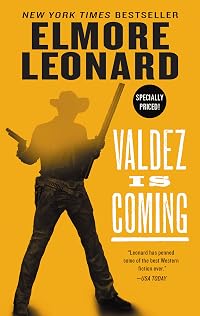







Member Reviews
Third person multiple POV, linear structure.
Sometimes I read reviews of a book and wonder if the reviewers and I have read the same story. I like Louis L'Amour. He's more balanced than most other Western authors of his time. He portrays all the characters equally, men, women, whites, Indians. Gender roles tend to be prescribed, but this takes place in the 1800s, ffs, and was written in the 1950s! Considering that, this novel has a fairly enlightened view of the role and value of women.
Yes, there is violence between the whites and the Indians. Read history much? There is violence between the men on the frontier. It was a lawless time. But the Indians are not shown to be either "noble savages" or ignorant heathens. They are people with a show more distinct culture and worldview, which L'Amour tries to portray. I am not an expert so I can't judge, but I know he was an author who did a tremendous amount of research before writing his stories.
L'Amour respects his characters. show less
Sometimes I read reviews of a book and wonder if the reviewers and I have read the same story. I like Louis L'Amour. He's more balanced than most other Western authors of his time. He portrays all the characters equally, men, women, whites, Indians. Gender roles tend to be prescribed, but this takes place in the 1800s, ffs, and was written in the 1950s! Considering that, this novel has a fairly enlightened view of the role and value of women.
Yes, there is violence between the whites and the Indians. Read history much? There is violence between the men on the frontier. It was a lawless time. But the Indians are not shown to be either "noble savages" or ignorant heathens. They are people with a show more distinct culture and worldview, which L'Amour tries to portray. I am not an expert so I can't judge, but I know he was an author who did a tremendous amount of research before writing his stories.
L'Amour respects his characters. show less
John Wayne famously said that Hondo was the best western novel he had ever read. "Best" is subjective, of course. Possibly I would think of "Lonesome Dove", but that is a more literary novel. In any case, I get why someone would choose Hondo as his favorite. This is a great story. Not particularly literary, for the language is plain and straightforward, always in service of the storytelling, but a gripping tale nonetheless.
From the beginning, we notice we are in the hands of a capable storyteller, who knows the setting and understands the type of people he is depicting. When he makes Hondo a hardened veteran of the west, he is completely convincing. He doesn't need to tell us what kind of person Hondo is, we see it in the way he show more acts.
This is a very readable book, easy and entertaining. Also, I liked how the Apaches were depicted, with a lot of respect but not idealized. They are not noble savages here, but a proud, warlike people defending their land and their way of life, following their own codes of conduct in a ruthless manner if necessary. show less
From the beginning, we notice we are in the hands of a capable storyteller, who knows the setting and understands the type of people he is depicting. When he makes Hondo a hardened veteran of the west, he is completely convincing. He doesn't need to tell us what kind of person Hondo is, we see it in the way he show more acts.
This is a very readable book, easy and entertaining. Also, I liked how the Apaches were depicted, with a lot of respect but not idealized. They are not noble savages here, but a proud, warlike people defending their land and their way of life, following their own codes of conduct in a ruthless manner if necessary. show less
Two star rating meaning "it was ok." I read up to all but the last 50 pages, then gave up and watched the 1953 movie instead, and since the novel was based on the movie which was based on a different story by L'Amour, I don't feel like that was a terrible cheat on my part.
How did I come to choose such a book that at the outset I knew had a long shot of being something I would like? I read it in memory of my father, who loved Louis L'Amour and read perhaps all of his books. I don't know which novel was his favorite so this one might not have been one of L'Amour's best effort in Dad's opinion. I remember Dad said that he liked L'Amour because he "could smell the campfire coffee" when reading him. I was sad when there was only a couple show more cursory mentions of coffee, but L'Amour did a lot of scene setting and leather creaking that I would say was pretty good. The story was where it was weak. It was an old fashioned John Wayne type Western, full of expected tropes, with little insight into human nature, especially women -- er, woman since there was only one.
I get why Dad liked it. He was a Hondo kind of guy. And if reading L'Amour gave him pleasure, I'm all for that. Dad was a hard-working guy who had simple tastes, like campfire coffee. Nothing wrong with that. show less
How did I come to choose such a book that at the outset I knew had a long shot of being something I would like? I read it in memory of my father, who loved Louis L'Amour and read perhaps all of his books. I don't know which novel was his favorite so this one might not have been one of L'Amour's best effort in Dad's opinion. I remember Dad said that he liked L'Amour because he "could smell the campfire coffee" when reading him. I was sad when there was only a couple show more cursory mentions of coffee, but L'Amour did a lot of scene setting and leather creaking that I would say was pretty good. The story was where it was weak. It was an old fashioned John Wayne type Western, full of expected tropes, with little insight into human nature, especially women -- er, woman since there was only one.
I get why Dad liked it. He was a Hondo kind of guy. And if reading L'Amour gave him pleasure, I'm all for that. Dad was a hard-working guy who had simple tastes, like campfire coffee. Nothing wrong with that. show less
Book on CD performed by David Straithairn
3.5***
An iconic work of American Western genre, featuring a strong, rather taciturn, loner who lives, and is willing to die, by his principles, and a vulnerable but equally strong woman determined to keep her family home and protect what she holds dear.
The setting is practically a character: the southeast corner of Arizona, populated by rattlesnakes, gila monsters, coyotes, jackrabbits and pumas, not to mention the various Apache tribes fighting to regain their historic lands. Hondo Lane is at home in this unforgiving landscape, having lived with the native Apaches for some years and learned how to find water where this is none, how to track game (and men), and how to avoid being tracked. Angie show more Lowe is also at home here, having grown up on the ranch with her father who was on friendly terms with the local chief, Vitorro. They are, obviously, perfect for each other. Except … he’s a confirmed loner acting as a scout for the local military unit, and she is already married (though her good-for-nothing husband has been missing for a few months).
As tensions between the Native Americans and the military units increase, Hondo feels compelled to return to Angie Lowe’s side.
David Straithairn does a fabulous job of performing the audiobook. He brings these characters to life.
The text I had handy included a significant afterword by L’Amour’s son that gave more background into how the author came to write this work which launched his fame and career as a writer of Westerns. I’m glad I took the time to read it after listening to the audiobook. show less
3.5***
An iconic work of American Western genre, featuring a strong, rather taciturn, loner who lives, and is willing to die, by his principles, and a vulnerable but equally strong woman determined to keep her family home and protect what she holds dear.
The setting is practically a character: the southeast corner of Arizona, populated by rattlesnakes, gila monsters, coyotes, jackrabbits and pumas, not to mention the various Apache tribes fighting to regain their historic lands. Hondo Lane is at home in this unforgiving landscape, having lived with the native Apaches for some years and learned how to find water where this is none, how to track game (and men), and how to avoid being tracked. Angie show more Lowe is also at home here, having grown up on the ranch with her father who was on friendly terms with the local chief, Vitorro. They are, obviously, perfect for each other. Except … he’s a confirmed loner acting as a scout for the local military unit, and she is already married (though her good-for-nothing husband has been missing for a few months).
As tensions between the Native Americans and the military units increase, Hondo feels compelled to return to Angie Lowe’s side.
David Straithairn does a fabulous job of performing the audiobook. He brings these characters to life.
The text I had handy included a significant afterword by L’Amour’s son that gave more background into how the author came to write this work which launched his fame and career as a writer of Westerns. I’m glad I took the time to read it after listening to the audiobook. show less
Hondo is a loner, a dispatch rider for the Army, avoiding warring Apaches through his knowledge and wits. Angie is a woman living alone on her ranch, with only a young child to keep her company, deserted by her husband. When Hondo shows up one day without a horse but toting a saddle a friendship between the two solitary people is begun.
I liked this much better than I'd recalled from a read of about 30 years ago. Lots of character development without all the self-reflection and angst that is found in some later L'Amour novels. The native tribes are presented as people too, not stereotypes. Good read, recommended.
I liked this much better than I'd recalled from a read of about 30 years ago. Lots of character development without all the self-reflection and angst that is found in some later L'Amour novels. The native tribes are presented as people too, not stereotypes. Good read, recommended.
Part of my work in this Readers Advisory class I'm taking is to read from outside my typical genre. Although I read a lot of fiction, I don't tend towards genre fiction so that ought to make it easy to choose. I've most certainly read fantasy and sci-fi novels, and with having read all of Austen and books like [b:The Blue Castle|95693|The Blue Castle |L.M. Montgomery|https://d2arxad8u2l0g7.cloudfront.net/books/1442108651s/95693.jpg|1298683] I wouldn't call myself unfamiliar with certain subgenres of romance, and while I wouldn't say I read a lot of horror I think of Shirley Jackson and [b:House of Leaves|24800|House of Leaves|Mark Z. Danielewski|https://d2arxad8u2l0g7.cloudfront.net/books/1403889034s/24800.jpg|856555] and the spooky show more October reads I find for myself, and I've read too much Agatha Christie to say I don't read mysteries. Nonfiction? Well, philosophy and Augustine's [b:Confessions|27037|Confessions|Augustine of Hippo|https://d2arxad8u2l0g7.cloudfront.net/books/1266454051s/27037.jpg|1427207] and writing books, so again, while I could extend my reading of subgenres within any of those categories, there was only one where I really hadn't had recent/significant encounters with. (Okay, that's a bit of a lie because [b:My Ántonia|17150|My Ántonia|Willa Cather|https://d2arxad8u2l0g7.cloudfront.net/books/1389151307s/17150.jpg|575450] shows up now and then on Westerns lists, but not everyone would count it.)
So here we are. Westerns. I tried to start with [b:Riders of the Purple Sage|90160|Riders of the Purple Sage|Zane Grey|https://d2arxad8u2l0g7.cloudfront.net/books/1320415192s/90160.jpg|2663060] but it was so ridiculous I put it down for a bit. I took up this one instead, wanting to find the pulpiest most Western-y of Westerns before I moved on to more diverse subgenres. And this is just what you'd expect with a man who is Fraught but Strong and loves his Dog and Woman, and who Respects the Indians but also kills them. (He has lived with them, learned from them, but he's also a white man and better at Apache skills than any actual Apache. Because that's how it always is.) He doesn't kill the Good Indian but we the readers are supposed to be glad he's dead anyways because it makes the plot nice and neat.
I was aware before I started this assignment that I would be reading some stereotypes of Native Americans and would see violence, both of outright and insidious kinds, enacted against them in many of these books. It is exactly what I expected, exactly what you see in the old Western TV shows, or even Westerns that aren't that old at all.
It's also just what you expect in terms of characterization and romantic development. I'm pretty sure I could've described these characters to you before I ever read the book. It succeeded in being the most typical Western novel imaginable, which works for my purposes. show less
So here we are. Westerns. I tried to start with [b:Riders of the Purple Sage|90160|Riders of the Purple Sage|Zane Grey|https://d2arxad8u2l0g7.cloudfront.net/books/1320415192s/90160.jpg|2663060] but it was so ridiculous I put it down for a bit. I took up this one instead, wanting to find the pulpiest most Western-y of Westerns before I moved on to more diverse subgenres. And this is just what you'd expect with a man who is Fraught but Strong and loves his Dog and Woman, and who Respects the Indians but also kills them. (He has lived with them, learned from them, but he's also a white man and better at Apache skills than any actual Apache. Because that's how it always is.) He doesn't kill the Good Indian but we the readers are supposed to be glad he's dead anyways because it makes the plot nice and neat.
I was aware before I started this assignment that I would be reading some stereotypes of Native Americans and would see violence, both of outright and insidious kinds, enacted against them in many of these books. It is exactly what I expected, exactly what you see in the old Western TV shows, or even Westerns that aren't that old at all.
It's also just what you expect in terms of characterization and romantic development. I'm pretty sure I could've described these characters to you before I ever read the book. It succeeded in being the most typical Western novel imaginable, which works for my purposes. show less
I'd long heard of Louis L'Amour as among the most famous writers of Westerns and his 1953 novel, Hondo was on a Western recommendation list I've been reading through. Well, I'd be tempted to call this a guy thing. All I can say ladies, that if any male sig other of yours sneers at your bodice rippers, you need only brandish this novel as an example of the godawful things boys are way too fond of, because this reads like the male counterpart to reeking romance aisle. From the start, the prose sounded like the voice-over from an old-fashioned cheesy trailer. This is the second paragraph, describing Hondo Lane, gunman and hero of the tale:
He was a big man, wide-shouldered, with the lean, hard-boned face of the desert rider. There was no show more softness in him. His toughness was ingrained and deep, without cruelty, yet quick, hard, and dangerous. Whatever wells of gentleness might lie within him were guarded and deep.
Yet, I pressed on. Through dizzying point of view switches and the breaking of a horse that involves bucking and getting the poor thing into a lather. Until I hit the most painful grouping of gender cliches known to man, woman, or beast. See, "Marty-Stu" Hondo soon meets up with pretty rancher Angie Lowe. And phrases begin to pile up like: he "made her feel like a woman" and she's "a lot of woman" and "all woman" and he's doing a "man's job" she can't do since "she had her woman's work." That's the sound of me retching you're hearing.
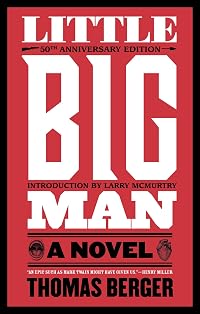
Now, by the way, I'm not saying all this genre is crap or for men only. I enjoyed Elmer Kelton, was impressed by Little Big Man, The Ox-Bow Incident, Lonesome Dove and True Grit. But I think Louis L'Amour is only for hardcore lovers of the genre who won't notice or care about clunky writing. show less
He was a big man, wide-shouldered, with the lean, hard-boned face of the desert rider. There was no show more softness in him. His toughness was ingrained and deep, without cruelty, yet quick, hard, and dangerous. Whatever wells of gentleness might lie within him were guarded and deep.
Yet, I pressed on. Through dizzying point of view switches and the breaking of a horse that involves bucking and getting the poor thing into a lather. Until I hit the most painful grouping of gender cliches known to man, woman, or beast. See, "Marty-Stu" Hondo soon meets up with pretty rancher Angie Lowe. And phrases begin to pile up like: he "made her feel like a woman" and she's "a lot of woman" and "all woman" and he's doing a "man's job" she can't do since "she had her woman's work." That's the sound of me retching you're hearing.
Now, by the way, I'm not saying all this genre is crap or for men only. I enjoyed Elmer Kelton, was impressed by Little Big Man, The Ox-Bow Incident, Lonesome Dove and True Grit. But I think Louis L'Amour is only for hardcore lovers of the genre who won't notice or care about clunky writing. show less
Members
- Recently Added By
Lists

A Novel Cure
742 works; 23 members

25 Best Western Novels (Western Writers of America)
25 works; 1 member
Author Information

868+ Works 99,793 Members
Born in Jamestown, North Dakota on March 22, 1908, Louis L'Amour's adventurous life could have been the subject of one of his novels. Striking out on his own in 1923, at age 15, L'Amour began a peripatetic existence, taking whatever jobs were available, from skinning dead cattle to being a sailor. L'Amour knew early in life that he wanted to be a show more writer, and the experiences of those years serve as background for some of his later fiction. During the 1930s he published short stories and poetry; his career was interrupted by army service in World War II. After the war, L'Amour began writing for western pulp magazines and wrote several books in the Hopalong Cassidy series using the pseudonym Tex Burns. His first novel, Westward the Tide (1950), serves as an example of L'Amour's frontier fiction, for it is an action-packed adventure story containing the themes and motifs that he uses throughout his career. His fascination with history and his belief in the inevitability of manifest destiny are clear. Also present and typical of L'Amour's work are the strong, capable, beautiful heroine who is immediately attracted to the equally capable hero; a clear moral split between good and evil; reflections on the Native Americans, whose land and ways of life are being disrupted; and a happy ending. Although his work is somewhat less violent than that of other western writers, L'Amour's novels all contain their fair share of action, usually in the form of gunfights or fistfights. L'Amour's major contribution to the western genre is his attempt to create, in 40 or more books, the stories of three families whose histories intertwine as the generations advance across the American frontier. The novels of the Irish Chantry, English Sackett, and French Talon families are L'Amour's most ambitious project, and sadly were left unfinished at his death. Although L'Amour did not complete all of the novels, enough of the series exists to demonstrate his vision. L'Amour's strongest attribute is his ability to tell a compelling story; readers do not mind if the story is similar to one they have read before, for in the telling, L'Amour adds enough small twists of plot and detail to make it worth the reader's while. L'Amour fans also enjoy the bits of information he includes about everything from wilderness survival skills to finding the right person to marry. These lessons give readers the sense that they are getting their money's worth, that there is more to a L'Amour novel than sheer escapism. With over 200 million copies of his books in print worldwide, L'Amour must be counted as one of the most influential writers of westerns in this century. He died from lung cancer on June 10, 1988. (Bowker Author Biography) Louis L'Amour, truly America's favorite storyteller, was the first fiction writer ever to receive the Congressional Gold Medal from the United States Congress in honor of his life's work, & was also awarded the Medal of Freedom. There are over 260 million copies of his books in print worldwide. (Publisher Provided) show less
Some Editions
Awards and Honors
Distinctions
Work Relationships
Common Knowledge
- Canonical title
- Hondo
- Original title
- Hondo
- Original publication date
- 1953
- People/Characters
- Hondo Lane; Ed Lowe; Angie Lowe; Johnny Lowe; Vittoro; Silva
- Related movies
- Hondo (1953 | IMDb)
- Epigraph
- [None]
- Dedication
- [None]
- First words
- He rolled the cigarette in his lips, likeing the taste of the tobacco, squinting his eyes against the sun glare.
- Last words
- (Click to show. Warning: May contain spoilers.)And beside him a woman held in her arms a sleeping child...a woman who would be there with him, in that house, before that hearth.
- Original language*
- Inglés
*Some information comes from Common Knowledge in other languages. Click "Edit" for more information.
Classifications
Statistics
- Members
- 1,456
- Popularity
- 16,102
- Reviews
- 33
- Rating
- (3.78)
- Languages
- 5 — Czech, Dutch, English, French, Spanish
- Media
- Paper, Audiobook, Ebook
- ISBNs
- 37
- UPCs
- 1
- ASINs
- 12