On This Page
Description
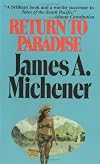
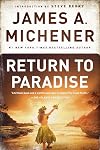
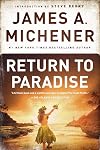
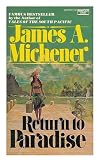
James A. Michener, the master of historical fiction, revisits the scenes of his first great work, "Tales of the South Pacific, " the Pulitzer Prize winner that brought him international acclaim. In this sequel collection, Michener once again evokes the magic of the extraordinary isles in the Pacific--from Fiji and Gaudalcanal to New Zealand and Papua New Guinea--through stories that burst with adventure, charm, and local color. For Michener's many fans around the globe, "Return to Paradise show more "is a precious second look at a land of enchantment by one of the most gifted storytellers of the twentieth century. Praise for "Return to Paradise"" " "A brilliant book and a worthy successor to "Tales of the South Pacific.""--"The Atlanta Constitution"" " "This is a book that should be read by everyone. . . . All who have seen the South Pacific will find on every page the odors of frangipani, copra, blood, and beer."--"The New York Times"" " "There's drama and pathos and adventure and humanity . . . and a very high degree of excellence. Michener can write."--"Kirkus Reviews" show lessTags
Recommendations





























Member Reviews
A sequel of sorts to Tales of the South Pacifc, Return to Paradise takes a different formal track than that of the earlier volume. Here, in a collection of independent short stories, Michener precedes each tale with an essay that ranges in subject matter from geo-political argument to virtual travel brochure. The result is an overall effort that does not equal that of Tales of the South Pacific but whose individual stories sometimes rise above anything he has written before.
Most of the essays are not only readable but provide essential background information for the fictional short stories. All but two, that is. The essays on New Zealand and Australia are unbearable abominations. Yet the stories that follow, which rely upon those essays show more for their crispness and assumptions, are two of the best in the book, especially "Until They Sail," the story of four New Zealand sisters who strike up romances with American troops during World War II.
Still, it is the stories of the tropical South Pacific I most like. The stories about Tahiti and Polynesia, the Marquesas, Guadalcanal, the Solomons, Fiji. "Povenaaa's Daughter" and "The Mynah Birds" will last with me for quite some time. One final note worth remarking, each and every story ends with a sharp, shocking twist. You quickly come to expect them, and, for that reason, they lose their punch, although never their shock.
These two works of Michener, Tales of the South Pacific and Return to Paradise, for me, are his best works. They show the writer at his freshest, before he became a living corporation for producing bestsellers (not that the later works do not have merit--Michener was a master storyteller at every stage of his career). But it is the stories of the South Seas and America's presence in the Pacific during and right after World War II that I most appreciate. Readers will always be able to revisit the books and stories on the South Pacific and get something new out of them. I'm not sure the same can be said for the enormous epics that followed. show less
Most of the essays are not only readable but provide essential background information for the fictional short stories. All but two, that is. The essays on New Zealand and Australia are unbearable abominations. Yet the stories that follow, which rely upon those essays show more for their crispness and assumptions, are two of the best in the book, especially "Until They Sail," the story of four New Zealand sisters who strike up romances with American troops during World War II.
Still, it is the stories of the tropical South Pacific I most like. The stories about Tahiti and Polynesia, the Marquesas, Guadalcanal, the Solomons, Fiji. "Povenaaa's Daughter" and "The Mynah Birds" will last with me for quite some time. One final note worth remarking, each and every story ends with a sharp, shocking twist. You quickly come to expect them, and, for that reason, they lose their punch, although never their shock.
These two works of Michener, Tales of the South Pacific and Return to Paradise, for me, are his best works. They show the writer at his freshest, before he became a living corporation for producing bestsellers (not that the later works do not have merit--Michener was a master storyteller at every stage of his career). But it is the stories of the South Seas and America's presence in the Pacific during and right after World War II that I most appreciate. Readers will always be able to revisit the books and stories on the South Pacific and get something new out of them. I'm not sure the same can be said for the enormous epics that followed. show less
Before going to Tahiti in 2015, I prepped for the trip by watching all three of the “Munity on the Bounty” movies (the earliest from 1935!) like I was studying for the SAT’s! And after abruptly landing back in the “real world”, I grabbed every book I could get my hands on that was set in these beautiful Islands – if only to recapture for just a moment a teeny bit of the magic found in that amazing archipelago.
Return to Paradise is the follow-up to Tales of the South Pacific, the inspiration behind the acclaimed 1958 musical South Pacific (which my long-suffering husband took me to see at a local theater a few years ago – sadly, it’s pretty cheesy), so I recommend starting with Tales first, before jumping into show more Return.
The two books go hand-in-hand and are great read together. While Tales introduces us to the mystical island of Bali Hai (based off the real, and largely undeveloped to this day, Tahitian isle of Mo’orea), as you gather from the title, Return brings us back to the paradisaical islands of the South Pacific (not to be confused with Hawai’i, which is in the North Pacific).
Both books are organized in a series of vignette-like short stories, which could each be read on their own, but as a whole come together to make a whole novel. In Return, you’ll be swept away in 19 different tales taking you on adventures to places like Fiji, New Zealand, New Guinea, and more. Michener’s perspective has a solid authenticity, which is no surprise, as these short stories are rooted in the time he spent at many of these islands of the Pacific Theater (as its known) during World War II. And you definitely get these sense that Michener is not only “Returning” his audience to the South Pacific, but that by writing the stories, he’s longing to go back himself.
All of the stories are fascinating, but those that linger in the remote South Pacific islands are the most evocative. Michener’s style, I find is a bit of an “older style” that might seem a bit dry to the modern reader, however, if you want to relive your time in the islands, or evoke a “Calgon – Take Me Away” moment, then I highly recommend giving Return, and especially its predecessor Tales a shot. show less
Return to Paradise is the follow-up to Tales of the South Pacific, the inspiration behind the acclaimed 1958 musical South Pacific (which my long-suffering husband took me to see at a local theater a few years ago – sadly, it’s pretty cheesy), so I recommend starting with Tales first, before jumping into show more Return.
The two books go hand-in-hand and are great read together. While Tales introduces us to the mystical island of Bali Hai (based off the real, and largely undeveloped to this day, Tahitian isle of Mo’orea), as you gather from the title, Return brings us back to the paradisaical islands of the South Pacific (not to be confused with Hawai’i, which is in the North Pacific).
Both books are organized in a series of vignette-like short stories, which could each be read on their own, but as a whole come together to make a whole novel. In Return, you’ll be swept away in 19 different tales taking you on adventures to places like Fiji, New Zealand, New Guinea, and more. Michener’s perspective has a solid authenticity, which is no surprise, as these short stories are rooted in the time he spent at many of these islands of the Pacific Theater (as its known) during World War II. And you definitely get these sense that Michener is not only “Returning” his audience to the South Pacific, but that by writing the stories, he’s longing to go back himself.
All of the stories are fascinating, but those that linger in the remote South Pacific islands are the most evocative. Michener’s style, I find is a bit of an “older style” that might seem a bit dry to the modern reader, however, if you want to relive your time in the islands, or evoke a “Calgon – Take Me Away” moment, then I highly recommend giving Return, and especially its predecessor Tales a shot. show less
This book is separated into chapters about the geography, people and industry on different islands followed by a fictional story about the area. These are not really connected at all and it is a book you can dip in and out of. Of course, the book shows its age but tells the reader about these places in 1950 and also about American attitudes of the time. I found I enjoyed the factual sections the most and skipped a couple of the stories as I lost interest in them. The New Zealand sections told me lots of information I didn't know about that country, particularly during the Second World War.
Someone requested that my university library purchase access to this e-audiobook, as well as another by Michener (Texas, which I read in the past and which is even longer than this 21-plus-hour book). Reviews of the narrator were mixed, and having a number of three-hour drives planned within a short period, I decided to listen to this one.
It can be considered a sequel to Michener's Pulitzer Prize-winning Tales of the South Pacific (which I have not read). The book alternates nonfiction essays on various South Pacific islands or countries with short stories set on that particular island (with the exception of nonfiction chapters at the beginning on "The Mighty Ocean" (introduction) and at the end on "Rabaul" (not sure why this merited a show more separate chapter from the rest of New Guinea, but no separate story) and "What I Learned" (conclusion). Places covered include "The Atoll" (perhaps generic for many small islands in the area), Polynesia, Fiji, Guadalcanal, Espiritu Santo, New Zealand, Australia, and New Guinea.
It's important to read both "The Mighty Ocean" and "What I Learned" to put the book in context. The nonfiction is a good (but rather detailed) travelogue when it comes to physical descriptions and history, but is very dated, particularly when discussing culture and social customs (the book was published in 1951).
The fictional short stories are full of two-dimensional late-1940s stereotypes, particularly when it comes to the natives of the islands. Despite the stereotypes, my favorite stories were "Mr. Morgan" (set on the atoll), "Povenaa's Daughter" (set in Polynesia), and "Until They Sail" (set in New Zealand). The first two had humorous parts, and the latter, while more serious, was better-developed than any other story in the book (although a character's abrupt change of mind at the end is not explained). The first and last were made into movies.
I really disliked the last two stories, "The Jungle" (set in Australia,), and "The Fossickers" (set in New Guinea). "The Jungle" in particular was an ugly story with an unsatisfying end.
As for the narrator, actor Larry McKeever, I found him to be - okay. I think he read the book a little too slowly, and at times that (along with the content) made me sleepy. I'm glad I did not recommend that we purchase his nearly-65-hour narration of Texas.
© Amanda Pape - 2018
[The e-audiobook, and a print copy for reference, were both borrowed from and returned to my university library.] show less
It can be considered a sequel to Michener's Pulitzer Prize-winning Tales of the South Pacific (which I have not read). The book alternates nonfiction essays on various South Pacific islands or countries with short stories set on that particular island (with the exception of nonfiction chapters at the beginning on "The Mighty Ocean" (introduction) and at the end on "Rabaul" (not sure why this merited a show more separate chapter from the rest of New Guinea, but no separate story) and "What I Learned" (conclusion). Places covered include "The Atoll" (perhaps generic for many small islands in the area), Polynesia, Fiji, Guadalcanal, Espiritu Santo, New Zealand, Australia, and New Guinea.
It's important to read both "The Mighty Ocean" and "What I Learned" to put the book in context. The nonfiction is a good (but rather detailed) travelogue when it comes to physical descriptions and history, but is very dated, particularly when discussing culture and social customs (the book was published in 1951).
The fictional short stories are full of two-dimensional late-1940s stereotypes, particularly when it comes to the natives of the islands. Despite the stereotypes, my favorite stories were "Mr. Morgan" (set on the atoll), "Povenaa's Daughter" (set in Polynesia), and "Until They Sail" (set in New Zealand). The first two had humorous parts, and the latter, while more serious, was better-developed than any other story in the book (although a character's abrupt change of mind at the end is not explained). The first and last were made into movies.
I really disliked the last two stories, "The Jungle" (set in Australia,), and "The Fossickers" (set in New Guinea). "The Jungle" in particular was an ugly story with an unsatisfying end.
As for the narrator, actor Larry McKeever, I found him to be - okay. I think he read the book a little too slowly, and at times that (along with the content) made me sleepy. I'm glad I did not recommend that we purchase his nearly-65-hour narration of Texas.
© Amanda Pape - 2018
[The e-audiobook, and a print copy for reference, were both borrowed from and returned to my university library.] show less
An essay, followed by a story of the area, repeated about 10 times. Reflects the area's history and culture as of 1950's.
Un livre que j'ai aimé, un auteur que j'ai découvert, des lieux et des personnes connues plus tard et combien aimés. Le 5 c'est perso, mais c'est quand même un excellent bouquin de nouvelles, la guerre du pacifique côté cour.
May 10, 2009French
Members
- Recently Added By
Lists

Publisher's Weekly Bestsellers - Part II - 1940 - 1979
355 works; 5 members

Summer 2025
16 works; 1 member
Author Information

209+ Works 49,355 Members
James A. Michener, 1907 - 1997 James Albert Michener was born on February 3, 1907 in Doylestown, Pa. He earned an A.B. from Swarthmore College, an A.M. from Colorado State College of Education, and an M.A. from Harvard University. He taught for many years and was an editor for Macmillan Publishing Company. His first book, "Tales of the South show more Pacific," derived from Michener's service in the Pacific in World War II, won the 1947 Pulitzer Prize for Fiction and was the basis for the Rodgers and Hammerstein Broadway musical South Pacific, which won the 1950 Pulitzer Prize for Drama. Michener completed close to 40 novels. Some other epic works include "Hawaii," "Centennial," "Space," and "Caribbean." He also wrote a significant amount of nonfiction including his autobiography "The World Is My Home." Among his many other honors, James Michener received the Presidential Medal of Freedom in 1977. He was married to Patti Koon in 1935; they divorced in 1948. He married Vange Nord in 1948 (divorced 1955) and Mari Yoriko Sabusawa in 1955 (deceased 1994). He died in 1997 in Austin, Texas. (Bowker Author Biography) show less
Some Editions
Awards and Honors
Distinctions
Series

Belongs to Publisher Series
Penguin Travel and Adventure (1186)
Work Relationships
Has the adaptation
Is abridged in
Reader's Digest Condensed Books 1951 v04: Fallen Away / Return to Paradise / A Roving Commission / The Southwest Corner / The Arms of Venus by Reader's Digest
Reader's Digest Condensed Books: Monarch of Goddess Island • East of Eden • The Anatomy of a Crime • Return to Paradise • The Intruder by Reader's Digest
Best-in-Books The Silver Chalice; A King's Story; A Man Called Peter; The Day Chist Died; Kids Say the Darndest Things; A Stillness at Appomattox; High Adventure; Return to Paradise; Peanuts; The Desperate Hours by Nelson Doubleday
Common Knowledge
- Canonical title
- Return to Paradise
- Original publication date
- 1951
- Related movies
- Mr. Morgan - Return to Paradise (1953 | IMDb); Until They Sail - Until They Sail (1957 | IMDb)
- Dedication
- To
The Men and Women
of the Islands:
Fred Archer of Rabaul
Tom Harris of Santo
Yorky Booth of New Guinea
Lew Hirshon of Tahiti
Brett Hilder of all over
Eddie Lund <... (show all)i>of Quinn's Bar
and, above all,
Tiger Lil of the Gold Fields - First words
- In 1948 I addressed some students at Washington and Lee University, and in the question-answer period one young man observed with asperity, "But it's easy for you to write. You've traveled."
- Last words
- (Click to show. Warning: May contain spoilers.)It has become, especially as it leads to New Zealand and Australia, one of our highways to the future.
Classifications
Statistics
- Members
- 558
- Popularity
- 53,061
- Reviews
- 8
- Rating
- (3.66)
- Languages
- 5 — Dutch, English, German, Korean, Swedish
- Media
- Paper, Audiobook, Ebook
- ISBNs
- 21
- ASINs
- 37