
Kenneth Roberts (1) (1885–1957)
Author of Northwest Passage
For other authors named Kenneth Roberts, see the disambiguation page.
Kenneth Roberts (1) has been aliased into Kenneth Lewis Roberts.
About the Author
Image credit: Courtesy of the NYPL Digital Gallery (image use requires permission from the New York Public Library)
Series
Works by Kenneth Roberts
Works have been aliased into Kenneth Lewis Roberts.
Warpath 1 copy
Northwest Passage (abridged) 1 copy
Associated Works
Works have been aliased into Kenneth Lewis Roberts.
Tagged
Common Knowledge
- Legal name
- Roberts, Kenneth Lewis
- Birthdate
- 1885-12-08
- Date of death
- 1957-07-21
- Gender
- male
- Education
- Cornell University (1908)
- Occupations
- novelist
journalist - Organizations
- Saturday Evening Post
- Awards and honors
- Pulitzer Prize (Special Citation, 1957)
- Nationality
- USA
- Birthplace
- Kennebunk, Maine, USA
- Places of residence
- Kennebunk, Maine, USA
Kennebunkport, Maine, USA - Place of death
- Kennebunkport, Maine, USA
- Associated Place (for map)
- Maine, USA
Members
Reviews

Oof, I did not consider that I may have reason to remove an author from my devour list, which admittedly, seems quite short-sighted of me... but Roberts' physical descriptions of the black inhabitants of Haiti almost stopped me from continuing the history lesson. I am shocked I missed this racism in the works I've already absorbed. Yet, I am itching to read a biography of Toussaint: "we have no other resources than destruction and fire. Bear in mind that the soil bathed with our sweat must show more not furnish our enemies with the smallest sustenance. Tear up the roads with shot; throw corpses and horses into all springs and wells; burn and annihilate everything in order that those who have come to reduce us to slavery may have before their eyes the image of that hell which they deserve."
I suppose most humans only partially see the light. I'm still deciding on whether or not I'll pursue Roberts to shed any more: "the pages of history are sprinkled with dolts, idiots, drunkards maintained in the highest offices -- mediocrities whose stubbornness has sacrificed armies, whose blindness has destroyed navies, whose bad judgement has ruined their countries' prestige, starves helpless people by the million, wrecked cities, toppled arts, civilization, learning and understanding in the dust -- and most of these fools' names hold unsullied place in the lying annals of their respective nations." show less
I suppose most humans only partially see the light. I'm still deciding on whether or not I'll pursue Roberts to shed any more: "the pages of history are sprinkled with dolts, idiots, drunkards maintained in the highest offices -- mediocrities whose stubbornness has sacrificed armies, whose blindness has destroyed navies, whose bad judgement has ruined their countries' prestige, starves helpless people by the million, wrecked cities, toppled arts, civilization, learning and understanding in the dust -- and most of these fools' names hold unsullied place in the lying annals of their respective nations." show less

Sometimes I'm just in the mood for a good, long, old fashioned historical novel, and Northwest Passage certainly filled this bill for me. Young Langdon Towne just growing into adulthood in 1750s Maine, wants to be an artist. He wants to go west and paint Indians. This ambition runs him afoul of his straight-laced father and, especially, of his beloved Elizabeth's father, a hell and brimstone, status seeking minister. When Towne further gains the enmity of the town's petty tyrant, he show more hightails it out of town with a friend with an aim to join the army, thinking it fairly safe, as the major battles of the English and their American colonists against the French and their Indian allies (i.e., the French and Indian War) seem to be mostly over. Running into the charismatic figure of Sergeant McNott in a nearby pub, however, Towne and his friend soon find themselves joining the famed Rogers Rangers, led by the larger than life Major Robert Rogers. Adventure ensues, you'll not be surprised to learn, 709 pages of adventure, to be precise, along with romance and political intrigue. Towne's superior abilities as an artist stand him in good stead throughout. This novel is a lot of fun, and even, in some places thought-provoking. The descriptions of the hardships endured by the Rangers, and the countryside they travel through, are vivid (descriptions of nature and weather are a strength throughout), as is the violence of the massacre they perpetrate an Indian village, a retaliation, we are told, for the outrages these Indians themselves have perpetrated on nearby English homesteaders. Our hero at first tells us of his opinions that Indians are, when push comes to shove, basically "savages." But as the book moves along and Towne matures, and he learns more about the Indians and about the villainy that Europeans perpetrate on the natives, so do his perspectives and his sympathies. Which is not to say this is an even-handed treatment, narratively. The book is a product of its time, for sure. Jews don't come off too well, either. That said, the plotting and characterizations in this novel turned out to be more nuanced and complex that I was expecting. Heroes turn out to be flawed, sometimes gravely so, expectations regarding stereotypical romantic historical fiction plotting are often subverted, as well. So while there are parts of this long novel that move along less briskly than we would wish, overall I found this to be a very entertaining reading experience. show less

This tips Kenneth Roberts onto my must-read-everything-ever-written-by-them list. Portrays the American Revolution from a loyalist perspective detailing the atrocities of that civil war committed by the rebels upon their own countrymen - labeling anyone a Tory who questioned the new patriots thus allowing them to be persecuted/imprisoned/murdered and, end-game, seizing their property - and the ineptitude of the British military hampered by class prejudices and more concern for English show more politics than protecting their loyal subjects and preserving the colonies. While Oliver Wiswell is a fictitious character allowing the reader to traverse across the colonies and the Atlantic to London and Paris (the French supported the rebels), Roberts, primarily an historian, paints a vivid and thorough rendition of America's founding. So satisfying to finally replace the shiny bullshit learned in school with reality. show less
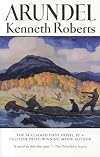
I do enjoy the novels of Kenneth Roberts who has a good narrative gift, and does try to portray the American War of Independence with a reaonable level of objectivity. Arundel, follows the adventures of Steve Nason, who finds himself joining the army under Benedict Arnold in the unsucessful attack on Quebec city by the Continentals in 1775-76. Arnold is not yet a traitor, and is depicted as a very energetic and vehement patriot. But the attack on the city fails, and Nason and company have to show more get back to New York as best they can. Steve does get the girl, though. The Roberts' novels about this War would make quite an interesting TV series, a la "Game of thrones" as there are several interesting villains and heroes in his corpus. The novel was first published in 1934. show less
Lists
Must-Read Maine (5)
Awards


You May Also Like
Associated Authors
Statistics
- Works
- 23
- Also by
- 1
- Members
- 3,365
- Popularity
- #7,582
- Rating
- 4.0
- Reviews
- 45
- ISBNs
- 107
- Languages
- 8
- Favorited
- 6