On This Page
Description
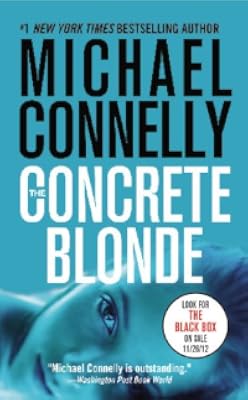
The Dollmaker was the name of the serial killer who had stalked Los Angeles ruthlessly, leaving grisly calling cards on the faces of his victims. Now, with a single faultless shot, Harry Bosch thinks he has ended the city's nightmare.But the dead man's widow is suing Harry and the LAPD for killing the wrong man--an accusation that rings terrifyingly true when a new victim is discovered with the Dollmaker's macabre signature.So, for the second time, Harry must hunt down a death-dealer who is show more very much alive, before he strikes again. It's a blood-tracked quest that will take Harry from the hard edges of the L.A. night to the last place he ever wanted to go--the darkness of his own heart.With The Concrete Blonde, Edgar Award-winning author Michael Connelly has hit a whole new level in his career, creating a breathtaking thriller that thrusts you into a blistering courtroom battle--and a desperate search for a sadistic killer. show lessTags
Recommendations




Member Reviews
»“I didn’t know, Sylvia,” he said. “I hoped.”«
I didn’t know either but had hoped for a good Bosch novel and got even more than I expected.
In Michael Connelly’s “The Concrete Blonde” we’re revisiting Harry’s “white whale” case, which is, of course, “The Dollmaker”’s. Harry shot that guy in self-defence four years ago but it left an ugly stain on his already rather grey vest. Harry was de facto demoted and at the time of the “Concrete Blonde” he’s being sued over that shooting when another body is found that has all the marks of a Dollmaker victim…
What ensues from this point on is part courtroom drama but, to a much larger extent, a very suspenseful, exciting and smart police procedural which show more managed to fool me at every turn. As always, Harry investigates this at high stakes and takes great risk and, thus, we sometimes cross over into the realm of thrillers which is a very welcome aspect here.
As implied by the opening quote (which is the final sentence of the novel), we get to know Bosch a lot better yet: His budding relationship with Sylvia from the last novel goes to full bloom here - and keeps evolving. It’s unusual to read this much personal information in a non-”cosy” police procedural but it’s just one more way in which this novel works brilliantly: By not only showing Harry’s professional rough cop side but also his convictions and ethical values, he becomes much more of a believable, sensitive person.
»The anchor christened the killer the Dollmaker. After that, the killer was called that by everybody, even the cops.
But Bosch always hated that name. It said something about the victims as well as the killer. It depersonalized them, made it easier for the Dollmaker stories that were broadcast to be entertaining instead of horrifying.«
Harry even knows his Nietzsche and sees and recognises the danger he’s in of becoming as bad - or worse - than the people he’s hunting.
»‘Whoever fights monsters should see to it that in the process he does not become a monster. And when you look into the abyss, the abyss also looks into you….’«
That Harry is aware of this danger, though, as well as his “moral compass” prevent him from becoming a monster.
»Bosch drove over to Central Division and found an open parking space at the front curb. For a while, he sat in his car looking at two trustees from the lockup washing the painted enamel mural that stretched along the front wall of the bunkerlike station. It was a depiction of a nirvana where black and white and brown children played together and smiled at friendly police officers. It was a depiction of a place where the children still had hope. In angry black spray paint along the bottom of the mural someone had written, “This is a damnable lie!”
Bosch wondered whether someone from the neighborhood or a cop had done it.«
Everyone keeps growing in this one - even Irving, now promoted, comes around and grows a personality beyond just gnashing his teeth to cow his detectives. He even starts respecting Bosch both as a cop and a human being. Shockingly, Irving even has a sense of humour…
»“Somebody put a cigarette butt in my pot,” he said. “That yours, Harry?”«
Some fresh blood, Hans “Hans Off” Rollenberger, is also around and Honey “Money” Chandler makes an appearance as one of Bosch’s adversary’s (albeit cut short by an event I wasn’t prepared for after seeing the TV show…).
Ultimately, I very much enjoyed this novel and will undoubtedly read on in this series.
Five out of five stars.
»Bosch drove over to Central Division and found an open parking space at the front curb. For a while, he sat in his car looking at two trustees from the lockup washing the painted enamel mural that stretched along the front wall of the bunkerlike station. It was a depiction of a nirvana where black and white and brown children played together and smiled at friendly police officers. It was a depiction of a place where the children still had hope. In angry black spray paint along the bottom of the mural someone had written, “This is a damnable lie!”
Bosch wondered whether someone from the neighborhood or a cop had done it.«
Blog | Facebook | Twitter | Mastodon | Instagram | Pinterest | Medium | Matrix | Tumblr
Ceterum censeo Putin esse delendam show less
I didn’t know either but had hoped for a good Bosch novel and got even more than I expected.
In Michael Connelly’s “The Concrete Blonde” we’re revisiting Harry’s “white whale” case, which is, of course, “The Dollmaker”’s. Harry shot that guy in self-defence four years ago but it left an ugly stain on his already rather grey vest. Harry was de facto demoted and at the time of the “Concrete Blonde” he’s being sued over that shooting when another body is found that has all the marks of a Dollmaker victim…
What ensues from this point on is part courtroom drama but, to a much larger extent, a very suspenseful, exciting and smart police procedural which show more managed to fool me at every turn. As always, Harry investigates this at high stakes and takes great risk and, thus, we sometimes cross over into the realm of thrillers which is a very welcome aspect here.
As implied by the opening quote (which is the final sentence of the novel), we get to know Bosch a lot better yet: His budding relationship with Sylvia from the last novel goes to full bloom here - and keeps evolving. It’s unusual to read this much personal information in a non-”cosy” police procedural but it’s just one more way in which this novel works brilliantly: By not only showing Harry’s professional rough cop side but also his convictions and ethical values, he becomes much more of a believable, sensitive person.
»The anchor christened the killer the Dollmaker. After that, the killer was called that by everybody, even the cops.
But Bosch always hated that name. It said something about the victims as well as the killer. It depersonalized them, made it easier for the Dollmaker stories that were broadcast to be entertaining instead of horrifying.«
Harry even knows his Nietzsche and sees and recognises the danger he’s in of becoming as bad - or worse - than the people he’s hunting.
»‘Whoever fights monsters should see to it that in the process he does not become a monster. And when you look into the abyss, the abyss also looks into you….’«
That Harry is aware of this danger, though, as well as his “moral compass” prevent him from becoming a monster.
»Bosch drove over to Central Division and found an open parking space at the front curb. For a while, he sat in his car looking at two trustees from the lockup washing the painted enamel mural that stretched along the front wall of the bunkerlike station. It was a depiction of a nirvana where black and white and brown children played together and smiled at friendly police officers. It was a depiction of a place where the children still had hope. In angry black spray paint along the bottom of the mural someone had written, “This is a damnable lie!”
Bosch wondered whether someone from the neighborhood or a cop had done it.«
Everyone keeps growing in this one - even Irving, now promoted, comes around and grows a personality beyond just gnashing his teeth to cow his detectives. He even starts respecting Bosch both as a cop and a human being. Shockingly, Irving even has a sense of humour…
»“Somebody put a cigarette butt in my pot,” he said. “That yours, Harry?”«
Some fresh blood, Hans “Hans Off” Rollenberger, is also around and Honey “Money” Chandler makes an appearance as one of Bosch’s adversary’s (albeit cut short by an event I wasn’t prepared for after seeing the TV show…).
Ultimately, I very much enjoyed this novel and will undoubtedly read on in this series.
Five out of five stars.
»Bosch drove over to Central Division and found an open parking space at the front curb. For a while, he sat in his car looking at two trustees from the lockup washing the painted enamel mural that stretched along the front wall of the bunkerlike station. It was a depiction of a nirvana where black and white and brown children played together and smiled at friendly police officers. It was a depiction of a place where the children still had hope. In angry black spray paint along the bottom of the mural someone had written, “This is a damnable lie!”
Bosch wondered whether someone from the neighborhood or a cop had done it.«
Blog | Facebook | Twitter | Mastodon | Instagram | Pinterest | Medium | Matrix | Tumblr
Ceterum censeo Putin esse delendam show less
In book three of the Harry Bosch series, Connelly finally hits his stride. The preceding two books frequently referenced the lethal shooting of a serial killer, a career-changer that resulted in Harry being transferred out of the glamorous (?!) Robbery-Homicide Division and into the hinterlands in Hollywood. In The Concrete Blonde, the case is being tried in a civil court. Harry's refused to plead or settle, and is making do with a lawyer from the D.A.'s office against a top-notch civil rights attorney, Honey Chandler.
The tale opens with the very scene where it all began, Bosch and a streetwalker informant watching the apartment of a man who is possibly The Dollmaker, a serial killer who rapes and kills his victims, and then garishly show more applies makeup to their faces. Segue into the courtroom, where Harry's trial is about to begin. During recess, he gets a call from his lieutenant, asking him to come to a homicide scene. They were led there by a note echoing the handwriting and style of The Dollmaker, and the information in the rhyme has led detectives to a woman buried in concrete. Harry is sure in his gut that he shot the right man, so is this the work of a copycat or is Harry wrong?
It's an reasonably intriguing premise--aside from Harry's gut doing the detecting--made urgent by the trial. To add to the tension, it appears someone has leaked information to the prosecuting attorney, so it isn't long before Harry and his somewhat inept attorney are threatened with contempt of court. The back and forth from the courtroom to solving the mystery of the woman in concrete keep the pace moving. His relationship with Sylvia provides a counterpoint to the sordidness of the case and the trial.
One of the strange things about the series for me is the 80s setting. It's so odd to think of a time of pagers and public telephones. In-time information isn't quite as much of a lynch pin in this case, so it's easier to ignore. There's a couple of red herrings, the first quite obvious, the second less so, but the law of character conservation holds. I will note that it's a relief for a mystery-thriller to not feel the need to explore the serial-killer POV.
Although Connelly still has a rather flat, simplistic writing style, he seems to be improving stylistically, or at least allowing himself to drift away from the narrow confines of Harry's basic world-view. A couple of points was almost poetic, as Harry muses at various points about the nature of justice.
"The lack of hospitality exists because the federal government does not want its courthouse to give even the appearance that justice may be slow, or nonexistent... There is enough of that going on across Spring Street in the County Criminal Courts building. Every day the benches in the hallways of every floor are clogged with those who wait. Mostly they are women and children, their husbands or fathers or lovers held in lockup. Mostly they are black or brown. Mostly the benches look like crowded life rafts--women and children first--with people pressed together and cast adrift, waiting, always waiting, to be found."
A game changer for me as well. Fast-paced, I devoured it in one night. I'll definitely be moving on with the series. show less
The tale opens with the very scene where it all began, Bosch and a streetwalker informant watching the apartment of a man who is possibly The Dollmaker, a serial killer who rapes and kills his victims, and then garishly show more applies makeup to their faces. Segue into the courtroom, where Harry's trial is about to begin. During recess, he gets a call from his lieutenant, asking him to come to a homicide scene. They were led there by a note echoing the handwriting and style of The Dollmaker, and the information in the rhyme has led detectives to a woman buried in concrete. Harry is sure in his gut that he shot the right man, so is this the work of a copycat or is Harry wrong?
It's an reasonably intriguing premise--aside from Harry's gut doing the detecting--made urgent by the trial. To add to the tension, it appears someone has leaked information to the prosecuting attorney, so it isn't long before Harry and his somewhat inept attorney are threatened with contempt of court. The back and forth from the courtroom to solving the mystery of the woman in concrete keep the pace moving. His relationship with Sylvia provides a counterpoint to the sordidness of the case and the trial.
One of the strange things about the series for me is the 80s setting. It's so odd to think of a time of pagers and public telephones. In-time information isn't quite as much of a lynch pin in this case, so it's easier to ignore. There's a couple of red herrings, the first quite obvious, the second less so, but the law of character conservation holds. I will note that it's a relief for a mystery-thriller to not feel the need to explore the serial-killer POV.
Although Connelly still has a rather flat, simplistic writing style, he seems to be improving stylistically, or at least allowing himself to drift away from the narrow confines of Harry's basic world-view. A couple of points was almost poetic, as Harry muses at various points about the nature of justice.
"The lack of hospitality exists because the federal government does not want its courthouse to give even the appearance that justice may be slow, or nonexistent... There is enough of that going on across Spring Street in the County Criminal Courts building. Every day the benches in the hallways of every floor are clogged with those who wait. Mostly they are women and children, their husbands or fathers or lovers held in lockup. Mostly they are black or brown. Mostly the benches look like crowded life rafts--women and children first--with people pressed together and cast adrift, waiting, always waiting, to be found."
A game changer for me as well. Fast-paced, I devoured it in one night. I'll definitely be moving on with the series. show less
This is the third book in the series and at first I struggled to get into the book. However once I did it was a very enjoyable read and I loved the way the trial sequences linked up with the investigation of a Serial Killer. The trial sections were the favourite parts for me and I enjoyed the relationship between Harry Bosch and his adversary in court Honey 'Money' Chandler. I think by the end of the book I had worked out who the killer was but I did enjoy the journey to the final resolution. Michael Connelly is an excellent write however I still think I have a slight preference for the Lincoln Lawyer/Mickey Haller Series but it is increasingly a close call. One slight irritation, I could do without all the smoking in the book, it show more doesn't add to the book. If you enjoy crime books I would recommend this series. show less
Wow. Just wow.
The story centers around a previous case of Bosch's, the one which got him booted out of the elite homicide squad and into Hollywood. Bosch was on the case of the Dollmaker, a serial killer who hunted, raped, and murdered prostitutes, then dehumanized them by painting their faces with makeup. Bosch shot and killed a man who he thought was resisting arrest and reaching for a gun. Evidence that this man was the serial killer was subsequently discovered--as was the fact that the man's object when disobeying police orders, far from a gun, was his toupee. Years later, the man's widow is now suing Bosch. At the same time, evidence is emerging that either the Dollmaker had a copycat or Bosch killed the wrong man. Alternating show more between being interrogated in court for his past actions and searching for this new appearance of the killer, Bosch is forced to consider whether his violence is justified or whether hunting the monsters has so warped his viewpoint that all he can see is the monster in those around him. As the prosecutor asks, "If the system turns away from the abuses inflicted on the guilty, then who can be next but the innocents?" During the story, one of the characters quotes Nietzche: “He who fights with monsters might take care lest he thereby become a monster. And if you gaze for long into an abyss, the abyss gazes also into you.” All of the stories in the series have explored this theme. What makes the internal investigations officer become an instrument of corruption? How does the drug task force cop become a dealer? Why does the Ad Vice cop become the sexual predator he is supposed to hunt? In this book, Bosch is confronted with how easy it is to fall into darkness--how easy it is for a man who hunts monsters to become one. It is a poignant and powerful story and leaves one with questions far after the last page is reached.
The book also explicitly deals with society's treatment of women. It points out the way the prostitutes are dehumanized, even how names like "the Dollmaker" infantilize and dehumanize the victims. Connelly points out how anger at women in power always seems to fall into sexual insults. They are called bitches and whores, and the men they dominate intellectually tell themselves and others that they gained the power by "f*cking a man in power". The book discusses how rape, how reducing women to sexual objects, is about humiliation and dominance. Yet throughout the series, Bosch and Connelly themselves are complicit in using sexually charged, female-humiliating language. I can't decide if it is intentional or not, but it certainly got me to thinking about how often the language for humiliation is the language of rape. For example, IAD officials who go after a detective have a "hard-on" for him, a phrase I have found repulsive and distasteful in previous books. Bosch declares that (emphasis mine) "we're going to nail this son of a bitch." (Ever hear anyone use the phrase, "son of a womanizer"?) Another conversation: "'You f*ck!...I'm in that courtroom getting f*cked in the ass and I find out you're the guy'...'I'm sorry. She screwed me too. It was like blackmail. I couldn't--I tried to get out of it but she had me by the shorthairs.'" The language of rape here is so explicit, so repetitive, that it made me realize how common this language is in our culture, especially in male-dominated fields. I didn't even realize how often I use them.
The book's focus is on ethics rather than action, but the prose still has the tight journalistic style that makes it a fast and easy read. I like this style, although it leaves some of the characterization very sparse; for example, after three books of the character, I still don't know whether "98" Pound's nickname was given sarcastically. Connelly's dialogue is still a little problematic: although more natural than in the first book, all characters have very similar voices and use similar intonation and expression. Oddly, for a book that so clearly "gets it" in terms of rape and rape language, the book's predominantly male cast is rather disappointing. For a story dealing with the theme of humiliation of women, dominance of women, confinement of women, there are very few women in the story; only two of any significance: the cold, clinical, and extremely successful lawyer, Honey Chandler, and Harry's gentle, damsel-in-distress style girlfriend, Sylvia. But for all these minor defects, the questions asked are troubling and relevant. To hunt the monsters, must one become one? Has Bosch crossed that invisible line that divides the monsters from the heroes? Does the line even exist?
This book also comes at the right time in the series. At this point, after two books seeing him in action, seeing him both cruel and kind, I like Bosch. I empathize with him. But now we see Bosch on the defensive, hammered (see, the language so automatic that I'm doing it) by a defence attorney who links his own troubled past, including the murder of his mother, to his own actions. Like Bosch himself, I began to wonder where the line can be drawn between the monster and the man who hunts them. There's this really powerful, sickening moment where Bosch, confronted with his own actions and his own reactions, is unashamed and says the man got what was coming to him. Like me, the jury is sickened. And Bosch simply doesn't understand why they have this reaction. Bosch's agony is twofold. Even if the man Bosch killed was guilty, he was not given the opportunity to face justice. As the attorney says, "You say he deserved what he got. When were you appointed judge, jury, and executioner?" Bosch believes in justice, but he doesn't even trust the system that he is a pert of. He makes his own deals, hands out his own sentences. It's a troubling moral question. What happens when the system is broken? But how can we have a world when each person executes their own justice? I think I tend to love books which ask who watches the watchers. It's a question we deal with every day as we fight against the traits we fear and hate in ourselves. To echo Nietzche again, “Is it better to out-monster the monster or to be quietly devoured?”
It's a book full of questions with no easy answers. In the end, Bosch discovers that "Nobody in this world is who they say they are, nobody. Not when they're in their own room with the door shut and locked. The best you can hope for is to know yourself. And sometimes, when you see your true self, you have to turn away." Altogether, a powerful, powerful story. show less
The story centers around a previous case of Bosch's, the one which got him booted out of the elite homicide squad and into Hollywood. Bosch was on the case of the Dollmaker, a serial killer who hunted, raped, and murdered prostitutes, then dehumanized them by painting their faces with makeup. Bosch shot and killed a man who he thought was resisting arrest and reaching for a gun. Evidence that this man was the serial killer was subsequently discovered--as was the fact that the man's object when disobeying police orders, far from a gun, was his toupee. Years later, the man's widow is now suing Bosch. At the same time, evidence is emerging that either the Dollmaker had a copycat or Bosch killed the wrong man. Alternating show more between being interrogated in court for his past actions and searching for this new appearance of the killer, Bosch is forced to consider whether his violence is justified or whether hunting the monsters has so warped his viewpoint that all he can see is the monster in those around him. As the prosecutor asks, "If the system turns away from the abuses inflicted on the guilty, then who can be next but the innocents?" During the story, one of the characters quotes Nietzche: “He who fights with monsters might take care lest he thereby become a monster. And if you gaze for long into an abyss, the abyss gazes also into you.” All of the stories in the series have explored this theme. What makes the internal investigations officer become an instrument of corruption? How does the drug task force cop become a dealer? Why does the Ad Vice cop become the sexual predator he is supposed to hunt? In this book, Bosch is confronted with how easy it is to fall into darkness--how easy it is for a man who hunts monsters to become one. It is a poignant and powerful story and leaves one with questions far after the last page is reached.
The book also explicitly deals with society's treatment of women. It points out the way the prostitutes are dehumanized, even how names like "the Dollmaker" infantilize and dehumanize the victims. Connelly points out how anger at women in power always seems to fall into sexual insults. They are called bitches and whores, and the men they dominate intellectually tell themselves and others that they gained the power by "f*cking a man in power". The book discusses how rape, how reducing women to sexual objects, is about humiliation and dominance. Yet throughout the series, Bosch and Connelly themselves are complicit in using sexually charged, female-humiliating language. I can't decide if it is intentional or not, but it certainly got me to thinking about how often the language for humiliation is the language of rape. For example, IAD officials who go after a detective have a "hard-on" for him, a phrase I have found repulsive and distasteful in previous books. Bosch declares that (emphasis mine) "we're going to nail this son of a bitch." (Ever hear anyone use the phrase, "son of a womanizer"?) Another conversation: "'You f*ck!...I'm in that courtroom getting f*cked in the ass and I find out you're the guy'...'I'm sorry. She screwed me too. It was like blackmail. I couldn't--I tried to get out of it but she had me by the shorthairs.'" The language of rape here is so explicit, so repetitive, that it made me realize how common this language is in our culture, especially in male-dominated fields. I didn't even realize how often I use them.
The book's focus is on ethics rather than action, but the prose still has the tight journalistic style that makes it a fast and easy read. I like this style, although it leaves some of the characterization very sparse; for example, after three books of the character, I still don't know whether "98" Pound's nickname was given sarcastically. Connelly's dialogue is still a little problematic: although more natural than in the first book, all characters have very similar voices and use similar intonation and expression. Oddly, for a book that so clearly "gets it" in terms of rape and rape language, the book's predominantly male cast is rather disappointing. For a story dealing with the theme of humiliation of women, dominance of women, confinement of women, there are very few women in the story; only two of any significance: the cold, clinical, and extremely successful lawyer, Honey Chandler, and Harry's gentle, damsel-in-distress style girlfriend, Sylvia. But for all these minor defects, the questions asked are troubling and relevant. To hunt the monsters, must one become one? Has Bosch crossed that invisible line that divides the monsters from the heroes? Does the line even exist?
This book also comes at the right time in the series. At this point, after two books seeing him in action, seeing him both cruel and kind, I like Bosch. I empathize with him. But now we see Bosch on the defensive, hammered (see, the language so automatic that I'm doing it) by a defence attorney who links his own troubled past, including the murder of his mother, to his own actions. Like Bosch himself, I began to wonder where the line can be drawn between the monster and the man who hunts them. There's this really powerful, sickening moment where Bosch, confronted with his own actions and his own reactions, is unashamed and says the man got what was coming to him. Like me, the jury is sickened. And Bosch simply doesn't understand why they have this reaction. Bosch's agony is twofold. Even if the man Bosch killed was guilty, he was not given the opportunity to face justice. As the attorney says, "You say he deserved what he got. When were you appointed judge, jury, and executioner?" Bosch believes in justice, but he doesn't even trust the system that he is a pert of. He makes his own deals, hands out his own sentences. It's a troubling moral question. What happens when the system is broken? But how can we have a world when each person executes their own justice? I think I tend to love books which ask who watches the watchers. It's a question we deal with every day as we fight against the traits we fear and hate in ourselves. To echo Nietzche again, “Is it better to out-monster the monster or to be quietly devoured?”
It's a book full of questions with no easy answers. In the end, Bosch discovers that "Nobody in this world is who they say they are, nobody. Not when they're in their own room with the door shut and locked. The best you can hope for is to know yourself. And sometimes, when you see your true self, you have to turn away." Altogether, a powerful, powerful story. show less
The opening line of Michael Connelly's third book in the Harry Bosch series, "The Concrete Blonde," sets the appropriate noir tone, "The house in Silverlake was dark, its windows as empty as a dead man's eyes." The threat is apparent and the recipient of the threat is Harry Bosch who shot and killed the husband of the plaintiff in a current civil case. The trial is more than the risk of being publicly humiliated as a cold blooded killer. Harry's self identity is challenged: is he motivated to kill in unconscious reaction to the brutal murder of his prostitute mother? For a brief moment he also questions the righteousness of the shooting: was Norman Church actually the serial killer labeled "the Dollmaker?"
Bosch's self-examination show more extends into his deeper psyche as he finds himself saying for the first time in his more than forty years, "I Love You." With Sylvia Moore he has found a relationship that comforts, that matters and which shapes his behavior. When he finds himself betrayed by partner Jerry Edgar, his first reaction is a harsh, unyielding demand that Edgar transfer out of the detective unit. After time spent with Sylvia, Bosch relents: he has found a way to break his own self-protecting shell and finds an empathetic understanding of Edgar's ensnarement by plaintiff attorney, Honey Chandler.
Much of the plot takes place in court house outside of which stands a statue of Justice. Chandler refers to her as a concrete blonde. "Bosch wondered what Chandler had thought about justice at the end. At her end. He knew there was no justice without hope." show less
Bosch's self-examination show more extends into his deeper psyche as he finds himself saying for the first time in his more than forty years, "I Love You." With Sylvia Moore he has found a relationship that comforts, that matters and which shapes his behavior. When he finds himself betrayed by partner Jerry Edgar, his first reaction is a harsh, unyielding demand that Edgar transfer out of the detective unit. After time spent with Sylvia, Bosch relents: he has found a way to break his own self-protecting shell and finds an empathetic understanding of Edgar's ensnarement by plaintiff attorney, Honey Chandler.
Much of the plot takes place in court house outside of which stands a statue of Justice. Chandler refers to her as a concrete blonde. "Bosch wondered what Chandler had thought about justice at the end. At her end. He knew there was no justice without hope." show less
It’s true that third time’s the charm: this third book in Michael Connelly’s Harry Bosch series looks indeed to have reached the solid ground needed for a continuing story, one that reinforces my resolution of adding more crime/thriller novels to my usual reading “menu” and to give further space in the genre to this series in particular.
A past investigation - one that was previously mentioned in passing - has come to bite Bosch in the behind: four years prior he was involved in the manhunt for the serial killer nicknamed “the Dollmaker” because he used to garishly paint the face of his victims with their own makeup. Following an unexpected lead, Bosch burst into the apartment where the killer brought his victims and shot show more him when the man seemed to reach for a gun under his pillow: the police found later that Norman Church, that was the man’s name, had a lot of incriminating evidence in that apartment, and therefore Bosch had indeed apprehend the true killer, but his off-procedure actions brought on a severe reprimand and his transfer from the prestigious Robbery Homicide Dept. to the far less glamorous Hollywood Division.
Now Church’s widow is suing Bosch and the LAPD protesting her husband’s innocence: the man was not actually reaching for a gun but for his toupee, and she maintains he was not a serial killer but an honest family man. The situation is complicated when a message, similar to those the serial killer sent to the police, brings to the discovery of another corpse - this one buried under the foundations of a building - and it seems that the victim was killed after Church’s death, therefore raising doubts about Bosch’s performance and threatening him with an accusation of wrongful death. The detective is forced to walk a difficult path between the courthouse, where his every action is put under merciless scrutiny, and the investigation for the new victim, which leads him to question his own past convictions and actions as he and the LAPD try to figure out if there is a copycat killer still on the prowl.
Of the three books I’ve read so far in this series, this is the most fast-paced and engrossing: on one side there is the hunt for evidence about the existence of another serial killer, and then the actual hunt for the man, punctuated by dead-end clues and faulty leads and culminating into a very unexpected (at least for me) revelation; on the other there is the courthouse trial, where Bosch’s conduct and past are put under a ruthless microscope as the prosecuting attorney pulls no punches in her campaign to discredit the detective. The character of Honey Chandler (nicknamed “Money” thanks to her rate of successes in the field) is an intriguing one: a very capable, very determined woman who is able to shake Bosch’s bedrock certainties making him question his own conduct and certainties: this is not the first time his actions have fallen under the spotlight, or that his career has been in jeopardy, but Chandler manages to make it quite close and personal, shaking the foundations of his perception of himself.
This sense of fallibility, this uncertainty, manage to suddenly make Bosch more human, far more relatable than previously shown, and contribute to turn him into a far more sympathetic character than he was so far. He seems less afraid of his emotions and has even started what looks like a stable relationship with a woman, and although he still keeps much of his feelings to himself, he appears willing to admit to their existence and to let them surface from time to time. While from Bosch’s point of view these might appear like weaknesses, these chinks in his carefully construed armor help in rounding his character and adding more layers to it: for a series that runs for the considerable number of books it has reached so far, this is more than necessary because it would be difficult to carry on for long with a protagonist that never changes from his “lone wolf” self - he needs to evolve through experience and in this book I saw the first glimmer of those changes that I hope will continue the transformation in the course of the series.
The layering of characterization goes hand in hand with a compelling plot where the search for and validation of evidence is made more intriguing by a lack of the kind of technology we are used to in our present time: in the mid-90s, when the story is set, the term “legwork” applied to police investigation was still quite apt, as the detectives had to actually move all over the place to confirm or discard each piece of collected information. This allows the author, in this particular case, to take his readers through the seedier parts of Los Angeles, where the porno industry (and the crime racket) made money through hard-core movies and the sale of X-rated tapes - yes, tapes. So quaint… ;-)
Another element I enjoyed here is that although the story is focused on the search for a serial killer, we are not exposed to the gorier aspects of the situation, since the author prefers to detail those of the manhunt: this allows for one of the few lighter sections of the book, when we are given an inside view of the re-formed Dollmaker Team and the interactions between the .detectives. As is bound to happen in any task force, the person in charge is not the best-and-brightest of the bunch, and I was amused at the tongue-in-cheek banter of the detectives as they poked fun at their leader practically under his nose.
Where I was slightly dubious, at the end of the previous book, about the possibility of carrying forward with this series, I am now much more hopeful that the next volumes will be as narratively intriguing as this one and look forward to discovering what lies down the road. show less
A past investigation - one that was previously mentioned in passing - has come to bite Bosch in the behind: four years prior he was involved in the manhunt for the serial killer nicknamed “the Dollmaker” because he used to garishly paint the face of his victims with their own makeup. Following an unexpected lead, Bosch burst into the apartment where the killer brought his victims and shot show more him when the man seemed to reach for a gun under his pillow: the police found later that Norman Church, that was the man’s name, had a lot of incriminating evidence in that apartment, and therefore Bosch had indeed apprehend the true killer, but his off-procedure actions brought on a severe reprimand and his transfer from the prestigious Robbery Homicide Dept. to the far less glamorous Hollywood Division.
Now Church’s widow is suing Bosch and the LAPD protesting her husband’s innocence: the man was not actually reaching for a gun but for his toupee, and she maintains he was not a serial killer but an honest family man. The situation is complicated when a message, similar to those the serial killer sent to the police, brings to the discovery of another corpse - this one buried under the foundations of a building - and it seems that the victim was killed after Church’s death, therefore raising doubts about Bosch’s performance and threatening him with an accusation of wrongful death. The detective is forced to walk a difficult path between the courthouse, where his every action is put under merciless scrutiny, and the investigation for the new victim, which leads him to question his own past convictions and actions as he and the LAPD try to figure out if there is a copycat killer still on the prowl.
Of the three books I’ve read so far in this series, this is the most fast-paced and engrossing: on one side there is the hunt for evidence about the existence of another serial killer, and then the actual hunt for the man, punctuated by dead-end clues and faulty leads and culminating into a very unexpected (at least for me) revelation; on the other there is the courthouse trial, where Bosch’s conduct and past are put under a ruthless microscope as the prosecuting attorney pulls no punches in her campaign to discredit the detective. The character of Honey Chandler (nicknamed “Money” thanks to her rate of successes in the field) is an intriguing one: a very capable, very determined woman who is able to shake Bosch’s bedrock certainties making him question his own conduct and certainties: this is not the first time his actions have fallen under the spotlight, or that his career has been in jeopardy, but Chandler manages to make it quite close and personal, shaking the foundations of his perception of himself.
This sense of fallibility, this uncertainty, manage to suddenly make Bosch more human, far more relatable than previously shown, and contribute to turn him into a far more sympathetic character than he was so far. He seems less afraid of his emotions and has even started what looks like a stable relationship with a woman, and although he still keeps much of his feelings to himself, he appears willing to admit to their existence and to let them surface from time to time. While from Bosch’s point of view these might appear like weaknesses, these chinks in his carefully construed armor help in rounding his character and adding more layers to it: for a series that runs for the considerable number of books it has reached so far, this is more than necessary because it would be difficult to carry on for long with a protagonist that never changes from his “lone wolf” self - he needs to evolve through experience and in this book I saw the first glimmer of those changes that I hope will continue the transformation in the course of the series.
The layering of characterization goes hand in hand with a compelling plot where the search for and validation of evidence is made more intriguing by a lack of the kind of technology we are used to in our present time: in the mid-90s, when the story is set, the term “legwork” applied to police investigation was still quite apt, as the detectives had to actually move all over the place to confirm or discard each piece of collected information. This allows the author, in this particular case, to take his readers through the seedier parts of Los Angeles, where the porno industry (and the crime racket) made money through hard-core movies and the sale of X-rated tapes - yes, tapes. So quaint… ;-)
Another element I enjoyed here is that although the story is focused on the search for a serial killer, we are not exposed to the gorier aspects of the situation, since the author prefers to detail those of the manhunt: this allows for one of the few lighter sections of the book, when we are given an inside view of the re-formed Dollmaker Team and the interactions between the .detectives. As is bound to happen in any task force, the person in charge is not the best-and-brightest of the bunch, and I was amused at the tongue-in-cheek banter of the detectives as they poked fun at their leader practically under his nose.
Where I was slightly dubious, at the end of the previous book, about the possibility of carrying forward with this series, I am now much more hopeful that the next volumes will be as narratively intriguing as this one and look forward to discovering what lies down the road. show less
The backstory: Concrete Blonde is the third mystery in Michael Connelly's Harry Bosch series. Read my reviews of the first two: The Black Echo and The Black Ice.
The basics: Harry Bosch is on trial in civil court for the killing of the Dollmaker serial killer four years ago. Meanwhile, it appears the Dollmaker may not be dead. A new note, presumably from the killer, is received, and it points to a new body, one who died after the Dollmaker.
My thoughts: I have an odd fascination for serial killer stories, and Concrete Blonde is a good one. By re-investigating the murders from four years ago, before the Bosch series begins, the reader gets to know more about this case that demoted Bosch from the prestigious Robbery Homicide Division to show more Hollywood homicide. In many ways, this book felt allows Bosch and his recent past to come full circle. It's simultaneously an intriguing mystery and a suspenseful legal thriller, as every clue to the new body and note have potentially dire implications for Bosch's civil defense case.
I enjoyed each element of this novel, but I most appreciated the depth with which Connelly explores Bosch's backstory in this mystery. I'm frequently annoyed when mystery writers stifle character growth, even when paired with a compelling mystery. Connelly shows no fear, either in his mysteries tinged with law enforcement corruption or with exploring Bosch's demons. Bosch isn't a character I would say I particularly liked, but he is one I increasingly trust and remain fascinated by. I can't wait to see where Connelly takes him nest.
The verdict: Concrete Blonde is another excellent book in a superb series. While I correctly predicted some of its twists and turns, Connelly once again kept me on my toes. The biggest strength of this novel is the combination of beguiling mystery and the continued growth of Bosch as a character. show less
The basics: Harry Bosch is on trial in civil court for the killing of the Dollmaker serial killer four years ago. Meanwhile, it appears the Dollmaker may not be dead. A new note, presumably from the killer, is received, and it points to a new body, one who died after the Dollmaker.
My thoughts: I have an odd fascination for serial killer stories, and Concrete Blonde is a good one. By re-investigating the murders from four years ago, before the Bosch series begins, the reader gets to know more about this case that demoted Bosch from the prestigious Robbery Homicide Division to show more Hollywood homicide. In many ways, this book felt allows Bosch and his recent past to come full circle. It's simultaneously an intriguing mystery and a suspenseful legal thriller, as every clue to the new body and note have potentially dire implications for Bosch's civil defense case.
I enjoyed each element of this novel, but I most appreciated the depth with which Connelly explores Bosch's backstory in this mystery. I'm frequently annoyed when mystery writers stifle character growth, even when paired with a compelling mystery. Connelly shows no fear, either in his mysteries tinged with law enforcement corruption or with exploring Bosch's demons. Bosch isn't a character I would say I particularly liked, but he is one I increasingly trust and remain fascinated by. I can't wait to see where Connelly takes him nest.
The verdict: Concrete Blonde is another excellent book in a superb series. While I correctly predicted some of its twists and turns, Connelly once again kept me on my toes. The biggest strength of this novel is the combination of beguiling mystery and the continued growth of Bosch as a character. show less
Members
- Recently Added By
Lists

Best Crime Fiction
262 works; 39 members

Top Cops (Detectives in Fiction)
86 works; 24 members

Page Turners
185 works; 11 members

Books Read in 2018
4,360 works; 110 members

Books - Connolly, Michael: Bosch
44 works; 1 member
Talk Discussions
Past Discussions
Chat in Book Discussion : The Concrete Blonde by Michael Connelly (July 2020)
Author Information

160+ Works 154,697 Members
Michael Connelly was born in Philadelphia, Pennsylvania on July 21, 1956. He graduated from the University of Florida in 1980 where he majored in journalism and minored in creative writing. After graduation, he worked at newspapers in Daytona Beach and Fort Lauderdale, Florida, specializing in the crime beat. In 1986, he interviewed survivors of a show more plane crash with two other reporters and the magazine story subsequently written on the crash was on the short list for the Pulitzer Prize for feature writing. This story led to a job as a crime reporter for the Los Angeles Times. After three years there, he began writing his first novel. His first novel, The Black Echo, was published in 1992 and won the Edgar Award for best first novel. He is the author of the Harry Bosch series, the Jack McEvoy series, and the Mickey Haller series. He has won numerous awards including the Anthony Award, Macavity Award, Shamus Award, Dilys Award, Nero Award, Barry Award, Ridley Award, Maltese Falcon Award (Japan), .38 Caliber Award (France), Grand Prix Award (France), Premio Bancarella Award (Italy), and the Pepe Carvalho Award (Spain). (Bowker Author Biography) show less
Some Editions
Awards and Honors
Awards
Distinctions
Notable Lists
Series


Work Relationships
Is contained in
The Closers / Chasing the Dime / Echo Park / The Overlook / The Poet / The Last Coyote / The Concrete Blonde / Lost Light / The Black Echo by Michael Connelly
The Black Echo / The Concrete Blonde / Angels Flight / City of Bones / Lost Light / The Wrong Side of Goodbye / The Late Show by Michael Connelly
The Black Echo / The Concrete Blonde / Angels Flight / City of Bones / Lost Light / Two Kinds of Truth / The Late Show by Michael Connelly
The Black Echo / The Black Ice / The Concrete Blonde / The Last Coyote / The Poet / Trunk Music / Blood Work / Angels Flight / Void Moon / A Darkness More Than Night / City of Bones / Lost Light / The Narrows / The Closers / The Lincoln Lawyer / Echo Park / The Overlook / The Brass Verdict / Nine Dragons / The Reversal by Michael Connelly
Common Knowledge
- Canonical title
- The Concrete Blonde
- Original publication date
- 1994
- People/Characters
- Hieronymus 'Harry' Bosch; Jerry Edgar; Harvey 'Ninety-eight' Pounds; Irvin Irving; Sylvia Moore; Joel Bremmer (show all 23); Norman Church; Deborah Church; Honey 'Money' Chandler; Rodney Belk; Larry Sakai; Alva Keyes; Terry Lloyd; Thomas 'Tommy' Faraday; Victor Amado; Ray Mora; John Locke; Mr Wieczorek; Hans 'Hans Off' Rollenberger; Frankie Sheehan; Mike Opelt; Georgia Stern; Chap Newell
- Important places
- Los Angeles, California, USA; California, USA
- Dedication
- This is for
Susan, Paul and Jamie
Bob and Marlen, Ellen,
Jane and Damian - First words
- The house in Silverlake was dark, its windows as empty as a dead man's eyes.
- Last words
- (Click to show. Warning: May contain spoilers.)"I hoped."
- Blurbers
- DeMille, Nelson; Barnes, Linda; Hill, Reginald
- Original language
- English
Classifications
Statistics
- Members
- 4,622
- Popularity
- 3,139
- Reviews
- 126
- Rating
- (3.92)
- Languages
- 15 — Czech, Danish, Dutch, English, Finnish, French, German, Italian, Norwegian (Bokmål), Polish, Portuguese, Russian, Spanish, Swedish, Turkish
- Media
- Paper, Audiobook, Ebook
- ISBNs
- 120
- UPCs
- 1
- ASINs
- 35