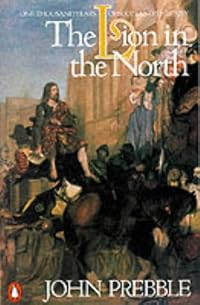
Lion In the North: A Personal View of Scotland's History
by John Prebble
On This Page
Description
The Lion in the North looks at the turbulent years of Scotland's independence, when treachery, hand in hand with noble ideals, stalked the glens, and no clan would compromise its pride.Tags
Recommendations














Member Reviews
I enjoyed this. The author really doesn't like Presbyterianism and notes just how much time and effort the Scots spent on killing each other. Killing Englishmen is just an occasional vice. He points out how poorly the Scots did out of the union and how they prospered with in it. Since this was published in 1971 he did anticipate the rise of Scottish nationalism.
An ambitious history of Scotland starting in earliest times where there are no written records, right up until the mid 19th century or so. It obviously covers a lot of ground and, as the author states, is a personal history. This is especially visible when towards the end of the book he states that Scotland could never again be an independent country - given the current political situation, a particularly ironic viewpoint.
The impression is given of Scotland as a loose coalition of warring factions for many centuries, some of whom were looked down on by the others (the Highlanders who themselves were tribal and in conflict with each other over land and livestock and who kept their own language until a policy of genocide was carried out show more against them). There are some useful genealogies which I made frequent use of, as the story does dot about in time a bit and people are referred to in two or three ways - by title or full name or by surname as in 'the Graham'. I did find that confusing and sometimes was not clear without backtracking to work out who was meant especially as a succession of men were referred to in that way. And it was always men whose identity was in doubt - a few women such as Mary of Guise and Mary Queen of Scots appear - as mainly the book is a story of conflict among men in which women and children are the pawns and victims.
I found it a bit hard going at times and given the somewhat dry nature of a lot of it, despite the mayhem and murder, would rate it at a middling 3 stars. show less
The impression is given of Scotland as a loose coalition of warring factions for many centuries, some of whom were looked down on by the others (the Highlanders who themselves were tribal and in conflict with each other over land and livestock and who kept their own language until a policy of genocide was carried out show more against them). There are some useful genealogies which I made frequent use of, as the story does dot about in time a bit and people are referred to in two or three ways - by title or full name or by surname as in 'the Graham'. I did find that confusing and sometimes was not clear without backtracking to work out who was meant especially as a succession of men were referred to in that way. And it was always men whose identity was in doubt - a few women such as Mary of Guise and Mary Queen of Scots appear - as mainly the book is a story of conflict among men in which women and children are the pawns and victims.
I found it a bit hard going at times and given the somewhat dry nature of a lot of it, despite the mayhem and murder, would rate it at a middling 3 stars. show less
Written in a style that is meant to be entertaining as well as informative, but is frustrating at times because of sentence fragments and over-emotive language. Not objective enough to be real history, and not humorous enough to be comedy.
Scottish history - something I was interested in and keen to read. However, for me this book was difficult to engage with and often boring.
A radical account of the true scottish story from a Highlander's point of view.
Ratings
Members
- Recently Added By
Author Information

Common Knowledge
- Important places
- Scotland, UK
- Dedication
- For James Robertson-Justice
- First words
- Eleven centuries ago Kenneth the Hardy, son of Alpin and the descendant of forty tribal kings, became the first King of Alba, of Albainn the land of the Scots.
- Last words
- (Click to show. Warning: May contain spoilers.)The Earl of Seafield, one of the principal supporters of the Treaty of Union, is believed to have said that it was the 'end of an auld song', but the great echo-chamber of Scottish history held the notes for another century and a half, until they were lost in the brassy anthem of an imperial Britain.
Classifications
Statistics
- Members
- 418
- Popularity
- 73,685
- Reviews
- 5
- Rating
- (3.76)
- Languages
- English
- Media
- Paper
- ISBNs
- 7
- ASINs
- 10