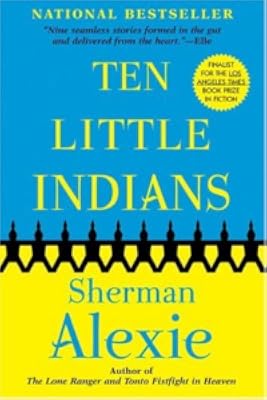
Ten Little Indians
by Sherman Alexie
On This Page
Description
Los Angeles Times Book Prize Finalist: A "stellar collection" of stories about navigating life off the reservation, filled with laughter and heartbreak (People).In these lyrical, affectionate tales from the author of The Absolutely True Diary of a Part-Time Indian and The Lone Ranger and Tonto Fistfight in Heaven, characters navigate the crossroads of culture, battle stereotypes, and find themselves through everything from politics to basketball. Richard, the narrator of "Lawyer's League," show more grows up in Seattle, the son of "an African American giant who played defensive end for the University of Washington Huskies" and "a petite Spokane Indian ballerina." A woman is caught in a restaurant when a suicide bomb goes off in "Can I Get a Witness." And Estelle Walks Above (née Estelle Miller), studies her way off the Spokane Indian Reservation and goes on to both enjoy and resent the company of the white women of Seattle—who see her as a shamanic genius, and look to her for guidance on everything from sex and fashion to spirituality.
These and the other "warm, revealing, invitingly roundabout stories" in Ten Little Indians run the gamut from earthy wit to sobering emotional truth, mapping the outer reaches of the human heart (The New York Times Book Review).
From a New York Times–bestselling and National Book Award–winning author, these tales, "rambunctious and exuberant, bristle with an edgy and mordant humor" (Chicago Tribune).
This ebook features an illustrated biography including rare photos from the author's personal collection.
. show less
Tags
Recommendations




Member Reviews
Sherman Alexie’s short stories in Ten Little Indians are brilliant, subtle, hilarious, sad, and utterly irreverent.
I found Alexie to be as great a writer as I have been hearing that he is. With his sharp touch, he explores the contradictions within his characters, Indian and non-Indian alike. In critical jargon, he “destabilizes” their identity, asking what does it mean to be an Native American, white, or anything else. He writes about people on the edges of their cultures. And in depicting the contradictions and complexes of his characters, Alexie lays bare those of his readers.
Read more on my blog: me, you and books
http://mdbrady.wordpress.com/2012/02/16/ten-little-indians-by-sherman-alexie/
I found Alexie to be as great a writer as I have been hearing that he is. With his sharp touch, he explores the contradictions within his characters, Indian and non-Indian alike. In critical jargon, he “destabilizes” their identity, asking what does it mean to be an Native American, white, or anything else. He writes about people on the edges of their cultures. And in depicting the contradictions and complexes of his characters, Alexie lays bare those of his readers.
Read more on my blog: me, you and books
http://mdbrady.wordpress.com/2012/02/16/ten-little-indians-by-sherman-alexie/
A Spokane college student becomes obsessed with tracking down a reclusive Native American poet, uncovering truths about art, identity, and the invisibility of Native voices. A lawyer confronts the fragility of racial solidarity and liberal idealism in a moment of unexpected violence on the basketball court. A Native American woman survives a terrorist bombing and comes to grips with her unhappy home life. A grieving father finds unexpected hope in a sex toy-turned-spiritual talisman. A successful Spokane businessman struggles with his own cultural dislocation and racial assumptions during a taxi ride. A son reflects on his radical, intellectual mother’s larger-than-life presence and the complexities of being raised by a woman both show more empowering and overwhelming. A married couple’s decades-long relationship is shaped by a youthful mistake. A homeless Spokane man embarks on a 24-hour quest to reclaim his grandmother’s stolen Native regalia. After the death of his parents, a former basketball star attempts to find redemption through a return to the game.
In the nine stories comprising Ten Little Indians, Sherman Alexie crafts a powerful, multifaceted portrait of contemporary Native American life, focusing on urban Spokane Indians navigating a modern America that both marginalizes and misunderstands them. The collection's greatest strength lies in its ability to blend humor, melancholy, and irony while confronting themes of cultural dislocation, historical trauma, racial identity, and the quiet resilience of Native people in everyday life. Whether his characters are grieving parents, disillusioned intellectuals, or homeless wanderers, Alexie portrays them as people who are flawed, funny, and fiercely alive. While each piece in the volume carries its own emotional weight, the standout tales for me—“What You Pawn I Will Redeem,” “Flight Patterns,” and “The Life and Times of Estelle Walks Above”—highlight the author’s storytelling prowess and emotional depth. These works are not only the most thematically ambitious but also the most compelling for their insight into the Native American search for identity in the 21st century. show less
In the nine stories comprising Ten Little Indians, Sherman Alexie crafts a powerful, multifaceted portrait of contemporary Native American life, focusing on urban Spokane Indians navigating a modern America that both marginalizes and misunderstands them. The collection's greatest strength lies in its ability to blend humor, melancholy, and irony while confronting themes of cultural dislocation, historical trauma, racial identity, and the quiet resilience of Native people in everyday life. Whether his characters are grieving parents, disillusioned intellectuals, or homeless wanderers, Alexie portrays them as people who are flawed, funny, and fiercely alive. While each piece in the volume carries its own emotional weight, the standout tales for me—“What You Pawn I Will Redeem,” “Flight Patterns,” and “The Life and Times of Estelle Walks Above”—highlight the author’s storytelling prowess and emotional depth. These works are not only the most thematically ambitious but also the most compelling for their insight into the Native American search for identity in the 21st century. show less
What's novel about this collection of short stories is the way they explore the lived experiences of Native Americans (specifically, members of the Spokane tribe) in the modern world. Not to represent that the stories are particularly realistic - Alexie, exercising his prerogative as a writer, takes the liberty of placing his Native American characters in situations optimized to explore specific themes - but the challenges they face feel culturally and psychologically authentic.
Some of the tales deal explicitly with the struggle to integrate Native American traditions and values into the modern world, like the first story in the collection, "The Search Engine," in which a college student's pursuit of a Native American beatnik poet show more morphs into a modern-day vision quest. Or "Do Not Go Gentle," in which a Native American couple with a desperately ill child find comfort and healing in an extremely unusual totem. Or "Lawyer's League," in which an aspiring mixed-race lawyer weighs the extent to which he's going to need to compromise his pride in order to win the trust of an intolerant world. Or my favorite story in the collection, "What You Pawn I Will Redeem," in which a homeless Native American man goes on a quest to buy back his dignity (the stolen regalia of his grandmother, rediscovered in a pawn shop) but who is, in the end, saved by his own inherent dignity.
But others relate experiences that are more universal. For instance, in "Can I Get a Witness?" a woman who survives a terrorist explosion is confronted by the temptation to explode her entire life - who among us hasn't wondered what it would feel like to blow up everything we have and start over? In "The Life of Times of Estelle Walks Above", a young man struggles to accept that his mother could be both extraordinary and flawed. In "Do You Know Where I Am?" a man reflects on back on a marriage in which "contentment always ran slightly ahead of dissatisfaction". In "What Ever Happened to Frank Snake Church," a former high school basketball phenom struggles to cope with the grief of his parent's death and the gradual dissolution of his own dreams. Disappointment, frustration, grief ... themes that Alexie handles with a combination of deft storytelling, psychological integrity, and copious quantities of sarcasm, which may or may not be a Native American thing ("The two funniest tribes I've ever been around are Indians and Jews, so I guess that says something about the inherent humor of genocide" - a quote from "What I Pawn"), but is definitely an Alexie thing.
While the tales range from bitter to funny, poignant to heartbreaking, they collectively deliver an experience that feels fierce but wise (words I employ reluctantly, as skewering Native American archetypes is another Alexie specialty), dark but also hopeful. show less
Some of the tales deal explicitly with the struggle to integrate Native American traditions and values into the modern world, like the first story in the collection, "The Search Engine," in which a college student's pursuit of a Native American beatnik poet show more morphs into a modern-day vision quest. Or "Do Not Go Gentle," in which a Native American couple with a desperately ill child find comfort and healing in an extremely unusual totem. Or "Lawyer's League," in which an aspiring mixed-race lawyer weighs the extent to which he's going to need to compromise his pride in order to win the trust of an intolerant world. Or my favorite story in the collection, "What You Pawn I Will Redeem," in which a homeless Native American man goes on a quest to buy back his dignity (the stolen regalia of his grandmother, rediscovered in a pawn shop) but who is, in the end, saved by his own inherent dignity.
But others relate experiences that are more universal. For instance, in "Can I Get a Witness?" a woman who survives a terrorist explosion is confronted by the temptation to explode her entire life - who among us hasn't wondered what it would feel like to blow up everything we have and start over? In "The Life of Times of Estelle Walks Above", a young man struggles to accept that his mother could be both extraordinary and flawed. In "Do You Know Where I Am?" a man reflects on back on a marriage in which "contentment always ran slightly ahead of dissatisfaction". In "What Ever Happened to Frank Snake Church," a former high school basketball phenom struggles to cope with the grief of his parent's death and the gradual dissolution of his own dreams. Disappointment, frustration, grief ... themes that Alexie handles with a combination of deft storytelling, psychological integrity, and copious quantities of sarcasm, which may or may not be a Native American thing ("The two funniest tribes I've ever been around are Indians and Jews, so I guess that says something about the inherent humor of genocide" - a quote from "What I Pawn"), but is definitely an Alexie thing.
While the tales range from bitter to funny, poignant to heartbreaking, they collectively deliver an experience that feels fierce but wise (words I employ reluctantly, as skewering Native American archetypes is another Alexie specialty), dark but also hopeful. show less
I'm still trying to figure out how to say this:
The thing I like best about short story collections (by a single author), if they're written well and compiled well, is the feeling I get, after reading each story, of comprehending an intimate secret the author needed me to understand. Poetry and novels both can (and do) knock me out, but there's something about the short story that can really get into my blood.
I am in love with this book. I couldn't get enough of it while I was reading it. It accompanied me almost everywhere I went this weekend, and when I thought maybe, for social reasons (and reducing the weight of my purse from being a lethal weapon), I should leave it at home for just a few hours, I obsessed over its absence like a show more phantom limb or shiny, new lover. I held it like a teddy bear going to sleep at night. I wanted to absorb it into my skin, and I feel this immense sense of guilt for refiling it back onto the bookshelf. I'd rather frame it.
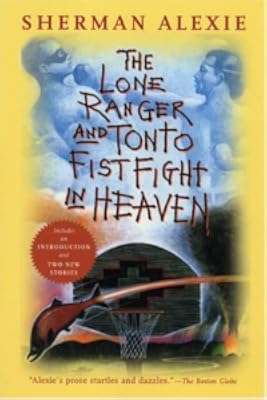
Every story contains characters and situations that are tender, profane, and hilarious all at once, and each constantly evaded my expectations by achieving something far greater than anything I could have imagined. I'm not much for spoilers though I hate to not discuss every story for its brilliance, but it seems a little much to tally everything I loved about each story here. I don't recall enjoying The Lone Ranger and Tonto Fistfight in Heaven as much, but it has been several years and this experience has caused me to seriously consider rereading it.
I think you should read this book. show less
The thing I like best about short story collections (by a single author), if they're written well and compiled well, is the feeling I get, after reading each story, of comprehending an intimate secret the author needed me to understand. Poetry and novels both can (and do) knock me out, but there's something about the short story that can really get into my blood.
I am in love with this book. I couldn't get enough of it while I was reading it. It accompanied me almost everywhere I went this weekend, and when I thought maybe, for social reasons (and reducing the weight of my purse from being a lethal weapon), I should leave it at home for just a few hours, I obsessed over its absence like a show more phantom limb or shiny, new lover. I held it like a teddy bear going to sleep at night. I wanted to absorb it into my skin, and I feel this immense sense of guilt for refiling it back onto the bookshelf. I'd rather frame it.
Every story contains characters and situations that are tender, profane, and hilarious all at once, and each constantly evaded my expectations by achieving something far greater than anything I could have imagined. I'm not much for spoilers though I hate to not discuss every story for its brilliance, but it seems a little much to tally everything I loved about each story here. I don't recall enjoying The Lone Ranger and Tonto Fistfight in Heaven as much, but it has been several years and this experience has caused me to seriously consider rereading it.
I think you should read this book. show less
Maybe even 5 stars . . . I waffle. These short stories are far more character-driven than plot-driven, but they are fine character studies indeed. Here are Alexie's familiar Spokane, but mostly a set of "urban" Indians, recognizing and dealing with their place in more than one culture. They are literate, funny, educated, striving, loving, interesting people. And Alexie peppers in lots of his familiar wit and pathos. This was a fun book to dip in and out of, maybe not the emotional effect of some of his other writing, but I enjoyed it and recommend it. -cg
I am in a state of bliss. What a collection of stories! What a voice! I started this book last night and read right through it, pulled along by the amazing characters in these stories. Alexie is by turns wry, sarcastic, realistic, full of pain and laughter, showing people in paih, in love, trying to find their way, trying to lose themselves. I loved every page.
Ten Little Indians is a gem of a book that sat unread on my book shelf for a long time, perhaps too long. I have no idea when I acquired it but I am glad to have read it now rather than at some earlier point in the ten years since it was published, for reasons I shall make clear shortly.
Alexie is a masterful storyteller. I first heard of him a number of years ago, in relation to his screenplay, Smoke Signals, and the movie that was made from it. Alexie is Native American and the central characters in this collection of short stories are all Native Americans from the same tribe as his own. Like Alexie, the characters have grown up on the reservation and then relocated to Seattle. Using these common elements as a starting point Alexie show more takes his characters through a wide swath of life adventures, some elements of which are based in Native American culture and other parts are more universal, or generic 21st century American culture.
Having recently moved onto a reservation for vocational reasons I had a different understanding of the way in which he portrayed influences of Native American culture in shaping his characters and their subsequent interaction with non-Natives off of the reservation than I would have had a few months ago. While I have been warmly welcomed here there are some ways in which I will always be an outsider, no matter how many years I stay. His characters, long time residents of the city, remain outsiders while living in their own homeland.
I picked Ten Little Indians off my shelf figuring it was finally time to read it and send on to someone else. I was delighted by the stories and characters within its pages and may find myself seeking out Alexie again. show less
Alexie is a masterful storyteller. I first heard of him a number of years ago, in relation to his screenplay, Smoke Signals, and the movie that was made from it. Alexie is Native American and the central characters in this collection of short stories are all Native Americans from the same tribe as his own. Like Alexie, the characters have grown up on the reservation and then relocated to Seattle. Using these common elements as a starting point Alexie show more takes his characters through a wide swath of life adventures, some elements of which are based in Native American culture and other parts are more universal, or generic 21st century American culture.
Having recently moved onto a reservation for vocational reasons I had a different understanding of the way in which he portrayed influences of Native American culture in shaping his characters and their subsequent interaction with non-Natives off of the reservation than I would have had a few months ago. While I have been warmly welcomed here there are some ways in which I will always be an outsider, no matter how many years I stay. His characters, long time residents of the city, remain outsiders while living in their own homeland.
I picked Ten Little Indians off my shelf figuring it was finally time to read it and send on to someone else. I was delighted by the stories and characters within its pages and may find myself seeking out Alexie again. show less
Members
- Recently Added By
Lists

Native American / Indigenous Literature
172 works; 100 members

Books Read in 2015
3,299 works; 129 members
Author Information

60+ Works 31,020 Members
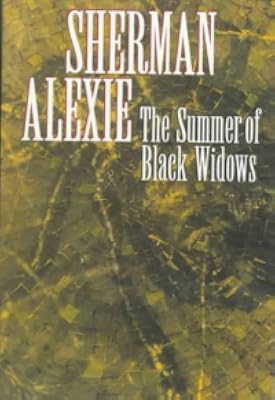
Sherman J. Alexie Jr. was born on October 7, 1966. His mother was Spokane Indian and his father was Coeur d'Alene Indian. Alexie grew up on the Spokane Indian Reservation in Wellpinit, Washington. He decided to attend high school off the reservation where he knew he would get a better education. He was the only Indian at the school, and excelled show more academically as well as in sports. After high school, he attended Gonzaga University for two years before transferring to Washington State University, where he graduated with a degree in American studies. He received the Washington State Arts Commission Poetry Fellowship in 1991 and the National Endowment for the Arts Poetry Fellowship in 1992. His collections of poetry included The Business of Fancydancing, First Indian on the Moon, The Summer of Black Widows, One Stick Song, and Face. His first collection of short stories, The Lone Ranger and Tonto Fistfight in Heaven, received a PEN/Hemingway Award for Best First Book of Fiction and a Lila Wallace-Reader's Digest Writers' Award. His other short story collections included The Toughest Indian in the World, Ten Little Indians, and War Dances. His first novel, Reservation Blues, received the Before Columbus Foundation's American Book Award and the Murray Morgan Prize. His other novels included Indian Killer, The Absolutely True Diary of a Part-Time Indian, and Flight. He won the Andrew Carnegie Medal for Excellence in Nonfiction in 2018 for You Don't Have to Say You Love Me: A Memoir. Alexie and Jim Boyd, a Colville Indian, collaborated on the album Reservation Blues, which contains the songs from the book of the same name. In 1997, Alexie collaborated with Chris Eyre, a Cheyenne/Arapaho Indian, on a film project inspired by Alexie's work, This is What it Means to Say Phoenix, Arizona, from the short story collection The Lone Ranger and Tonto Fistfight in Heaven. Smoke Signals debuted at the Sundance Film Festival in January 1998, winning two awards: the Audience Award and the Filmmakers Trophy. In 1999 the film received a Christopher Award. (Bowker Author Biography) show less
Awards and Honors
Awards
Common Knowledge
- Canonical title
- Ten Little Indians
- Original publication date
- 2003
- Disambiguation notice
- Please distinguish Sherman Alexie's Ten Little Indians: Stories (2003), from Agatha Christie's novel, And Then There Were None (1939), which sometimes appears under the same title as this work, and also from th... (show all)e play or any film or video adaptation of Christie's Work. Thank you.
Classifications
Statistics
- Members
- 1,412
- Popularity
- 16,725
- Reviews
- 28
- Rating
- (3.94)
- Languages
- English, French, Spanish, Swedish
- Media
- Paper, Ebook
- ISBNs
- 14
- ASINs
- 4