
On This Page
Description
A young Cree woman who has been searching for her missing sister sits at the hospital bedside of her unconscious uncle, an injured bush pilot. Both share family tragedies and personal resiliance.Tags
Recommendations
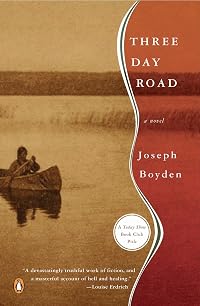














Member Recommendations

Member Reviews
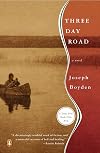
After reading Canadian author Joseph Boyden’s Three Day Road last year, it was apparent that I had stumbled upon an extraordinary, new-to-me author. That first book told the story of Xavier Bird and his life-long friend Elijah Whiskeyjack, as they struggled to survive WWI together. Through Black Spruce, winner of Canada’s 2008 Giller Prize, takes place decades later and tells the story of Xavier’s son, Will Bird, legendary Cree bush pilot. Will is lying comatose in a hospital. His granddaughter Annie sits by his side and the narrative is presented as alternating chapters, Will telling his story to Annie and Annie relating hers to her grandfather. Boyden chose joint narratives for his previous book too and this effective narration show more device made it possible for him to leave each chapter with somewhat of a cliffhanger that the reader has to wait for as he reads the other storyteller’s tale. Needless to say, this technique, coupled with brilliant writing made the book impossible to put down.
Will and Annie’s stories are entirely different yet they share some common themes: growing up in virtual poverty and often being very hungry, the drug addiction and alcoholism prevalent on the “rez,” the desperate winter weather conditions common to Canada’s Arctic region where the stories take place and the loneliness and depression that is common, the danger of unsavory characters that plague any generation, and the importance of the love of friends and family. Will describes their hometown in this way:
“Moosonee. End of the road. End of the tracks. I can sense it just beyond the trees, nieces. It’s not so far away through the heavy snow. That place, it can be a sad, greedy town. You fall into your group of friends, and that’s that. Friends for life, minus the times you are enemies. Not too many people around here to choose from for friends, or for enemies. So choose right. In this place, your people will die for you. Unless they’re mad at you. If you are on the outs with a friend, all bets are off. You don’t exist. I’m down to my last couple of friends and have been for years. Maybe it’s like anywhere, but we’re some vengeful bunch. I blame it on the Cree being a clan-based people. Each clan has its own interests in mind. And whenever you have your own best interests in mind, someone gets left out and angry.” (Page 11)
Someone is angry at Will and someone is angry at Annie and that is what keeps the narrative moving. The way in which each of their stories is resolved is what keeps you on the edge of your seat. I’m hoping that Boyden is making a trilogy out of this. The silent Gordon and could easily go on to have a book of their own. I wonder what Mr. Boyden is writing right now. Very highly recommended. show less
Will and Annie’s stories are entirely different yet they share some common themes: growing up in virtual poverty and often being very hungry, the drug addiction and alcoholism prevalent on the “rez,” the desperate winter weather conditions common to Canada’s Arctic region where the stories take place and the loneliness and depression that is common, the danger of unsavory characters that plague any generation, and the importance of the love of friends and family. Will describes their hometown in this way:
“Moosonee. End of the road. End of the tracks. I can sense it just beyond the trees, nieces. It’s not so far away through the heavy snow. That place, it can be a sad, greedy town. You fall into your group of friends, and that’s that. Friends for life, minus the times you are enemies. Not too many people around here to choose from for friends, or for enemies. So choose right. In this place, your people will die for you. Unless they’re mad at you. If you are on the outs with a friend, all bets are off. You don’t exist. I’m down to my last couple of friends and have been for years. Maybe it’s like anywhere, but we’re some vengeful bunch. I blame it on the Cree being a clan-based people. Each clan has its own interests in mind. And whenever you have your own best interests in mind, someone gets left out and angry.” (Page 11)
Someone is angry at Will and someone is angry at Annie and that is what keeps the narrative moving. The way in which each of their stories is resolved is what keeps you on the edge of your seat. I’m hoping that Boyden is making a trilogy out of this. The silent Gordon and could easily go on to have a book of their own. I wonder what Mr. Boyden is writing right now. Very highly recommended. show less
I half-wondered if Boyden's second novel would engage me as his first, Three Day Road, did or whether it would turn out to be a case of a wistful "Oh well!" for another author lacking staying power. It was the former; I didn't want to put the book down.
Like his first novel, this is told by alternating narrators. The first is Will Bird, a well-known Cree bush pilot, who lies, comatose, in the hospital while his thoughts spin out the tale of how he got there. The second is his niece, Annie Bird, who has returned to Moosonee to sit with her uncle because her friend, a nurse, has told her that talking with a patient may help to rouse him. While sitting there, she tells him the story of her search for her missing sister, who went south to show more Montreal and New York to be a model. Eventually, you start to see the two threads merge naturally into a single story that's exciting and tense.
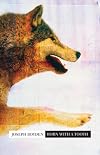
This book has the same clean writing style that I admired so much in both his first novel and his collection of short stories, Born With a Tooth. It's fluid, quick and compelling, and takes you right into the First Nation communities around Moosonee, or out into the frozen bush on the borders of Hudson Bay. He has also crafted another set of vivid and complex characters that engaged me from the opening pages.
Though this book won Canada's top prize for fiction, I still rank his first novel ahead of it. Will's story line is gripping and forceful—there wasn't a chance I was going to set the book down while in the midst his chapters. Some of Annie's tale, however, is a bit more prosaic. Though the portions of her story set at home drew me right in, when she recounts her sojourn in the drug-fueled lifestyle of the glitterati, there's a bit of dullness to the story...almost as if the superficiality of that life had colored the writing. I wanted those parts of the book over so I could get back to the North. I also found a faint hint of blockbuster in the ending as, after a climactic scene, everything begins to wrap up tidily.
But...don't interpret this as damning—I was delighted with this story and have added Boyden to my Favorite Authors list.
By the way, if the characters' surname sounds familiar to those who have read Three Day Road, Will and Annie are Xavier Bird's son and granddaughter. Since he has stated he will always write about the First Nations, I'm hoping there will be more stories about the inhabitants of Moosonee and Moose Factory. show less
Like his first novel, this is told by alternating narrators. The first is Will Bird, a well-known Cree bush pilot, who lies, comatose, in the hospital while his thoughts spin out the tale of how he got there. The second is his niece, Annie Bird, who has returned to Moosonee to sit with her uncle because her friend, a nurse, has told her that talking with a patient may help to rouse him. While sitting there, she tells him the story of her search for her missing sister, who went south to show more Montreal and New York to be a model. Eventually, you start to see the two threads merge naturally into a single story that's exciting and tense.
This book has the same clean writing style that I admired so much in both his first novel and his collection of short stories, Born With a Tooth. It's fluid, quick and compelling, and takes you right into the First Nation communities around Moosonee, or out into the frozen bush on the borders of Hudson Bay. He has also crafted another set of vivid and complex characters that engaged me from the opening pages.
Though this book won Canada's top prize for fiction, I still rank his first novel ahead of it. Will's story line is gripping and forceful—there wasn't a chance I was going to set the book down while in the midst his chapters. Some of Annie's tale, however, is a bit more prosaic. Though the portions of her story set at home drew me right in, when she recounts her sojourn in the drug-fueled lifestyle of the glitterati, there's a bit of dullness to the story...almost as if the superficiality of that life had colored the writing. I wanted those parts of the book over so I could get back to the North. I also found a faint hint of blockbuster in the ending as, after a climactic scene, everything begins to wrap up tidily.
But...don't interpret this as damning—I was delighted with this story and have added Boyden to my Favorite Authors list.
By the way, if the characters' surname sounds familiar to those who have read Three Day Road, Will and Annie are Xavier Bird's son and granddaughter. Since he has stated he will always write about the First Nations, I'm hoping there will be more stories about the inhabitants of Moosonee and Moose Factory. show less
I liked Boyden’s Three Day Road very much, and this book follows on from that in the sense that the grandsons of the two protagonists in Three Day Road are very much the focus of Through Black Spruce, but whereas the grandfathers were closer than brothers and suffered through the horrors of WWI together, the grandsons in Through Black Spruce are sworn enemies and the hatred and violence between them is a motor that drives much of the story. They do not, however, get equal billing as the story follows the life of Will Bird, a legendary Cree bush pilot who has run afoul of Marius, a local thug and drug dealer; as the novel opens, Will is in a coma from an attack that we only learn about towards the end of the story. The perspective show more shifts between two first-person narratives: Will and his beloved niece, Annie who unfolds her story talking to Will in the hospital because people believe that it is good to talk to comatose patients in the hope that they can hear and will awake. Annie’s story is the other motor for the novel; it involves travelling to Toronto and New York, seeking her lost sister who worked as a model in New York. She starts modeling herself and her life becomes entangled in the superficial, artificial, temporary worlds of high fashion, big money, drugs, booze, prestige clubs, and people who are your friends for as long as they can use you or for as long as you entertain them or for as long as you bring them some notoriety or those fleeting moments that pass for attention and fame.
The novel juxtaposes the artificiality of life at that urban peak with the slower, more deliberate, more supporting pace and way of life among the First Nations people, including those trapped in the urban setting themselves, but especially for those who live in and with nature. It is a testament to the power of family, friends, and love, emotional, familial, physical. It details wonderfully life in the bush, off the land, where life can be hard and short if one does not know how to live with respect for nature and the animals that share the earth and sustain people. Animals and birds are trapped and hunted and decoyed and shot, but always with respect for the animal, respect for the life that the animal gives in giving up its own, respect for its, and the human’s, place in the order of things that sustain the world, respect for spirits good and bad, respect for elders and ancestors. The two worlds pictured and explored could not be more extremely opposite of each other. The writing is clean and straight-forward; the narrative is well structured, well paced; the characters, especially Will and Annie are well delineated, well developed and sympathetic, the tension in the plot is well-developed. A fine novel. show less
The novel juxtaposes the artificiality of life at that urban peak with the slower, more deliberate, more supporting pace and way of life among the First Nations people, including those trapped in the urban setting themselves, but especially for those who live in and with nature. It is a testament to the power of family, friends, and love, emotional, familial, physical. It details wonderfully life in the bush, off the land, where life can be hard and short if one does not know how to live with respect for nature and the animals that share the earth and sustain people. Animals and birds are trapped and hunted and decoyed and shot, but always with respect for the animal, respect for the life that the animal gives in giving up its own, respect for its, and the human’s, place in the order of things that sustain the world, respect for spirits good and bad, respect for elders and ancestors. The two worlds pictured and explored could not be more extremely opposite of each other. The writing is clean and straight-forward; the narrative is well structured, well paced; the characters, especially Will and Annie are well delineated, well developed and sympathetic, the tension in the plot is well-developed. A fine novel. show less
It is impossible not to compare Through Black Spruce with Boyden’s earlier book, Three Day Road. And Through Black Spruce does fall short of the first one.
Boyden again writes with poetic prose, and has well-developed, complex characters. This story could be read as a sequel of the first – although it does stand alone – in an epic historical account of the aboriginal community in Canada through 4 generations, from the great-aunt Niska, a shaman woman in the beginning of the century and her nephew and WWI hero in the first book, then – in the second – his children and grand-children growing up on a reserve and dealing with the aftermaths of aboriginal schools: alcoholism, unemployment, gangs. However, Boyden is too scared to show more deal with the most natural outcome of such reality for aboriginal women: prostitution. He chooses instead to send the young female characters into the world of advertisement, making then super-models. Unfortunately this is not an environment that is natural to Boyden, and it shows. While his accounts of the North, the cold, the hunts, even the jealousy, friendships and animosities fostered in a small community all sound very true, the accounts of his nieces high life in Montreal and New York is too stereotypical.
Even if aspects of this book did disappoint me, I am still eager to read more of Boyden’s writing, and I am already waiting for his next book. He has a natural voice as a writer; he is perceptive and moving. I hope his next attempt stays truer to his voice. show less
Boyden again writes with poetic prose, and has well-developed, complex characters. This story could be read as a sequel of the first – although it does stand alone – in an epic historical account of the aboriginal community in Canada through 4 generations, from the great-aunt Niska, a shaman woman in the beginning of the century and her nephew and WWI hero in the first book, then – in the second – his children and grand-children growing up on a reserve and dealing with the aftermaths of aboriginal schools: alcoholism, unemployment, gangs. However, Boyden is too scared to show more deal with the most natural outcome of such reality for aboriginal women: prostitution. He chooses instead to send the young female characters into the world of advertisement, making then super-models. Unfortunately this is not an environment that is natural to Boyden, and it shows. While his accounts of the North, the cold, the hunts, even the jealousy, friendships and animosities fostered in a small community all sound very true, the accounts of his nieces high life in Montreal and New York is too stereotypical.
Even if aspects of this book did disappoint me, I am still eager to read more of Boyden’s writing, and I am already waiting for his next book. He has a natural voice as a writer; he is perceptive and moving. I hope his next attempt stays truer to his voice. show less
Through black spruce by Joseph Boyden is a novel of love and loss and persistence set primarily in Ontario at the southern end of the James Bay.
Though about half the narration takes place northern Ontario in their Cree community, and half in New York City, the taiga forest is obviously a well-loved home for both narrators. But this is not a novel full of action.
What hooked me was the tone of the narrators, Will & Annie, reflective and measured, always reaching out to the other. The sentences are short, terse really, but clear and descriptive. Yet the picture is tantalizingly out of focus, and it takes quite awhile to put the pieces together, and even then there are things unfinished, unsaid, unresolved.
The first chapter is clearly a man show more talking to his nieces, obviously in trouble and talking to help keep himself moving. But what kind of trouble isn’t clear. In trouble with alcohol? When the first paragraph of a novel is a description of what to blend with rye whiskey, you know alcohol plays an important role in the story. Alcohol plays a role through rest of the chapter, a description of Will’s first plane crash onto a partially frozen creek lined with black spruce, but not the only one. The other thing that plays a significant role in the story are his family and friends, particularly his nieces; the final paragraph of the chapter makes clear that getting back to them is keeping the narrator going:
"The snow’s deep here, nieces. I’m tired, but I have to keep walking. I’m so tired, but I’ve got to get up or I’ll freeze to death. Talking to you, it keeps me warm."
The second chapter introduces niece Annie, who lets us know her uncle is in the hospital, in intensive care and unconscious. Why isn’t clear until we’re a quite a way into the story. Annie has been away for a long time, out of communication with her uncle (and her mother). We learn eventually that she started out searching for her missing sister, and followed her trail to the glamorous life of a model, locating her sister’s “friends” and living the high in New York City, until Annie’s life there falls apart.
Her friend Eva, a nurse at the hospital, encourages Annie to talk to her uncle. Her first attempt is awkward, and it’s clear she feels guilty, somehow responsible for his ending up here (It took me awhile after I finished the book to figure out why.) But Annie and Will have a bond because, as Annie says, speaking of her sister, “I bet you believe she’s still alive . . . Nobody else around here does but you and me, I bet.” The other bond they have is they both love living in the bush, hunting and trapping.
The remainder of the book alternates back and forth between Will’s voice and Annie’s, and we are left to attempt to piece together the story of what happened to Suzanne and to Will. What happened to Suzanne? Is it possible that she will come back? And what about Will? What happened to him? Clearly he and his niece both desire his return to the land of the living. Will he make it?
My public library does not have any of Boyden's other books, unfortunately, but I hope to read more of his writing.
This novel won the Giller Prize in 2008. show less
Though about half the narration takes place northern Ontario in their Cree community, and half in New York City, the taiga forest is obviously a well-loved home for both narrators. But this is not a novel full of action.
What hooked me was the tone of the narrators, Will & Annie, reflective and measured, always reaching out to the other. The sentences are short, terse really, but clear and descriptive. Yet the picture is tantalizingly out of focus, and it takes quite awhile to put the pieces together, and even then there are things unfinished, unsaid, unresolved.
The first chapter is clearly a man show more talking to his nieces, obviously in trouble and talking to help keep himself moving. But what kind of trouble isn’t clear. In trouble with alcohol? When the first paragraph of a novel is a description of what to blend with rye whiskey, you know alcohol plays an important role in the story. Alcohol plays a role through rest of the chapter, a description of Will’s first plane crash onto a partially frozen creek lined with black spruce, but not the only one. The other thing that plays a significant role in the story are his family and friends, particularly his nieces; the final paragraph of the chapter makes clear that getting back to them is keeping the narrator going:
"The snow’s deep here, nieces. I’m tired, but I have to keep walking. I’m so tired, but I’ve got to get up or I’ll freeze to death. Talking to you, it keeps me warm."
The second chapter introduces niece Annie, who lets us know her uncle is in the hospital, in intensive care and unconscious. Why isn’t clear until we’re a quite a way into the story. Annie has been away for a long time, out of communication with her uncle (and her mother). We learn eventually that she started out searching for her missing sister, and followed her trail to the glamorous life of a model, locating her sister’s “friends” and living the high in New York City, until Annie’s life there falls apart.
Her friend Eva, a nurse at the hospital, encourages Annie to talk to her uncle. Her first attempt is awkward, and it’s clear she feels guilty, somehow responsible for his ending up here (It took me awhile after I finished the book to figure out why.) But Annie and Will have a bond because, as Annie says, speaking of her sister, “I bet you believe she’s still alive . . . Nobody else around here does but you and me, I bet.” The other bond they have is they both love living in the bush, hunting and trapping.
The remainder of the book alternates back and forth between Will’s voice and Annie’s, and we are left to attempt to piece together the story of what happened to Suzanne and to Will. What happened to Suzanne? Is it possible that she will come back? And what about Will? What happened to him? Clearly he and his niece both desire his return to the land of the living. Will he make it?
My public library does not have any of Boyden's other books, unfortunately, but I hope to read more of his writing.
This novel won the Giller Prize in 2008. show less
This seems to be a place-marker kind of book: something to hold in place between [b:Three Day Road|823411|Three Day Road|Joseph Boyden|https://images.gr-assets.com/books/1327905456s/823411.jpg|809209] and [b:The Orenda|17661831|The Orenda|Joseph Boyden|https://images.gr-assets.com/books/1363710334s/17661831.jpg|24652514]. Like all place-markers, it stands as a static symbol of waiting until one can pick up the story again -- and indeed, there is a lot of waiting, to no purpose in this novel.
While Three Day Road was a heartrending journey of finding one's way home and The Orenda was an equally emotional journey back in time, this seems like a long walk to nowhere.
It's isn't as if it's a bad book; it's just not a very good one, given show more Boyden's ability to shine like the Northern Star, when he wants to; when he puts his heart into it.
We are given two diverging, yet intertwining storylines: an uncle who is in a coma in a hospital bed recounts, in his mind, the story of his troubled life to his niece; the niece, who is equally troubled, talks to the comatose uncle, and through this therapeutic talk, finds herself again.
The entire novel, in fact, is riddled with voiceless people: Will cannot speak because he's in a coma; the only real conversations that Annie has is with her comatose uncle Will, which can be said to be no conversation at all; Gordon, Annie's love interest and protector, is mute and communicates only with a pen and a pad of paper; Suzanne, Annie's sister, is missing and so she only speaks through Annie's memories of her. It's a wonderful metaphor for the infection that ails the indigenous people: never having a say in their own destinies; unfortunately, Boyden fails to tease this out in a satisfying way. Everyone is voiceless, and then everybody gets back his/her voice, abracadabra and presto! Huh?!
The novel unravels in the usual tug-of-war between Canadian indigenous virtues and the (painted) American Woman of profanity: Annie loses herself in the tawdry and competitive world of high fashion models of NYC who are drowning their lives with drugs, booze and sex. Oh so predictable, and oh so cheap. While Boyden could have made much of this scene by exploring it with real sentiment, it is a surprise to meet only caricatures. Annie is saved, (and saves herself and Gordon), when she returns to her native roots in Northern Ontario, on the shores of James Bay. A little too much of a cliché, because it is done too smoothly. This placidity, in the face of great harm, is all so improbable that it detracts from what could have been an extraordinary journey of redemption.
It may sound trite and reductive -- but that's it; that's the story in a nutshell, and on one level is not much more profound than this.
What saves the novel from complete failure is that Boyden injects Will's character with his signature Boyden incisiveness. While we can dismiss Annie's journey out of hand, we are hard-pressed to do so with Will, for we connect with him immediately, and viscerally. He has a real story to tell, not a cranked out re-run from the Oprah syndicate.
Old men speak in riddles, nieces, but if you listen carefully, they might have something important to tell you.
I look forward to listening, again, when Boyden returns to his authentic voice. show less
While Three Day Road was a heartrending journey of finding one's way home and The Orenda was an equally emotional journey back in time, this seems like a long walk to nowhere.
It's isn't as if it's a bad book; it's just not a very good one, given show more Boyden's ability to shine like the Northern Star, when he wants to; when he puts his heart into it.
We are given two diverging, yet intertwining storylines: an uncle who is in a coma in a hospital bed recounts, in his mind, the story of his troubled life to his niece; the niece, who is equally troubled, talks to the comatose uncle, and through this therapeutic talk, finds herself again.
The entire novel, in fact, is riddled with voiceless people: Will cannot speak because he's in a coma; the only real conversations that Annie has is with her comatose uncle Will, which can be said to be no conversation at all; Gordon, Annie's love interest and protector, is mute and communicates only with a pen and a pad of paper; Suzanne, Annie's sister, is missing and so she only speaks through Annie's memories of her. It's a wonderful metaphor for the infection that ails the indigenous people: never having a say in their own destinies; unfortunately, Boyden fails to tease this out in a satisfying way. Everyone is voiceless, and then everybody gets back his/her voice, abracadabra and presto! Huh?!
The novel unravels in the usual tug-of-war between Canadian indigenous virtues and the (painted) American Woman of profanity: Annie loses herself in the tawdry and competitive world of high fashion models of NYC who are drowning their lives with drugs, booze and sex. Oh so predictable, and oh so cheap. While Boyden could have made much of this scene by exploring it with real sentiment, it is a surprise to meet only caricatures. Annie is saved, (and saves herself and Gordon), when she returns to her native roots in Northern Ontario, on the shores of James Bay. A little too much of a cliché, because it is done too smoothly. This placidity, in the face of great harm, is all so improbable that it detracts from what could have been an extraordinary journey of redemption.
It may sound trite and reductive -- but that's it; that's the story in a nutshell, and on one level is not much more profound than this.
What saves the novel from complete failure is that Boyden injects Will's character with his signature Boyden incisiveness. While we can dismiss Annie's journey out of hand, we are hard-pressed to do so with Will, for we connect with him immediately, and viscerally. He has a real story to tell, not a cranked out re-run from the Oprah syndicate.
Old men speak in riddles, nieces, but if you listen carefully, they might have something important to tell you.
I look forward to listening, again, when Boyden returns to his authentic voice. show less
Through Black Spruce by Joseph Boyden is a novel that explores indigenous culture, family ties and identity. I found this to to a powerful story that follows two distinct POVs. The elder voice is that of Will Bird, a retired bush pilot who lies in a coma as his mind is actively going over the events that led to his condition. The younger voice belongs to Annie, Will’s niece who visits with her uncle and tells him of her journey of the past few months as she followed her missing sister’s trail to Toronto, Montreal and New York City before returning home to their small community of Moosonee near the shores of James Bay.
While the story takes us through heartbreak, mysterious disappearances, and violent confrontations what jumped out at show more me was the strong bond of kinship that these two characters shared. While not directly addressed, as the story advances, the plight of the indigenous people with drugs, alcohol and the death of their traditional way of life is made very clear.
Although there has been some controversy surrounding this author, I chose to simply concentrate on the story and I found it to be powerful, original and unforgettable. My only concern was that the ending seemed rather contrived but overall this was a very rewarding read. show less
While the story takes us through heartbreak, mysterious disappearances, and violent confrontations what jumped out at show more me was the strong bond of kinship that these two characters shared. While not directly addressed, as the story advances, the plight of the indigenous people with drugs, alcohol and the death of their traditional way of life is made very clear.
Although there has been some controversy surrounding this author, I chose to simply concentrate on the story and I found it to be powerful, original and unforgettable. My only concern was that the ending seemed rather contrived but overall this was a very rewarding read. show less
Members
- Recently Added By
Published Reviews
ThingScore 50
The winner of the 2008 Giller Prize, Canada's top literary award, has just been released in the United States, where I suspect the response will be mixed. Much of this novel reflects its crisp, poetic title, but overall the quality of "Through Black Spruce" wobbles erratically, and what's weakest about the book is its depiction of what we know best: American depravity....This is powerful and show more powerfully told, but the novel as a whole is weakened by the other story running through Will's. show less
added by vancouverdeb
Joseph Boyden won huge critical acclaim with his first novel, Three Day Road, which concerns the First World War experience of Elijah Weesageechak and Xavier Bird, two Cree hunters who fought as snipers with a Canadian regiment. In it, Boyden brought a fresh angle to a well-trodden subject. Now, in Through Black Spruce, he connects these protagonists to explore the overarching theme of show more addiction and trauma....But the novel weakens when Annie narrates her search for Suzanne, a celebrity model, in Toronto and New York. Manhattan is full of clichés: Soleil the society hostess who toys with newcomers, the coke-head models, the tough-guy drug dealers. It makes a dull contrast to the vivid scenes in the northern wilderness. His characters are most moving when revelations occur in small, quiet moments. show less
added by vancouverdeb
Early on in Through Black Spruce, the follow-up to Joseph Boyden’s bestselling first novel, Three Day Road, former bush pilot Will Bird reflects on a recurring dream he used to have some 30 years ago....Boyden is definitely a gifted storyteller. His narrative progresses with practiced ease until, very near the end, it falters in a climax that is pure melodrama – after which, I’m sad to show more say, the story unravels into a threadbare epilogue: a disappointing finale that does little justice to the rest of the novel. show less
added by vancouverdeb
Lists

The Best of Canadian Literature
235 works; 32 members

Giller Prize Winners
32 works; 6 members

Best Books Read for TIOLI
49 works; 14 members

Most Popular Books Tagged Ontario
35 works; 2 members

Arctic novels
35 works; 5 members
Author Information

10+ Works 4,904 Members
Joseph Boyden is a novelist and short story writer. His first novel, Three Day Road won the Amazon/Books in Canada First Novel Award and the Rogers Writers' Trust Fiction Prize. His second novel, Through Black Spruce, won the 2008 Scotiabank Giller Prize. Of Irish, Scottish and Anishinaabe heritage, Boyden writes about First Nations heritage and show more culture. He studied creative writing at York University and the University of New Orleans, and taught in the Aboriginal Student Program at Northern College. He is currently a Lecturer with the UBC Creative Writing Program. (Bowker Author Biography) show less
Awards and Honors
Awards
Series

Belongs to Publisher Series
Common Knowledge
- Canonical title
- Through Black Spruce
- Original title
- Through Black Spruce
- Original publication date
- 2008-09-09
- People/Characters
- Annie Bird; Will Bird; Suzanne Bird; Marius Netmaker; Gordon "Painted Tongue"
- Important places
- Moose Factory, Ontario, Canada; Moosonee, Ontario, Canada; Toronto, Ontario, Canada; Montréal, Québec, Canada; New York, New York, USA; Northern Ontario, Canada
- Dedication
- AMANDA
Nisakihakan
JACOB
Nkosis
WILLIAM AND PAMELA
Kotakiyak Nicishanu - First words
- When there was no Pepsi left for my rye whisky, nieces, there was always ginger ale.
- Quotations
- The humming of a living body, pike or sturgeon, ruffed grouse or moose or human, when it passes to death, the beat of that heart continues, in a lesser way maybe, but it joins the heartbeat of the day and the night. Of our wo... (show all)rld. When I was younger I believed that the northern lights, the electricity I felt on my skin under my parka, the faint crackle of it in my ears, was Gitchi Manitou collecting the vibrations of lives spent, refuelling the world with these animals’ power.
I want to sit up, put my feet on the floor, close the distance between us, and crawl into his bed. My hand moves to him at the thought of it. I imagine my mouth on his smooth torso. His jutting ribs. His scars. I picture bein... (show all)g under a blanket with him, our limbs wrapped around each other, not wanting to let go. He wouldn’t let go. It wouldn’t be hard to lift my leg up and off my own bed. First leg would go, the other following easy. Body follows. Bodies follow.
Lots of times growing up, I'd just try to do something myself because I believed that being a boy, and being Indian, I should just know how to do things. My father understood that my pride would take its course and I'd end up... (show all) learning two lessons at once. The less painful road was always to just ask him how to do something when I could stomach it, but more important, that to fail at doing something, whether it was surviving a snowstorm or trying to catch fish, meant that pride can kill you, or at the very least make you so hungry you could cry. Learn from your elders. Yes.
I guess we all have our favourite childhood memories. Mine burn inside me like red coals. A cold autumn evening there on the shores of the big water, our canvas prospector's tent glowing by lantern light against the night, ... (show all)the air cold on my cheeks as my moshum, your father, sits with me on a boulder overlooking the water. ... Moshum sits with me and points out how the bay has absorbed the light. He gives names to the stars that appear. North Star. Hunter's Star. Going Home Star. He speaks slow in Cree, the words magic and long, a part of me.
“They are the same stars you see anywhere you go in the world, little Niska,” he says. This name, Niska, Little Goose, has always been his pet name for me. “My own auntie told me that,” Moshum says, “but I didn't learn it until I travelled far away. And now I teach it to you.” I remembered those words. Remember them to this day. - Last words
- (Click to show. Warning: May contain spoilers.)The hands of my family reach out to help me.
- Original language*
- Anglais (Canada) (Canada)
*Some information comes from Common Knowledge in other languages. Click "Edit" for more information.
Classifications
Statistics
- Members
- 1,177
- Popularity
- 21,188
- Reviews
- 50
- Rating
- (4.05)
- Languages
- Dutch, English, French, German
- Media
- Paper, Audiobook, Ebook
- ISBNs
- 23
- ASINs
- 17