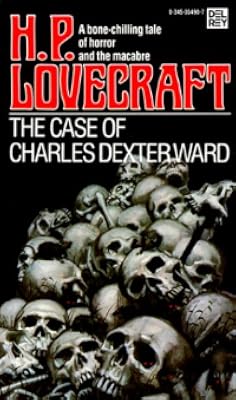
The Case of Charles Dexter Ward
by H. P. Lovecraft
Intégrale H. P. Lovecraft (3), Randolph Carter tales (5; mentioned)
On This Page
Description
H. P. Lovecraft was one of the greatest horror writers of all time. His seminal work appeared in the pages of legendary Weird Tales and has influenced countless writer of the macabre. This is one of those stories.Tags
Recommendations
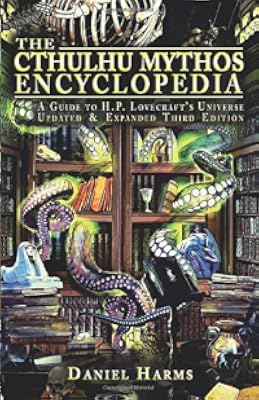



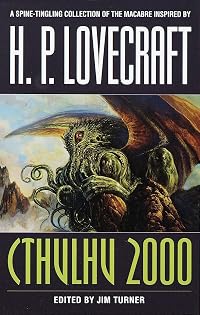
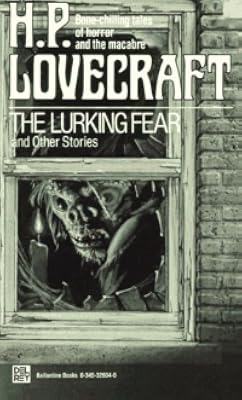
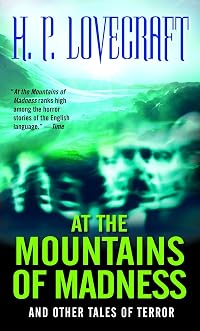


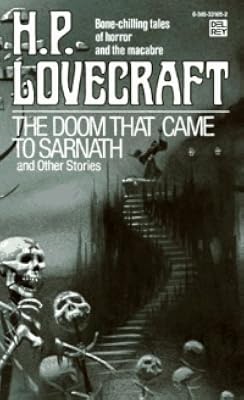


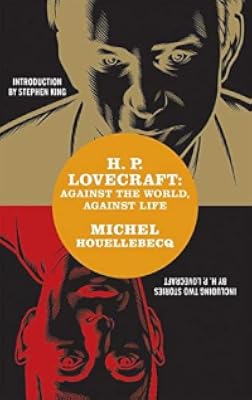


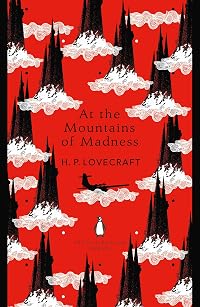









Member Recommendations

anonymous user Lovecraft's Curwen is reminiscent of the ageless villain in Bulwer-Lytton.
Member Reviews
As Lovecraft himself declined to have this story published, I had a disquieting feeling that I might not be driven beyond horror through Cyclopean ruins and preternatural visions of madness! Paradoxically, my fears were both expunged and loathsomely augmented as I delved deep into the endless catacombs of Pawtuxet, searching out horrors both nameless and unimaginable and yet so cosmically effulgent in Lovecraft's accursed manuscript of alchemical necromancy!!
"He screamed and screamed and screamed in a voice whose falsetto panic no acquaintance of his would ever have recognised; and though he could not rise to his feet he crawled and rolled desperately away over the damp pavement where dozens of Tartarean wells poured forth their show more exhausted whining and yelping to answer his own insane cries." ...yes, it's that good.
P.S. OGTHROD AI’F GEB’L—EE’H YOG-SOTHOTH ’NGAH’NG AI’Y ZHRO !!! show less
"He screamed and screamed and screamed in a voice whose falsetto panic no acquaintance of his would ever have recognised; and though he could not rise to his feet he crawled and rolled desperately away over the damp pavement where dozens of Tartarean wells poured forth their show more exhausted whining and yelping to answer his own insane cries." ...yes, it's that good.
P.S. OGTHROD AI’F GEB’L—EE’H YOG-SOTHOTH ’NGAH’NG AI’Y ZHRO !!! show less
I first discovered Lovecraft when I was young, perhaps in junior high? I read everything of his at that time, but this particular work was a bit beyond me.
Now, re-reading it decades later, I understand and respect it more. I like his masterful use of dramatic irony as the characters are slow to discover or understand the cosmic horror which the reader is already privy to, creating a tension that ensnares the reader. I think this novella is less ambiguous than many of his other works, and he tells us almost everything about what finally befell poor Charles Dexter Ward. The setting of Old Providence is beautifully done, and the scenes set underground are particularly chilling. Granted, there are some rambling, slow passages, and a smidge show more of the racism that mars some of his writing. It is a product of its time, but still enjoyable. show less
Now, re-reading it decades later, I understand and respect it more. I like his masterful use of dramatic irony as the characters are slow to discover or understand the cosmic horror which the reader is already privy to, creating a tension that ensnares the reader. I think this novella is less ambiguous than many of his other works, and he tells us almost everything about what finally befell poor Charles Dexter Ward. The setting of Old Providence is beautifully done, and the scenes set underground are particularly chilling. Granted, there are some rambling, slow passages, and a smidge show more of the racism that mars some of his writing. It is a product of its time, but still enjoyable. show less
No sé qué más pudiera decir que no se haya dicho ya sobre H.P. Lovecraft más allá de reiterar que fue un escritor fuera de serie.
Este libro que antes que cualquier otra cosa tiene una prosa maravillosa, una manera de estar escrito que es prodigioso, una historia por demás singular y por supuesto interesante, pero a pesar de ser un libro de terror, lo que más llama la atención es la manera en que Lovecraft nos pinta un escenario tenebroso, no es que, de miedo, es que se siente el ambiente oscuro y extraño de lo que cuenta.
El caso de Charles Dexter Ward no es en absoluto una historia de terror al uso, es más bien como si lo que Lovecraft hiciera fuera dibujarnos todo el humo alrededor de ese miedo que se supone se debe de show more sentir, la historia es magnífica, retorcida y absolutamente genial.
Poco a poco y de manera muy despacio nos va relatando la historia de este personaje, de cómo se va metiendo en la oscuridad, en la locura y de alguna manera tratando de explicar las razones por las cuales Ward termina como lo ha hecho.
No es una lectura ágil, pero tampoco necesita serlo, éste aunque es un libro corto, es uno de esos que hay que leerse despacio, que te obliga a leerlo de esa manera, es curioso que aún y cuando se nos relatan los hechos, lo cierto es que lo redacta de tal manera que hay que poner todos los sentidos para poder comprender todo lo que se cuenta, los hechos, motivos, razones y por supuesto a como se llegó al final.
Un final absolutamente fascinante, tan bien construido y manejado que aún y cuando sabía que la historia iba para ese final, no dejó de sorprenderme, más por la forma en que se llega al mismo que por lo que se cuenta.
Es un libro maravilloso, absolutamente recomendable. show less
Este libro que antes que cualquier otra cosa tiene una prosa maravillosa, una manera de estar escrito que es prodigioso, una historia por demás singular y por supuesto interesante, pero a pesar de ser un libro de terror, lo que más llama la atención es la manera en que Lovecraft nos pinta un escenario tenebroso, no es que, de miedo, es que se siente el ambiente oscuro y extraño de lo que cuenta.
El caso de Charles Dexter Ward no es en absoluto una historia de terror al uso, es más bien como si lo que Lovecraft hiciera fuera dibujarnos todo el humo alrededor de ese miedo que se supone se debe de show more sentir, la historia es magnífica, retorcida y absolutamente genial.
Poco a poco y de manera muy despacio nos va relatando la historia de este personaje, de cómo se va metiendo en la oscuridad, en la locura y de alguna manera tratando de explicar las razones por las cuales Ward termina como lo ha hecho.
No es una lectura ágil, pero tampoco necesita serlo, éste aunque es un libro corto, es uno de esos que hay que leerse despacio, que te obliga a leerlo de esa manera, es curioso que aún y cuando se nos relatan los hechos, lo cierto es que lo redacta de tal manera que hay que poner todos los sentidos para poder comprender todo lo que se cuenta, los hechos, motivos, razones y por supuesto a como se llegó al final.
Un final absolutamente fascinante, tan bien construido y manejado que aún y cuando sabía que la historia iba para ese final, no dejó de sorprenderme, más por la forma en que se llega al mismo que por lo que se cuenta.
Es un libro maravilloso, absolutamente recomendable. show less
Old Providence! It was this place and the mysterious forces of its long, continuous history which had brought him into being, and which had drawn him back toward marvels and secrets whose boundaries no prophet might fix. Here lay the arcana, wondrous or dreadful as the case might be, for which all his years of travel and application had been preparing him. A taxicab whirled him through Post Office Square with its glimpse of the river, the old Market House, and the head of the bay, and up the steep curved slope of Waterman Street to Prospect, where the vast gleaming dome and sunset-flushed Ionic columns of the Christian Science Church beckoned northward. Then eight squares past the fine old estates his childish eyes had known, and the show more quaint brick sidewalks so often trodden by his youthful feet. And at last the little white overtaken farmhouse on the right, on the left the classic Adam porch and stately bayed facade of the great brick house where he was born. It was twilight, and Charles Dexter Ward had come home.
I am out of review space under [b:The Complete Works of H.P. Lovecraft|11851522|The Complete Works of H.P. Lovecraft|H.P. Lovecraft|https://images.gr-assets.com/books/1327886768s/11851522.jpg|16807494], and I seem to be headed into the longer works now, so I am going to start reviewing them individually, I think. This one, at least. This one is the first of Lovecraft's tales to date (and I have slogged through everything he wrote as a sole author from 1917 to 1926 so far) that I have really, genuinely enjoyed beginning to end. Just some general points regarding the overall craft:
*When Lovecraft actually bothers to write dialogue, it's generally very, very good. All the conversations in this tale really work to heighten the creep factor. I wish he'd done this more often.
*The whole story balances around the quote I've pulled above, and I just love everything that is going on in that passage. This is really 100% Grade A mastery, here.
*The balance between truly horrific cosmic realities and a hero who has just enough luck and fortitude to win this one time actually works in this one, largely because the villainy and heroism are both kept directly at a human level.
*There is a cosmic something emergent in the story, but it is left with just a scrap of mystery. Everything else is explained. It works. Somehow Lovecraft finally manages to hit the balance he's been grasping for exactly in this outing.
*The Mythos continues to grow in the background, withour friend Randolph Carter making another return trip through a tiny reference to tie the whole matter back into previous stories. This helps explain the hero's otherwise rather improbable ability to fight fire with fire. The conspiracy that is revealed in this tale will be making returns in the future stories, I feel sure. Lovecraft has finally come up with an evil that isn't just hand waving at primitive cults.
*Even though so much of the story depends on [b:The Picture of Dorian Gray|5297|The Picture of Dorian Gray|Oscar Wilde|https://images.gr-assets.com/books/1424596966s/5297.jpg|1858012], I found the outright reference to Wilde's disgrace disconcerting. Probably just a problem for a modern reader.
*Another black cat, this one named Nig. Really, Lovecraft?
*Lovecraft actually gives us four whole sympathetic characters to cheer on. I am not big on being able to 'relate' to a character, but wow does sympathetic characterization help me with Lovecraft.
*Lovecraft loved New England so, so much. With everything else I hate about him, that fact is so very endearing.
*You know that trope that so annoys me, where protagonists are slow to figure everything out and are still stumbling about in the dark light years after the reader knows what happened? Yeah, that happens here. But I've almost come to find this endearing about Lovecraft as well. And it this case, the piece by piece reveal to the characters is more the point of the story than the mystery to be resolved, and that reveal is done incredibly well and it very satisfying.
*The explanations that are given here are all excellent and nothing in this story crosses over into stupid territory. This one sits very firmly in the fantasy genre for me (rather than horror), but it is deliciously creepy fantasy. (Plenty of gross, but no close ups of the gross, and after every other flipping story in the collection I'm reading, that works fine for me.)
*I am not sure this story would work quite so well for someone who hasn't read the rest of his works up to this point, unfortunately. Otherwise this would be a great place to start with Lovecraft.
Tl;dr: Good job, H.P. Loved it. show less
I am out of review space under [b:The Complete Works of H.P. Lovecraft|11851522|The Complete Works of H.P. Lovecraft|H.P. Lovecraft|https://images.gr-assets.com/books/1327886768s/11851522.jpg|16807494], and I seem to be headed into the longer works now, so I am going to start reviewing them individually, I think. This one, at least. This one is the first of Lovecraft's tales to date (and I have slogged through everything he wrote as a sole author from 1917 to 1926 so far) that I have really, genuinely enjoyed beginning to end. Just some general points regarding the overall craft:
*When Lovecraft actually bothers to write dialogue, it's generally very, very good. All the conversations in this tale really work to heighten the creep factor. I wish he'd done this more often.
*The whole story balances around the quote I've pulled above, and I just love everything that is going on in that passage. This is really 100% Grade A mastery, here.
*The balance between truly horrific cosmic realities and a hero who has just enough luck and fortitude to win this one time actually works in this one, largely because the villainy and heroism are both kept directly at a human level.
*There is a cosmic something emergent in the story, but it is left with just a scrap of mystery. Everything else is explained. It works. Somehow Lovecraft finally manages to hit the balance he's been grasping for exactly in this outing.
*The Mythos continues to grow in the background, with
*Even though so much of the story depends on [b:The Picture of Dorian Gray|5297|The Picture of Dorian Gray|Oscar Wilde|https://images.gr-assets.com/books/1424596966s/5297.jpg|1858012], I found the outright reference to Wilde's disgrace disconcerting. Probably just a problem for a modern reader.
*Another black cat, this one named Nig. Really, Lovecraft?
*Lovecraft actually gives us four whole sympathetic characters to cheer on. I am not big on being able to 'relate' to a character, but wow does sympathetic characterization help me with Lovecraft.
*Lovecraft loved New England so, so much. With everything else I hate about him, that fact is so very endearing.
*You know that trope that so annoys me, where protagonists are slow to figure everything out and are still stumbling about in the dark light years after the reader knows what happened? Yeah, that happens here. But I've almost come to find this endearing about Lovecraft as well. And it this case, the piece by piece reveal to the characters is more the point of the story than the mystery to be resolved, and that reveal is done incredibly well and it very satisfying.
*The explanations that are given here are all excellent and nothing in this story crosses over into stupid territory. This one sits very firmly in the fantasy genre for me (rather than horror), but it is deliciously creepy fantasy. (Plenty of gross, but no close ups of the gross, and after every other flipping story in the collection I'm reading, that works fine for me.)
*I am not sure this story would work quite so well for someone who hasn't read the rest of his works up to this point, unfortunately. Otherwise this would be a great place to start with Lovecraft.
Tl;dr: Good job, H.P. Loved it. show less
This was the second Lovecraft story I read, after At the Mountains of Madness, so at the time I knew next to nothing about Lovecraft's mythos and other writings. (That didn't last long, though.) Now with two volumes of his work under my belt, this is still the story that has stuck with me the most. It takes a while to get into, and the old-fashioned, stuffy prose doesn't help the slow start, but once things start picking up with terrible revelations and horrible implications, there's no putting it down. I find it fascinating how Lovecraft is able to pull off such a terrifying story with no gratuitous visuals. Everything is implied rather than shown directly. When describing a monster, in this story at least, Lovecraft doesn't go into show more actual physical descriptions, but instead simply describes how terrifying in appearance the creature is. And the genius of it is, it works. The Case of Charles Dexter Ward is easily the masterpiece of Howard Phillips Lovecraft. show less
Lovecraft's only full-length novel (though a short one) and a classic of the genre. It falls just short of masterpiece due to a slightly prosaic feel that never quite attains the scope of something like At the Mountains of Madness and the Shadow Out of time, to name two of his other longer works. Which isn't necessarily a criticism per se since it's a different type of story, more in common with the works of Poe and Hawthorne than Hodgson or Blackwood. It's simply that I prefer his more cosmically themed work, and feel that Lovecraft excelled more strongly in that area. Tales of witchcraft and the occult were hardly new, even in Lovecraft's day, and had already been attempted by bigger-name writers than himself.
The novel isn't without show more its high points, of course: for one, a strong evocation of place that includes more than a few semi-autobiographical details, as well as a good deal of authentic New England folklore and history, all of which add a richness to the tale that raises it above his other works of this ilk. There are also some magnificently eerie moments such as the doctor's exploration of the abandoned catacombs, as well as a surprisingly rousing action scene early in the book. Unfortunately some recurring Lovecraft faults are also present: a rather too credulous and naive set of characters, an over-reluctance to reveal a particular twist long after said twist should have become blindingly apparent to everyone concerned, and a somewhat fuzzy main threat that's just a little too ill-defined to be truly terrifying.
Taken as a whole, though, I found The Case of Charles Dexter Ward to be a gripping and well-wrought tale of New England witchcraft, worth reading as much for its autobiographical content as its merits as a horror tale. show less
The novel isn't without show more its high points, of course: for one, a strong evocation of place that includes more than a few semi-autobiographical details, as well as a good deal of authentic New England folklore and history, all of which add a richness to the tale that raises it above his other works of this ilk. There are also some magnificently eerie moments such as the doctor's exploration of the abandoned catacombs, as well as a surprisingly rousing action scene early in the book. Unfortunately some recurring Lovecraft faults are also present: a rather too credulous and naive set of characters, an over-reluctance to reveal a particular twist long after said twist should have become blindingly apparent to everyone concerned, and a somewhat fuzzy main threat that's just a little too ill-defined to be truly terrifying.
Taken as a whole, though, I found The Case of Charles Dexter Ward to be a gripping and well-wrought tale of New England witchcraft, worth reading as much for its autobiographical content as its merits as a horror tale. show less
La magia di Lovecraft, il motivo per cui l'orrore da lui evocato persiste nella mente come una luce eccessiva sulla retina dietro le palpebre chiuse, è che nulla è descritto, ma tutto è evocato, e fa riusonare gli archetipi che ciascuno di noi si porta dentro.
Qui non siamo ancora alla perfezione, ma l'orrore puro è vicinissimo.
Qui non siamo ancora alla perfezione, ma l'orrore puro è vicinissimo.
Members
- Recently Added By
Lists

Best Horror Books
281 works; 85 members

Weird and Weirder Fiction
270 works; 35 members

Scary Stories for the Season
160 works; 94 members

Jones and Newman's Horror: Another 100 Best Books
100 works; 7 members

Vote - Bookmarque's Teetering TBR Tower
33 works; 8 members

Genre Benders: Science Fiction + Horror
15 works; 4 members

1940s
221 works; 25 members

Books Read in 2019
4,052 works; 110 members

Books Read in 2015
3,299 works; 129 members

Mustich's 1000 Books to Read Before You Die: A Life Changing List
1,001 works; 20 members

Cawthorn and Moorcock's Fantasy: The 100 Best Books
110 works; 7 members

Best Horror Mega-List
342 works; 6 members

Survey of Classic Science Fiction
171 works; 48 members
Best Science Fiction Novels
816 works; 430 members
Author Information

1,940+ Works 74,208 Members
Howard Phillips Lovecraft, 1890 - 1937 H. P. Lovecraft was born on August 20, 1890 in Providence, Rhode Island. His mother was Sarah Susan Phillips Lovecraft and his father was Winfield Scott Lovecraft, a traveling salesman for Gorham & Co. Silversmtihs. Lovecraft was reciting poetry at the age of two and when he was three years old, his father show more suffered a mental breakdown and was admitted to Butler Hospital. He spent five years there before dying on July 19, 1898 of paresis, a form of neurosyphillis. During those five years, Lovecraft was told that his father was paralyzed and in a coma, which was not the case. His mother, two aunts and grandfather were now bringing up Lovecraft. He suffered from frequent illnesses as a boy, many of which were psychological. He began writing between the ages of six and seven and, at about the age of eight, he discovered science. He began to produce the hectographed journals, "The Scientific Gazette" (1899-1907) and "The Rhode Island Journal of Astronomy" (1903-07). His first appearance in print happened, in 1906, when he wrote a letter on an astronomical matter to The Providence Sunday Journal. A short time later, he began writing a monthly astronomy column for The Pawtuxet Valley Gleaner - a rural paper. He also wrote columns for The Providence Tribune (1906-08), The Providence Evening News (1914-18), The Asheville (N.C.) Gazette-News (1915). In 1904, his grandfather died and the family suffered severe financial difficulties, which forced him and his mother to move out of their Victorian home. Devastated by this, he apparently contemplated suicide. In 1908, before graduating from high school, he suffered a nervous breakdown. He didn't receive a diploma and failed to get into Brown University, both of which caused him great shame. Lovecraft was not heard from for five years, re-emerging because of a letter he wrote in protest to Fred Jackson's love story in The Argosy. His letter was published in 1913 and caused great controversy, which was noted by Edward F. Daas, President of the United Amateur Press Association (UAPA). Daas invited Lovecraft to join the UAPA, which he did in early 1914. He eventually became President and Official Editor of the UAPA and served briefly as President of the rival National Amateur Press Association (NAPA). He published thirteen issues of his own paper, The Conservative (1915-23) and contributed poetry and essays to other journals. He also wrote some fiction which titles include "The Beast in the Cave" (1905), "The Alchemist" (1908), "The Tomb" and "Dagon" (1917). In 1919, Lovecraft's mother was deteriorating, mentally and physically, and was admitted to Butler Hospital. On May 24, 1921, his mother died from a gall bladder operation. While attending an amateur journalism convention in Boston, Lovecraft met his future wife Sonia Haft Greene, a Russian Jew. They were married on March 3, 1924 and Lovecraft moved to her apartment in Brooklyn. Sonia had a shop on Fifth Avenue that went bankrupt. In 1925, Sonia went to Cleveland for a job and Lovecraft moved to a smaller apartment in the Red Hook district of Brooklyn. In 1926, he decided to move back to Providence. Lovecraft had his aunts bar his wife, Sonia, from going to Providence to start a business because he couldn't have the stigma of a tradeswoman wife. They were divorced in 1929. After his return to Providence, he wrote his greatest fiction, which included the titles "The Call of Cthulhu" (1926), "At the Mountains of Madness" (1931), and "The Shadow Out of Time" (1934-35). In 1932, his aunt, Mrs. Clark, died; and he moved in with his other aunt, Mrs. Gamwell, in 1933. Suffering from cancer of the intestine, Lovecraft was admitted to Jane Brown Memorial Hospital and on March 15, 1937 he died. (Bowker Author Biography) show less
Some Editions
Awards and Honors
Series


Belongs to Publisher Series
Columna Jove (21)
J'ai lu (410)
Ediciones de bolsillo (127)
Colecção Vampiro (103)
suhrkamp taschenbuch (0391)
Delta Science Fiction (199)
Work Relationships
Is contained in
H. P. Lovecraft, Gesammelte Werke: Gebunden in feingeprägter Leinenstruktur auf Naturpapier aus Bayern. Mit Goldprägung (Anaconda Gesammelte Werke 45) (German Edition) by H. P. Lovecraft (indirect)
El caso de Charles Dexter Ward - (Spanish Version): H. P. Lovecraft (Spanish Edition) by Howard Phillips Lovecraft
H.P. Lovecraft - The Complete Fiction Omnibus Collection - Second Edition: The Prime Years: 1926-1936 by H. P. Lovecraft
Has the adaptation
Inspired
Common Knowledge
- Canonical title
- The Case of Charles Dexter Ward
- Original title
- The Case of Charles Dexter Ward
- Alternate titles
- Gengångaren; Os mortos podem voltar (PT) (PT)
- Original publication date
- 1941
- People/Characters
- Charles Dexter Ward; Joseph Curwen; Inspector John Raymond Legrasse; Randolph Carter; Yog-Sothoth
- Important places
- Providence, Rhode Island, USA; Rhode Island, USA; USA
- Related movies
- The Resurrected (aka The Case of Charles Dexter Ward | 1992 | IMDb); The Haunted Palace (1963 | IMDb)
- First words
- From a private hospital for the insane near Providence, Rhode Island, there recently disappeared an exceedingly singular person.
- Last words
- (Click to show. Warning: May contain spoilers.)For like his accursed picture a year beore, Joseph Curwen now lay scattered on the floor as a thin coating of fine blueish-grey dust.
- Original language
- English
- Canonical DDC/MDS
- 813.087340
- Disambiguation notice
- This is for books that contain The Case of Charles Dexter Ward as their complete contents.
Classifications
- Genres
- Horror, Fiction and Literature, Fantasy
- DDC/MDS
- 813.087340 — Literature & rhetoric American literature in English American fiction in English By type Genre fiction Adventure fiction Horror fiction; Ghost fiction Weird fiction Cosmic horror
- LCC
- PS3523 .O833 .C37 — Language and Literature American literature American literature Individual authors 1900-1960
- BISAC
Statistics
- Members
- 1,838
- Popularity
- 11,869
- Reviews
- 38
- Rating
- (3.92)
- Languages
- 15 — Catalan, Danish, Dutch, English, Estonian, Finnish, French, German, Greek, Italian, Polish, Spanish, Swedish, Turkish, Portuguese (Portugal)
- Media
- Paper, Audiobook, Ebook
- ISBNs
- 112
- ASINs
- 55