
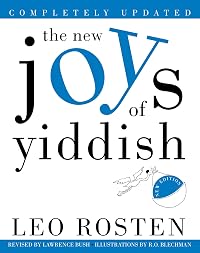
The Joys of Yiddish
by Leo Rosten
On This Page
Description
Do you know when to cry Mazel tov -- and when to avoid it like the plague? Did you know that Oy! is not a word, but a vocabulary with 29 distinct variations, sighed, cried, howled, or moaned, employed to express anything from ecstasy to horror? Here are words heard 'round the English-speaking world: chutzpa, or gall, brazen nerve, effrontery, " ... that quality enshrined in a man who, having killed his mother and his father, throws himself on the mercy of the court because he is an orphan." show more Then there's mish-mosh, or mess, hodgepodge, total confusion ... and shamus, or private eye. They're all here and more, in Leo Rosten's glorious classic The Joys of Yiddish, which weds scholarship to humor and redefines dictionary to reflect the heart and soul of a people through their language, illuminating each entry with marvelous stories and epigrams from folklore and the Talmud, from Bible to borscht belt and beyond. With Rosten's help, anyone can pronounce and master the nuances of words that convey everything from compassion to skepticism. Savor the irresistible pleasure of Yiddish in this banquet of a book!--Amazon.com. show lessTags
Recommendations





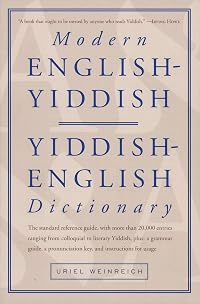
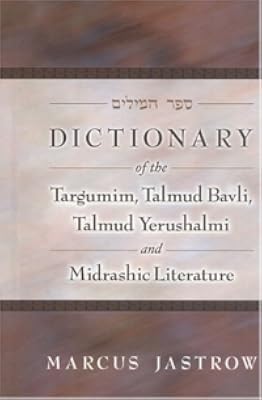
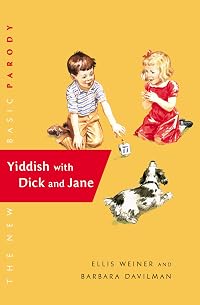

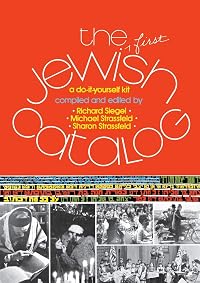












Member Recommendations
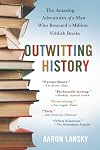
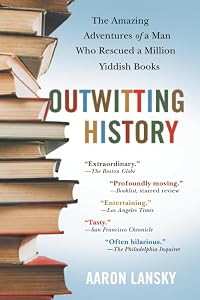
Outwitting History: The Amazing Adventures of a Man Who Rescued a Million Yiddish Books by Aaron Lansky
SqueakyChu Yiddish is a language so full of richness and innuendo that it needs to be preserved. Learn what Aaron Dansky did to try to prevent this language from disappearing.
20
Member Reviews
Is it a dictionary with illustrative jokes, or a joke-book with a veneer of scholarship? Either way, this charming volume works very well in getting across the mysteries and fun of Yiddish, a language whose lexicon has entered into the English language via immigrants. Rosten has a very deft touch in picking his jokes; sometimes, the joke is only tangential to the word it (allegedly) illustrates, and one suspects it's been put in there because it made the author laugh. A lot of fun to have.
A dictionary to fall in love with: I never wished I'd studied Linguistics as badly as I did while reading this book. In the preface, Rosten writes "I think Yiddish a language of exceptional charm ... a tongue that never takes its tongue out of its cheek." and then he goes on to demonstrate that charm and cheekiness for 500 some-odd pages.
Well, it helps to have a little background in Yiddish (but, not absolutely necessary) to begin with to enjoy this book. I was raised and went to high school in an area that was about 35-40% Jewish and you, even if you weren't Jewish, soon learned a little Yiddish. I mean, who wants to hear that you're a putz and have no idea whether this is a compliment or not (it isn't).
As to the book; it's really quite funny. Leo Rosten, of course, is well known as the author of the H*Y*M*A*N K*A*P*L*A*N books. I'm no linguist, but I vote for Yiddish as the most expressive language around.
Cheers,
b*o*o*k*b*l*o*t*t*e*r
As to the book; it's really quite funny. Leo Rosten, of course, is well known as the author of the H*Y*M*A*N K*A*P*L*A*N books. I'm no linguist, but I vote for Yiddish as the most expressive language around.
Cheers,
b*o*o*k*b*l*o*t*t*e*r
Enjoyable book about the Yiddish language which is a mixture of German and Hebrew. It was spoken by the Eastern European Jews (like Tevya in the Fiddler on the Roof), many of whom came to the U.S. We have fun words from this language like schlemiel and kitsch.
NO OF PAGES: 534 SUB CAT I: Reference SUB CAT II: Yiddish SUB CAT III: DESCRIPTION: Do you know when to cry Mazel tov -- and when to avoid it like the plague? Did you know that Oy! is not a word, but a vocabulary with 29 distinct variations, sighed, cried, howled, or moaned, employed to express anything from ecstasy to horror? Here are words heard 'round the English-speaking world: chutzpa, or gall, brazen nerve, effrontery, "...that quality enshrined in a man who, having killed his mother and his father, throws himself on the mercy of the court because he is an orphan." Then there's mish-mosh, or mess, hodgepodge, total confusion...and shamus, or private eye.
They're all here and more, in Leo Rosten's glorious classic The Joys of show more Yiddish, which weds scholarship to humor and redefines dictionary to reflect the heart and soul of a people through their language, illuminating each entry with marvelous stories and epigrams from folklore and the Talmud, from Bible to borscht belt and beyond. With Rosten's help, anyone can pronounce and master the nuances of words that convey everything from compassion to skepticism. Savor the irresistible pleasure of Yiddish in this banquet of a book!NOTES: Donated by Raina. SUBTITLE: show less
They're all here and more, in Leo Rosten's glorious classic The Joys of show more Yiddish, which weds scholarship to humor and redefines dictionary to reflect the heart and soul of a people through their language, illuminating each entry with marvelous stories and epigrams from folklore and the Talmud, from Bible to borscht belt and beyond. With Rosten's help, anyone can pronounce and master the nuances of words that convey everything from compassion to skepticism. Savor the irresistible pleasure of Yiddish in this banquet of a book!NOTES: Donated by Raina. SUBTITLE: show less
This book is simply a joy. (No pun intended.)
funniest dictionary ever
Members
- Recently Added By
Author Information

48+ Works 3,985 Members
He was the author of The Return of H*Y*M*A*N K*P*L*A*N, Captain Newman, M.D., and countless other books, articles, and screenplays. (Bowker Author Biography)
Some Editions
Awards and Honors
Distinctions
Common Knowledge
- Original title
- The joys of yiddish (People I have loved, known or admired) (People I have loved, known or admired)
- Original publication date
- 1970, Simon & Schuster Inc., New York
- Dedication
- For my mother who taught me the mama-loshen and for my children and their children and theirs
- First words
- Preface: I wrote this book because there was no other way in which I could have it.
- Last words
- (Click to show. Warning: May contain spoilers.)The rabbis often warned the laity not to court mental danger by two-deep immersion in the Zohar's cosmological mumbo-jumbo--and I can only agree with them.
- Original language*
- angličtina
- Canonical DDC/MDS
- 422.43703; 439.1
- Canonical LCC
- PN6231.J5
*Some information comes from Common Knowledge in other languages. Click "Edit" for more information.
Classifications
Statistics
- Members
- 1,072
- Popularity
- 24,065
- Reviews
- 14
- Rating
- (4.17)
- Languages
- 5 — Czech, English, French, Italian, Yiddish
- Media
- Paper
- ISBNs
- 18
- ASINs
- 14