
On This Page
Description
Suspicious events at a Middle Eastern archaeological excavation site intrigue the great Hercule Poirot as he investigates Murder in Mesopotamia, a classic murder mystery from Agatha Christie.Amy Leatheram has never felt the lure of the mysterious East, but when she travels to an ancient site deep in the Iraqi desert to nurse the wife of a celebrated archaeologist, events prove stranger than she could ever have imagined. Her patient's bizarre visions and nervous terror seem unfounded, but as show more the oppressive tension in the air thickens, events come to a terrible climax—in murder.
With one spot of blood as his only clue, Hercule Poirot must embark on a journey not just across the desert, but into the darkest crevices of the human soul to unravel a mystery which taxes even his remarkable powers.
. Historical Fiction. Fiction. Mystery. show less
Tags
Recommendations

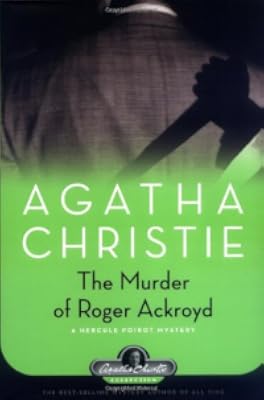

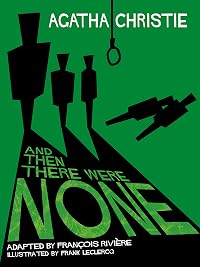










Member Recommendations

VivienneR The memoir may have been the inspiration for the mystery.
50
Member Reviews
61 [Murder in Mesopotamia] by [[Agatha Christie]]
Rating: 4* of five
Narrated by the mildly stupid Nurse Amy Leatheran, this Poirot from 1936 is a complete farrago. The crime hinges on a circumstance that is, frankly, absurd. But you know what? This is a thumping good read.
You need to know that, if you look under the following spoiler tag, there will be absolutely no point in reading the book.Unless one has an unusually bad memory, the first time one enters into sexual congress with a person not resident in one's own head—good, bad, or indifferent—is vividly clear for the rest of one's life. And you want me to believe that Mrs. Leidner didn't look at Dr. Leidner's, um, equipment and think, "hey there boys!"? Especially since we're show more readily told that she's had no other men in marriage, which codes at the time "no sex."
So no, not credible. Not even a little bit. We do have a seriously sick case of stalking on our hands. We do have "love" curdled into obsession. We do have antiquities theft...a problem quite pressing in the Mesopotamia of today...we do have lots of drug use. We do not have any of Christie's longueurs of style that curse later efforts, that can make the later Poirots feel as though one is reading pastiche. We have a bracing, heady draft of prime-of-life Dame Agatha that draws heavily on her time as Lady Mallowan, wife of an archaeologist. She observes so clearly and sees so much and is unbelievably economical with her verbiage.
I'm so glad I had three and a half hours in the waiting room to read the Overdrive-borrowed Kindlebook! show less
Rating: 4* of five
Narrated by the mildly stupid Nurse Amy Leatheran, this Poirot from 1936 is a complete farrago. The crime hinges on a circumstance that is, frankly, absurd. But you know what? This is a thumping good read.
You need to know that, if you look under the following spoiler tag, there will be absolutely no point in reading the book.
So no, not credible. Not even a little bit. We do have a seriously sick case of stalking on our hands. We do have "love" curdled into obsession. We do have antiquities theft...a problem quite pressing in the Mesopotamia of today...we do have lots of drug use. We do not have any of Christie's longueurs of style that curse later efforts, that can make the later Poirots feel as though one is reading pastiche. We have a bracing, heady draft of prime-of-life Dame Agatha that draws heavily on her time as Lady Mallowan, wife of an archaeologist. She observes so clearly and sees so much and is unbelievably economical with her verbiage.
I'm so glad I had three and a half hours in the waiting room to read the Overdrive-borrowed Kindlebook! show less
This fabulous mystery by Agatha Christie has long been a favorite of mine. It outshines many of her other mysteries due to some wonderful atmosphere and a very likable heroine in Amy Leatheren. Hercule Poirot, though a major force in solving the mystery, almost plays second fiddle at certain points in this most entertaining murder mystery.
Murder in Mesopotamia is an adventure set in an exotic land where a murder occurs. The first half of the book almost has the feel of an M.M. Kaye mystery. Though Christie was never in the same class as Kaye in imbuing romance to a time and place, there is certainly atmosphere to spare in this one. Only when Hercule Poirot is introduced into the story do we see classic elements of mystery fiction show more brought to the forefront.
Amy Leatheren is a young nurse asked to accompany an archaeological expedition to the Middle East. Her job is to look after Louise Leidner, the wife of the man heading the dig. Louise is a beautiful but frightened woman capable of both sweetness and offhand cruelty. Of what she is frightened is somewhat vague, but may be connected to tensions on the dig; on the surface all is friendly and familiar, but a dangerous unrest lies just beneath the surface.
Amy discovers answers to her questions too late to prevent a particularly brutal murder. This is when Christie's famous detective, Hercule Poirot, steps in to solve a most baffling puzzle of how the murder occurred. Amy has been asked to put on pen and paper her account of the events which transpired, and this is her narrative. Soon she is acting as Poirot's helper and, to her delight and embarrassment, having the time of her life. The detective and his new assistant will uncover secret relationships and secret identities, and before too long, another murder occurs.
Christie creates wonderful atmosphere here, from the Tigris Palace Hotel in Baghdad to Tell Yarimjah. Whether describing her cast of players, or bazaars where people from various nationalities and backgrounds gather for tea and scones overlooking the ruins, she makes the archaeological expedition come alive. Beneath the delicate impressions of her pen you can feel the passion of those on the dig, as they attempt to discover the Assyrian city close to Hassanieh. And they can see in the actions of the beautiful Louise, that she is almost "begging" to be murdered, while oblivious to the danger.
While the solution is wildly intricate and implausible, the presence of Hercule Poirot, a fun and likable heroine in Amy Leatheren, and tons of atmosphere make for a nice mystery read. A delightfully old-fashioned mystery fans of the genre will relish. show less
Murder in Mesopotamia is an adventure set in an exotic land where a murder occurs. The first half of the book almost has the feel of an M.M. Kaye mystery. Though Christie was never in the same class as Kaye in imbuing romance to a time and place, there is certainly atmosphere to spare in this one. Only when Hercule Poirot is introduced into the story do we see classic elements of mystery fiction show more brought to the forefront.
Amy Leatheren is a young nurse asked to accompany an archaeological expedition to the Middle East. Her job is to look after Louise Leidner, the wife of the man heading the dig. Louise is a beautiful but frightened woman capable of both sweetness and offhand cruelty. Of what she is frightened is somewhat vague, but may be connected to tensions on the dig; on the surface all is friendly and familiar, but a dangerous unrest lies just beneath the surface.
Amy discovers answers to her questions too late to prevent a particularly brutal murder. This is when Christie's famous detective, Hercule Poirot, steps in to solve a most baffling puzzle of how the murder occurred. Amy has been asked to put on pen and paper her account of the events which transpired, and this is her narrative. Soon she is acting as Poirot's helper and, to her delight and embarrassment, having the time of her life. The detective and his new assistant will uncover secret relationships and secret identities, and before too long, another murder occurs.
Christie creates wonderful atmosphere here, from the Tigris Palace Hotel in Baghdad to Tell Yarimjah. Whether describing her cast of players, or bazaars where people from various nationalities and backgrounds gather for tea and scones overlooking the ruins, she makes the archaeological expedition come alive. Beneath the delicate impressions of her pen you can feel the passion of those on the dig, as they attempt to discover the Assyrian city close to Hassanieh. And they can see in the actions of the beautiful Louise, that she is almost "begging" to be murdered, while oblivious to the danger.
While the solution is wildly intricate and implausible, the presence of Hercule Poirot, a fun and likable heroine in Amy Leatheren, and tons of atmosphere make for a nice mystery read. A delightfully old-fashioned mystery fans of the genre will relish. show less
Nurse Leatheran has been recently hired to serve as companion to the wife of an archaeological dig in Afghanistan. Her charge has been fearful and nervous for weeks, which she eventually learns is due to her fears that someone is going to try to harm her. When her fears come true the authorities invite Hercule Poirot, who happens to be in the area, to investigate.
A variation on the locked room murder mystery which stands out due to its setting. Christie remains brilliant both at characterization and plotting. However, the book lost half a star just because the narrator, Nurse Leatheran, has a very strong colonialist outlook which dampened my enjoyment.
A variation on the locked room murder mystery which stands out due to its setting. Christie remains brilliant both at characterization and plotting. However, the book lost half a star just because the narrator, Nurse Leatheran, has a very strong colonialist outlook which dampened my enjoyment.
Amy Leathern is hired as a nurse to Louise Leidner, whose husband is an archaeologist on a dig at Hassanieh, in what the title of the book calls Mesopotamia (now Iraq). Louise is convinced someone is out to kill her. Her husband suspects it’s all in her head, so having Nurse Leathern around will hopefully calm Louise down. But calm is not to be had when murder strikes on the dig. Nurse Leathern now has to add Watson duties to her roster as Hercule Poirot arrives on scene to solve the crime.
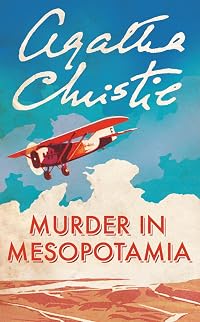
Of the two “archaeology dig” Agathas I can think of (the other one being Appointment with Death), I liked this one better. There’s a really horrifying murder in this one, and Nurse Leathern makes an amusing and refreshing change of narrator, show more straightforward and not nearly as romantic as Hastings would have been under the circumstances. What he would have made of Sheila Reilly…! I did not guess the ending, and my boyfriend would call it unfair because some of Poirot’s knowledge is derived from telegrams that he sent off-screen. The one thing that really puzzles me is why the Harper paperback would have a cover with an adorable little red high-wing plane flying over the desert, clear blue sky, fluffy white clouds. As adorable as this plane is, there is no such vehicle in the story, much to my disappointment.
Still, I would recommend this book as a decent Christie, definitely fun for the archaeological aspect, which she liked in her own life. show less
Of the two “archaeology dig” Agathas I can think of (the other one being Appointment with Death), I liked this one better. There’s a really horrifying murder in this one, and Nurse Leathern makes an amusing and refreshing change of narrator, show more straightforward and not nearly as romantic as Hastings would have been under the circumstances. What he would have made of Sheila Reilly…! I did not guess the ending, and my boyfriend would call it unfair because some of Poirot’s knowledge is derived from telegrams that he sent off-screen. The one thing that really puzzles me is why the Harper paperback would have a cover with an adorable little red high-wing plane flying over the desert, clear blue sky, fluffy white clouds. As adorable as this plane is, there is no such vehicle in the story, much to my disappointment.
Still, I would recommend this book as a decent Christie, definitely fun for the archaeological aspect, which she liked in her own life. show less
What fun with Murder in Mesopotamia by Agatha Christie as Nurse Amy Leatheran narrates an investigation by Hercule Poirot. The wife of the archaeologist, Louise Leidner, dies by trauma to the head. No weapon can be found and supposedly no one entered the enclave. In his usual method, Hercule Poirot methodically investigates the crime. So many possible suspects. Louise Leidner is an American and married to Dr. Erich Leidner only two years. Her beauty and intelligence both provoke and stimulate the other people at the dig. But who would actually kill Louise and for what reason? Agatha Christie creates a delightful story with her diverse cast of characters and the detailed setting. I love all the phrases, such as: It is one way of calling show more a goose a swan AND Remember, the pudding proves itself only when you eat it. Agatha Christie provides great characters and funny scenes. show less
I ended up being deeply frustrated by 'Murder In Mesopotamia'. I don't mind so much when a book is bad from the beginning, then I can set it aside like 'Appointment With Death' and not waste too much time on it, but a book that is actually quite good until the final couple of chapters vexes me.
When I started the book, I thought I might be about to read something on a par with the excellent 'The Murder Of Roger Ackroyd'. Christie chose to tell the tell entirely as a report from a very down-to-earth and unfanciful nurse who happens to be in Iraq and accepts an assignment on a remote archaeological dig to look after a highly-strung woman who is convinced that someone is trying to kill her.
The nurse was a woman with strong opinions about show more people, which she would normally have kept to herself but which, as the chronicler of events, she felt called upon to share. She was ungenerous in her views of all of the women except the one she was supposed to be nursing and even her she tends to treat as paranoid until she actually turns up dead. Her reaction when she first meets the great detective and finds him to be small, old, with an egg-shaped head, imperfect English and an odd manner even for a foreigner was a lot of fun. It even made Poirot smile.
Sadly, the nurse is also a wonderful example of the deeply ingrained sense of English Exceptionalism that even an English woman in a fairly modest position was imbued with. Foreigners, like Poirot, are strange people and not entirely to be trusted. Natives, the Iraqis whose country they are all guests in, are slightly worse than foreigners and are not to be depended upon except as objects of suspicion.
By the time Poirot arrived, about halfway through the book, a classic Locked Room Mystery had been set up, complete with a diagram showing the layout of the building. The challenge was not just to discover who killed the woman but how they managed it. The cast of characters was relatively small but very colourful and the setting was exotic.
Poirot, who just happened to have been passing through Iraq on the day the murder occurred, arrived at this remote archaeological dig in the middle of the desert and begins, rather laboriously, to set out the problem space - just in case the reader missed the fact that the woman was killed in a locked room without anyone hearing any noise and when everybody appears to have an alibi. Thankfully, as this is all filtered through the nurse's slightly dismissive, why-doesn't-he-get-on-with-it? commentary, it comes alive a little more than it would otherwise have done.
I spent the next thirty per cent of the book happily absorbing all the little disclosures about the various people who might have been the killer and about the background of the woman who was murdered, without having the slightest clue as to who the killer was or how the killing was done.
Then I got to the 'Poirot Explains It All' part and the whole book popped like an over-inflated balloon.
As Poirot shared his findings with all the remaining potential suspects, I was reminded, once again, of what a tedious, self-aggrandising man Poirot is.
I was thrown out of the story a little when Poirot publicly gives some unasked for advice to an overly-servile young man that, to impress a lady, he'd be better off hitting her in the head with a plate to show her he is a man. Even as humour that was a bizarre comment.
What really killed the book for me was that, having endured Poirot's explanation, I was offered a solution that is so far beyond the bounds of possibility in terms of concept, execution and the murderer's reaction that, had I not been reading a Library Book, I'd have cheerfully thrown the thing in the bin for wasting hours of my time. show less
https://fromtheheartofeurope.eu/murder-in-mesopotamia-by-agatha-christie/
It’s mainly remembered for the story behind the story; the first murder victim is based strongly on the real-life Lady Katherine Woolley, wife of Sir Leonard Woolley who led the 1930s excavation at Ur where Agatha Christie met her second husband, Sir Max Mallowan.
Massive spoilers: The various European and American characters in the book are vividly drawn. But the murder part of the plot is frankly ridiculous. It requires the first victim to have forgotten crucial details of her own previous marriage, and also requires that she remains strangely silent at the crucial moment of being murdered. The second murder is very poorly planned and could easily have failed. show more The murderer is very lucky that they actually off their victims. They are unlucky that Poirot is there to catch them out.
Despite my frustrations with the narrative, I found the context really fascinating. It’s a thoroughly racist book – Iraq was basically under British military occupation at the time, and the Arabs get barely a mention – and certainly not a positive one – in the narrative.
I was struck by a couple of other points too. The narrator’s name is Amy Leatheran; that surname simply doesn’t exist in real life. (She pops up again in the 1970 Agatha Christie novel Passenger to Frankfurt, nursing the narrator’s great-aunt, but does not appear to have aged 35 years in the meantime.) I’m wondering what significance the name has. If you swap “leather” for “mallow”, you get A. Mallowan, which was Agatha Christie’s married name, but maybe that’s stretching a bit. show less
It’s mainly remembered for the story behind the story; the first murder victim is based strongly on the real-life Lady Katherine Woolley, wife of Sir Leonard Woolley who led the 1930s excavation at Ur where Agatha Christie met her second husband, Sir Max Mallowan.
Massive spoilers: The various European and American characters in the book are vividly drawn. But the murder part of the plot is frankly ridiculous. It requires the first victim to have forgotten crucial details of her own previous marriage, and also requires that she remains strangely silent at the crucial moment of being murdered. The second murder is very poorly planned and could easily have failed. show more The murderer is very lucky that they actually off their victims. They are unlucky that Poirot is there to catch them out.
Despite my frustrations with the narrative, I found the context really fascinating. It’s a thoroughly racist book – Iraq was basically under British military occupation at the time, and the Arabs get barely a mention – and certainly not a positive one – in the narrative.
I was struck by a couple of other points too. The narrator’s name is Amy Leatheran; that surname simply doesn’t exist in real life. (She pops up again in the 1970 Agatha Christie novel Passenger to Frankfurt, nursing the narrator’s great-aunt, but does not appear to have aged 35 years in the meantime.) I’m wondering what significance the name has. If you swap “leather” for “mallow”, you get A. Mallowan, which was Agatha Christie’s married name, but maybe that’s stretching a bit. show less
Members
- Recently Added By
Lists

British Mystery
469 works; 14 members

Crime and Mysteries to Read
746 works; 31 members

Excavation Books
1 work; 1 member
Hostile Books
1 work; 1 member

Agatha Christie Poirot
43 works; 2 members

Books About Murder
313 works; 7 members

Detective Stories
343 works; 5 members

Books Read in 2022
5,166 works; 114 members

Books Read in 2023
5,547 works; 145 members

Books Read in 2024
4,623 works; 126 members

TBR
77 works; 1 member
Must Read Detective Stories (Nick Fuller)
278 works; 2 members
A Locked Room Library
71 works; 1 member

Books in the Bibliography of The Dawn of Everything by Graeber & Wengrow
478 works; 2 members

Agatha Christie Chronology
93 works; 1 member
Author Information

2,146+ Works 439,767 Members
One of the most successful and beloved writer of mystery stories, Agatha Mary Clarissa Christie was born in 1890 in Torquay, County Devon, England. She wrote her first novel, The Mysterious Affair at Styles, in 1920, launching a literary career that spanned decades. In her lifetime, she authored 79 crime novels and a short story collection, 19 show more plays, and six novels written under the name of Mary Westmacott. Her books have sold over a billion copies in the English language with another billion in 44 foreign languages. Some of her most famous titles include Murder on the Orient Express, Mystery of the Blue Train, And Then There Were None, 13 at Dinner and The Sittaford Mystery. Noted for clever and surprising twists of plot, many of Christie's mysteries feature two unconventional fictional detectives named Hercule Poirot and Miss Jane Marple. Poirot, in particular, plays the hero of many of her works, including the classic, The Murder of Roger Ackroyd (1926), and Curtain (1975), one of her last works in which the famed detective dies. Over the years, her travels took her to the Middle East where she met noted English archaeologist Sir Max Mallowan. They married in 1930. Christie accompanied Mallowan on annual expeditions to Iraq and Syria, which served as material for Murder in Mesopotamia (1930), Death on the Nile (1937), and Appointment with Death (1938). Christie's credits also include the plays, The Mousetrap and Witness for the Prosecution (1953; film 1957). Christie received the New York Drama Critics' Circle Award for 1954-1955 for Witness. She was also named Dame Commander of the Order of the British Empire in 1971. Christie died in 1976. (Bowker Author Biography) show less
Some Editions
Series

Belongs to Publisher Series
Selecciones de Biblioteca Oro (libro 140)
Work Relationships
Is contained in
Perilous Journeys of Hercule Poirot: Death on the Nile, Murder in Mesopotamia, Mystery of the Blue Train by Agatha Christie
Sleeping Murder, Postmark Murder, The ABC Murders, Murder On The orient Express, And Then There Were None by Agatha Christie (indirect)
Agatha Christie Crime Collection: 4:50 from Paddington, Lord Edgware Dies, Murder In Mesopotamia by Agatha Christie
Poirot in the Orient: Murder in Mesopotamia, Death on the Nile, Appointment With Death by Agatha Christie
Murderers Abroad: They Came to Baghdad / Murder in Mesopotamia / The Mystery of the Blue Train / Passenger to Frankfurt / So Many Steps To Death by Agatha Christie
Murder in Three Acts / Death in the Clouds / The A.B.C. Murders / Murder in Mesopotamia / Cards on the Table by Agatha Christie
4.50 From Paddington / Murder in Mesopotamia / A Pocket Full of Rye / Lord Edgware Dies by Agatha Christie
Dame Agatha Abroad: Murder on the Orient Express / Murder in Mesopotamia / They Came to Bagdad by Agatha Christie
Murder in Mesopotamia / Death on the Nile / Hercule Poirot's Christmas / Sad Cypress / The Big Four by Agatha Christie
Common Knowledge
- Canonical title
- Murder in Mesopotamia
- Original title
- Murder in Mesopotamia
- Original publication date
- 1936-07-06
- People/Characters
- Hercule Poirot; Amy Leatheran; Louise Leidner; Doctor Eric Leidner; Anne Johnson; Mr. Emmott (show all 14); Carl Reiter; William Coleman; Richard Carey; Dr. Giles Reilly; Sheila Reilly; Father Lavigny; Marie Mercado; Joseph Mercado
- Important places
- Mesopotamia; Baghdad, Iraq; Hassanieh, Iraq; Iraq
- Related movies
- Murder in Mesopotamia (2001 | IMDb)
- Dedication
- Dedicated to
My many archaeological friends
in Iraq and Syria - First words
- The events chronicled in this narrative took place some four years ago. (Foreword by Giles Reilly, M.D.)
In the hall of the Tigris Palace Hotel in Baghdad a hospital nurse was finishing a letter. (Chapter I, Frontispiece) - Last words
- (Click to show. Warning: May contain spoilers.)Something like that.
- Blurbers
- Lathen, Emma; Attenborough, Richard; Coben, Harlan
- Original language
- English UK
Classifications
Statistics
- Members
- 4,770
- Popularity
- 2,982
- Reviews
- 95
- Rating
- (3.65)
- Languages
- 31 — Catalan, Chinese, Czech, Danish, Dutch, English, Estonian, Finnish, French, German, Greek, Gujarati, Hungarian, Indonesian, Italian, Japanese, Korean, Norwegian (Bokmål), Norwegian, Polish, Romanian, Russian, Serbian, Croatian, Sinhalese, Slovenian, Spanish, Swedish, Tamil, Turkish, Portuguese (Portugal)
- Media
- Paper, Audiobook, Ebook
- ISBNs
- 185
- UPCs
- 3
- ASINs
- 100