On This Page
Description
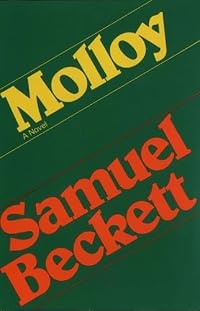
Molloy, the first of the three masterpieces which constitute Samuel Beckett's famous trilogy, appeared in French in 1951, followed seven months later by Malone Dies (Malone meurt) and two years later by The Unnamable (L'Innommable). Few works of contemporary literature have been so universally acclaimed as central to their time and to our understanding of the human experience.Tags
Recommendations











Member Reviews
If there is one question I dread, to which I have never been able to invent a satisfactory reply, it is the question what am I doing.
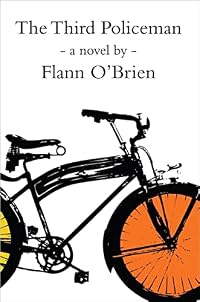
Molloy is not part of a trilogy (according to Beckett), but if it was, the trilogy—Great Absurdist Fiction with Bicycles—would also include Le Surmâle by Alfred Jarry and The Third Policeman by Brian O'Nolan (aka Flann O’Brien).
Beckett’s prose is hypnotically spare, his humor blacker than black. In their parallel stories, Molloy and Moran face similar situations and experiences even as purpose and meaning elude them—but notice how they convince themselves to persevere. Beckett even has Moran end up where Molloy began, bum leg and all.
Molloy is not part of a trilogy (according to Beckett), but if it was, the trilogy—Great Absurdist Fiction with Bicycles—would also include Le Surmâle by Alfred Jarry and The Third Policeman by Brian O'Nolan (aka Flann O’Brien).
Beckett’s prose is hypnotically spare, his humor blacker than black. In their parallel stories, Molloy and Moran face similar situations and experiences even as purpose and meaning elude them—but notice how they convince themselves to persevere. Beckett even has Moran end up where Molloy began, bum leg and all.
The first part of the "Trilogy" which is generally considered Beckett's most important prose work. A strange, puzzling, and captivating book, and a great performance by both Barrett and Crowley (who read one part of the book each). I think I would want to read this again on paper some time to look more closely at the way Beckett's language works, but clearly it is a very theatrical work, and it comes across very effectively as audio.
One reason I've been wanting to get to grips with Beckett is that I've been reading a lot of Thomas Bernhard lately, and I was curious to find out how much the two of them really do connect. There obviously is a lot of overlap: both of them are playwrights whose prose is meant to be heard as well as seen on show more the page; both share an interest in patterns and repetitions, both are fascinated by various kinds of negativity, and both have a tendency to indulge in bitter, sarcastic jokes.
What Bernhard doesn't really share with Beckett is the latter's interest in the absurd. Bernhard's texts exist in a world which the narrator is always trying to force into a logical pattern: Beckett's characters seem to accept that the world cannot and will not let meaning be imposed on it, and their attempts to reason don't go beyond what they can see in front of their noses. Always assuming that they still have noses.
That is reflected in the way Beckett's characters are radically disconnected from conventional society. To the extent that we are often left unsure where and when the story is set, and whether there even still is such a thing as conventional society. In this case, Molloy is a deranged, crippled homeless person - although the fragments of "high" language he occasionally uses with such scathing irony make us wonder if he might have had an education at some point - whilst his pursuer Moran manages to break most of his links with the bourgeois world in the course of his unexplainable quest. show less
One reason I've been wanting to get to grips with Beckett is that I've been reading a lot of Thomas Bernhard lately, and I was curious to find out how much the two of them really do connect. There obviously is a lot of overlap: both of them are playwrights whose prose is meant to be heard as well as seen on show more the page; both share an interest in patterns and repetitions, both are fascinated by various kinds of negativity, and both have a tendency to indulge in bitter, sarcastic jokes.
What Bernhard doesn't really share with Beckett is the latter's interest in the absurd. Bernhard's texts exist in a world which the narrator is always trying to force into a logical pattern: Beckett's characters seem to accept that the world cannot and will not let meaning be imposed on it, and their attempts to reason don't go beyond what they can see in front of their noses. Always assuming that they still have noses.
That is reflected in the way Beckett's characters are radically disconnected from conventional society. To the extent that we are often left unsure where and when the story is set, and whether there even still is such a thing as conventional society. In this case, Molloy is a deranged, crippled homeless person - although the fragments of "high" language he occasionally uses with such scathing irony make us wonder if he might have had an education at some point - whilst his pursuer Moran manages to break most of his links with the bourgeois world in the course of his unexplainable quest. show less
All I know is what the words know.
Molloy, the man, is a sexually ambiguous homeless wanderer with mother issues. Notwithstanding his lack of interest in sex, he is keenly tuned to the sensual. He is partially educated in a formal sense, while a little more so in an informal one. He also has a bad leg and uses crutches, yet somehow manages to ride a bicycle. Molloy is struggling and, as a reader, one participates in this struggle.
I wandered in my mind, slowly, noting every detail of the labyrinth, its paths familiar as those of my garden and yet ever new, as empty as the heart could wish or alive with strange encounters.
Molloy, the book, is a labyrinth. It's divided into two parts. The first section is narrated by Molloy himself. The show more second section, which starts about halfway through the book, is narrated by someone else. I won't say who it is because that's part of the fun. I think it's useful to know about this shift in narration before reading the book because Molloy's narration tried my patience at times. It's not so much that he is unreliable as he is confusing and easily distracted. Ah, but perhaps that's the point, Beckett, you sly old dog! Anyway, I had just about had my fill of Molloy when along came the second part of the book and rescued me from the mental quagmire I felt I'd stepped into. Or did it. I would be lying if I said I didn't go back to the beginning when I got to the end. Damn you, Beckett.
There is no doubt one sometimes meets with strangers who are not entire strangers, through their having played a part in certain cerebral reels.
Beckett is an atmospheric writer. He has a way of placing the reader inside a world entirely of his own making. It could be anywhere...or nowhere. I felt comfortable, yet uncertain of where I was. I have found that reading his fiction is a completely different experience from reading his dramatic work. While many of the themes remain the same (existentialism, alienation, isolation, death, interior life, etc.), in his fiction they exist in richer layers, appearing less stark and, to me, more complete, yet still tempered with his well-timed absurd humor. show less
Molloy, the man, is a sexually ambiguous homeless wanderer with mother issues. Notwithstanding his lack of interest in sex, he is keenly tuned to the sensual. He is partially educated in a formal sense, while a little more so in an informal one. He also has a bad leg and uses crutches, yet somehow manages to ride a bicycle. Molloy is struggling and, as a reader, one participates in this struggle.
I wandered in my mind, slowly, noting every detail of the labyrinth, its paths familiar as those of my garden and yet ever new, as empty as the heart could wish or alive with strange encounters.
Molloy, the book, is a labyrinth. It's divided into two parts. The first section is narrated by Molloy himself. The show more second section, which starts about halfway through the book, is narrated by someone else. I won't say who it is because that's part of the fun. I think it's useful to know about this shift in narration before reading the book because Molloy's narration tried my patience at times. It's not so much that he is unreliable as he is confusing and easily distracted. Ah, but perhaps that's the point, Beckett, you sly old dog! Anyway, I had just about had my fill of Molloy when along came the second part of the book and rescued me from the mental quagmire I felt I'd stepped into. Or did it. I would be lying if I said I didn't go back to the beginning when I got to the end. Damn you, Beckett.
There is no doubt one sometimes meets with strangers who are not entire strangers, through their having played a part in certain cerebral reels.
Beckett is an atmospheric writer. He has a way of placing the reader inside a world entirely of his own making. It could be anywhere...or nowhere. I felt comfortable, yet uncertain of where I was. I have found that reading his fiction is a completely different experience from reading his dramatic work. While many of the themes remain the same (existentialism, alienation, isolation, death, interior life, etc.), in his fiction they exist in richer layers, appearing less stark and, to me, more complete, yet still tempered with his well-timed absurd humor. show less
Audio book and then first book read on my kindle. Absolutely incredible. One of my all-time favorites. Absurd, insane, real. Beautiful use of language, combining high and low cultural influence. Incredible psychological introspection. Brilliant narration. Brilliant. Brilliant. Brilliant. And funny as hell.
Reason read: Reading 1001 TBR takedown.
This is part of the trilogy by Samuel Beckett written in French and translated by Patrick Bowles. There are two parts to Molloy but the second part could even be a prequel to the first part. The first part which features Molloy has two paragraphs. The first is shortest the second is nearly 80 pages. I listened to the audio which I think makes reading this type of literary work easier. In Beckett's works there is basically no plots and probably no character development. Reportedly this trilogy deals with death but I would also say that Molloy reads as if it is about living life with death as end. The second part features a man and his son. The man is suppose to find Molloy and he takes his son show more along. Parts of the first part reappear in the second part which makes it feel like this man who is looking for Molloy is Molloy. It also is not a good example of the father son relationship. show less
This is part of the trilogy by Samuel Beckett written in French and translated by Patrick Bowles. There are two parts to Molloy but the second part could even be a prequel to the first part. The first part which features Molloy has two paragraphs. The first is shortest the second is nearly 80 pages. I listened to the audio which I think makes reading this type of literary work easier. In Beckett's works there is basically no plots and probably no character development. Reportedly this trilogy deals with death but I would also say that Molloy reads as if it is about living life with death as end. The second part features a man and his son. The man is suppose to find Molloy and he takes his son show more along. Parts of the first part reappear in the second part which makes it feel like this man who is looking for Molloy is Molloy. It also is not a good example of the father son relationship. show less
Molloy by Samuel Beckett is a very simple book. It puts two accounts which are essentially interior monologues with outcalls to a perceived reality back to back. Molloy, a man who has lived with the existential abyss for some time, and possibly all of his life, has the first part and contemplates his relationships with his mother (possibly incestuous), communication (he has largely given up speaking) sex (a single, sad and, predatory relationship outside the one with his mother)) and the authorities (who arrest him and harass him) with an amazing sang froid. Our other voice is Jacques Moran, the other monolgue is his. He is a man of some substance but is entirely unaware of the abyss that gapes before him and his son as they venture out show more to find Molloy - for what reason we know not.
Beckett has a reputation as a gloomy writer - a dark prophet - but he is in fact one of the most humorous writers I know (on a comedic par with Kafka). There is a non-religious numinous quality to his writing. His prose is pared down and disciplined. It is, moreover, beautiful. Since Joyce few have mastered a language, any language to such devastating effect. His phrases glow on the page and lodge themselves in the mind. His expressiveness is almost unsurpassed. HIs observations are insightful and far from bleak. Beckett may be the most life affirming writer outside of Joyce and Hrabal. And that is high praise indeed. show less
Beckett has a reputation as a gloomy writer - a dark prophet - but he is in fact one of the most humorous writers I know (on a comedic par with Kafka). There is a non-religious numinous quality to his writing. His prose is pared down and disciplined. It is, moreover, beautiful. Since Joyce few have mastered a language, any language to such devastating effect. His phrases glow on the page and lodge themselves in the mind. His expressiveness is almost unsurpassed. HIs observations are insightful and far from bleak. Beckett may be the most life affirming writer outside of Joyce and Hrabal. And that is high praise indeed. show less
??? Question marks would be my best review. I listened to the audio version after reading a review that said the narrators were good and it made the story easier to understand. I can attest that the narrators are great, especially the narrator of the first half of the book in the voice of the title character. That part has a vague semblance of a plot as Molloy sets off to borrow some money from his Mother, but never gets there. His narrative is occasionally amusing in a very peculiar way. Beckett's writing, throughout the book, is often beautiful. The words and sentences all make sense--it's just the overall story that is vague. The second half of the book, with the narrator setting off on an obscure mission to find Molloy (he seems to show more me more like a befuddled Angel of Death than the private detective he is generally accepted to be) is less satisfying. The trivialities dwelt on by the narrator are not as interesting as the trivialities dwelt on by Molloy. I'm sure Beckett knows what the book is about, and I'm sure if I were an Irish Catholic it might make a bit more sense. But if I have to do research on a book after I've read it to figure out what I just read, I'm not sure it's worth it, at least not in this case. At this point, I'm just happy to have finished it. I feel like I must have gotten something out of it--I just don't know what. show less
Members
- Recently Added By
Lists

The Guardian's 1000 Novels Everyone Must Read
1,005 works; 549 members

Canon de la narrativa universal del siglo XX
254 works; 6 members

1950s
340 works; 22 members
20th Century Literature
1,161 works; 54 members

Favourite Books
1,817 works; 308 members

Blue Pyramid 1,276 Best Books of All Time
1,248 works; 32 members

1,001 BYMRBYD Concensus
723 works; 27 members

My TBR
371 works; 3 members

Mustich's 1000 Books to Read Before You Die: A Life Changing List
1,001 works; 18 members

Books Read in 2024
4,623 works; 126 members

Canon de la narrativa universal del s. XX (cicutadry)
499 works; 3 members

Les 50 meilleurs livres de langue française de 1900 à aujourd’hui
69 works; 2 members
The Complete Rory Gilmore Reading List
506 works; 5 members
.
396 works; 1 member
Author Information

528+ Works 42,945 Members
Nobel Prize winner (1969) Samuel Beckett was born on April 13, 1906 near Dublin, Ireland into a middle-class Protestant family. As a boy, he studied French and enjoyed cricket, tennis, and boxing. At Trinity College he continued his studies in French and Italian and became interested in theater and film, including American film. After graduation, show more Beckett taught English in Paris and traveled through France and Germany. While in Paris Beckett met Suzanne Deschevaus-Dusmesnil. During World War II when Paris was invaded, they joined the Resistance. They were later forced to flee Paris after being betrayed to the Gestapo, but returned in 1945. Beckett and Deschevaus-Dusmesnil married in 1961. Samuel Beckett's first novel was Dream of Fair to Middling Women. Among his many works are Murphy; Malone Dies; and The Unnameable. His plays include Endgame, Happy Days, Not I, That Time, and Krapp's Last Tape. In 1953, the production of Waiting For Godot in Paris by director and actor Roger Blin earned Beckett international fame. Beckett was awarded the Nobel Prize in Literature in 1969. His style was postmodern minimalist and some of his major themes were imprisonment in one's self, the failure of language, and moral conduct in a godless world. Despite his fame, Samuel Beckett led a secluded life. In his later years he suffered from cataracts and emphysema. His wife Suzanne died on July 17, 1989 and Beckett died on December 22nd of the same year. (Bowker Author Biography) show less
Some Editions
Awards and Honors
Notable Lists
Series

Belongs to Publisher Series
Work Relationships
Is contained in
Has as a commentary on the text
Has as a student's study guide
Common Knowledge
- Canonical title*
- Molloy
- Original title
- Molloy
- Original publication date
- 1951
- Original language
- French
- Canonical DDC/MDS
- 843.914
*Some information comes from Common Knowledge in other languages. Click "Edit" for more information.
Classifications
Statistics
- Members
- 1,386
- Popularity
- 17,023
- Reviews
- 27
- Rating
- (4.02)
- Languages
- 20 — Catalan, Chinese, Czech, Danish, English, Finnish, French, German, Galician, Greek, Hungarian, Icelandic, Italian, Lithuanian, Norwegian (Bokmål), Polish, Portuguese, Spanish, Swedish, Turkish
- Media
- Paper, Audiobook, Ebook
- ISBNs
- 60
- UPCs
- 1
- ASINs
- 32