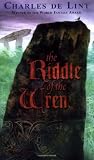
The Riddle of the Wren
by Charles de Lint
On This Page
Description
Minda, who is trapped inside a dark nightmare, makes a journey to another world to confront Ildran the Dream-master and try to save the Lord of the Moors.Tags
Recommendations










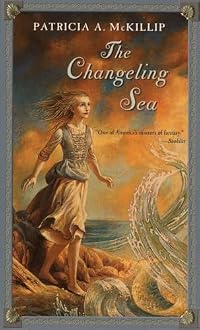
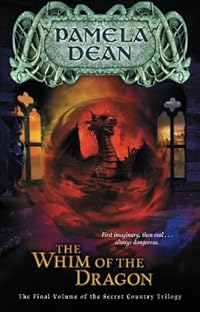
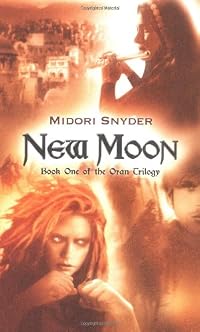





Member Recommendations
Member Reviews
A good early book of Charles de Lint's, and one that is in contrast to his later works, including the ones like "Moonheart" set in modern-day Toronto and early Britain and his more established Newford works.
It pulls from much Celtic mythology, with the Erlkin standing in for Elves, tall menhir, gates to travel between the worlds, and a version of the Tuatha de Danaan who are the undiminished Good Folk. Young Minda is living with a man she knows is her father who is an innkeeper and a mean, abusive dolt. Fortunately she has friends and support, and when her dreams are keeping her from going to sleep she learns that it is time for her to move on. Her adventure takes her to a menhir where Jan, trapped inside, gives her a protective show more talisman and a new name, "Talenyn" meaning "Little Wren."
Her flight from Ildran, the Dream Master who has been sending these nightmares, takes her to other worlds and a slew of new people, including a scholar, Huorn the Hunter, a talking badger, and a mischievous tinker. She learns to believe in herself and her own strength by the very end, and the worlds are better for it.
It is obviously an early work of de Lint's, with a slew of almost-Celtic terms abounding (almost too many) and a female protagonist whom he treats with respect and dignity, and creates a place where her story can grow. The idea of taw comes in here, as does an elder race and the idea of a world that is not-quite-ours. Our world is richer for this book. show less
It pulls from much Celtic mythology, with the Erlkin standing in for Elves, tall menhir, gates to travel between the worlds, and a version of the Tuatha de Danaan who are the undiminished Good Folk. Young Minda is living with a man she knows is her father who is an innkeeper and a mean, abusive dolt. Fortunately she has friends and support, and when her dreams are keeping her from going to sleep she learns that it is time for her to move on. Her adventure takes her to a menhir where Jan, trapped inside, gives her a protective show more talisman and a new name, "Talenyn" meaning "Little Wren."
Her flight from Ildran, the Dream Master who has been sending these nightmares, takes her to other worlds and a slew of new people, including a scholar, Huorn the Hunter, a talking badger, and a mischievous tinker. She learns to believe in herself and her own strength by the very end, and the worlds are better for it.
It is obviously an early work of de Lint's, with a slew of almost-Celtic terms abounding (almost too many) and a female protagonist whom he treats with respect and dignity, and creates a place where her story can grow. The idea of taw comes in here, as does an elder race and the idea of a world that is not-quite-ours. Our world is richer for this book. show less
I suppose it's hard for an author to do high fantasy without sounding derivative anymore. But spare me - it's REALLY hard for a reader to slog through page upon page of made-up mythology/religion related by a wizard in high-fantastic-wizardly diction. The reader is at the point of succumbing to terminal boredom, but the be-lectured characters just sit there mesmerized and put in the odd fascinated comment while the reader skips and skims like mad. De Lint is never tedious when he writes urban fiction. This book has high points and I've enjoyed them, but I can't imagine setting down one of the Newford novels 2/3 of the way through in sheer boredom without caring how it ended. I eventually finished it, but the last two paragraphs were so show more derivative that I wished I hadn't! show less
This early work by de Lint is a traditional style fantasy. Minda Sealy is having nightmares and when she actually brings something out of one of those dreams she realises the danger she is in and ends up travelling through worlds.
In this book you can see the seeds of where de Lint's imagination will take him. Elements from traditional mythology with his own personal twist. Themes of abuse and friendship, quests and the "family of the heart". Not his strongest work but still a very enjoyable read.
In this book you can see the seeds of where de Lint's imagination will take him. Elements from traditional mythology with his own personal twist. Themes of abuse and friendship, quests and the "family of the heart". Not his strongest work but still a very enjoyable read.
Minda Sealy, a girl plagued by nightmares, journeys across worlds. She vows to rescue Jan, the Lord of the Moors, from the evil Dreammaster while discovering her own identity and power.
A sentimental favorite since it was my first de Lint. However, trying to judge it somewhat objectively, I'd say it shows that it was one of his earliest works. It's a fun read for the target YA audience but he has gotten better as an author as his career progressed.
Charles de Lint’s first novel (not his first published, but his first written) before he moved on to his Newford books. Minda Sealy has always had bad dreams in which she is terrified. One night while asleep she meets Jan (Lord of the Moors) who has been imprisoned by Ildran the Dream Master. He is trying to capture Minda and imprison her too in his rise for power. Jan gives Minda three tokens and the next morning she finds a way to flee her father and begin a journey to find and rescue Jan.
On her travels she uses standing stones to travel between different worlds. She makes many friends, some are human and others are various different fae creatures and animals who can speak. Together they must battle Ildran and the evil creatures he show more sends after Minda in their many forms.
De Lint incorporates much Celtic lore and mythology in this many-worlds novel which I really enjoyed. It is a story of discovery and coming of age as well. I have only read some of his Newford books and short stories prior to this and it is very different, but still has his lyrical storytelling and excellent characterisation. Recommended to all fantasy and Charles de Lint fans. show less
On her travels she uses standing stones to travel between different worlds. She makes many friends, some are human and others are various different fae creatures and animals who can speak. Together they must battle Ildran and the evil creatures he show more sends after Minda in their many forms.
De Lint incorporates much Celtic lore and mythology in this many-worlds novel which I really enjoyed. It is a story of discovery and coming of age as well. I have only read some of his Newford books and short stories prior to this and it is very different, but still has his lyrical storytelling and excellent characterisation. Recommended to all fantasy and Charles de Lint fans. show less
A very early example of de Lint's work. I'd recommend his later novels instead (his Newford urban fantasy/magical realism books are wonderful). This reads well enough as straight high-fantasy and, with that young heroine coming into her strength, had a very YA feel. It wasn't to my taste but a well-written tale nonetheless. I'd recommend it to rather young readers and particularly rabid fans of de Lint.
Members
- Recently Added By
Author Information

196+ Works 43,385 Members
Charles de Lint, an extraordinarily prolific writer of fantasy works, was born in the Netherlands in 1951. Due to his father's work as a surveyor, the family lived in many different places, including Canada, Turkey, and Lebanon. De Lint was influenced by many writers in the areas of mythology, folklore, and science fiction. De Lint originally show more wanted to play Celtic music. He only began to write seriously to provide an artist friend with stories to illustrate. The combination of the success of his work, The Fane of the Grey Rose (which he later developed into the novel The Harp of the Grey Rose), the loss of his job in a record store, and the support of his wife, Mary Ann, helped encourage de Lint to pursue writing fulltime. After selling three novels in one year, his career soared and he has become a most successful fantasy writer. De Lint's works include novels, novellas, short stories, chapbooks, and verse. He also publishes under the pseudonyms Wendelessen, Henri Cuiscard, and Jan Penalurick. He has received many awards, including the 2000 World Fantasy Award for Best Collection for Moonlight and Vines, the Ontario Library Association's White Pine Award, as well as the Great Lakes Great Books Award for his young adult novel The Blue Girl. His novel Widdershins won first place, Amazon.com Editors' Picks: Top 10 Science Fiction & Fantasy Books of 2006. In 1988 he won Canadian SF/Fantasy Award, the Casper, now known as the Aurora for his novel Jack, the Giant Killer. Also, de Lint has been a judge for the Nebula Award, the World Fantasy Award, the Theodore Sturgeon Award and the Bram Stoker Award. (Bowker Author Biography) show less
Some Editions
Common Knowledge
- Canonical title*
- Загадка поющих камней
- Original title
- The Riddle of the Wren
- Original publication date
- 1984-06-01
- People/Characters
- Minda Sealy (Minda Talenyn); Hadon Sealy; Janey; Rabbert; Jan Penalurick; Ildran (show all 14); Taneh Leafmoon; Grimbold; Markj'n; Ruhn; Cabber (Cablin); Sian; Garowd; Jo'akim
- Epigraph
- as we perceive our dreams at centrifugal spin
so green leaves grow
the rowan bears the crown....
---Robin Williamson - Dedication
- for my mother Geradina
- First words
- The town of Fernwillow was the picturesque consequence of centuries of unplanned and disordered growth.
- Last words
- (Click to show. Warning: May contain spoilers.)And as the barrow and menhir stood there as a monument to those who had fallen, so nothing ever grew in that barren circle, as a bitter reminder so that the dark times might never return.
- Original language
- English
*Some information comes from Common Knowledge in other languages. Click "Edit" for more information.
Classifications
- Genres
- Fiction and Literature, Fantasy, Teen
- DDC/MDS
- 813.54 — Literature & rhetoric American literature in English American fiction in English 1900-1999 1945-1999
- LCC
- PZ7 .D383857 .R — Language and Literature Fiction and juvenile belles lettres Fiction and juvenile belles lettres Juvenile belles lettres
- BISAC
Statistics
- Members
- 811
- Popularity
- 33,918
- Reviews
- 12
- Rating
- (3.61)
- Languages
- English, Russian
- Media
- Paper
- ISBNs
- 7
- ASINs
- 3