On This Page
Description
One Ring to rule them all, One Ring to find them, One Ring to bring them all and in the darkness bind them. In ancient times the Rings of Power were crafted by the Elven-smiths, and Sauron, the Dark Lord, forged the One Ring, filling it with his own power so that he could rule all others. But the One Ring was taken from him, and though he sought it throughout Middle-earth, it remained lost to him. After many ages it fell into the hands of Bilbo Baggins, as told in The Hobbit. In a sleepy show more village in the Shire, young Frodo Baggins finds himself faced with an immense task, as his elderly cousin Bilbo entrusts the Ring to his care. Frodo must leave his home and make a perilous journey across Middle-earth to the Cracks of Doom, there to destroy the Ring and foil the Dark Lord in his evil purpose. show lessTags
Recommendations
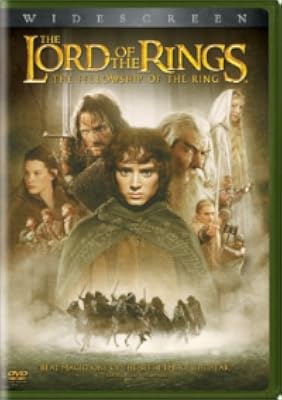

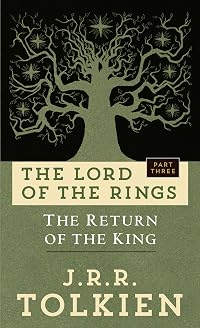
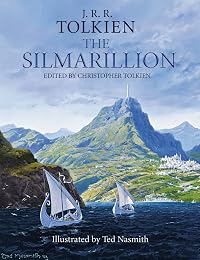


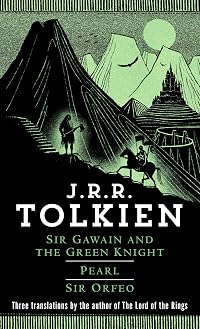
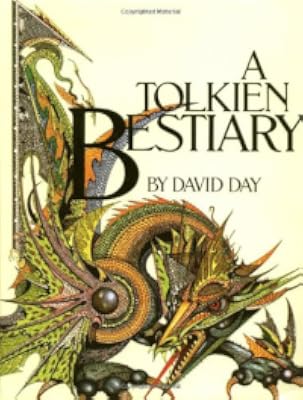

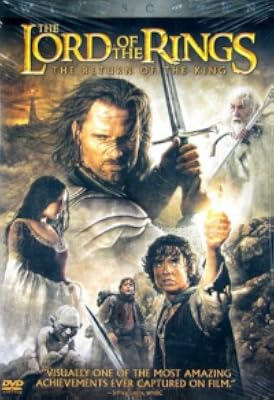



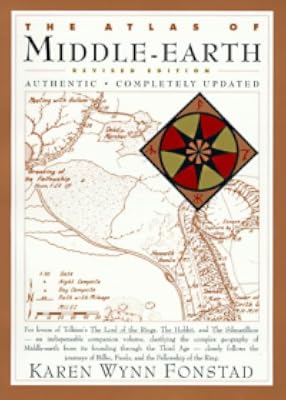


Member Recommendations
Kittso I LOVE THE LORD OF THE RINGS, my brother absolutely LOVES it like me, actually every family member LOVES it!
53
Death_By_Papercut Long, epic fantasy.
55

SonoranDreamer Epic fantasy world with dragons, magic, and a book that comes with a map of the world.
23

Member Reviews
"'Won't somebody give us a bit of a song, while the sun is high?' said Merry, when they had finished. 'We haven't had a song or a tale for days.'" (pg. 271)
Re-reading the first part of The Lord of the Rings for the first time since my early teens, I had expected that my impressions of the book would be profoundly changed. I last read The Fellowship of the Ring around 2004, in the immediate aftermath of the films, and I remember being disappointed. The book was much slower, was less inclined to stirring action than the big-screen adaptation, and it had confusing diversions such as Tom Bombadil and the barrow-wights. The writing, while not difficult for a fourteen-year-old, seemed ordinary and dense with unnecessary lore. Now that I am show more older, and with much longer and denser literary tomes conquered on my bookshelf, I expected I would have a substantially different experience this time. I both did and did not, as I hope to explain in my review, but all in all, reading Fellowship again was a rather muted experience.
Ultimately, the books cannot now escape the shadow of the films. This is not solely because of circumstance, because of the fact that everyone has seen them and they have become so culturally recognised, but because the films improve on what Tolkien did. Often in my re-reading of Fellowship, I found myself marvelling not at Tolkien's creation (though I should) but at the craft of screenwriting evident in the films. Many of the great lines come direct from Tolkien, to his credit, but the films synthesised the stories in a way that embraced the lore and the spirit of Tolkien while making it much more arresting for the audience. Key events such as Bilbo's party, the pursuit of the hobbits by the Nazgûl, and both the forming and the breaking of the Fellowship, are quite simply plotted much better in the films, and it has little or nothing to do with the demands of the newer medium for simplicity, action or spectacle. Each of the storytelling choices on film were just better decisions in general.
This is not to say that Tolkien did poorly; on the contrary, his achievement is magnificent and, if you love the Lord of the Rings films, as I do, then a huge chunk of the credit goes to their original creator. I have already mentioned how many of the great lines from the film are his, but it is also worth restating an obvious and well-worn point: Tolkien's world-building is fantastic. Middle-earth feels complete and real, for all its elves and magic and dark lords, and if Tolkien sometimes gets a bit too heavy in his lore (lines like "in the Riddermark of Rohan the Rohirrim, the Horse-lords, dwell" would be more perplexing if I didn't already know the story), it is rarely off-putting. He set a standard of world-building that most writers could not meet, and those that have met it have been called his imitators. He is one of the true originators in popular genre fiction, alongside the likes of Robert Louis Stevenson, Arthur Conan Doyle, George Lucas and Ian Fleming. Many adventure writers could build their entire reputations around just one of Tolkien's set-pieces; it is remarkable that Tolkien had the genius to conceive of, and write convincingly, the flight from the Nazgûl, the corruption of the Ring, the arrival of Strider, Weathertop, the fall of Gandalf in Moria, and the breaking of the Fellowship (though it should be noted that the fall of Boromir is, strangely, left to open The Two Towers in print). All these incredible, pivotal, instant-classic scenes – and it's only book one of three. It's a wealth of storytelling treasure.
That said, there are some oddities in Tolkien's writing. Tom Bombadil quite rightly gets a kicking, critically speaking, mostly because he won't shut up singing, but also because his role and placement in the book is a drag. His presence interrupts the time-sensitive peril of the hobbits' flight from the Nazgûl, and the fact that he flippantly shows the Ring has no effect on him or his realm somewhat spikes the reader's sense of its supposedly catastrophic effect on Middle-earth.
But mostly it's the singing. We go from the danger of Black Riders and the fate of the world to "hey, Tom, Tom Bombadillo, a ring a ding dillo" from some weirdo who lives in the woods. And he's not the only one who breaks into song: Frodo, Sam, Merry, Aragorn, Legolas, and countless others – no one, it seems, can refrain from a whimsical refrain about willow trees and merry-hearted gladness. "Tom sang most of the time, but it was chiefly nonsense" (pg. 193), and this is true; the songs are silly but they don't sink the book, just as the 'hey nonny nonny' stuff in Shakespeare doesn't sink his plays.
A greater problem, once you learn to tune out the singing, is that – Gandalf aside – the characters all sound alike. The dialogue is functional and lacks differentiation; when Merry says, in response to a piece of lore, that "it must be evil indeed" in that place (pg. 388), he sounds exactly like Frodo, Sam, Aragorn, or any other of the characters. The secondary characters – Legolas, Gimli, etc. – don't have the arcs or the character moments they are granted in the film. Aragorn is the biggest disappointment; there is none of the reluctant kingship that defines his character in the films. Here, he readily agrees with Boromir to go to Minas Tirith as king and reforges the sword Narsil as the Fellowship leaves Rivendell. He resolutely believes that "the hour had come at last when the heir of Elendil should come forth and strive with Sauron for the mastery" (pg. 484). Frankly, it's just less interesting than what Peter Jackson, Viggo Mortensen and the screenwriters give the character.
These are all, to be honest, more or less the same thoughts I had at fourteen years old: the films are better though the books are good, the songs are ridiculous but can be skipped, and the writing is denser than it needs to be. But I mentioned at the start of this review that I both did and did not have a different experience this time around. In the sense that I did, it came in two ways.
The first is that, now that I am older with some more sophisticated literature under my belt, I began to thirst for a literary element in Fellowship that wasn't necessarily there. I recently watched an interview with the great Argentine writer Jorge Luis Borges, in which he said he did not understand the appeal of Tolkien's writing, seeing it as of little merit. I thought that harsh at the time, and in some ways I still do, but Borges' criticism kept returning to my mind as I re-read Fellowship. The prose is functional and the book is all plot and world-building, rarely addressing things on a deeper level. Usually, I can find thematic undercurrents in what I read, but aside from 'good versus evil', I struggled to engage with much beyond the superficial here.
Maybe it's all tapped out, a feeling of over-familiarity I have from being aware of The Lord of the Rings world for twenty years. But it's interesting to note that Tolkien himself writes, in his Foreword, that the book has no "inner meaning or 'message'… neither allegorical nor topical" and that it "does not resemble" the real-life War (pg. xvii). There were many passages that made me think, 'come on, this is the Second World War': the dark power rising again after the first Alliance failed to beat it, the dwarves seeking refuge in the West, the appeaser Saruman thinking he can control Sauron, the one great race (the elves/British) passing the torch to a new one (the race of Men/Americans). I can see why Tolkien was keen to distance himself from this, not wanting his meticulously crafted world to be cheapened or overshadowed by claims of being ripped from the headlines, but it's strange that he was so reluctant to acknowledge it, or blind to it. Even if he didn't intend allegory, Middle-earth was created in Britain in the 1930s and 1940s, and it would be rather absurd to argue it wasn't influenced by the seismic history being written daily in the real world at the time. It's very interesting from a literary perspective, which makes it frustrating that the author was at such pains to nix it.
The second way in which I had a different experience this time around was a happier one; I found that I could appreciate the smaller and more contemplative moments of Tolkien's story. I remember, as a teenage reader, getting bored by the Shire, but now that I am older I understand much more intuitively its appeal, and Frodo's reluctance to leave. I remember being disappointed that the action was less impressive than in the films, with Weathertop and the Mines of Moria lacking the beats or thrills of the screen (the teenage me didn't appreciate how much harder that sort of thing is to deliver in print), but this time around I was much less impatient when Strider is gathering athelas herbs, or Frodo is gazing into the Mirror of Galadriel.
Even with my longstanding familiarity with The Lord of the Rings, I was still finding new responses to Tolkien's book. I think if I had come to this fresh – as impossible as that is after the films and their deep imprint on pop-culture – I would appreciate the story, the world-building, and the genius of Tolkien's work all the more. For all its flaws and oddities, the story is fantastically ambitious – and successful in that ambition. Instantly memorable scenes like the flight from the Nazgûl or Gandalf in Moria could make a reputation by themselves. It is classic adventure that can shrug off my criticisms easily, and cause things to bubble up in the imagination which deserve all my praise. You still shouldn't expect me to sing along, though.
"'Yes, you have seen a thing or two since you last peeped out of a looking-glass,' he said to his reflection. 'But now for a merry meeting!' He stretched out his arms and whistled a tune." (pg. 295) show less
Re-reading the first part of The Lord of the Rings for the first time since my early teens, I had expected that my impressions of the book would be profoundly changed. I last read The Fellowship of the Ring around 2004, in the immediate aftermath of the films, and I remember being disappointed. The book was much slower, was less inclined to stirring action than the big-screen adaptation, and it had confusing diversions such as Tom Bombadil and the barrow-wights. The writing, while not difficult for a fourteen-year-old, seemed ordinary and dense with unnecessary lore. Now that I am show more older, and with much longer and denser literary tomes conquered on my bookshelf, I expected I would have a substantially different experience this time. I both did and did not, as I hope to explain in my review, but all in all, reading Fellowship again was a rather muted experience.
Ultimately, the books cannot now escape the shadow of the films. This is not solely because of circumstance, because of the fact that everyone has seen them and they have become so culturally recognised, but because the films improve on what Tolkien did. Often in my re-reading of Fellowship, I found myself marvelling not at Tolkien's creation (though I should) but at the craft of screenwriting evident in the films. Many of the great lines come direct from Tolkien, to his credit, but the films synthesised the stories in a way that embraced the lore and the spirit of Tolkien while making it much more arresting for the audience. Key events such as Bilbo's party, the pursuit of the hobbits by the Nazgûl, and both the forming and the breaking of the Fellowship, are quite simply plotted much better in the films, and it has little or nothing to do with the demands of the newer medium for simplicity, action or spectacle. Each of the storytelling choices on film were just better decisions in general.
This is not to say that Tolkien did poorly; on the contrary, his achievement is magnificent and, if you love the Lord of the Rings films, as I do, then a huge chunk of the credit goes to their original creator. I have already mentioned how many of the great lines from the film are his, but it is also worth restating an obvious and well-worn point: Tolkien's world-building is fantastic. Middle-earth feels complete and real, for all its elves and magic and dark lords, and if Tolkien sometimes gets a bit too heavy in his lore (lines like "in the Riddermark of Rohan the Rohirrim, the Horse-lords, dwell" would be more perplexing if I didn't already know the story), it is rarely off-putting. He set a standard of world-building that most writers could not meet, and those that have met it have been called his imitators. He is one of the true originators in popular genre fiction, alongside the likes of Robert Louis Stevenson, Arthur Conan Doyle, George Lucas and Ian Fleming. Many adventure writers could build their entire reputations around just one of Tolkien's set-pieces; it is remarkable that Tolkien had the genius to conceive of, and write convincingly, the flight from the Nazgûl, the corruption of the Ring, the arrival of Strider, Weathertop, the fall of Gandalf in Moria, and the breaking of the Fellowship (though it should be noted that the fall of Boromir is, strangely, left to open The Two Towers in print). All these incredible, pivotal, instant-classic scenes – and it's only book one of three. It's a wealth of storytelling treasure.
That said, there are some oddities in Tolkien's writing. Tom Bombadil quite rightly gets a kicking, critically speaking, mostly because he won't shut up singing, but also because his role and placement in the book is a drag. His presence interrupts the time-sensitive peril of the hobbits' flight from the Nazgûl, and the fact that he flippantly shows the Ring has no effect on him or his realm somewhat spikes the reader's sense of its supposedly catastrophic effect on Middle-earth.
But mostly it's the singing. We go from the danger of Black Riders and the fate of the world to "hey, Tom, Tom Bombadillo, a ring a ding dillo" from some weirdo who lives in the woods. And he's not the only one who breaks into song: Frodo, Sam, Merry, Aragorn, Legolas, and countless others – no one, it seems, can refrain from a whimsical refrain about willow trees and merry-hearted gladness. "Tom sang most of the time, but it was chiefly nonsense" (pg. 193), and this is true; the songs are silly but they don't sink the book, just as the 'hey nonny nonny' stuff in Shakespeare doesn't sink his plays.
A greater problem, once you learn to tune out the singing, is that – Gandalf aside – the characters all sound alike. The dialogue is functional and lacks differentiation; when Merry says, in response to a piece of lore, that "it must be evil indeed" in that place (pg. 388), he sounds exactly like Frodo, Sam, Aragorn, or any other of the characters. The secondary characters – Legolas, Gimli, etc. – don't have the arcs or the character moments they are granted in the film. Aragorn is the biggest disappointment; there is none of the reluctant kingship that defines his character in the films. Here, he readily agrees with Boromir to go to Minas Tirith as king and reforges the sword Narsil as the Fellowship leaves Rivendell. He resolutely believes that "the hour had come at last when the heir of Elendil should come forth and strive with Sauron for the mastery" (pg. 484). Frankly, it's just less interesting than what Peter Jackson, Viggo Mortensen and the screenwriters give the character.
These are all, to be honest, more or less the same thoughts I had at fourteen years old: the films are better though the books are good, the songs are ridiculous but can be skipped, and the writing is denser than it needs to be. But I mentioned at the start of this review that I both did and did not have a different experience this time around. In the sense that I did, it came in two ways.
The first is that, now that I am older with some more sophisticated literature under my belt, I began to thirst for a literary element in Fellowship that wasn't necessarily there. I recently watched an interview with the great Argentine writer Jorge Luis Borges, in which he said he did not understand the appeal of Tolkien's writing, seeing it as of little merit. I thought that harsh at the time, and in some ways I still do, but Borges' criticism kept returning to my mind as I re-read Fellowship. The prose is functional and the book is all plot and world-building, rarely addressing things on a deeper level. Usually, I can find thematic undercurrents in what I read, but aside from 'good versus evil', I struggled to engage with much beyond the superficial here.
Maybe it's all tapped out, a feeling of over-familiarity I have from being aware of The Lord of the Rings world for twenty years. But it's interesting to note that Tolkien himself writes, in his Foreword, that the book has no "inner meaning or 'message'… neither allegorical nor topical" and that it "does not resemble" the real-life War (pg. xvii). There were many passages that made me think, 'come on, this is the Second World War': the dark power rising again after the first Alliance failed to beat it, the dwarves seeking refuge in the West, the appeaser Saruman thinking he can control Sauron, the one great race (the elves/British) passing the torch to a new one (the race of Men/Americans). I can see why Tolkien was keen to distance himself from this, not wanting his meticulously crafted world to be cheapened or overshadowed by claims of being ripped from the headlines, but it's strange that he was so reluctant to acknowledge it, or blind to it. Even if he didn't intend allegory, Middle-earth was created in Britain in the 1930s and 1940s, and it would be rather absurd to argue it wasn't influenced by the seismic history being written daily in the real world at the time. It's very interesting from a literary perspective, which makes it frustrating that the author was at such pains to nix it.
The second way in which I had a different experience this time around was a happier one; I found that I could appreciate the smaller and more contemplative moments of Tolkien's story. I remember, as a teenage reader, getting bored by the Shire, but now that I am older I understand much more intuitively its appeal, and Frodo's reluctance to leave. I remember being disappointed that the action was less impressive than in the films, with Weathertop and the Mines of Moria lacking the beats or thrills of the screen (the teenage me didn't appreciate how much harder that sort of thing is to deliver in print), but this time around I was much less impatient when Strider is gathering athelas herbs, or Frodo is gazing into the Mirror of Galadriel.
Even with my longstanding familiarity with The Lord of the Rings, I was still finding new responses to Tolkien's book. I think if I had come to this fresh – as impossible as that is after the films and their deep imprint on pop-culture – I would appreciate the story, the world-building, and the genius of Tolkien's work all the more. For all its flaws and oddities, the story is fantastically ambitious – and successful in that ambition. Instantly memorable scenes like the flight from the Nazgûl or Gandalf in Moria could make a reputation by themselves. It is classic adventure that can shrug off my criticisms easily, and cause things to bubble up in the imagination which deserve all my praise. You still shouldn't expect me to sing along, though.
"'Yes, you have seen a thing or two since you last peeped out of a looking-glass,' he said to his reflection. 'But now for a merry meeting!' He stretched out his arms and whistled a tune." (pg. 295) show less
This is at least my seventh time reading The Fellowship of the Ring. It's been about seven years since I last read it, and I'm a much different reader than I was any of the previous six times I've read it. I've read many more books, become a more critical reader, and have read especially broadly in the fantasy genre.
I'd forgotten how incredibly slow - dare I say plodding - is the pacing. One hundred pages in, Frodo has barely left the Shire. Two-thirds of the way through, he's in Rivendell and they're still debating what to do with the Ring. After fifteen years, the memory of the movies is more fresh in my mind than the first time I read the book and was waiting with bated breath to find out who or what the Black Riders were, and if show more they would be successful in finding the Ring. The old-fashioned, archaic language and resulting clunky dialog (how often can one think "Frodo son of Drogo" without cracking a grin or rolling eyes?) is exactly what I would criticize in books I read now.
But despite its faults, I love this series. I love the hobbits. No one but Gandalf seems to expect much of them, least of all the hobbits themselves. They love the small comforts of home, and can't imagine anything better than putting up their feet with some good food and pipeweed (amend that last to "a good book," and I'd be right there with them). And it's just because they love home so much that they do what they must to protect it. They are not heroes. They're just regular folk who, seeing a need to combat evil, do their best, even though they can't know the final outcome. It gives me hope that, if push comes to shove, maybe I could do the same. And that is why clunky dialog, archaic language, poetry, slow plot and all, I will read these books another seven times. show less
I'd forgotten how incredibly slow - dare I say plodding - is the pacing. One hundred pages in, Frodo has barely left the Shire. Two-thirds of the way through, he's in Rivendell and they're still debating what to do with the Ring. After fifteen years, the memory of the movies is more fresh in my mind than the first time I read the book and was waiting with bated breath to find out who or what the Black Riders were, and if show more they would be successful in finding the Ring. The old-fashioned, archaic language and resulting clunky dialog (how often can one think "Frodo son of Drogo" without cracking a grin or rolling eyes?) is exactly what I would criticize in books I read now.
But despite its faults, I love this series. I love the hobbits. No one but Gandalf seems to expect much of them, least of all the hobbits themselves. They love the small comforts of home, and can't imagine anything better than putting up their feet with some good food and pipeweed (amend that last to "a good book," and I'd be right there with them). And it's just because they love home so much that they do what they must to protect it. They are not heroes. They're just regular folk who, seeing a need to combat evil, do their best, even though they can't know the final outcome. It gives me hope that, if push comes to shove, maybe I could do the same. And that is why clunky dialog, archaic language, poetry, slow plot and all, I will read these books another seven times. show less
I haven't read Lord Of The Rings since, oooh, College at least, long dim days lost in the mist of times, but once upon a time it was a veritable pillar of my life. I certainly wouldn't have survived my teenage years without it. When the films came out, of course, I thought about rereading them but somehow never got around to it. Here I am then, middle aged and pudgy as a hobbit with a family of my own, convinced that such adventures as I have had are all well behind me. My weary feet don't pursue the road very far and when my eyes turn to far-off hills, I wonder if I can get there by the motorway, and whether there's a cafe nearby.
So why would I crack open those old worn and torn and sellotaped paperbacks Mum got for me when I was in show more hospital that year having my appendix out? (I distinctly remember the soldier with the helmet full of water washing Wormtongue's spit from the steps while I sat in the waiting room. Pardon me, but could you put the book down while we perform abdominal surgery on you? Thanks.) Why would you revisit that and remind yourself of all the things you lost and left behind, all the things you did wrong?
Because in the end, that's what The Lord Of The Rings is about. Things lost and gone away and barely remembered. Suffused with the sadness of beautiful things passing; yet there is joy in the remembering, if you can bear it. Well, I can, and that's no bad thing.
Dec 2021 - Listened to the Rob Ingles audio version. Enchanting.
Dec 2023 - listened again show less
So why would I crack open those old worn and torn and sellotaped paperbacks Mum got for me when I was in show more hospital that year having my appendix out? (I distinctly remember the soldier with the helmet full of water washing Wormtongue's spit from the steps while I sat in the waiting room. Pardon me, but could you put the book down while we perform abdominal surgery on you? Thanks.) Why would you revisit that and remind yourself of all the things you lost and left behind, all the things you did wrong?
Because in the end, that's what The Lord Of The Rings is about. Things lost and gone away and barely remembered. Suffused with the sadness of beautiful things passing; yet there is joy in the remembering, if you can bear it. Well, I can, and that's no bad thing.
Dec 2021 - Listened to the Rob Ingles audio version. Enchanting.
Dec 2023 - listened again show less
Considering that the depths of winter is usually considered my peak time for reading Tolkien, it feels almost strange to revisit the beginning of the Lord of the Rings trilogy as we take our first real steps towards spring. But when the Orlando Bloom bookmark comes up in the shuffle, and the winds of wanderlust beckon, there really is no better time to follow the Fellowship as they also take their first steps on their quest out of the Shire and towards Mount Doom. Like the early days of spring (before we get bogged down in mud season), the first book in the trilogy has a distinctly hopeful feel. Tolkien’s luscious imagery paints a rich portrait of Middle Earth, so we get to discover this new land alongside the sheltered hobbits; and show more while they face the first of their foes and lose their first companion, their quest has yet to feel the full burden and desperation that will come to overshadow the later novels. In this specific edition, we are also treated to Alan Lee’s gorgeous watercolour paintings which do so wonderfully bring the tale even further off the pages into our minds. My usual complaint of wanting evermore content still stands (lol), but it was decidedly lovely to rest our eyes from the dense text and focus instead on his intricate illustrations. I am sorely tempted to pick up the journey where we leave off here (Tolkien did mean for the tale to be one long volume rather than three distinct novels), and I may just yet polish off the trilogy over the summer. But for now we must leave Frodo and Samwise on their boat floating away from the Fellowship, and venture to other literary lands in search of different adventures. show less
At this point I’ve kind of just accepted that I will probably never finish reading LOTR, let alone The Fellowship of the Ring. Because every time I put this book down, I honestly have little interest in picking it up again.
I think it was the info-dumps. They were so pointlessly long that they lost me. Which really is a sad thing. I wanted to love this. I wanted to embrace my inner Stephen Colbert and geek out over this story, these characters, this world.
But I couldn’t. No matter how hard I tried.
I was told that I should push through until I met Strider. And if I was still bored then, I probably wouldn’t enjoy the rest of the story.
Well, I made it past Strider. And all the way to Rivendell. Over halfway through the book. Almost show more to 300 pages. And it just wasn’t worth it to me anymore.
I’ll probably give it another go some other time. But at the moment, there’s just 1,000 other books I’d like to read, that I know I’ll enjoy. So even though I know this is, like, a literary masterpiece, what’s the point in reading it if I’m spending the entire time wishing I were reading something else??
Let me make it very clear that I don’t hate Tolkien. I’m well aware the man was a genius. But I couldn’t do this. I’m really, really sorry.
Please forgive me.
Elliana Maselli
September 4, 2021
1:08PM show less
I think it was the info-dumps. They were so pointlessly long that they lost me. Which really is a sad thing. I wanted to love this. I wanted to embrace my inner Stephen Colbert and geek out over this story, these characters, this world.
But I couldn’t. No matter how hard I tried.
I was told that I should push through until I met Strider. And if I was still bored then, I probably wouldn’t enjoy the rest of the story.
Well, I made it past Strider. And all the way to Rivendell. Over halfway through the book. Almost show more to 300 pages. And it just wasn’t worth it to me anymore.
I’ll probably give it another go some other time. But at the moment, there’s just 1,000 other books I’d like to read, that I know I’ll enjoy. So even though I know this is, like, a literary masterpiece, what’s the point in reading it if I’m spending the entire time wishing I were reading something else??
Let me make it very clear that I don’t hate Tolkien. I’m well aware the man was a genius. But I couldn’t do this. I’m really, really sorry.
Please forgive me.
Elliana Maselli
September 4, 2021
1:08PM show less
Middle Earth is a wonderful place to visit, even as darkness begins to devour the sky from the east. That the spark of hope would be found in a diminutive, forgotten creature like a Hobbit – that it would smolder in a green and bountiful forgotten land, focused on the living rather than the battle, only to catch fire and burn so bright – is the ultimate draw.
Is there anyone on the face of the planet who doesn’t know the story of Frodo and the Ring. Even before the Peter Jackson film treatments, Tolkien’s epic quest story was a cultural icon. But Jackson packaged Tolkien’s vision for the masses, thankfully without losing the soul of the story, so that it is even more a part of our collective consciousness.
I read [The Hobbit] show more many years ago and was taken with Tolkien’s world. Being an obsessive myself, I figured I had to read everything and should go back to what he considered the start of the story, or at least a rendition of the beginning. And I picked up [The Silmarillion] – there lay madness, and I quickly abandoned hope. So, reading [The Lord of the Rings] trilogy for the first time, after having watched the Jacskon films, was like coming home.
[The Fellowship of the Ring] is easily my favorite part of the story because the fellowship is intact and alive throughout. I understand why Frodo must strike out on his own, and I understand why Strider – because I like that part of him much better the kingly parts – has to go his own way. But the sum of their parts is so great, and their collective is so vibrant. The mystery and tension of this book hits a tone that Tolkien never quite regains, save perhaps for the bits about Sam and Frodo on the tower of Cirith Ungol. There are more heart-stopping and heart-rending moments in [The Fellowship] than in all the rest of the books.
Bottom Line: Maybe as close to perfection as Tolkien ever came – but he wasn’t so enamored with perfection as he was obsessive about breadth and depth.
5 bones!!!!! show less
Is there anyone on the face of the planet who doesn’t know the story of Frodo and the Ring. Even before the Peter Jackson film treatments, Tolkien’s epic quest story was a cultural icon. But Jackson packaged Tolkien’s vision for the masses, thankfully without losing the soul of the story, so that it is even more a part of our collective consciousness.
I read [The Hobbit] show more many years ago and was taken with Tolkien’s world. Being an obsessive myself, I figured I had to read everything and should go back to what he considered the start of the story, or at least a rendition of the beginning. And I picked up [The Silmarillion] – there lay madness, and I quickly abandoned hope. So, reading [The Lord of the Rings] trilogy for the first time, after having watched the Jacskon films, was like coming home.
[The Fellowship of the Ring] is easily my favorite part of the story because the fellowship is intact and alive throughout. I understand why Frodo must strike out on his own, and I understand why Strider – because I like that part of him much better the kingly parts – has to go his own way. But the sum of their parts is so great, and their collective is so vibrant. The mystery and tension of this book hits a tone that Tolkien never quite regains, save perhaps for the bits about Sam and Frodo on the tower of Cirith Ungol. There are more heart-stopping and heart-rending moments in [The Fellowship] than in all the rest of the books.
Bottom Line: Maybe as close to perfection as Tolkien ever came – but he wasn’t so enamored with perfection as he was obsessive about breadth and depth.
5 bones!!!!! show less
Maybe it is my age, but I was much more tolerant of the songs and poetry during this reading than I was the first time I read the book. I'm amazed at how thoroughly real the world of Middle Earth is - from the sense of history, the various languages, the varied peoples - it rings with verity. I enjoyed especially the development of the characters - how faithful Sam is, how noble Aragorn. I also liked the slower pace - I couldn't help but recall scenes from Peter Jackson's movie but I preferred Tolkien's storytelling. Like Sam, I love the Elves, and I can understand Gimli's devotion.
Members
- Recently Added By
Published Reviews
ThingScore 88
Lists

1001 Books You Must Read Before You Die
1,448 works; 1,134 members

Read the book and saw the movie
1,170 works; 195 members

Best Fantasy Novels
821 works; 357 members
501 Must-Read Books
529 works; 72 members
NPRs your picks: top 100 Sci-Fi/Fantasy books
297 works; 80 members

Banned Books Week 2014
268 works; 63 members
Favourite Books
1,819 works; 316 members

20th Century Literature
1,161 works; 54 members

100 books to read in a lifetime
102 works; 37 members
Favourite High Fantasy Books
113 works; 23 members

1001 Children's Books You Must Read Before You Grow Up
774 works; 100 members
Books That Changed Me
158 works; 47 members

NPRs your favorites: 100 Best Ever Teen Novels
237 works; 49 members

1950s
340 works; 22 members
Favorite Childhood Books
1,646 works; 518 members
Favorite Long Books
330 works; 42 members
Time Magazine's "All-Time 100"
113 works; 15 members

Recommend the 20 best books you've read in the last five years
2,168 works; 606 members
Folio Society
831 works; 50 members

Best Friendship Stories
205 works; 16 members

Books Featured on Gilmore Girls
307 works; 21 members
Banned or Challenged Books
400 works; 41 members
Ballantine Adult Fantasy Series
85 works; 8 members
Year 9 Reading List
29 works; 3 members

1,001 BYMRBYD Concensus
723 works; 27 members

Books I've Read More Than Once
602 works; 49 members

Books tagged favorites
390 works; 30 members

Childhood Favorites
427 works; 24 members

Top Five Books of 2020
982 works; 348 members
Favorite Literary Love Stories
182 works; 100 members

Here There Be Dragons
143 works; 23 members
The 100 Best Fantasy Books of All Time
100 works; 15 members

The Seven-League Shelf
57 works; 3 members

Top Five Books of 2017
757 works; 231 members
Mind Expanding Books by hackerkid
581 works; 8 members

Allie's Favourite 150 Books
145 works; 3 members

Carole's List
445 works; 13 members

NPRs audience picks: 100 best beach reads
105 works; 12 members

Authors from England
147 works; 4 members

Rory Gilmore Book Club
193 works; 5 members

Books Read in 2023
5,547 works; 145 members
Fate vs. Free Will
63 works; 8 members
Overdue Podcast
806 works; 9 members

1970s
657 works; 23 members

Books Read in 2016
4,666 works; 199 members

Books Read in 2022
5,166 works; 114 members
Everybody Has A 'Best Books List'. Here is mine.
20 works; 1 member

Books Read in 2020
4,379 works; 123 members
Nifty Fifties
129 works; 14 members

aijowenuwaneaw
10 works; 1 member

Books Read in 2017
4,249 works; 129 members

Top 10 2021
10 works; 1 member

LIBROS DE CIENCIA FICCIÓN Y FANTASIA
60 works; 1 member
Books to Reread Someday
53 works; 7 members
Five star books
1,757 works; 108 members

Em's (Adult) List of Read Books in 2024
24 works; 1 member
Books We Love to Reread
688 works; 296 members
'Books You Can't Live Without: The Top 100', The Guardian, 2007
156 works; 7 members

Recommended Reading : 600 Classics Reviewed, Editors of Salem Press, 2015
634 works; 6 members

Top Five Books of 2024
795 works; 264 members

EGBERTINA'S List of childhood books worthy of merit or unspeakable delight
155 works; 6 members

Gilmore Girls Complete Reading List
30 works; 1 member

Gen X Library
245 works; 4 members
Books We Want To Read Again For The First Time
384 works; 160 members

100 knjiga
100 works; 1 member
el
1,139 works; 1 member
Read For Your Life
157 works; 1 member

Fantasy TBR
17 works; 1 member

Books Finished in 2024
12 works; 1 member
Le Monde - Les 100 livres du siècle
121 works; 23 members

𓐩hought Daughter ♱♰✟✞✝︎☨†˚₊‧꒰ა ♱ ໒꒱ ‧
38 works; 1 member

2025 Reading List
51 works; 2 members
Best Audiobooks
240 works; 114 members

Books We Loved As Children
603 works; 252 members
Books We Couldn't Put Down
443 works; 197 members
The Complete Rory Gilmore Reading List
506 works; 5 members

Read in 2003
81 works; 1 member

Books Read in 2025
4,091 works; 97 members

Book club books
22 works; 1 member

Books Read in 2018
4,360 works; 110 members
BitLife
212 works; 4 members

Books Read in 2003
257 works; 7 members

Books Read in 2012
816 works; 34 members

Books Read in 2012 (Numbered)
168 works; 6 members
Survey of Fantasy Classics
111 works; 23 members
Best books I read in 2013
152 works; 3 members
Ambleside Books
459 works; 18 members
Honey For a Child's Heart
1,152 works; 25 members
KayStJ's to-read list
1,616 works; 11 members

Books About Boys
175 works; 15 members
Robin
21 works; 2 members

Swinging Seventies
255 works; 18 members

S.F. Masterworks (Complete)
229 works; 15 members

Books Read in 2021
5,361 works; 113 members
Novels/Poems/Short Stories/Anything Storytelling Related
112 works; 2 members

Books Read in 2001
194 works; 4 members

The Art of Manliness' 100+ Books Every Man Should Read
108 works; 2 members

um actually
76 works; 3 members

Mustich's 1000 Books to Read Before You Die: A Life Changing List
1,001 works; 19 members
Books With the Most Memorable Titles
478 works; 158 members
Fantasy Books Ranked
6 works; 1 member

Books Read in 2024
4,623 works; 126 members
Best Children's Books You've Read
197 works; 75 members

Weird and Weirder Fiction
270 works; 34 members

Unread books
1,063 works; 84 members
Talk Discussions
Past Discussions
Lord of the Rings Group Read in 2019 Category Challenge (April 2021)
Fellowship of the Ring discussion, Part II chapters 4-6 in Hogwarts Express (October 2008)
Fellowship of the Ring final discussion, Part II chapters 7-10 in Hogwarts Express (October 2008)
Fellowship of the Ring discussion, Part II chapters 1-3 in Hogwarts Express (October 2008)
Fellowship of the Ring discussion, chapters 7-9 in Hogwarts Express (September 2008)
Fellowship of the Ring discussion, chapters 4-6 in Hogwarts Express (September 2008)
Author Information

A writer of fantasies, Tolkien, a professor of language and literature at Oxford University, was always intrigued by early English and the imaginative use of language. In his greatest story, the trilogy The Lord of the Rings (1954--56), Tolkien invented a language with vocabulary, grammar, syntax, even poetry of its own. Though readers have show more created various possible allegorical interpretations, Tolkien has said: "It is not about anything but itself. (Certainly it has no allegorical intentions, general, particular or topical, moral, religious or political.)" In The Adventures of Tom Bombadil (1962), Tolkien tells the story of the "master of wood, water, and hill," a jolly teller of tales and singer of songs, one of the multitude of characters in his romance, saga, epic, or fairy tales about his country of the Hobbits. Tolkien was also a formidable medieval scholar, as evidenced by his work, Beowulf: The Monster and the Critics (1936) and his edition of Anciene Wisse: English Text of the Anciene Riwle. Among his works published posthumously, are The Legend of Sigurd and Gudrún and The Fall of Arthur, which was edited by his son, Christopher. In 2013, his title, TheHobbit (Movie Tie-In) made The New York Times Best Seller List. (Bowker Author Biography) show less
Some Editions
Awards and Honors
Notable Lists
Series

Common Knowledge
- Canonical title
- The Fellowship of the Ring
- Original title
- The Fellowship of the Ring
- Alternate titles*
- Sagan om ringen; Ringens brödraskap
- Original publication date
- 1954
- People/Characters
- Frodo Baggins; Gandalf; Samwise Gamgee ('Sam'); Aragorn II; Meriadoc "Merry" Brandybuck; Peregrin "Pippin" Took (show all 130); Legolas; Gimli; Boromir; Galadriel; Elrond (Half-elven); Saruman the White; Sauron; Amroth; Anárion; Arvedui; Arwen Undómiel; Angelica Baggins; Bilbo Baggins; Dora Baggins; Drogo Baggins; Bain; Balin; Barahir; Beorn; Beren; Queen Berúthiel; Bifur; Bob; Falco Boffin; Bofur; Fredegar Bolger; Tom Bombadil; Hugo Bracegirdle; Esmeralda Brandybuck; Gorbadoc Brandybuck; Melilot Brandybuck; Primula Baggins; Rorimac Brandybuck; Milo Brockhouse; Barliman Butterbur; Celeborn; Celebrían; Celebrimbor; Círdan; Dáin II Ironfoot; Déagol; Denethor II; Dior; Dori; Durin; Dwalin; Varda Elentári; Elendil; Elladan; Elrohir; Elwing; Erestor; Marcho Fallohide; Blanco Fallohide; Fang; Faramir; Fatty Lumpkin; Fëanor; Bill Ferny; Findegil; Finrod Felagund; Fundin; Frár; Flói; Galdor of the Havens; Andwise "Andy" Roper; Halfast Gamgee; Hamfast Gamgee; Gildor Inglorion; Glóin; Glorfindel; Harry Goatleaf; Goldberry; Gollum; Grimbeorn; Grip; Hador; Haldir of Lórien; Tobold Hornblower; Húrin; Isildur; Lindir; Lóni; Lúthien Tinúviel; Farmer Maggot; Mrs Maggot; Meneldil; Náli; Narvi; Nimrodel; Old Noakes; Nob; Nori; Ohtar; Óin; Gorhendad Brandybuck; Ori; Orophin; Odo Proudfoot; Sancho Proudfoot; Radagast the Brown; Rumil of Lórien; Lobelia Sackville-Baggins; Lotho Sackville-Baggins; Otho Sackville-Baggins; Sandyman the Miller; Ted Sandyman; Smaug; Elu Thingol; Thorin Oakenshield; Thráin II; Thranduil; Thrór; Adelard Took; Bandobras Took; Everard Took; Gerontius Took; Túrin II; Daddy Twofoot; Uglúk; Valandil of Arnor; Will Whitfoot; Eärendil; Gwaihir
- Important places
- Middle-earth; The Shire; Bree; Rivendell; Moria; Lothlórien (show all 16); Parth Galen; Bag End, Hobbiton, The Shire, Eriador, Middle-earth; Caradhras; Anduin; The Old Forest; The Barrow Downs; Weathertop; Caras Galadon; Barad-dûr; Mordor
- Important events
- The Council of Elrond
- Related movies
- The Lord of the Rings: The Fellowship of the Ring (2001 | IMDb | Peter Jackson); The Lord of the Rings (1978 | IMDb | Ralph Bakshi)
- Epigraph
- Three Rings for the Elven-kings under the sky,
Seven for the Dwarf-lords in their halls of stone,
Nine for Mortal Men doomed to die,
One for the Dark Lord on his dark throne
In the Land of Mordor where the Shadows... (show all) lie.
One Ring to rule them all, One Ring to find them,
One Ring to bring them all and in the darkness bind them
In the Land of Mordor where the Shadows lie. - First words
- Prologue - This book is largely concerned with Hobbits, and from its pages a reader may discover much of their character and a little of their history.
Chap One - When Mr. Bilbo Baggins of Bag End announced that he would shortly be celebrating his eleventy-first birthday with a party of special magnificence, there was much talk and excitement in Hobbiton. - Quotations
- Many that live deserve death. And some die that deserve life. Can you give it to them? Then do not be too quick to deal out death in judgement. For even the very wise cannot see all ends.
I regret to announce that—though, as I said, eleventy-one years is far too short a time to spend among you—this is the END. I am going. I am leaving NOW. GOOD-BYE!
The Road goes ever on and on
Down from the door where it began.
Now far away the Road has gone,
And I must follow, if I can,
Pursuing it with eager feet,
Until it joins some larger way
Where many paths an... (show all)d errands meet.
And whither then? I cannot say.
All that is gold does not glitter,
Not all those who wander are lost;
The old that is strong does not wither,
Deep roots are not reached by the frost.
From the ashes a fire shall be woken, a light from the shad... (show all)ows shall spring;
Renewed shall be blade that was broken,
The crownless again shall be king.
Health and hope grew strong in them, and they were content with each good day as it came, taking pleasure in every meal, and in every word and song. - Last words
- (Click to show. Warning: May contain spoilers.)Then shouldering their burdens, they set off, seeking a path that would bring them over the grey hills of the Emyn Muil, and down into the Land of Shadow.
- Blurbers
- C.S. Lewis; W.H. Auden; Eisley, Loren
- Original language
- English
- Canonical DDC/MDS
- 823.912
- Canonical LCC
- PR6039.O32
- Disambiguation notice
- J.R.R. Tolkien's complete work The Lord of the Rings consists of six Books, frequently bound in three Volumes:
- Volume 1: The Fellowship of the Ring, consisting of Book I, "The Ring Sets Out" and Book II, ... (show all)"The Ring Goes South";
- Volume 2: The Two Towers, consisting of Book III, "The Treason of Isengard," and Book IV, "The Ring Goes East"; and
- Volume 3: The Return of the King, consisting of Book V, "The War of the Ring," and Book VI, "The End of the Third Age," with Appendices.
*Some information comes from Common Knowledge in other languages. Click "Edit" for more information.
Classifications
Statistics
- Members
- 63,814
- Popularity
- 19
- Reviews
- 575
- Rating
- (4.37)
- Languages
- 50 — Afrikaans, Albanian, Arabic, Armenian, Basque, Belarusian, Bulgarian, Catalan, Chinese, Czech, Danish, Dutch, English, Esperanto, Estonian, Faroese, Finnish, French, Frisian, Georgian, German, Galician, Greek, Hebrew, Hungarian, Icelandic, Indonesian, Italian, Japanese, Korean, Latvian, Lithuanian, Macedonian, Norwegian (Bokmål), Norwegian, Farsi/Persian, Polish, Romanian, Russian, Serbian, Croatian, Slovak, Slovenian, Spanish, Swedish, Thai, Turkish, Ukrainian, Yiddish, Portuguese (Brazil)
- Media
- Paper, Audiobook, Ebook
- ISBNs
- 426
- UPCs
- 21
- ASINs
- 271