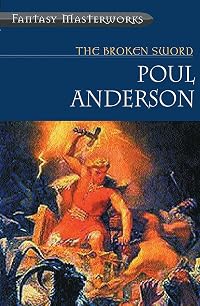
The Broken Sword
by Poul Anderson
On This Page
Description
The son of a Norse warlord, kidnapped at birth and raised by elves, and the bitter changeling who replaced him clash in a monumental war of trolls, elves, and man in this acclaimed classic of fantasy fiction Published the same year as The Fellowship of the Ring, Poul Anderson's novel The Broken Sword draws on similar Scandinavian and Anglo-Saxon sources. In his greed for land and power, Orm the Strong slays the family of a Saxon witch-and for his sins, the Northman must pay with his newborn show more son. Stolen by elves and replaced by a changeling, Skafloc is raised to manhood unaware of his true heritage and treasured for his ability to handle the iron that the elven dare not touch. Meanwhile, the being who supplanted him as Orm's son grows up angry and embittered by the humanity he has been denied. A pawn in a witch's vengeance, the creature Valgard will never know love, and consumed by rage, he will commit a murderous act of unspeakable vileness. It is their destiny to finally meet on the field of battle-the man-elf and his dark twin, the monster-when the long-simmering war between elves and trolls finally erupts with a devastating fury. And only the mighty sword Tyrfing, broken by Thor and presented to Skafloc in infancy, can turn the tide in a terrible clashing of faerie folk that will ultimately determine the fate of the old gods. Considered one of the masters of golden-age speculative fiction, along with such notables as Isaac Asimov, Ray Bradbury, and Robert Heinlein, multiple Hugo and Nebula Award winner Poul Anderson proved himself equally adept at creating epic fantasy with The Broken Sword, a masterful tale of men, elves, and gods that is at once breathtakingly exciting and heartbreakingly tragic. show lessTags
Recommendations
















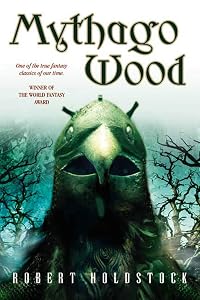
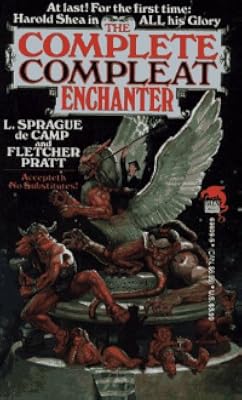


Member Recommendations
themulhern A grim doom, lots of fighting, hidden identities, slightly different elves.
Member Reviews
1954. The same year that [b:The Fellowship of the Ring|34|The Fellowship of the Ring (The Lord of the Rings, #1)|J.R.R. Tolkien|https://d.gr-assets.com/books/1298411339s/34.jpg|3204327] came out. And yet, this is arguably a better book.
What? No way! But what about JRRT's depth of world-building, the gradual easing of modest characters into epic ones? What about the language? How could a single fantasy novel by a popular SF author outdo one of the standards of literature?
Easy. Make characters as sharp and bright as arrows, fit them into the bow of a world, and let them fly straight and true. Give them immediate adventure, no superfluous quests or long-winded reliance on the little annoying things like lembas this and lembas that, and show more throw them deep into revenge, epic love stories, swords that will chop down the world-tree, incest, the undead, and the machinations of the Norse gods. And of course, you can't have a tale without witches, trolls, elves, and dwarves, especially when they are NOT the derivative of JRRT, that they are derived precisely from the epic tales of Norse legends, that they are as old and deep and rich as the real peoples who have been telling these tales for over a thousand years, and we're not forgetting Wagner's Ring Cycle, are we? Oh wait... who is taking what story elements from whom? Oh... right...
So why is this short and truly tight Norse epic pretty much ignored? Oh, I suppose it has something to do with the times it came out. Everything needed a Christian motif back then, and this sure as hell didn't have it, even if the Christian god had a walk-on role, as did the olympians, so of course Narnia and JRRT were given a lot more talk-time. But imagine, if you will, if this nearly perfect adventure-epic were given a fresh splash of paint and a huge advertising budget. Not as a movie, but as a fantastically rich book who's time has finally come?
I think we're ready as a culture to open ourselves up to a truly fascinating mythos that has really been left on the sideboard for way too long. Gaiman's Mr. Wednesday aside, or [b:The Long Dark Tea-Time of the Soul|357|The Long Dark Tea-Time of the Soul (Dirk Gently, #2)|Douglas Adams|https://d.gr-assets.com/books/1388257271s/357.jpg|1096], of course.
This was one hell of a rip-roaring adventure, with cloven heads and high adventure, stormed walls, deceit, sex, revenge, and horror. It's easily all the best aspects of the huge epic fantasy door-stoppers in an easy to digest format, with beautiful poetry literally flowing through it, and best of all, it never has a dull moment or dull characters. It is, in short, a work of true brilliance.
And let's not let things like this disappear, shall we? Let's not assume that the most well-known works are always the best. (I feel like a traitor, saying so, because I've read JRRT's stuff over 7 times.)
A side note, my postscript:
Poul Anderson's opening to the novel was a real eye-opener. He just had to tell us that his intent was to call attention to the magic and the races as high-tech analogues, as per Clarke's law. There was no direct explanation or reveal in the text, though, so he wanted us to feel like we were in a perfect fantasy novel, but the fact that he did put the question to us first means that he intended us to read on several levels at once, and because I obliged him, this novel managed to blow my mind in several ways at once. This was no idle fancy. This was a master storyteller asking us to enjoy it as deeply as he wrote it.
What a guy. :) show less
What? No way! But what about JRRT's depth of world-building, the gradual easing of modest characters into epic ones? What about the language? How could a single fantasy novel by a popular SF author outdo one of the standards of literature?
Easy. Make characters as sharp and bright as arrows, fit them into the bow of a world, and let them fly straight and true. Give them immediate adventure, no superfluous quests or long-winded reliance on the little annoying things like lembas this and lembas that, and show more throw them deep into revenge, epic love stories, swords that will chop down the world-tree, incest, the undead, and the machinations of the Norse gods. And of course, you can't have a tale without witches, trolls, elves, and dwarves, especially when they are NOT the derivative of JRRT, that they are derived precisely from the epic tales of Norse legends, that they are as old and deep and rich as the real peoples who have been telling these tales for over a thousand years, and we're not forgetting Wagner's Ring Cycle, are we? Oh wait... who is taking what story elements from whom? Oh... right...
So why is this short and truly tight Norse epic pretty much ignored? Oh, I suppose it has something to do with the times it came out. Everything needed a Christian motif back then, and this sure as hell didn't have it, even if the Christian god had a walk-on role, as did the olympians, so of course Narnia and JRRT were given a lot more talk-time. But imagine, if you will, if this nearly perfect adventure-epic were given a fresh splash of paint and a huge advertising budget. Not as a movie, but as a fantastically rich book who's time has finally come?
I think we're ready as a culture to open ourselves up to a truly fascinating mythos that has really been left on the sideboard for way too long. Gaiman's Mr. Wednesday aside, or [b:The Long Dark Tea-Time of the Soul|357|The Long Dark Tea-Time of the Soul (Dirk Gently, #2)|Douglas Adams|https://d.gr-assets.com/books/1388257271s/357.jpg|1096], of course.
This was one hell of a rip-roaring adventure, with cloven heads and high adventure, stormed walls, deceit, sex, revenge, and horror. It's easily all the best aspects of the huge epic fantasy door-stoppers in an easy to digest format, with beautiful poetry literally flowing through it, and best of all, it never has a dull moment or dull characters. It is, in short, a work of true brilliance.
And let's not let things like this disappear, shall we? Let's not assume that the most well-known works are always the best. (I feel like a traitor, saying so, because I've read JRRT's stuff over 7 times.)
A side note, my postscript:
Poul Anderson's opening to the novel was a real eye-opener. He just had to tell us that his intent was to call attention to the magic and the races as high-tech analogues, as per Clarke's law. There was no direct explanation or reveal in the text, though, so he wanted us to feel like we were in a perfect fantasy novel, but the fact that he did put the question to us first means that he intended us to read on several levels at once, and because I obliged him, this novel managed to blow my mind in several ways at once. This was no idle fancy. This was a master storyteller asking us to enjoy it as deeply as he wrote it.
What a guy. :) show less
The Broken Sword was written around the same time as The Lion, the Witch, and the Wardrobe and the Fellowship of the Ring, and is a foundational heroic fantasy novel, but unfortunately hasn't reached the same level of mainstream success as those novels despite being very on par in quality.
The Broken Sword blends together elements of Celtic and Norse mythology with a dash of historical fiction to create a novel that clearly influenced later writers like David Gemmell. There's larger-than-life heroes and villains, unexplained magic, mythological weapons, and tons of monologued poetry. It's not the easiest read, but it's evocative and lyrical and deserves more attention.
The first half of the novel is the stronger bit, in my opinion - the show more ending feels a bit rushed and descends into a pretty one-note tale of battles and slaughter that isn't as rich as the more heroic and romantic earlier acts - but this one is definitely worth a read if you're interested in heroic fantasy or sword and sorcery. It feels quite a bit like reading a myth, much like The Lord of the Rings in some ways but decidedly its own thing in tone. show less
The Broken Sword blends together elements of Celtic and Norse mythology with a dash of historical fiction to create a novel that clearly influenced later writers like David Gemmell. There's larger-than-life heroes and villains, unexplained magic, mythological weapons, and tons of monologued poetry. It's not the easiest read, but it's evocative and lyrical and deserves more attention.
The first half of the novel is the stronger bit, in my opinion - the show more ending feels a bit rushed and descends into a pretty one-note tale of battles and slaughter that isn't as rich as the more heroic and romantic earlier acts - but this one is definitely worth a read if you're interested in heroic fantasy or sword and sorcery. It feels quite a bit like reading a myth, much like The Lord of the Rings in some ways but decidedly its own thing in tone. show less
The Broken Sword is Viking infused epic fantasy, with a war between elves and trolls centered on two uncanny brother. Scafloc was kidnapped from his human parents and raised as a prince of the elves. Valgard is the fae changeling left in his place. When a evil witch reveals Valgard's true heritage, he embarks on a campaign of violence that slays his false human family and kicks off a brutal war. Scafloc survives the first assault, develops a relationship with his/Valgard's sister Freda, and reforges an acient sword of terrible evil power.
There's sagas, swordplays, sisters (ew), and the dark winds of Ragnarok in the background. What's not to like? And compared to modern fantasy, the story moves swiftly from peak to peak.
There's sagas, swordplays, sisters (ew), and the dark winds of Ragnarok in the background. What's not to like? And compared to modern fantasy, the story moves swiftly from peak to peak.
It's fine. It's not the second coming. Any comparison to The Lord of the Rings is likely precipitated by the coincidence of publication dates.
It reads more old-fashioned than it actually is (it reminds me of the mood of 1920s or earlier fiction, e.g. Lord Dunsany, or Eddison, or going back further, but more appropriately) William Morris). The characters are lightly sketched, without the kind of psychological realism we are used to in a novel--reminding me (again, appropriately) of characters in a viking saga, or any piece of literature pre-18th century (when characters had names, a bit of description attached, and then they wander through the plot with little more than that).
It would likely make a pretty exciting movie, and no one show more could complain that they hadn't captured the nuance of characters as there is none to be captured. Here is a sample of the style:
Skafloc grew apace, and a bonny boy he was, big and gay, with great blue eyes and hair like spun gold in the sunshine. He was noisier than the few elf children, and grew so much swifter that he was a man when they were still unchanged.
(It should really be "so much more swiftly" ... my initial read of this passage was that he would win a footrace!)
Or, in a more blood-thirsty vein:
Mightily he smote at the flank of the invaders. An elf fell to his ax, he twisted the weapon loose and struck at another, smashed the face of a third with his shield--hewing, hewing, he waded into battle.
So if you'd like a modern faux-Icelandic saga, this is for you! But don't expect unforgettable characters, or an exciting new milieu, or even unanticipated twists and turns. It's not that kind of book.
show less
It reads more old-fashioned than it actually is (it reminds me of the mood of 1920s or earlier fiction, e.g. Lord Dunsany, or Eddison, or going back further, but more appropriately) William Morris). The characters are lightly sketched, without the kind of psychological realism we are used to in a novel--reminding me (again, appropriately) of characters in a viking saga, or any piece of literature pre-18th century (when characters had names, a bit of description attached, and then they wander through the plot with little more than that).
It would likely make a pretty exciting movie, and no one show more could complain that they hadn't captured the nuance of characters as there is none to be captured. Here is a sample of the style:
Skafloc grew apace, and a bonny boy he was, big and gay, with great blue eyes and hair like spun gold in the sunshine. He was noisier than the few elf children, and grew so much swifter that he was a man when they were still unchanged.
(It should really be "so much more swiftly" ... my initial read of this passage was that he would win a footrace!)
Or, in a more blood-thirsty vein:
Mightily he smote at the flank of the invaders. An elf fell to his ax, he twisted the weapon loose and struck at another, smashed the face of a third with his shield--hewing, hewing, he waded into battle.
So if you'd like a modern faux-Icelandic saga, this is for you! But don't expect unforgettable characters, or an exciting new milieu, or even unanticipated twists and turns. It's not that kind of book.
show less
This is absolutely fecking fantastic, though when the action moves to Ireland, the narrator's pronunciation is just shy enough of acccurate to cause winces, and overall, the use of modern British accents feels lazy, whereas the voices of the supernatural charcters bring chills. I thought I'd read Poul Anderson before, but I think I'd been mixing him him up with Frederick Pohl. I am an idiot.
Would give it 3.5, if such half-stars were available. It is a surprisingly (to me) dark and morally complex fantasy, pitting the ancient Norse gods against the "new" Christian god amidst a twisted family saga worthy of Greek tragedy, and coming to the conclusion that "man is fated to outlive the immortals." Its age shows in the portrayal of the female characters, and I realized that battle scenes bore me to distraction, but then I'd run across something like this:
The sun lowered until it was a far pale disc on a sullen horizon, briefly seen through storm clouds. The gathering cold was a relentless, searing presence, the soul of these grim waters; it gnawed through clothes and flesh and bone into the very soul...To touch metal was to show more peel the skin from the fingers, and breath froze in the mustache.
Resonates with my Norse heritage and MN roots... show less
The sun lowered until it was a far pale disc on a sullen horizon, briefly seen through storm clouds. The gathering cold was a relentless, searing presence, the soul of these grim waters; it gnawed through clothes and flesh and bone into the very soul...To touch metal was to show more peel the skin from the fingers, and breath froze in the mustache.
Resonates with my Norse heritage and MN roots... show less
Deserves its acclaim as a fantasy masterpiece. I love Anderson’s maximalist language and narration style, it makes the story fittingly feel like an Anglo-Saxon epic. The fantasy elements are wide and wild co-mingling many mythologies and many tropes from ancient epics. My biggest hesitation comes from the melodrama that the writing descends to at some points but overall it’s a well-paced, action-packed story that deserves more readers.
Members
- Recently Added By
Lists

Best Fantasy Novels
821 works; 361 members

Bibliography for Among Others
159 works; 15 members
Survey of Fantasy Classics
111 works; 23 members

The Seven-League Shelf
57 works; 3 members

Ballantine Adult Fantasy Series
85 works; 8 members

David Pringle's Modern Fantasy: The 100 Best Novels
100 works; 5 members

Fantasy Masterworks
66 works; 5 members

Cawthorn and Moorcock's Fantasy: The 100 Best Books
110 works; 7 members
What Makes This Book So Great
102 works; 16 members

Classics of Fantasy
14 works; 2 members

Best Neglected Fantasy Books 1900-1955
30 works; 6 members

infjsarah's wishlist
408 works; 2 members

mom
729 works; 1 member
Author Information

693+ Works 53,504 Members
Poul Anderson, November 25, 1926 - July 31, 2001 Poul Anderson was born on November 25, 1926 in Bristol, Pennsylvania to parents Anton and Astrid. After his father's death, Poul's mother took them first to Denmark and then to Maryland and Minnesota. He earned his degree in Physics from the University of Minnesota, but chose instead to write show more stories for science fiction magazines, such as "Astounding." Anderson is considered a "hard science fiction" writer, meaning that his books have a basis in scientific fact. To attain this high level of scientific realism, Anderson spent many hours researching his topics with scientists and professors. He liked to write about individual liberty and free will, which was a well known theme in many of his books. He also liked to incorporate his love of Norse mythology into his stories, sometimes causing his modern day characters to find themselves in fantastical worlds, such as in "Three Hearts and Three Lions," published in 1961. Anderson has written over a hundred books, his last novel, "Genesis" won the John W. Campbell Award, one of the three major science fiction awards. He is a former president of the Science Fiction and Fantasy Writers of America and won three Nebula awards and nine Hugo Awards. In 1997, Anderson was named a Grandmaster by the Science Fiction and Fantasy Writers of America and was also inducted into the Science Fiction Fantasy Hall of Fame. Poul Anderson died on July 31, 2001 at the age of 74. (Bowker Author Biography) show less
Some Editions
Awards and Honors
Series
Belongs to Publisher Series
Work Relationships
Is contained in
Has as a commentary on the text
Common Knowledge
- Canonical title
- The Broken Sword
- Original title
- The Broken Sword
- Original publication date
- 1954 (original version) (original version); 1971 (revised version) (revised version)
- People/Characters
- Skafloc; Valgard the Changeling; Tyrfing (magic sword)
- Dedication
- To my mother
- First words
- There was a man called Orm the Strong, a son of Ketil Asmundsson who was a great landsman in the north of Jutland.
- Last words
- (Click to show. Warning: May contain spoilers.)Here ends the saga of Skafloc Elf's-Foster.
- Blurbers
- Rohan, Michael Scott; Holdstock, Robert; Moorcock, Michael; Searles, Baird
- Original language
- English
Classifications
Statistics
- Members
- 1,658
- Popularity
- 13,503
- Reviews
- 45
- Rating
- (3.76)
- Languages
- 11 — Czech, Dutch, English, Estonian, French, German, Hungarian, Italian, Polish, Spanish, Swedish
- Media
- Paper, Audiobook, Ebook
- ISBNs
- 46
- ASINs
- 20