On This Page
Description
Painstakingly restored from Tolkien's manuscripts and presented for the first time as a fully continuous and stand alone story, the epic tale of The Children of Húrin will reunite fans of The Hobbit and The Lord of the Rings with Elves and Men, dragons and Dwarves, eagles and Orcs, and the rich landscape and characters unique to Tolkien. There are tales of Middle-earth from times long before The Lord of the Rings, and the story told in this book is set in the great country that lay beyond show more the Grey Havens in the West: lands where Treebeard once walked, but which were drowned in the great cataclysm that ended the First Age of the World. In that remote time Morgoth, the first Dark Lord, dwelt in the vast fortress of Angband, the Hells of Iron, in the North; and the tragedy of Túrin and his sister Nienor unfolded within the shadow of the fear of Angband and the war waged by Morgoth against the lands and secret cities of the Elves. Their brief and passionate lives were dominated by the elemental hatred that Morgoth bore them as the children of Húrin, the man who had dared to defy and to scorn him to his face. Against them he sent his most formidable servant, Glaurung, a powerful spirit in the form of a huge wingless dragon of fire. Into this story of brutal conquest and flight, of forest hiding-places and pursuit, of resistance with lessening hope, the Dark Lord and the Dragon enter in direly articulate form. Sardonic and mocking, Glaurung manipulated the fates of Túrin and Nienor by lies of diabolic cunning and guile, and the curse of Morgoth was fulfilled. The earliest versions of this story by J.R.R. Tolkien go back to the end of the First World War and the years that followed; but long afterwards, when The Lord of the Rings was finished, he wrote it anew and greatly enlarged it in complexities of motive and character: it became the dominant story in his later work on Middle-earth. But he could not bring it to a final and finished form. In this book Christopher Tolkien has constructed, after long study of the manuscripts, a coherent narrative without any editorial invention. show lessTags
Recommendations
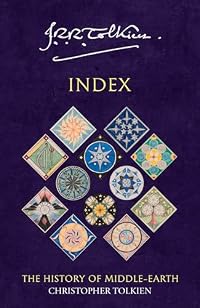
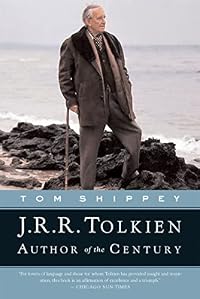
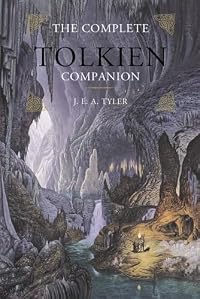




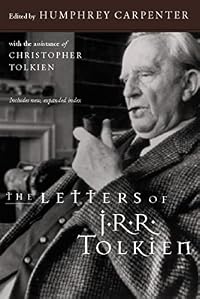
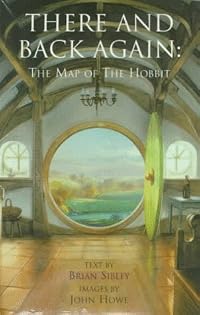
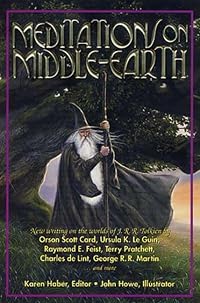


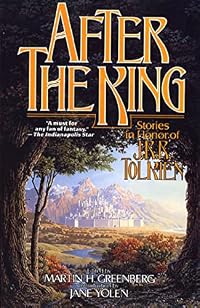
Member Recommendations
Jitsusama The Silmarillion is an essential book to better understand the occurrences surrounding the Children of Hurin. It also contains a slightly shorter version of the tale.
130
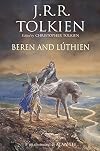
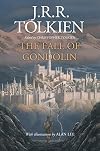
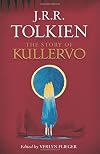

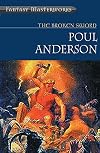
themulhern A grim doom, lots of fighting, hidden identities, slightly different elves.
Member Reviews
It probably shouldn't have been a surprise to me that The Children of Húrin, written by an author who shaped the modern fantasy genre and whose name has become a byword for world-building, would be an exemplary act of mythological storytelling. But it was. I remember being a bit cold on The Silmarillion when I read it a few years back; a work colleague who saw me reading it on my lunch-break recommended The Children of Húrin, but while I made a note of the title I never followed up on it until now. Aside from its thrilling conceptual coda (particularly the 'Akallabêth'), I had often found The Silmarillion heavy-going and over-indulgent in its lore, and I expected the same here.
Instead, aside from early chapters which establish the show more setting and dump some lore, The Children of Húrin is a lean and fully-realised story. Much credit must go to Tolkien's son Christopher, who compiled the final version from his father's various papers, but it is clear that there was a lot of movement from Tolkien himself to make The Children of Húrin a complete tale. If it had been published in his lifetime, it could not have emerged much different from the form it is now in.
For the version of The Children of Húrin that Christopher Tolkien has provided for us is, after a slow start, an excellent classic fantasy adventure with a deeply literary, Shakespearean tragedy at its heart. The main character, Túrin, is fascinatingly flawed, reminding me of the Bard's Coriolanus. Túrin hurts his friends as much as his enemies, and wiser characters left in his martial wake are not shy of remarking to the brave, proud and reckless warrior that perhaps the 'curse' Morgoth laid on his family is in fact caused, or at least exacerbated, by his and their own decisions ("The doom lies in yourself, not in your name" (pg. 170); "it is by lack of counsel not of courage that Húrin's kin bring woe to others" (pg. 203)).
You follow Túrin in the expectation that he will reclaim his family's legacy, defeat the dark lord and bring peace to the land, and yet while there are many of the trappings of conventional high fantasy – dragons, bandit hideouts and swords of named renown – Tolkien was far too astute and worldly-wise to make it this one-dimensional. Swept along by the author's vivid world-building but made robust by its character depth and plotting, the posthumous The Children of Húrin stands, surprisingly, alongside any of his other, better-known adventures; not as supplicant to the goodwill those stories have already generated amongst his fans, but as peer. If this lay of Beleriand stands in the shadow of The Hobbit and The Lord of the Rings, those great feats of the Third Age, it is not due to a lack of quality. Instead, it may be because its darker tone and tragic end make it more naturally suited to be positioned amongst shades of grey. show less
Instead, aside from early chapters which establish the show more setting and dump some lore, The Children of Húrin is a lean and fully-realised story. Much credit must go to Tolkien's son Christopher, who compiled the final version from his father's various papers, but it is clear that there was a lot of movement from Tolkien himself to make The Children of Húrin a complete tale. If it had been published in his lifetime, it could not have emerged much different from the form it is now in.
For the version of The Children of Húrin that Christopher Tolkien has provided for us is, after a slow start, an excellent classic fantasy adventure with a deeply literary, Shakespearean tragedy at its heart. The main character, Túrin, is fascinatingly flawed, reminding me of the Bard's Coriolanus. Túrin hurts his friends as much as his enemies, and wiser characters left in his martial wake are not shy of remarking to the brave, proud and reckless warrior that perhaps the 'curse' Morgoth laid on his family is in fact caused, or at least exacerbated, by his and their own decisions ("The doom lies in yourself, not in your name" (pg. 170); "it is by lack of counsel not of courage that Húrin's kin bring woe to others" (pg. 203)).
You follow Túrin in the expectation that he will reclaim his family's legacy, defeat the dark lord and bring peace to the land, and yet while there are many of the trappings of conventional high fantasy – dragons, bandit hideouts and swords of named renown – Tolkien was far too astute and worldly-wise to make it this one-dimensional. Swept along by the author's vivid world-building but made robust by its character depth and plotting, the posthumous The Children of Húrin stands, surprisingly, alongside any of his other, better-known adventures; not as supplicant to the goodwill those stories have already generated amongst his fans, but as peer. If this lay of Beleriand stands in the shadow of The Hobbit and The Lord of the Rings, those great feats of the Third Age, it is not due to a lack of quality. Instead, it may be because its darker tone and tragic end make it more naturally suited to be positioned amongst shades of grey. show less
It is astonishing how well Christopher Tolkien has assembled abandoned drafts, half-finished notes and presumably wildly contradictory sequences into a holistic, gripping narrative. "The Children of Húrin" is admittedly very heavy on the mythical tropes, but so are most memorable legends, that's why they became tropes in the first place. And this is not (nor was it ever) intended as a novel in the vein of "The Lord of the Rings" or a children's tale like "The Hobbit" -- it is, completely and utterly, a legend. A fictitious one in a fictitious universe, but a legend nonetheless. And when compared to the Nibelungen or the Greek tragedies that so clearly inspire it, this is, in my opinion, quite good.
The names and references to Tolkien's show more surrounding legendarium and vast cast of characters and locations are occasionally somewhat bewildering (even to a fan like me, as I've not been very immersed in this since my long-forgotten teens), but there is a handy glossary of names and places in the end of the book, as well as a map. Even should one not be inclined to look them up, though, they largely do not matter, and the ones that do appear sufficiently often to establish themselves from the narrative itself.
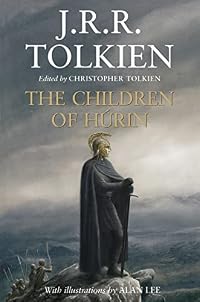
The transitions between summarising events and showing direct dialogue are smooth and never jarred me, despite that likely being a result of the different types of sources the narrative has been fetched from. And Alan Lee's illustrations are gorgeous -- though I would have liked a more active looking cover than the still, thoughtful pose they went with, and perhaps a more detailed close-up internal illustration of the Father of Dragons than I got. But this is nitpicking, and I enjoyed them and the book greatly. show less
The names and references to Tolkien's show more surrounding legendarium and vast cast of characters and locations are occasionally somewhat bewildering (even to a fan like me, as I've not been very immersed in this since my long-forgotten teens), but there is a handy glossary of names and places in the end of the book, as well as a map. Even should one not be inclined to look them up, though, they largely do not matter, and the ones that do appear sufficiently often to establish themselves from the narrative itself.
The transitions between summarising events and showing direct dialogue are smooth and never jarred me, despite that likely being a result of the different types of sources the narrative has been fetched from. And Alan Lee's illustrations are gorgeous -- though I would have liked a more active looking cover than the still, thoughtful pose they went with, and perhaps a more detailed close-up internal illustration of the Father of Dragons than I got. But this is nitpicking, and I enjoyed them and the book greatly. show less
You've got to admire Christopher Tolkien. His stewardship of his father's work has clearly been a labour of love, a deeply serious, scholarly task requiring commitment and devotion that stands in stark contrast to the crass commercialisation that, by default, accompanies the films. So when he produces a new posthumous book as by JRR Tolkien, you have to treat accusations of cashing in with skepticism.
The Children Of Hurin is definitely not new. Versions of the story appear in The Silmarillon and Unfinished Tales. It is one of the core myths of Tolkien's Elder Days, so the story will be familiar to many. However, what we have here is a carefully collated, edited, coherent, self-contained continuous narrative, and it is something of a show more revelation. It's a marvelous read and a great story and a thrilling journey through Beleriand. The archaic style, deliberately employed by Tolkien to give a sense of distance and deep time, may be off-putting to some readers, but it very quickly grows on you, creating a vivid, powerful sense of momentum and an epic sense of scale, with every emotion, even the pettier, meaner ones, painted in strong primary colours and the titanic forces at war and the overwhelming sense of impending doom and inescapable tragedy imbuing the whole thing with that aching sense of sadness and lovely things passing that is unique to Tolkien.
The illustrations by Alan Lee are wonderful and atmospheric. There is a useful fold-out map at the back to keep the reader oriented. Christopher Tolkien restricts his notes and comments to the introduction and the appendices, and they can be safely skipped if one is so inclined. A handsome little book well worth getting, and far from leaving me cyincal about the exploitation of Tolkien's work, it leaves me wishing for further volumes giving, for example, stories such as The Tale Of Beren And Luthien and The Fall Of Gondolin similar treatment. show less
The Children Of Hurin is definitely not new. Versions of the story appear in The Silmarillon and Unfinished Tales. It is one of the core myths of Tolkien's Elder Days, so the story will be familiar to many. However, what we have here is a carefully collated, edited, coherent, self-contained continuous narrative, and it is something of a show more revelation. It's a marvelous read and a great story and a thrilling journey through Beleriand. The archaic style, deliberately employed by Tolkien to give a sense of distance and deep time, may be off-putting to some readers, but it very quickly grows on you, creating a vivid, powerful sense of momentum and an epic sense of scale, with every emotion, even the pettier, meaner ones, painted in strong primary colours and the titanic forces at war and the overwhelming sense of impending doom and inescapable tragedy imbuing the whole thing with that aching sense of sadness and lovely things passing that is unique to Tolkien.
The illustrations by Alan Lee are wonderful and atmospheric. There is a useful fold-out map at the back to keep the reader oriented. Christopher Tolkien restricts his notes and comments to the introduction and the appendices, and they can be safely skipped if one is so inclined. A handsome little book well worth getting, and far from leaving me cyincal about the exploitation of Tolkien's work, it leaves me wishing for further volumes giving, for example, stories such as The Tale Of Beren And Luthien and The Fall Of Gondolin similar treatment. show less
I wrote a review in The Times. Here it is:
http://entertainment.timesonline.co.uk/tol/arts_and_entertainment/books/fiction/...
Since it's quite a while, I thought I'd risk the wrath of the copyright folks and post the text here.
=====
DON’T TURN THE PAGE yet. This is not just another anthology of scribblings from Tolkien’s bottom drawer, scaffolded with annotations and undergirt with footnotes. It is a complete novel, set in an imagined northern landscape; its reworking of myth and folktale is hardly peculiar in today’s literary world, though its diction has the formal archaism familiar to readers of The Lord of the Rings. It is worthy of a readership beyond Tolkien devotees.
For sheer length of gestation this book is remarkable. show more Inspired by the Norse tale of Sigurd and Fafnir, Tolkien first wrote a story about a dragon in 1899, at the age of 7. At school he discovered the Kalevala, a Finnish epic poem, and by 1914 was trying to turn the tale of Kullervo into “a short story somewhat on the lines of Morris’s romances”. By 1919 he had combined these elements in what became the tale of Túrin Turambar, the embittered hero who slays the dragon Glaurung, but whose triumph is instantly shattered by the suicide of his wife, now revealed as his lost sister Niënor, whom he joins in death.
These are the children of the title; their father Húrin is another mythic figure, the man who defies a god and watches the resulting curse play out in his children’s fate. When the author died in 1973 he left several versions, all incomplete, from which his son has woven this coherent narrative.
Once the darkness has settled on this tale, it rarely lifts: there are no comfortable inns on the bleak forest ways. Many of the characters die violently, and there is no happy ending (or at least, it is outside this book, in the largely unwritten tale of Eärendel the mariner). In The Lord of the Rings, Frodo and friends are preserved from disaster by happy coincidence or the workings of providence — but for the hapless children of Húrin every chance is an ill fortune.
It is strange that Tolkien, a believer in Christian redemption who coined the term “eu-catastrophe” (sudden happy ending), should relish such unrelenting gloom; but as a story-teller he was enthralled by the tale of Kullervo. However much he humanised the characters and transformed the plot, the unknowing incest and the double suicide were inevitable. Túrin’s fate is overdetermined. Like Oedipus, he is doomed by the curse on his father, though the curse here is the personal and seemingly disproportionate malice of a fallen archangel, mediated by a malevolent dragon. Like Kullervo, he is doomed by his own flawed character: reckless, brooding, unyielding in pride.
The book is beautiful, but other than the atmospheric illustrations by Alan Lee, and a (mercifully short) discussion of the editorial process, much of what lies between the covers was actually published in either The Silmarillion (1977) or Unfinished Tales (1980). Yet this new, whole version serves a valuable purpose (beyond pleasing the fans and the publishers). Peter Jackson’s film trilogy raised the profile of The Lord of the Ringsas a book, but there was nothing obvious to read next. The Hobbit is fun, but it is written for children. The Silmarillion is a bit of a hotchpotch, and its hieratic opening sections put many readers off. The 12-volume History of Middle-earth is strictly for the specialist. In The Children of Húrin we could at last have the successor to The Lord of the Rings that was so earnestly and hopelessly sought by Tolkien’s publishers in the late 1950s.
There are flaws, naturally. Occasionally the prose is too stilted, the dialogue too portentous, the unexplained names too opaque: the first mention of Maedhros is wholly mysterious, as the sons of Fëanor are not named in the otherwise useful introduction; a plant called aeglos is never described; and if Lothron is “the fifth month”, as the index says, is that our May or the Roman Quintilis (July)?
There is no list of illustrations, so the reader must guess what is depicted in the plates. But these are trivia. As a nearly finished work by Tolkien, the Great Unfinisher, this book deserves to eclipse almost all his other posthumous writings, and stand as a worthy memorial to the imagination of Tolkien, the Great Subcreator. show less
http://entertainment.timesonline.co.uk/tol/arts_and_entertainment/books/fiction/...
Since it's quite a while, I thought I'd risk the wrath of the copyright folks and post the text here.
=====
DON’T TURN THE PAGE yet. This is not just another anthology of scribblings from Tolkien’s bottom drawer, scaffolded with annotations and undergirt with footnotes. It is a complete novel, set in an imagined northern landscape; its reworking of myth and folktale is hardly peculiar in today’s literary world, though its diction has the formal archaism familiar to readers of The Lord of the Rings. It is worthy of a readership beyond Tolkien devotees.
For sheer length of gestation this book is remarkable. show more Inspired by the Norse tale of Sigurd and Fafnir, Tolkien first wrote a story about a dragon in 1899, at the age of 7. At school he discovered the Kalevala, a Finnish epic poem, and by 1914 was trying to turn the tale of Kullervo into “a short story somewhat on the lines of Morris’s romances”. By 1919 he had combined these elements in what became the tale of Túrin Turambar, the embittered hero who slays the dragon Glaurung, but whose triumph is instantly shattered by the suicide of his wife, now revealed as his lost sister Niënor, whom he joins in death.
These are the children of the title; their father Húrin is another mythic figure, the man who defies a god and watches the resulting curse play out in his children’s fate. When the author died in 1973 he left several versions, all incomplete, from which his son has woven this coherent narrative.
Once the darkness has settled on this tale, it rarely lifts: there are no comfortable inns on the bleak forest ways. Many of the characters die violently, and there is no happy ending (or at least, it is outside this book, in the largely unwritten tale of Eärendel the mariner). In The Lord of the Rings, Frodo and friends are preserved from disaster by happy coincidence or the workings of providence — but for the hapless children of Húrin every chance is an ill fortune.
It is strange that Tolkien, a believer in Christian redemption who coined the term “eu-catastrophe” (sudden happy ending), should relish such unrelenting gloom; but as a story-teller he was enthralled by the tale of Kullervo. However much he humanised the characters and transformed the plot, the unknowing incest and the double suicide were inevitable. Túrin’s fate is overdetermined. Like Oedipus, he is doomed by the curse on his father, though the curse here is the personal and seemingly disproportionate malice of a fallen archangel, mediated by a malevolent dragon. Like Kullervo, he is doomed by his own flawed character: reckless, brooding, unyielding in pride.
The book is beautiful, but other than the atmospheric illustrations by Alan Lee, and a (mercifully short) discussion of the editorial process, much of what lies between the covers was actually published in either The Silmarillion (1977) or Unfinished Tales (1980). Yet this new, whole version serves a valuable purpose (beyond pleasing the fans and the publishers). Peter Jackson’s film trilogy raised the profile of The Lord of the Ringsas a book, but there was nothing obvious to read next. The Hobbit is fun, but it is written for children. The Silmarillion is a bit of a hotchpotch, and its hieratic opening sections put many readers off. The 12-volume History of Middle-earth is strictly for the specialist. In The Children of Húrin we could at last have the successor to The Lord of the Rings that was so earnestly and hopelessly sought by Tolkien’s publishers in the late 1950s.
There are flaws, naturally. Occasionally the prose is too stilted, the dialogue too portentous, the unexplained names too opaque: the first mention of Maedhros is wholly mysterious, as the sons of Fëanor are not named in the otherwise useful introduction; a plant called aeglos is never described; and if Lothron is “the fifth month”, as the index says, is that our May or the Roman Quintilis (July)?
There is no list of illustrations, so the reader must guess what is depicted in the plates. But these are trivia. As a nearly finished work by Tolkien, the Great Unfinisher, this book deserves to eclipse almost all his other posthumous writings, and stand as a worthy memorial to the imagination of Tolkien, the Great Subcreator. show less
I really enjoyed this story and it's great to be immersed in the world of Tolkien's First Age of Men, Elves and Dwarves. Christopher Tolkien has stitched together from his father's partially completed writings a very worthy addition to the legends of Middle-earth.
The voice of The Children of Húrin lies somewhere between the "high tone" of the Silmarillion and the more direct, personal narrative of The Lord of the Rings, but tending more to the former. There is, therefore, a certain distance that stands between the reader and the characters that prevents me (at least) from fully empathising with their plights.
I found Túrin the least sympathetic of Tolkien's heroes (or, perhaps I should say protagonists, as despite his bravery and show more incredible deeds of arms, I don't think he's a hero in the same way that, say, Beren or Aragorn are). He's self-centred, arrogant and lacks understanding of others' feelings and motivations. This may well be largely due to the curse of Morgoth, but also seems to be a basic character flaw. As he rarely has any insight into his own inner-world, there is little development of character and he seems to run on the rails of the doom that Morgoth has laid out for him.
It need not have been so, for at a point in the story where Túrin's star is in the ascendant and he's becoming a figure of power in Beleriand, Morgoth worries that Túrin might escape his doom. So, it seems that Túrin's fate and the doom he brings to others is, at least in part, due to himself and not to Morgoth.
What I found more interesting was the presentation of Morgoth as a "person" with motivations and ambitions, contrasting with Sauron in The Lord of the Rings, in which he is barely met with and is presented as an ultimate evil force without any personality. Both treatments work well in the their contexts, but it was interesting to have this Dark Lord a little more fleshed out.
Overall, I really enjoyed the book, even if it doesn't sound like it from the above, but Tolkien sets himself some high standards to be held against. Just shy of a 5 star. show less
The voice of The Children of Húrin lies somewhere between the "high tone" of the Silmarillion and the more direct, personal narrative of The Lord of the Rings, but tending more to the former. There is, therefore, a certain distance that stands between the reader and the characters that prevents me (at least) from fully empathising with their plights.
I found Túrin the least sympathetic of Tolkien's heroes (or, perhaps I should say protagonists, as despite his bravery and show more incredible deeds of arms, I don't think he's a hero in the same way that, say, Beren or Aragorn are). He's self-centred, arrogant and lacks understanding of others' feelings and motivations. This may well be largely due to the curse of Morgoth, but also seems to be a basic character flaw. As he rarely has any insight into his own inner-world, there is little development of character and he seems to run on the rails of the doom that Morgoth has laid out for him.
It need not have been so, for at a point in the story where Túrin's star is in the ascendant and he's becoming a figure of power in Beleriand, Morgoth worries that Túrin might escape his doom. So, it seems that Túrin's fate and the doom he brings to others is, at least in part, due to himself and not to Morgoth.
What I found more interesting was the presentation of Morgoth as a "person" with motivations and ambitions, contrasting with Sauron in The Lord of the Rings, in which he is barely met with and is presented as an ultimate evil force without any personality. Both treatments work well in the their contexts, but it was interesting to have this Dark Lord a little more fleshed out.
Overall, I really enjoyed the book, even if it doesn't sound like it from the above, but Tolkien sets himself some high standards to be held against. Just shy of a 5 star. show less
The character of Hurin is not the focus of the plot, title notwithstanding: his role is effectively a framing device for the trials of his son, Turin. Hurin joined the unsuccessful battle against Morgoth (Melkor), and though captured helps ensure the escape of a contingent of Elves and Men. Defying Morgoth's desire to know the location of the hidden city of Gondolin, Morgoth tortures Hurin and imprisons him in Angband. Through sorcery, Hurin must witness a curse slowly unfold Morgoth's malevolence upon his family. So much for the narrative frame: the remainder of the tale tells of Turin's efforts to find his way in the world, oppose Morgoth, and return to his family. Of the other two children of Hurin: his eldest daughter dies in show more childhood, and his youngest daughter remains with her mother, separated from both Hurin and Turin. A romantic tragedy in high fantasy.
//
If Tolkien provides distinct prose styles in The Hobbit, The Lord Of The Rings, and The Silmarillion, here he's provided another which fits somewhere between: more measured than the paternal storyteller of Bilbo's and Frodo's tales, but more lyrical and engaged than I recall from The Silmarillion. That may result from son Christopher's refined editing skills, or perhaps that Tolkien left a solid set of versions to work from. It works as advertised, a neat entry into the larger world of the History of Middle-earth, not as daunting or as much a slog as The Silmarillion, and I'll use it as a stepping off point for revisiting that work, perhaps looking at the various volumes published since then: BoLT, HoME, UT I and II.
Hurin helps situate the distinctions between the First Age, Second Age, and Third Age in Tolkien's mythology. Hurin's tale is in fact one of three principle stories belonging to the First Age, the others being the Fall of Gondolin and the Tale of Beren and Luthien. The Second Age (according to Robert Foster) deals with the advent of Sauron, the forging of the Rings of Power, and Sauron's initial (temporary) overthrow. The Third Age is accounted for by both the events of Bilbo and Thorin & Company, and the later events of the Fellowship. It's tempting to see the Fourth Age as allegory for modern times here on Earth, but then Tolkien had a low opinion of allegory.
The relation of Men and Elves is intriguing: a key subtheme, though not the focus of this story. But surely it's important that the two races have such close dealings, partnerships, intermarriage, and are allied against Morgoth. Whereas in the Third Age, superstition at least on the part of Men toward Elves, if not outright forgetting. Interesting, too, when realising that Men came out of the East "running from something dark" but not speaking of it. What does Tolkien make of that, I wonder.
On a smaller scale, the forgetting and darkness cast upon Nienor by Glaurung (the original Dragon, creature of Morgoth and sire of Smaug), leading as it does to feral if enchanted behavior, and eventually to incest ... that, too, seems deliberately mythopoeic in the telling. But I may be forcing a reading which I admire in myth, which nevertheless is not here.
//
The map is arranged to fold out and remain visible while reading the book, and easily refolded until next reading session. Simple, clever, and highly functional. Alan Lee's illustrations are decorative rather than an added layer of visual interpretation. I'm impressed with how many there are, both full-colour as well as the pencil / line drawings scattered throughout. show less
//
If Tolkien provides distinct prose styles in The Hobbit, The Lord Of The Rings, and The Silmarillion, here he's provided another which fits somewhere between: more measured than the paternal storyteller of Bilbo's and Frodo's tales, but more lyrical and engaged than I recall from The Silmarillion. That may result from son Christopher's refined editing skills, or perhaps that Tolkien left a solid set of versions to work from. It works as advertised, a neat entry into the larger world of the History of Middle-earth, not as daunting or as much a slog as The Silmarillion, and I'll use it as a stepping off point for revisiting that work, perhaps looking at the various volumes published since then: BoLT, HoME, UT I and II.
Hurin helps situate the distinctions between the First Age, Second Age, and Third Age in Tolkien's mythology. Hurin's tale is in fact one of three principle stories belonging to the First Age, the others being the Fall of Gondolin and the Tale of Beren and Luthien. The Second Age (according to Robert Foster) deals with the advent of Sauron, the forging of the Rings of Power, and Sauron's initial (temporary) overthrow. The Third Age is accounted for by both the events of Bilbo and Thorin & Company, and the later events of the Fellowship. It's tempting to see the Fourth Age as allegory for modern times here on Earth, but then Tolkien had a low opinion of allegory.
The relation of Men and Elves is intriguing: a key subtheme, though not the focus of this story. But surely it's important that the two races have such close dealings, partnerships, intermarriage, and are allied against Morgoth. Whereas in the Third Age, superstition at least on the part of Men toward Elves, if not outright forgetting. Interesting, too, when realising that Men came out of the East "running from something dark" but not speaking of it. What does Tolkien make of that, I wonder.
On a smaller scale, the forgetting and darkness cast upon Nienor by Glaurung (the original Dragon, creature of Morgoth and sire of Smaug), leading as it does to feral if enchanted behavior, and eventually to incest ... that, too, seems deliberately mythopoeic in the telling. But I may be forcing a reading which I admire in myth, which nevertheless is not here.
//
The map is arranged to fold out and remain visible while reading the book, and easily refolded until next reading session. Simple, clever, and highly functional. Alan Lee's illustrations are decorative rather than an added layer of visual interpretation. I'm impressed with how many there are, both full-colour as well as the pencil / line drawings scattered throughout. show less
L'errore più grande che si possa fare (e che ho fatto alla prima lettura) avvicinandosi a questo libro è credere, come affermato nell'introduzione, che sia una lettura affrontabile con una vaga conoscenza dello sfondo su cui si intrecciano gli eventi, riassunto in due balzelli nell'introduzione stessa. Questo libro è da leggere necessariamente *dopo* il Silmarillion, pena la pressoché totale incomprensione degli eventi descritti. La storia è uno dei tre racconti principali scritti da Tolkien sulla Prima Era, ripresi e riscritti durante tutto il corso della sua vita, sia in prosa che in poesia, e sicuramente il più tragico e forse quello di maggior impatto. La versione qui proposta dal figlio, riassunta nel relativo capitolo del show more Silmarillion, espande quella presente nei Racconti incompiuti, garantendoci finalmente una lettura continua e completa. Una leggenda dei tempi antichi riportata nella forma più meritevole. show less
Members
- Recently Added By
Published Reviews
ThingScore 88
... So there's something very pagan about Tolkien's world, and it gets more pagan as we go further back. The Children of Húrin is practically Wagnerian. It has a lone, brooding hero, a supremely malicious dragon, a near-magical helmet, a long-standing curse, a dwarf of ambiguous moral character called Mîm and - the clincher, this - incest. Which is here a disaster and not, as in Wagner, a show more two-fingers-to-fate passion. Readers will already have come across the story in its essence in The Silmarillion and, substantially, in Unfinished Tales, which came out in 1980. One suspects that those who bought the latter book will not feel too cheated when they buy and read The Children of Húrin. ...
Christopher Tolkien has brought together his father's text as well, I think, as he can. In an afterword, he attests to the difficulty his father had in imposing "a firm narrative structure" on the story, and indeed it does give the impression of simply being one damned thing after another, with the hero, Túrin, stomping around the forests in a continuous sulk at his fate, much of which, it seems, he has brought upon himself.
As to whether the story brings out the feeling of "deep time" which Tolkien considered one of the duties of his brand of imaginative literature, I cannot really tell, for I do not take this kind of thing as seriously as I did when I was a boy and feel that perhaps the onus for the creation of such a sense of wonder is being placed too much on the reader. Actually, the First Age here seems a pretty miserable place to be; Orcs everywhere, people being hunted into outlawhood or beggary, and with no relief, light or otherwise, from a grumpy, pipe-smoking wizard. But it does have a strange atmosphere all of its own. Maybe it does work. show less
Christopher Tolkien has brought together his father's text as well, I think, as he can. In an afterword, he attests to the difficulty his father had in imposing "a firm narrative structure" on the story, and indeed it does give the impression of simply being one damned thing after another, with the hero, Túrin, stomping around the forests in a continuous sulk at his fate, much of which, it seems, he has brought upon himself.
As to whether the story brings out the feeling of "deep time" which Tolkien considered one of the duties of his brand of imaginative literature, I cannot really tell, for I do not take this kind of thing as seriously as I did when I was a boy and feel that perhaps the onus for the creation of such a sense of wonder is being placed too much on the reader. Actually, the First Age here seems a pretty miserable place to be; Orcs everywhere, people being hunted into outlawhood or beggary, and with no relief, light or otherwise, from a grumpy, pipe-smoking wizard. But it does have a strange atmosphere all of its own. Maybe it does work. show less
added by Cynfelyn
Inspired by the Norse tale of Sigurd and Fafnir, Tolkien first wrote a story about a dragon in 1899, at the age of 7. At school he discovered the Kalevala, a Finnish epic poem, and by 1914 was trying to turn the tale of Kullervo into “a short story somewhat on the lines of Morris’s romances”. By 1919 he had combined these elements in what became the tale of Túrin Turambar.
The book is show more beautiful, but other than the atmospheric illustrations by Alan Lee, and a discussion of the editorial process, much of what lies between the covers was actually published in either The Silmarillion (1977) or Unfinished Tales (1980). Yet this new, whole version serves a valuable purpose. In The Children of Húrin we could at last have the successor to The Lord of the Rings that was so earnestly and hopelessly sought by Tolkien’s publishers in the late 1950s. show less
The book is show more beautiful, but other than the atmospheric illustrations by Alan Lee, and a discussion of the editorial process, much of what lies between the covers was actually published in either The Silmarillion (1977) or Unfinished Tales (1980). Yet this new, whole version serves a valuable purpose. In The Children of Húrin we could at last have the successor to The Lord of the Rings that was so earnestly and hopelessly sought by Tolkien’s publishers in the late 1950s. show less
added by Celebrimbor
Lists

Best Fantasy Novels
821 works; 361 members

Unread books
1,063 works; 82 members
Favourite High Fantasy Books
113 works; 23 members

Favourite Fantasy Books of the 21st Century
51 works; 6 members

Favourite Books
1,817 works; 311 members

Top Five Books of 2016
795 works; 229 members

Books Read in 2022
5,164 works; 111 members

Recommend Fantasy Books
100 works; 1 member
Speculative Fiction to Read
706 works; 32 members
Best Children's Books You've Read
197 works; 74 members

Favorite Childhood Books
1,643 works; 517 members
Talk Discussions
Past Discussions
The Children of Húrin Book Discussion: Post after you finish the book. in The Green Dragon (October 2008)
Author Information

584+ Works 510,405 Members
A writer of fantasies, Tolkien, a professor of language and literature at Oxford University, was always intrigued by early English and the imaginative use of language. In his greatest story, the trilogy The Lord of the Rings (1954--56), Tolkien invented a language with vocabulary, grammar, syntax, even poetry of its own. Though readers have show more created various possible allegorical interpretations, Tolkien has said: "It is not about anything but itself. (Certainly it has no allegorical intentions, general, particular or topical, moral, religious or political.)" In The Adventures of Tom Bombadil (1962), Tolkien tells the story of the "master of wood, water, and hill," a jolly teller of tales and singer of songs, one of the multitude of characters in his romance, saga, epic, or fairy tales about his country of the Hobbits. Tolkien was also a formidable medieval scholar, as evidenced by his work, Beowulf: The Monster and the Critics (1936) and his edition of Anciene Wisse: English Text of the Anciene Riwle. Among his works published posthumously, are The Legend of Sigurd and Gudrún and The Fall of Arthur, which was edited by his son, Christopher. In 2013, his title, TheHobbit (Movie Tie-In) made The New York Times Best Seller List. (Bowker Author Biography) show less

Christopher Reuel Tolkien was born on November 21, 1924 in Leeds, England. He is author J.R.R. Tolkien's youngest son and is known for having edited and published much of his father's work posthumously, including The Children of Húrin. Christopher Tolkien, who grew up in Oxford, U.K., listening to tales of the Bagginses and their adventures, set show more to work as his father's editor far earlier than that. He was an editor from the age of 5, catching inconsistencies in his father's bedtime tales, and was promised tuppence by his father for every mistake he noticed in "The Hobbit". As a young man he was typing up manuscripts and drawing maps of Middle-earth and around the time he was commissioned an officer in the [Royal Air Force] in 1945, his father was already calling him his chief critic and collaborator. He was also responsible for composing the original map of Middle-earth included with the The Lord of the Rings series when it was first published in the mid-1950s. Christopher also brought us The Silmarillion, The Children of Húrin, The History of Middle-earth series and many others. Christopher Tolkien passed away on January 16, 2020 at the age of 95. (Bowker Author Biography) show less
Some Editions
Awards and Honors
Awards
Distinctions
Notable Lists
Series

Belongs to Publisher Series
Work Relationships
Is contained in
Is an expanded version of
Inspired
Common Knowledge
- Canonical title
- The Children of Húrin
- Original title
- The tale of the children of Húrin
- Alternate titles
- Narn I Chîn Húrin: The Tale of the Children of Húrin
- Original publication date
- 2007-04-16; 1910
- People/Characters
- Túrin Turambar; Niënor; Húrin; Morwen [Tolkein]; Morgoth Bauglir; Beleg (show all 12); Finduilas; Elu Thingol; Melian; Aegnor; Aerin (kinswoman of Hú | rin); Niënor / Níniel
- Important places
- Middle-earth; Beleriand
- Dedication
- To Baillie Tolkien
- First words
- Hador Goldenhead was a lord of the Edain and well-beloved by the Eldar.
- Quotations
- A man that flies from his fear may find that he has only taken a short cut to meet it.
For a man may love war, and yet dread many things.
The doom lies in yourself, not in your name.
For victory is victory, however small, nor is its worth only from what follows from it.
Let the unseen days be. Today is more than enough.
I will not walk backward in life. (show all 7)
False hopes are more dangerous than fears. - Last words
- (Click to show. Warning: May contain spoilers.)The sun went down, and Morwen sighed and clasped his hand and was still; and Hurin knew that she had died.
- Original language
- English
- Canonical DDC/MDS
- 823.087661
Classifications
- Genres
- Fantasy, Fiction and Literature, General Fiction
- DDC/MDS
- 823.087661 — Literature & rhetoric English & Old English literatures English fiction By type Genre fiction Adventure fiction Speculative fiction Fantasy fiction High fantasy
- LCC
- PR6039 .O32 .N37 — Language and Literature English English Literature 1900-1960
- BISAC
Statistics
- Members
- 13,175
- Popularity
- 591
- Reviews
- 150
- Rating
- (3.89)
- Languages
- 27 — Catalan, Chinese, Czech, Danish, Dutch, English, Estonian, Finnish, French, German, Greek, Hungarian, Italian, Korean, Lithuanian, Norwegian (Bokmål), Polish, Romanian, Russian, Croatian, Slovak, Slovenian, Spanish, Swedish, Turkish, Ukrainian, Portuguese (Brazil)
- Media
- Paper, Audiobook, Ebook
- ISBNs
- 112
- UPCs
- 2
- ASINs
- 62