On This Page
Description
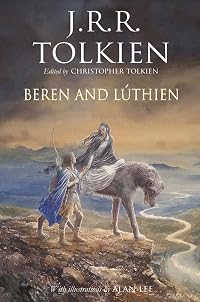
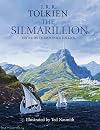
Beren was a mortal man, but Lúthien was an immortal elf. Her father, a great elvish lord, in deep opposition to Beren, imposed on him an impossible task that he must perform before he might wed Lúthien. To show something of the process whereby this legend of Middle-earth evolved over the years, [Christopher Tolkien] has told the story in his father's own words by giving, first, its original form, and then passages in prose and verse from later texts that illustrate the narrative as it show more changed. Presented together for the first time, they reveal aspects of the story, both in event and in narrative immediacy, that were afterwards lost.-- show lessTags
Recommendations

Member Recommendations
Member Reviews
You'll want to take my comments on this one with more than a grain of salt, as I have trouble being objective when it comes to Tolkien, and the story of Beren and Luthien hits me in a soft spot (my younger brother's middle name is Beren, and my sister's is Lorien -- Tolkien was big in my family). This is one of the stories that Sam Gamgee might have been referring to when he and Frodo are traveling to Mount Doom and Sam talks about the adventures in the great legends,
Beren and Luthien's story, for which we get here a couple choices of endings, was foundational in Tolkien's mythology, echoing aspects of his own life, and within his works in the romance of Aragorn and Arwen. As Christopher Tolkien reminds us,
Tolkien apparently began work on the story in 1917, and continued playing with it at least until some point in the 1930's, so there were several versions, as well as additions to both ends of the story, and snippets to be (maybe) inserted at various places. Christopher Tolkien, this book's editor/compiler does a really excellent job of organizing this material so that even readers who are not familiar with the entire mythology of which the story of Beren and Luthien is a part won't feel lost. Or, at least, very lost.
The story is presented, mainly, in two works, these being supplemented by additions and variations from other pieces. The first is the earlier form, and is in prose, and the second, broken into sections, is in verse. Both have their charms. I'll admit a preference for the earlier prose version, which is shorter, has little or no swooning, and is, at a few points, laugh-out-loud funny. I was having a little trouble staying focused on the poetic version until I started reading it out loud, with proper dramatic feeling, to my dog. Boy did that help! And my dog, who claims that there are far too few works of epic poetry with dog heroes, loved it! If I set the book aside for a bit he'd start poking me with his sweet wet nose and asking, hopefully, “Isn't it time to get back to the exciting adventures of Huan the Wonderdog?” And, really, he's not exaggerating. Huan may only get second billing on the marquee (well, his picture's on the cover, anyway), but he is the awesomest. Not only is he an amazing warrior, but he's better at planning missions than any of the men or elves he works with, and he has an expert knowledge of healing herbs! Like Aragorn, except tougher, fluffier, and you can ride on his back.
As I said, the prose version, The Tale of Tinuviel, comes from The Book of Lost Tales, and is loads of fun. Luthien Tinuviel is very fine heroine – brave, resourceful, etc. – and Beren is no slouch. Though of course it's not primarily humorous, there are some really funny bits, and little of that excessively “high” tone which sometimes leads the more hobbit-like of readers to feel drowsy. Initially this had something of the feel of Norse myth to me, but once I got farther in I decided it might have hints of the Kalevala, a Finnish story. We have giant magical cats and dogs, monstrous wolves... Wait. I just have to say, that Telvido, Prince of the Cats, who disappears in the longer, poetic version is too great a villain to miss. I wish he were on the book cover too.
The longer, though incomplete, version of the story is from “The Lay of Leithian.” This is, as I said, Tolkien in his high-toned, archaic style (which sometimes feels a little over the top, but then you come across an amazing word like “quook,” which is, deliciously, the past tense of “quake” and is just what you want to rhyme with “shook,” when you are describing an earthquake, and you forgive him all his excesses). Tolkien never finished any of this stuff to his satisfaction, so it seems unfair to pick much about rhymes and word choices he certainly would have improved upon, given enough time, and the story itself is really grand. Huan the Wonderdog is great in The Tale of Tinuviel, but here he is revealed in all his brilliance. Really, you'll love him. And Luthien and Beren are just as brave and loving and noble as you could ask for. There are romantic vistas, gloomy swamps, dank dungeons, true love, and tragic deaths – the works. Also beautiful colored plates and generous numbers of line drawings. I enjoyed the book very much. show less
”Folk seem to have just landed in them, usually – their paths were laid out that way, as you put it. But I expect they had lots of chances, like us, of turning back, only they didn't. And if they had, we shouldn't know, because they'd have been forgotten. We hear aboutshow more
those as just went on – and not all to a good end, mind you; at least not to what folk inside a story and not outside it call a good end.”
Beren and Luthien's story, for which we get here a couple choices of endings, was foundational in Tolkien's mythology, echoing aspects of his own life, and within his works in the romance of Aragorn and Arwen. As Christopher Tolkien reminds us,
”my father called it 'the chief of the stories of the Silmarillion', and he said of Beren that he is 'the outlawed mortal who succeeds (with the help of Luthien, a mere maiden even if an elf of royalty) where all the armies and warriors have failed: he penetrates the stronghold of the Enemy and wrests one of the Silmarilli from the Iron Crown. Thus he wins the hand of Luthien and the first marriage of mortal and immortal is achieved.”
Tolkien apparently began work on the story in 1917, and continued playing with it at least until some point in the 1930's, so there were several versions, as well as additions to both ends of the story, and snippets to be (maybe) inserted at various places. Christopher Tolkien, this book's editor/compiler does a really excellent job of organizing this material so that even readers who are not familiar with the entire mythology of which the story of Beren and Luthien is a part won't feel lost. Or, at least, very lost.
The story is presented, mainly, in two works, these being supplemented by additions and variations from other pieces. The first is the earlier form, and is in prose, and the second, broken into sections, is in verse. Both have their charms. I'll admit a preference for the earlier prose version, which is shorter, has little or no swooning, and is, at a few points, laugh-out-loud funny. I was having a little trouble staying focused on the poetic version until I started reading it out loud, with proper dramatic feeling, to my dog. Boy did that help! And my dog, who claims that there are far too few works of epic poetry with dog heroes, loved it! If I set the book aside for a bit he'd start poking me with his sweet wet nose and asking, hopefully, “Isn't it time to get back to the exciting adventures of Huan the Wonderdog?” And, really, he's not exaggerating. Huan may only get second billing on the marquee (well, his picture's on the cover, anyway), but he is the awesomest. Not only is he an amazing warrior, but he's better at planning missions than any of the men or elves he works with, and he has an expert knowledge of healing herbs! Like Aragorn, except tougher, fluffier, and you can ride on his back.
As I said, the prose version, The Tale of Tinuviel, comes from The Book of Lost Tales, and is loads of fun. Luthien Tinuviel is very fine heroine – brave, resourceful, etc. – and Beren is no slouch. Though of course it's not primarily humorous, there are some really funny bits, and little of that excessively “high” tone which sometimes leads the more hobbit-like of readers to feel drowsy. Initially this had something of the feel of Norse myth to me, but once I got farther in I decided it might have hints of the Kalevala, a Finnish story. We have giant magical cats and dogs, monstrous wolves... Wait. I just have to say, that Telvido, Prince of the Cats, who disappears in the longer, poetic version is too great a villain to miss. I wish he were on the book cover too.
The longer, though incomplete, version of the story is from “The Lay of Leithian.” This is, as I said, Tolkien in his high-toned, archaic style (which sometimes feels a little over the top, but then you come across an amazing word like “quook,” which is, deliciously, the past tense of “quake” and is just what you want to rhyme with “shook,” when you are describing an earthquake, and you forgive him all his excesses). Tolkien never finished any of this stuff to his satisfaction, so it seems unfair to pick much about rhymes and word choices he certainly would have improved upon, given enough time, and the story itself is really grand. Huan the Wonderdog is great in The Tale of Tinuviel, but here he is revealed in all his brilliance. Really, you'll love him. And Luthien and Beren are just as brave and loving and noble as you could ask for. There are romantic vistas, gloomy swamps, dank dungeons, true love, and tragic deaths – the works. Also beautiful colored plates and generous numbers of line drawings. I enjoyed the book very much. show less
A rather scholarly review of how the tale of Beren and Lúthien developed (evolved?) into the form seen in The Simarillion. I was reminded of The Nibelungiad and other Germanic legends especially in the betrayals and slaughters.
Interesting, with nice illustrations.
Interesting, with nice illustrations.
Okay, so, this book requires a HUGE caveat.
It's uneven as hell, it's not a full tale, and it is comprised of many unfinished snippets in various states of revision. You can see thirty odd years worth of fascination with the same tale of Beren and Luthien from very early and oddly simplistic Nordic-type style befitting Tolkien's regular scholarship all the way to several nearly full-developed Lays, poems in epic style, of the two characters, of Sauron who was named Thu, and Melkor, the original God of Evil that corrupted all that his siblings, the Illuvatar, made.
So we start with humble beginnings, telling the basic same tale over and over, of Beren's capture and Luthien's great courage, infiltrating Melkor's stronghold, tricking and show more magicking him until she could steal back the Simaril from his crown and saving her love.
When this is good, it's freaking awesome. When it isn't, it's just barely okay. :)
There's also a number of extra bits and pieces regarding Beren and Luthien's offspring, the half-elves who have a choice to remain Elf or fall into the fate of Mortal Man. I liked them, but they were all mere snippets.
One thing is certain, however. I feel very scholarly after reading this. It's not really designed for anyone's pure pleasure. As a writer, I loved to see the evolution of Tolkien's writing and style and dramatic choices as he revised and revised this prose and poetry into the forms we later see in the Silmarillion and in LoTR.
But without a much more vast underpinning or various re-reads of all the pertinent novels and histories, I'm afraid that most people may not really enjoy this for what it is.
For me, however, I LOVED the story of Beren and Luthien in the Silmarillion and immediately shined on how they were the prototypes and even MORE EPIC prototype for Aragorn and Arwen. I really looked forward to reading this. I just wish it had been finished and polished. ; ; show less
It's uneven as hell, it's not a full tale, and it is comprised of many unfinished snippets in various states of revision. You can see thirty odd years worth of fascination with the same tale of Beren and Luthien from very early and oddly simplistic Nordic-type style befitting Tolkien's regular scholarship all the way to several nearly full-developed Lays, poems in epic style, of the two characters, of Sauron who was named Thu, and Melkor, the original God of Evil that corrupted all that his siblings, the Illuvatar, made.
So we start with humble beginnings, telling the basic same tale over and over, of Beren's capture and Luthien's great courage, infiltrating Melkor's stronghold, tricking and show more magicking him until she could steal back the Simaril from his crown and saving her love.
When this is good, it's freaking awesome. When it isn't, it's just barely okay. :)
There's also a number of extra bits and pieces regarding Beren and Luthien's offspring, the half-elves who have a choice to remain Elf or fall into the fate of Mortal Man. I liked them, but they were all mere snippets.
One thing is certain, however. I feel very scholarly after reading this. It's not really designed for anyone's pure pleasure. As a writer, I loved to see the evolution of Tolkien's writing and style and dramatic choices as he revised and revised this prose and poetry into the forms we later see in the Silmarillion and in LoTR.
But without a much more vast underpinning or various re-reads of all the pertinent novels and histories, I'm afraid that most people may not really enjoy this for what it is.
For me, however, I LOVED the story of Beren and Luthien in the Silmarillion and immediately shined on how they were the prototypes and even MORE EPIC prototype for Aragorn and Arwen. I really looked forward to reading this. I just wish it had been finished and polished. ; ; show less
This didn't end up being what I expected - I thought it'd be more like Children Of Hurin, a single long narrative. Instead it seems to be something a little more stitched together from older versions of Beren And Luthien, and most of it verse which, it turns out, Tolkien was pretty good at. It makes for a choppy read as Christopher Tolkien bridges narrative gaps with earlier or later pieces or fragments, so it doesn't really form a whole and ends up being something framed by the usual careful and respectful scholarly exegesis of Tolkien's composition. Still, pretty readable and fairly enjoyable on the whole, but I think the narrative in the Silmarillion might be more satisfying as a read.
https://nwhyte.livejournal.com/3499182.html
To be honest, I don't think there was much new here - most of the material is in The Book of Lost Tales vol 2 and The Lays of Beleriand, published in 1984 and 1985 and which I read in 2011. The Beren and Lúthien story was of huge personal significance to his father - it's interesting to me that Tolkien, whose name had seven letters ending with -ien, found forbidden love with Edith Bratt, whose name had five letters starting with B. And as presented here, we see Tolkien's story-telling skills mature in the different versions of the tale. In the final version, in fact, Lúthien ends up as rather a kick-ass character who rescues Beren and challenges both Morgoth and her father. (This was largely show more edited out for The Silmarillion; a big mistake.) I think as presented here it's a bit more digestible than in the 1980s books, but if you already have them you can probably skip this. show less
To be honest, I don't think there was much new here - most of the material is in The Book of Lost Tales vol 2 and The Lays of Beleriand, published in 1984 and 1985 and which I read in 2011. The Beren and Lúthien story was of huge personal significance to his father - it's interesting to me that Tolkien, whose name had seven letters ending with -ien, found forbidden love with Edith Bratt, whose name had five letters starting with B. And as presented here, we see Tolkien's story-telling skills mature in the different versions of the tale. In the final version, in fact, Lúthien ends up as rather a kick-ass character who rescues Beren and challenges both Morgoth and her father. (This was largely show more edited out for The Silmarillion; a big mistake.) I think as presented here it's a bit more digestible than in the 1980s books, but if you already have them you can probably skip this. show less
More like a 3,5, but it's Tolkien so I'm rounding up.
I was excited about this because OMG it's Beren and Luthien, who doesn't love that story? But I expected it to be a fleshed-out version of the story, based on all the writing Tolkien ever did on the subject. That's not what it is. I suppose it starts of, sorta, with that (except Beren is an elf in that story, and that's the worst version of the tale), but that's not enough to fill the book (but I'm sure you could've if you wanted to), so instead we're then treated to lots of other versions of the story, often in poetry form.
It's kinda confusing and hard to follow, and not what I expected when I picked up the book. I find it hard to follow stories written in verse, and I was fighting show more to stay awake most of the time I read (not the book' fault, I blame my poor sleep the past week) which didn't exactly help with keeping up. HOWEVER I love Tolkien's poems, I love the rythm of them and how he rhymes, so even when I wasn't keeping up it was just a fucking treat to read. Honestly I feel like maybe that part of the book should be read out loud, but you can't do that on your commute.
Oh well. It's still such a beautiful story. show less
I was excited about this because OMG it's Beren and Luthien, who doesn't love that story? But I expected it to be a fleshed-out version of the story, based on all the writing Tolkien ever did on the subject. That's not what it is. I suppose it starts of, sorta, with that (except Beren is an elf in that story, and that's the worst version of the tale), but that's not enough to fill the book (but I'm sure you could've if you wanted to), so instead we're then treated to lots of other versions of the story, often in poetry form.
It's kinda confusing and hard to follow, and not what I expected when I picked up the book. I find it hard to follow stories written in verse, and I was fighting show more to stay awake most of the time I read (not the book' fault, I blame my poor sleep the past week) which didn't exactly help with keeping up. HOWEVER I love Tolkien's poems, I love the rythm of them and how he rhymes, so even when I wasn't keeping up it was just a fucking treat to read. Honestly I feel like maybe that part of the book should be read out loud, but you can't do that on your commute.
Oh well. It's still such a beautiful story. show less
Every time I see that a new Tolkien book is being published I get unbelievably excited. I can’t help it. Tolkien’s works were one of the first adult fantasy series I’d ever read, and has remained a life-long love. Beren and Luthien by J.R.R. Tolkien and edited by Christopher Tolkien is the last in a long line of posthumously published works focusing on Middle Earth. This one tells the story of Beren and Luthien, one of the tales found within the Silmarillion.
I expected this book to be something more comparable to The Children of Hurin than another compilation. I respect Christopher Tolkien’s zeal in trying to be as completely true to what his father wrote or would have wanted as possible. In this particular case I can’t help show more but feel that this dogmatic approach hurt rather than helped this volume. More than that, I think it’s safe to say that a longer, book length version of Beren and Luthien is what people want, and something that this story deserves.
This tale itself is a very good one. In my opinion, the version found in the Silmarillion stands as one of the best written pieces J.R.R. Tolkien produced. The story touches on themes that we see very little of, especially in the time period which this was first written. This is a story about a princess who can save herself and can save the man she loves. Luthien is an incredibly competent character and the first character I thought of when the term ‘strong female character’ came up in conversation. Even today this is something that isn’t always found in books.
Despite having some background on the events leading up to and characters surrounding the tale of Beren and Luthien, I still felt there was a certain degree of inaccessibility between the story and the reader. It is best if the basics of the story are already known to the reader. If you’ve read the story found in the Silmarillion or, at the very least, if you remember the version mentioned more briefly in the Lord of the Rings. (I think Aragorn may have been discussing it with Frodo in the swamp during Fellowship of the Ring? Please correct me if I’m mis-remembering.) Honestly, it’s probably best for the reader if they’ve read the Silmarillion as a whole, or least wiki-ed certain parts.
There are several versions of the story in this book. Some of them have the main character’s names – Beren and Luthien – listed differently. Certain characters are added. Some are missing. We have some very interesting villains not seen in the version within The Silmarillion. In particular I liked Tevildo the cat, a good foil to Huan. It was also interesting seeing the evolution of the story throughout the years. I really liked that the Lay of Lethian (what was completed, at least) is included, something which is mentioned in other books but which I, at least, have never seen.
The book did pitter out a little bit at the end. A few passages from later works are included in an effort to conclude the life of Beren and Luthien. There is mention of Beren and Luthien’s child and of events after the ending of the original story. This, along with the very beginning of the book, is where things become muddied and inaccessible. We don’t get a very long tale about their later life together. The reader is expected to know what happens next. The later life of Beren and Luthien is included in other tales, but lacks a story of its own.
Despite my gripes, the tale itself is really quite wonderful. I’ve always loved the story of Beren and Luthien, and it’s safe to say that I always will. I only wish that this volume was handled a little differently. The illustrations by Alan Lee are all very beautiful, as always.
However, I do still think that someone new to Middle Earth will feel very lost first going into Beren and Luthien. Still, there’s a lot to love here. Fans of the series get to see the evolution of one of the best tales of Middle Earth, and I think those hard core fans are who will appreciate the book the most. If you are a die-hard fan who owns everything with Tolkien’s name on it you will definitely want this book for your collection. If you don’t like editorial dialogue interrupting the narrative or if you aren’t a fan this book may be one to pass up.
This review originally found on Looking Glass Reads. show less
I expected this book to be something more comparable to The Children of Hurin than another compilation. I respect Christopher Tolkien’s zeal in trying to be as completely true to what his father wrote or would have wanted as possible. In this particular case I can’t help show more but feel that this dogmatic approach hurt rather than helped this volume. More than that, I think it’s safe to say that a longer, book length version of Beren and Luthien is what people want, and something that this story deserves.
This tale itself is a very good one. In my opinion, the version found in the Silmarillion stands as one of the best written pieces J.R.R. Tolkien produced. The story touches on themes that we see very little of, especially in the time period which this was first written. This is a story about a princess who can save herself and can save the man she loves. Luthien is an incredibly competent character and the first character I thought of when the term ‘strong female character’ came up in conversation. Even today this is something that isn’t always found in books.
Despite having some background on the events leading up to and characters surrounding the tale of Beren and Luthien, I still felt there was a certain degree of inaccessibility between the story and the reader. It is best if the basics of the story are already known to the reader. If you’ve read the story found in the Silmarillion or, at the very least, if you remember the version mentioned more briefly in the Lord of the Rings. (I think Aragorn may have been discussing it with Frodo in the swamp during Fellowship of the Ring? Please correct me if I’m mis-remembering.) Honestly, it’s probably best for the reader if they’ve read the Silmarillion as a whole, or least wiki-ed certain parts.
There are several versions of the story in this book. Some of them have the main character’s names – Beren and Luthien – listed differently. Certain characters are added. Some are missing. We have some very interesting villains not seen in the version within The Silmarillion. In particular I liked Tevildo the cat, a good foil to Huan. It was also interesting seeing the evolution of the story throughout the years. I really liked that the Lay of Lethian (what was completed, at least) is included, something which is mentioned in other books but which I, at least, have never seen.
The book did pitter out a little bit at the end. A few passages from later works are included in an effort to conclude the life of Beren and Luthien. There is mention of Beren and Luthien’s child and of events after the ending of the original story. This, along with the very beginning of the book, is where things become muddied and inaccessible. We don’t get a very long tale about their later life together. The reader is expected to know what happens next. The later life of Beren and Luthien is included in other tales, but lacks a story of its own.
Despite my gripes, the tale itself is really quite wonderful. I’ve always loved the story of Beren and Luthien, and it’s safe to say that I always will. I only wish that this volume was handled a little differently. The illustrations by Alan Lee are all very beautiful, as always.
However, I do still think that someone new to Middle Earth will feel very lost first going into Beren and Luthien. Still, there’s a lot to love here. Fans of the series get to see the evolution of one of the best tales of Middle Earth, and I think those hard core fans are who will appreciate the book the most. If you are a die-hard fan who owns everything with Tolkien’s name on it you will definitely want this book for your collection. If you don’t like editorial dialogue interrupting the narrative or if you aren’t a fan this book may be one to pass up.
This review originally found on Looking Glass Reads. show less
Members
- Recently Added By
Lists

Kirkus Starred Fiction Reviews of Books Published in 2017
412 works; 7 members

Books Read in 2017
4,249 works; 129 members
Talk Discussions
Past Discussions
New Tolkien Book in Council of Elrond (March 2022)
Author Information

603+ Works 517,575 Members
A writer of fantasies, Tolkien, a professor of language and literature at Oxford University, was always intrigued by early English and the imaginative use of language. In his greatest story, the trilogy The Lord of the Rings (1954--56), Tolkien invented a language with vocabulary, grammar, syntax, even poetry of its own. Though readers have show more created various possible allegorical interpretations, Tolkien has said: "It is not about anything but itself. (Certainly it has no allegorical intentions, general, particular or topical, moral, religious or political.)" In The Adventures of Tom Bombadil (1962), Tolkien tells the story of the "master of wood, water, and hill," a jolly teller of tales and singer of songs, one of the multitude of characters in his romance, saga, epic, or fairy tales about his country of the Hobbits. Tolkien was also a formidable medieval scholar, as evidenced by his work, Beowulf: The Monster and the Critics (1936) and his edition of Anciene Wisse: English Text of the Anciene Riwle. Among his works published posthumously, are The Legend of Sigurd and Gudrún and The Fall of Arthur, which was edited by his son, Christopher. In 2013, his title, TheHobbit (Movie Tie-In) made The New York Times Best Seller List. (Bowker Author Biography) show less
All Editions
Some Editions
Awards and Honors
Series

Work Relationships
Is contained in
Is abridged in
Inspired
Common Knowledge
- Canonical title
- Beren and Lúthien
- Original title
- Beren and Lúthien
- Original publication date
- 1917
- People/Characters
- Beren; Lúthien Tinúviel
- Important places
- Beleriand; Middle-earth
- Dedication
- For Baillie
- First words
- IN A LETTER of my father’s written on the 16th of July 1964 he said:
The germ of my attempt to write legends of my own to fit my private languages was the tragic tale of the hapless Kullervo in the Finnish Kalevala. - Last words
- (Click to show. Warning: May contain spoilers.)In the words of the Quenta Silmarillion: None saw Beren and Lúthien leave the world or marked where at last their bodies lay.
- Original language
- English
- Canonical DDC/MDS
- 823.087661
Classifications
- Genres
- Fantasy, Fiction and Literature
- DDC/MDS
- 823.087661 — Literature & rhetoric English & Old English literatures English fiction By type Genre fiction Adventure fiction Speculative fiction Fantasy fiction High fantasy
- LCC
- PR6039 .O32 .B47 — Language and Literature English English Literature 1900-1960
- BISAC
Statistics
- Members
- 2,822
- Popularity
- 6,449
- Reviews
- 35
- Rating
- (4.06)
- Languages
- 14 — Czech, Dutch, English, French, German, Greek, Hungarian, Italian, Polish, Russian, Spanish, Turkish, Ukrainian, Portuguese (Brazil)
- Media
- Paper, Audiobook, Ebook
- ISBNs
- 43
- ASINs
- 14