
Peter S. Beagle
Author of The Last Unicorn
About the Author
Peter S. Beagle was born in Manhattan in April of 1939. During his senior year of high school, Beagle entered a poem and a short story in the 1955 Scholastic Writing Awards Contest, not knowing that the Grand Prize was a college education. He won that prize and went on to spend four years at the show more University of Pittsburgh after graduating from high school in 1955. In his sophomore year at the University of Pittsburgh, Beagle entered another contest, winning first place again in Seventeen Magazine's Short Story Contest. At the age of 19, he published "A Fine and Private Place." Beagle graduated college with a degree in Creative Writing and a Spanish minor and then spent a year overseas. When he returned, his new-found agent had enrolled him in a writing workshop at Stanford. After his first few published stories, Beagle supported himself and his family as a freelancer for many years. In the 70's he began to write screenplays, as well as take up the hobby of singing folk songs at a local club. Beagle has published music as well as books, both his passions, and both lucrative. Beagle gives lectures and readings at universities, and also hosts writing workshops at schools such as the University of Washington and Clarion West. His works have been translated into 15 languages. Beagle has also written a script for Star Trek: The Next Generation and the screenplay for the animated feature version of The Lord of the Rings. In 1987, Beagle's "The Last Unicorn" was proclaimed the Number 5 All Time Fantasy Novel. That same year, "The Innkeeper's Song" won the Mythopoetic Fantasy Award. In 1997, "The Unicorn Sonata" won the Locus Poll Award for Best Novella, and in 1998, "Giant Bones" won the same award as well as being nominated for the 1998 World Fantasy Award. (Bowker Author Biography) show less
Image credit: Wikipedia
Series
Works by Peter S. Beagle
The Secret History of Fantasy (2010) — Editor; Contributor; Introduction, some editions — 233 copies, 7 reviews
Peter S. Beagle's Immortal Unicorn: Volume 2 (1999) — Editor; Contributor; Foreword — 132 copies, 1 review
The Essential Peter S. Beagle, Volume 1: Lila the Werewolf and Other Stories (2023) 87 copies, 4 reviews
The Essential Peter S. Beagle, Volume 2: Oakland Dragon Blues and Other Stories (2023) 77 copies, 2 reviews
My Son Heydari and the Karkadann 20 copies
The Fantasy & Science Fiction Book of Unicorns, Volume 2 — Contributor — 14 copies
The Last Unicorn #2 9 copies
The Last Unicorn #4 7 copies
The Last Unicorn #6 7 copies
The Last Unicorn #3 6 copies
The Last Unicorn #5 6 copies
Kaskia 3 copies
Four Fables 2 copies
Olfert Dapper's Day 2 copies
The Naga 2 copies
Oakland Dragon Blues 2 copies
The Bridge Partner [short story] 2 copies
Mr. McCaslin [short story] 1 copy
Complete Short Fiction 1 copy
Fantasy Worlds of Peter S. Beagle, Includes: Lila the Werewolf; The Last Unicorn; Come, Lady Death; A Fine and Private Place (1983) 1 copy
Music When Soft Voices Die 1 copy
Vanishing [Novelette] 1 copy
Trinity County Ca 1 copy
The Ape-man Of Mars 1 copy
Untitled Work on Fiction 1 copy
Associated Works
Wizards: Magical Tales From the Masters of Modern Fantasy (2007) — Contributor — 850 copies, 25 reviews
Songs of Love and Death: All Original Tales of Star Crossed Love (2010) — Contributor — 810 copies, 37 reviews
The Dragon Book: Magical Tales from the Masters of Modern Fantasy (2009) — Contributor — 489 copies, 14 reviews
The Year's Best Science Fiction: Twenty-Ninth Annual Collection (2012) — Contributor — 276 copies, 5 reviews
The Year's Best Fantasy and Horror: Ninth Annual Collection (1996) — Contributor — 258 copies, 3 reviews
Ghosts by Gaslight: Stories of Steampunk and Supernatural Suspense (2011) — Contributor — 221 copies, 8 reviews
The Best Science Fiction and Fantasy of the Year, Volume 1 (2007) — Contributor — 217 copies, 6 reviews
Five Seasons of Angel: Science Fiction and Fantasy Writers Discuss Their Favorite Vampire (2004) — Contributor — 206 copies, 3 reviews
The Best Science Fiction and Fantasy of the Year, Volume 2 (2008) — Contributor — 177 copies, 4 reviews
The Best Science Fiction and Fantasy of the Year, Volume 6 (2012) — Contributor — 162 copies, 4 reviews
The Best Science Fiction and Fantasy of the Year, Volume 7 (2013) — Contributor — 154 copies, 3 reviews
The Best Science Fiction and Fantasy of the Year, Volume 3 (2009) — Contributor — 151 copies, 2 reviews
The Very Best of Fantasy & Science Fiction: Sixtieth Anniversary Anthology (2009) — Contributor — 151 copies, 6 reviews
The Best Science Fiction and Fantasy of the Year, Volume 4 (2010) — Contributor — 141 copies, 2 reviews
The Graphic Canon of Children's Literature: The World's Greatest Kids' Lit as Comics and Visuals (2014) — Contributor — 101 copies, 1 review
New York Fantastic: Fantasy Stories from the City that Never Sleeps (2017) — Contributor — 45 copies, 1 review
The Magazine of Fantasy and Science Fiction July/August 2011, Vol. 121, Nos. 1 & 2 (2011) — Contributor — 16 copies, 1 review
Millemondi Primavera 2001: Nuove avventure nell'ignoto — Contributor — 2 copies
Treasure Island Trek; Children's Author & Illustrator Festival Saturday Oct, 18, 1969 — Contributor, some editions — 1 copy
Tagged
Common Knowledge
- Legal name
- Beagle, Peter Soyer
- Birthdate
- 1939-04-20
- Gender
- male
- Education
- University of Pittsburgh
- Occupations
- fantasy writer
non-fiction writer
screenwriter - Awards and honors
- Guest of Honour, Eastercon, UK (1999)
Mythopoeic Fantasy Award
Damon Knight Memorial Grand Master Award (2018) - Nationality
- USA
- Birthplace
- Manhattan, New York, New York, USA
- Places of residence
- Oakland, California, USA
New York, New York, USA - Associated Place (for map)
- New York, USA
Members
Discussions
The Last Unicorn Limited Edition 2025 in Folio Society Devotees (March 23)
OT Suntup the last Unicorn in Folio Society Devotees (September 2023)
Peter S. Beagle's short story anthologies in Fairy Tale Readers (March 2013)
Reviews
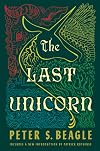
Perhaps the best book I've read all year. The movie was a childhood favorite, and I stumbled across the book in a local used book store, and couldn't pass it up. I'm so glad I've read it now - the depth and dimension of this story are so much richer than I knew. It makes me at once desperately sad and thoroughly joyful to be mortal and to have the capacity to imagine but never know such beauty in the world.
When a unicorn realizes that she may be the last remaining unicorn, she leaves her peaceful home on a quest to find out what happened to all her brothers and sisters. Along the way, she picks up bumbling magician seeking his talent and a dour cook looking for her lost innocence. The unicorn soon discovers that the world has changed since she last ventured out. Humans have lost their youthful innocence, and they are no longer able to see things as they truly are - humans have excelled in the show more art of deceiving themselves.
When I originally picked up this book, I'd expected a cute young adult tale, but never expected such depth. The Last Unicorn is a multi-layered allegory: about lost innocence, self-fulfilling prophecies, and self-deception. But these cynical themes aren't the main point. The main point is that only in fully understanding humans can the ethereal unicorns save themselves. Only by sacrificing a piece of their ineffable essence can they form a closer bond to humans. And this closer bond can lead humans to do wonderful things.
Yes, it is a Christian allegory by my interpretation. But I think it's amazing the way Beagle didn't just throw in a Christ Figure and be done with it....The allegory of Beagle's unicorn isn't uniquely Christian - it defies religious boundaries. It is a story of love and innocence that mixes cynicism and hope. Quite extraordinary!
I was also a HUGE fan of the bumbling wizard Schmendrick who (in my opinion) was only fooling himself into believing he wasn't a capable wizard. He's like the Lion, the Scarecrow, and the Tin Man in Wizard of Oz - just the fact that he wanted so badly to be a wizard made him into one. He could laugh at all the people who deceived themselves, as he unconsciously deceived his own self. He reminded me of myself when I'm in a glum mood thinking I'm not capable of anything when, of course, I'm quite capable if I'd stop expecting so little of myself. This book was a good reminder to have faith in yourself and think about the consequences of your beliefs. show less
When I originally picked up this book, I'd expected a cute young adult tale, but never expected such depth. The Last Unicorn is a multi-layered allegory: about lost innocence, self-fulfilling prophecies, and self-deception. But these cynical themes aren't the main point. The main point is that only in fully understanding humans can the ethereal unicorns save themselves. Only by sacrificing a piece of their ineffable essence can they form a closer bond to humans. And this closer bond can lead humans to do wonderful things.
Yes, it is a Christian allegory by my interpretation. But I think it's amazing the way Beagle didn't just throw in a Christ Figure and be done with it....The allegory of Beagle's unicorn isn't uniquely Christian - it defies religious boundaries. It is a story of love and innocence that mixes cynicism and hope. Quite extraordinary!
I was also a HUGE fan of the bumbling wizard Schmendrick who (in my opinion) was only fooling himself into believing he wasn't a capable wizard. He's like the Lion, the Scarecrow, and the Tin Man in Wizard of Oz - just the fact that he wanted so badly to be a wizard made him into one. He could laugh at all the people who deceived themselves, as he unconsciously deceived his own self. He reminded me of myself when I'm in a glum mood thinking I'm not capable of anything when, of course, I'm quite capable if I'd stop expecting so little of myself. This book was a good reminder to have faith in yourself and think about the consequences of your beliefs. show less
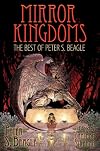
I requested this book because I’ve come across the stories of Peter S. Beagle now and again in my magazine and anthology reviews and always liked them. A bit of research reveals that he is much lauded and awarded in the genre and rightly so, but I didn’t know that. Pleasing to find your own inclinations justified so.
‘Mirror Kingdoms: The Best Of Peter S. Beagle’ contains two categories of story: those set in our world and those set in a fantasy realm. I’ll consider the show more ‘realistic’ ones first, that is, the yarns not set in imaginary realms. ‘Professor Gottesman And The Indian Rhinoceros’ is about a middle-aged, absent-minded professor of philosophy at an ordinary university who has a rhinoceros from the zoo talking to him and even following him home. It’s really a unicorn. It sounds preposterous and obviously is but so do all the stories herein when told cold. Yet Beagle carries it off with élan because the characters are so well done and likeable. The similes are so good and the gentle observations so apt.
‘Julie’s Unicorn’ is again based on a completely daft premise. The beast comes out of a tapestry hanging on the wall of a museum, bought to life by some witchery Julie learned from her granny. It’s only as big as a kitten because that’s how big it was in the picture. Various events ensue, bringing some trouble to Julie and her friend, a loveable old cook. The unicorn, I should add, is not at all nice but they do their best for it anyway.
‘Lila The Werewolf’ is set in New York, as is ‘Rock In The Park’, which is a bit autobiographical, except for the centaurs, I presume. ‘Salt Wine’ makes clever use of mermen, for if there are mermaids there must surely be mermen, too. A sailor gets the recipe for the title drink and makes a fortune. Obviously, there are complications. That one’s set in the past, as is ‘The Tale Of Junko And Sayuri’, which takes place in old Japan. A nice, easy-going hunter, comfortable with his low station in life, gets a wife who can change into animals at will. Trouble ensues.
‘The Vanishing’ is a grim tale about a man who used to be a guard on the Berlin Wall before it came down. While waiting for his pregnant daughter at a hospital, he goes into a kind of coma and finds himself back on the Wall in a strange limbo world surrounded by darkness. He encounters some other people and slowly discovers that they are all there for a purpose. It was absolutely gripping and a strong contender for the best one in the book, except that nearly all of them are strong contenders, damn it!
‘We Never Talk About My Brother’ uses chatty first person narration with the protagonist, Jacob, talking to a reporter here about his brother Esau, a big name television reporter famed throughout the USA with a hidden secret to his success. Another great story. ‘The Rabbi‘s Hobby’ was in a more minor key but the sentiment was delicately handled and it left you feeling good.
Many of the stories and, perhaps the best ones, are set in fantasy realms. In these fairy tales, even more than in the others, Beagle achieves the gentle rhythm of an old-fashioned storyteller, unhurried, mildly amused, sometimes sardonic and always interesting. ‘The Last Song Of Sirit Bayar’ features a ballad singer who drinks and a big ugly girl who has underage sex, not with him. The narrative technique is her telling the story to a scribe who writes it down, which is clever. As usual, the characters insinuate themselves into your soul and, as it moves toward the fabulous ending, the heart of the reader is well nigh split in twain with the pain and the beauty of it all.
‘Giant Bones’ is narrated by a garrulous farmer telling his son a bed-time story about how their great-great-great-grandfather came over the mountains to the flat lands they now inhabit and started the family. It starts slow, as they all do, and a reader wonders if it’s worth persisting with this verbose old fool. It is, as usual. The story turns out not to be the kind of story you thought it was going to be at the start. ‘What Tune The Enchantress Plays’ has a pair of star-crossed lovers and the lady must decide between her proper destiny and her true love for a boy.
Beagle gives away the secret of his writing in the introduction. He starts a story without the least idea of how it’s going to end and often does several drafts to get it right and several can mean a dozen. That explains, perhaps, why the plots are unpredictable and also explains why the writing is elegant. Many of these are not short stories but novellas, longer because they need to be, for part of Beagle’s method is to get you to know and understand the characters so you care when the plot does bad things to them.
The method works. It all works. A reviewer runs out of superlatives. This is the best collection of stories I have ever read and I cannot recommend it highly enough.
Eamonn Murphy
This review first appeared at https://www.sfcrowsnest.info/ show less
‘Mirror Kingdoms: The Best Of Peter S. Beagle’ contains two categories of story: those set in our world and those set in a fantasy realm. I’ll consider the show more ‘realistic’ ones first, that is, the yarns not set in imaginary realms. ‘Professor Gottesman And The Indian Rhinoceros’ is about a middle-aged, absent-minded professor of philosophy at an ordinary university who has a rhinoceros from the zoo talking to him and even following him home. It’s really a unicorn. It sounds preposterous and obviously is but so do all the stories herein when told cold. Yet Beagle carries it off with élan because the characters are so well done and likeable. The similes are so good and the gentle observations so apt.
‘Julie’s Unicorn’ is again based on a completely daft premise. The beast comes out of a tapestry hanging on the wall of a museum, bought to life by some witchery Julie learned from her granny. It’s only as big as a kitten because that’s how big it was in the picture. Various events ensue, bringing some trouble to Julie and her friend, a loveable old cook. The unicorn, I should add, is not at all nice but they do their best for it anyway.
‘Lila The Werewolf’ is set in New York, as is ‘Rock In The Park’, which is a bit autobiographical, except for the centaurs, I presume. ‘Salt Wine’ makes clever use of mermen, for if there are mermaids there must surely be mermen, too. A sailor gets the recipe for the title drink and makes a fortune. Obviously, there are complications. That one’s set in the past, as is ‘The Tale Of Junko And Sayuri’, which takes place in old Japan. A nice, easy-going hunter, comfortable with his low station in life, gets a wife who can change into animals at will. Trouble ensues.
‘The Vanishing’ is a grim tale about a man who used to be a guard on the Berlin Wall before it came down. While waiting for his pregnant daughter at a hospital, he goes into a kind of coma and finds himself back on the Wall in a strange limbo world surrounded by darkness. He encounters some other people and slowly discovers that they are all there for a purpose. It was absolutely gripping and a strong contender for the best one in the book, except that nearly all of them are strong contenders, damn it!
‘We Never Talk About My Brother’ uses chatty first person narration with the protagonist, Jacob, talking to a reporter here about his brother Esau, a big name television reporter famed throughout the USA with a hidden secret to his success. Another great story. ‘The Rabbi‘s Hobby’ was in a more minor key but the sentiment was delicately handled and it left you feeling good.
Many of the stories and, perhaps the best ones, are set in fantasy realms. In these fairy tales, even more than in the others, Beagle achieves the gentle rhythm of an old-fashioned storyteller, unhurried, mildly amused, sometimes sardonic and always interesting. ‘The Last Song Of Sirit Bayar’ features a ballad singer who drinks and a big ugly girl who has underage sex, not with him. The narrative technique is her telling the story to a scribe who writes it down, which is clever. As usual, the characters insinuate themselves into your soul and, as it moves toward the fabulous ending, the heart of the reader is well nigh split in twain with the pain and the beauty of it all.
‘Giant Bones’ is narrated by a garrulous farmer telling his son a bed-time story about how their great-great-great-grandfather came over the mountains to the flat lands they now inhabit and started the family. It starts slow, as they all do, and a reader wonders if it’s worth persisting with this verbose old fool. It is, as usual. The story turns out not to be the kind of story you thought it was going to be at the start. ‘What Tune The Enchantress Plays’ has a pair of star-crossed lovers and the lady must decide between her proper destiny and her true love for a boy.
Beagle gives away the secret of his writing in the introduction. He starts a story without the least idea of how it’s going to end and often does several drafts to get it right and several can mean a dozen. That explains, perhaps, why the plots are unpredictable and also explains why the writing is elegant. Many of these are not short stories but novellas, longer because they need to be, for part of Beagle’s method is to get you to know and understand the characters so you care when the plot does bad things to them.
The method works. It all works. A reviewer runs out of superlatives. This is the best collection of stories I have ever read and I cannot recommend it highly enough.
Eamonn Murphy
This review first appeared at https://www.sfcrowsnest.info/ show less
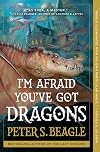
What an odd little story. I love Peter S. Beagle's other works so when I saw he had written a cozy fantasy I was excited to give it a try. I'm Afraid You've Got Dragons is more of a dark fairy tale adventure than it is a cozy fantasy IMO. Once I was able to let go of my expectations for something cozy, I had fun with this tale.
Gaius Aurelius Constantine Heliogabalus Thrax, who prefers people call him Robert, has inherited his deceased father's job as a dragon exterminator, a career he show more detests. Princess Cerise is determined to receive Crown Prince Reginald with the old castle looking its best and so the royal family hires Robert is hired to disinfest the entire castle. Things get more odd from here.
You have the makings of a fairy tale with some modern touches - a reluctant hero, a princess not in distress, a prince on a quest of sorts, an evil wizard out for revenge, and, of course, dragons. The story is a confusing mix of genres as it winds in and out of YA/Middle Grade, adult dark fairy tale, a touch of romance, a bit of whimsy bordering on surreal and back again, yet never quite settling on one. I did like that all the characters the shared the same theme of feeling trapped in their roles and learning that they have the ability to choose different fates if they wished. Our heroes were likable and easy to root for and the villain was sufficiently villainous. What was really sad was the treatment of dragons. It is this aspect that makes things darker as the extermination portion is given a lot more page time and detail than I expected, which moved things out of cozy territory for me.
The story ends with most of the loose ends tied up though still slightly open ended should the author ever wish to write more in this world. I'm glad I read the book though I don't see myself ever revisiting this one the way I do The Last Unicorn. show less
Gaius Aurelius Constantine Heliogabalus Thrax, who prefers people call him Robert, has inherited his deceased father's job as a dragon exterminator, a career he show more detests. Princess Cerise is determined to receive Crown Prince Reginald with the old castle looking its best and so the royal family hires Robert is hired to disinfest the entire castle. Things get more odd from here.
You have the makings of a fairy tale with some modern touches - a reluctant hero, a princess not in distress, a prince on a quest of sorts, an evil wizard out for revenge, and, of course, dragons. The story is a confusing mix of genres as it winds in and out of YA/Middle Grade, adult dark fairy tale, a touch of romance, a bit of whimsy bordering on surreal and back again, yet never quite settling on one. I did like that all the characters the shared the same theme of feeling trapped in their roles and learning that they have the ability to choose different fates if they wished. Our heroes were likable and easy to root for and the villain was sufficiently villainous. What was really sad was the treatment of dragons. It is this aspect that makes things darker as the extermination portion is given a lot more page time and detail than I expected, which moved things out of cozy territory for me.
The story ends with most of the loose ends tied up though still slightly open ended should the author ever wish to write more in this world. I'm glad I read the book though I don't see myself ever revisiting this one the way I do The Last Unicorn. show less
Lists
Five star books (1)
Allie's Wishlist (1)
Cats in Fiction (1)
Ghost Cats (1)
Favourite Books (1)
Awards


You May Also Like


Associated Authors
Statistics
- Works
- 128
- Also by
- 98
- Members
- 22,034
- Popularity
- #973
- Rating
- 4.3
- Reviews
- 610
- ISBNs
- 314
- Languages
- 20
- Favorited
- 118