On This Page
Description
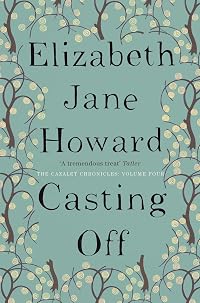
The fourth volume of the Cazalet Chronicles opens just as World War II has ended, continuing this critically acclaimed family saga perfect for fans of Downton Abbey The war is over, but for the Cazalets-and England-the challenges continue. Against the backdrop of a crumbling empire, the family soldiers on in the wake of disappointment, heartbreak, and tragedy. Returning home after five long years, Rupert Cazalet struggles to adapt to civilian life back in England. And his wife, Zoe, harbors show more a guilty secret. Young wife and mother Louise Cazalet, trapped in a loveless marriage to a famous portrait painter, searches for a way out. Cazalet cousins Polly and Clary must face life in a new world, their hopes and ideals changed forever by the ravages of war. And Rachel's self-sacrificing nature could cost her her relationship with Margot Sidney. But the family comes together again as three generations of Cazalets struggle to hold onto Home Place, the beloved Sussex estate that has been their refuge and their heart. Against the titanic sweep of history, as they are tested by infidelities, divorce, unimaginable loss, and the promise of renewed love, the Cazalets try to cast off the sins and sorrows of the past and sail bravely toward the future. show lessTags
Recommendations






















Member Reviews
This is the fifth and final volume of the Cazalet Chronicles and I have finished all five. I love these books and wish that EJH was still alive so that I could write her a letter, and tell her how much I appreciate her humor, psychological astuteness, the world she brings to life (England 1937-1959), the company of her characters. I admit it all makes me hugely nostalgic for a world that wasn't even mine except by extension--many of the characters are contemporary to my parents and grandparents, though English. Still there are resonances.
And comforts: These are not edgy, post-modern literary efforts. Everyone calls everyone "darling" (not the movie star darling, the familial darling) and love is strong and steady, even though the show more extended family has its share of conflicts, betrayals, misfits, outsiders; people make life-long mistakes and suffer deep losses. Still in these days of Trump, Brexit, etc., there is something almost exalted in bringing to life a cast of characters finding their way through change at the mid-century. It makes clear, at least to me, how all our freedoms are also the loss of belonging and accepted ways, of being embedded in an intelligible society.
EJH is a fine writer. She is wonderful with dialogue, especially with her cast of children, and can be quite funny describing opinions, conflicts, stages along the way from childhood through adolescence that are entirely familiar to anyone who has had a child or been one. Even her adults get to grow--Howard is especially good at portraying growth and keeping the essential personality of her characters. She loves her lovers and tells their stories with such tenderness. There are several deaths that are conveyed piercingly, for both reader and character.
I know that much of the story and many of the characters are taken from EJH's life, so I guess she knows much of what she writes from intimate experience. I've just begun reading her biography.
I loved every page of every volume. show less
And comforts: These are not edgy, post-modern literary efforts. Everyone calls everyone "darling" (not the movie star darling, the familial darling) and love is strong and steady, even though the show more extended family has its share of conflicts, betrayals, misfits, outsiders; people make life-long mistakes and suffer deep losses. Still in these days of Trump, Brexit, etc., there is something almost exalted in bringing to life a cast of characters finding their way through change at the mid-century. It makes clear, at least to me, how all our freedoms are also the loss of belonging and accepted ways, of being embedded in an intelligible society.
EJH is a fine writer. She is wonderful with dialogue, especially with her cast of children, and can be quite funny describing opinions, conflicts, stages along the way from childhood through adolescence that are entirely familiar to anyone who has had a child or been one. Even her adults get to grow--Howard is especially good at portraying growth and keeping the essential personality of her characters. She loves her lovers and tells their stories with such tenderness. There are several deaths that are conveyed piercingly, for both reader and character.
I know that much of the story and many of the characters are taken from EJH's life, so I guess she knows much of what she writes from intimate experience. I've just begun reading her biography.
I loved every page of every volume. show less
The war is over, and the extended Cazalet family must work out who they are and what they want in an England of continued rationing, smog, and political change. All of the things I've said about previous volumes in this series continue to hold true here—Elizabeth Jane Howard is very good at writing complex, flawed, believable people, and putting them in situations that show you more about them while also being very compulsively believable. There is one exception to this—the character of Archie rings an increasingly wrong note for me as the books progress, and even though more than once his convenience/dependence is commented on by the other characters, eh —but on the whole I really enjoyed this. One more volume to go!
The war is over, and the Cazalets are returning to their London homes after spending the war years at Home Place, their house in the country. The eldest children have grown into young adults and are finding their way in both work and relationships. Their parents are facing loss and aging in various ways. Marriages tightly held together during the war are tested now, and each couple must navigate these turbulent waters.
Anyone reading this book is most likely already invested in the Cazalet family, with hopes for each character. Will the long-time philanderer get their comeuppance? Can a widowed person find happiness? Will the younger generation have more options than their parents, and travel a smoother path? Elizabeth Jane Howard show more explores all of this and more, bringing several long-running plot threads to a conclusion in ways that brought tears to my eyes. This series is a work of genius. show less
Anyone reading this book is most likely already invested in the Cazalet family, with hopes for each character. Will the long-time philanderer get their comeuppance? Can a widowed person find happiness? Will the younger generation have more options than their parents, and travel a smoother path? Elizabeth Jane Howard show more explores all of this and more, bringing several long-running plot threads to a conclusion in ways that brought tears to my eyes. This series is a work of genius. show less
I'm on the home run with The Cazalet Chronicles ... but Book 4 Casting Off feels a bit like a series that is running out of steam.
The title is multi-layered:
The title is multi-layered:
- 'Casting off', as in casting off the ropes of a boat, leaving the shore behind for new horizons, so the characters cast off unwanted or now irrelevant ideas and mindsets. They cast off wartime clothing restrictions i.e. 'utility wear' for Dior's extravagant 'New Look'). They leave Home Place now denuded of the comforts of its large staff and they move to London, discovering both the drudgery of cooking and housework and the opportunity to meet new people and enjoy its cultural life. They cast off politicians such as the war-time hero Churchill for new horizons under Attlee's Labour
- government and a vision of a fairer society, exemplified by nationalising the coal mines and the National Health. They also cast off assorted spouses, leaving failed marriages through divorce while hoping for contentment in a new relationship or the chance to find a new love.
- 'Casting off' as in the technique used to finish a piece of knitting, which might — after hours of work — be a lovely piece of craftwork or it might not fit or it might be a jumbled mess (like Miss Milliment's attempts at gifts). The war is over, but peace is a jumbled mess and people can't just fit back into their old lives. There's still rationing and shortages and people who come back from the war are not the same. Polly, Clary and Louise, the young women who had yearned for the war to be over so that they could start their lives, find that the postwar years are not what they imagined. They were too young to take up the opportunity for wartime work (though there were working class girls of their age in the Land Army and doing factory work) but as the men come back, there's a growing paucity of jobs for women and those jobs are boring and badly paid. Characters also find that it isn't just those in the armed forces and witnesses to war crimes who were traumatised. Even distanced from direct experience of its horrors, civilians are traumatised by Nazi death camps and haunted by nuclear weapons. And there are some fates worse than death, such as Nora's husband Richard, a paraplegic who has no agency in his life at all and yearns to die.
To read the rest of my review please visit https://anzlitlovers.com/2024/11/10/casting-off-1995-the-cazalet-chronicles-4-by...
This is the fourth in a five-volume family saga detailing English life before, during and after World War II. The Cazalet family lies at the heart of the tale, though some of the characters on the family's periphery also come in for scrutiny. It’s astonishing how such a large cast of characters (Duchy and the Brig are matriarch and patriarch, respectively of three sons and their various wives and children, and an unselfish, uncomplaining, unmarried, unappreciated daughter) nonetheless remain individually distinct and vivid. I don’t like all of them but I feel as though I understand them. I'm tempted to dive right in and read the fifth soon, but then I will be done with the Cazalets and I'm not sure I'm ready for that.
July 1945. Hugh Cazalet, after the death of his wife Sybil, now suffers another loss as Miss Pearson, his secretary for 23 years, resigns. But the end of the European war is in sight. By the end of this book it is 1947, the war is over and there have been more engagements, marriages and divorces, births and deaths.
The title refers not just to ending relationships, but to letting go of war-time life. This is more complicated than anticipated. Longing for something for so long, does not make it easy to live through when it happens. Change is challenging. Post-war life is not all it is expected to be, in some ways it is harder. Though the privations of rationing continue, often harsher than during the war itself, possibilities for new show more life unfold like a flower in bloom. But there are no easy answers.
The three cousins are grown-up– Polly, Louise and Clary now face life as young adults, their idealism tainted by the sadness and disappointments of war. But there are surprises in store for Clary, while the Cazalet brothers must make a business decision which affects the financial future of the whole family. Can they still afford the Sussex home, the anchor for the family throughout the war, and home to The Duchy and The Brig? And where will this extended war-time family now live, separated from one another?
Expecting happiness after the end of the war, ordinary life disappoints as the trials and disappointments continue. Louise’s friend Stella explains: “… when anyone becomes more than a certain amount unhappy they get cut off. They don’t feel any comfort or concern or affection that comes from other people – all of that simply disappears inside some bottomless pit and when people realize that, they stop trying to be affectionate or comforting. Would you like some grey coffee, or some pink-brown tea?”
Howard’s characters are so clearly drawn that they became real people for me, while I read these books. They feel like real friends. That is a huge achievement for any novelist.
Read more of my book reviews @ http://www.sandradanby.com/ show less
The title refers not just to ending relationships, but to letting go of war-time life. This is more complicated than anticipated. Longing for something for so long, does not make it easy to live through when it happens. Change is challenging. Post-war life is not all it is expected to be, in some ways it is harder. Though the privations of rationing continue, often harsher than during the war itself, possibilities for new show more life unfold like a flower in bloom. But there are no easy answers.
The three cousins are grown-up– Polly, Louise and Clary now face life as young adults, their idealism tainted by the sadness and disappointments of war. But there are surprises in store for Clary, while the Cazalet brothers must make a business decision which affects the financial future of the whole family. Can they still afford the Sussex home, the anchor for the family throughout the war, and home to The Duchy and The Brig? And where will this extended war-time family now live, separated from one another?
Expecting happiness after the end of the war, ordinary life disappoints as the trials and disappointments continue. Louise’s friend Stella explains: “… when anyone becomes more than a certain amount unhappy they get cut off. They don’t feel any comfort or concern or affection that comes from other people – all of that simply disappears inside some bottomless pit and when people realize that, they stop trying to be affectionate or comforting. Would you like some grey coffee, or some pink-brown tea?”
Howard’s characters are so clearly drawn that they became real people for me, while I read these books. They feel like real friends. That is a huge achievement for any novelist.
Read more of my book reviews @ http://www.sandradanby.com/ show less
The fourth and penultimate volume of The Cazalet Chronicles, this one finds the family returning to "normal" life following the end of World War II. Of course, much has changed and any expectations that life will look like it did before are quickly dashed. As with the other books in the series, my favorite story lines involved Clary and Polly, two of the cousins. In this entry, they are both struggling to find themselves and build meaningful lives as young women. I did find this a bit overly long - there were a few chapters involving minor characters that were so brief and added so little that I felt they were unnecessary. A minor quibble, though. I will be sad when I have read the next and final volume.
4 stars
4 stars
Members
- Recently Added By
Lists

Best family sagas
244 works; 34 members

Top Five Books of 2018
802 works; 265 members

Books Read in 2017
4,249 works; 130 members

Top Five Books of 2024
795 works; 264 members

Books Read in 2025
4,128 works; 98 members
Author Information

46+ Works 6,668 Members
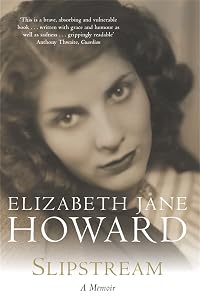
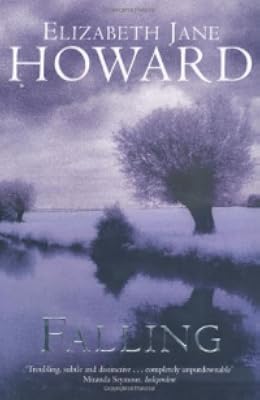
Elizabeth Jane Howard was born in London, England on March 26, 1923. She was educated by governesses at home. Her first novel, The Beautiful Visit, was published in 1950 and won the John Llewellyn Rhys prize. Her other works include the series the Cazalet Chronicles, Falling, and the autobiography Slipstream. The first two novels of the Cazalet show more Chronicles, The Light Years and Marking Time, became the BBC TV series The Cazalets in 2001. The other books in the series are Confusion, Casting Off, and All Change. She also edited several anthologies and wrote short stories, articles, television plays, film scripts and a book on food with Fay Maschler. She was made a CBE in 2000. She died on January 2, 2014 at the age of 90. (Bowker Author Biography) show less
Some Editions
Series

Belongs to Publisher Series
Le strade [Fazi] (316)
Gallimard, Folio (7279)
Work Relationships
Common Knowledge
- Canonical title
- Casting Off
- Original title
- Casting Off
- Original publication date
- 1995
- People/Characters*
- Hugh Cazalet; Edward Cazalet; Rupert Cazalet; Viola "Villy" Cazalet; Zoe Cazalet; Diana Mackintosh (show all 21); Polly Cazalet; Louise Cazalet; Clarissa "Clary" Cazalet; Rachel Cazalet; Kitty Cazalet (La Duchessa); Archie Lestrange; Margot Sidney (Sid); Raymond Castle; Christopher Castle; Jessica Castle; Nora Castle; Michael Hadleigh; Mrs Cripps; Theodore "Teddy" Cazalet; Simon Cazalet
- Important places
- Sussex, England, UK
- Related movies
- The Cazalets (2001 | IMDb)
- Dedication
- To Sybille Bedford with love and homage
- First words
- 'So I though if I stayed until the autumn, it would give you plenty of time to find someone suitable. Naturally I wouldn't want to put you out.'
- Quotations
- They went to Jepsons' [in Hastings] ... Clary was taking ages over choosing which fountain pen she was going to buy.... "They're always squeaky and hard at first," Polly said. "You know you have to use the nib to get it good.... (show all)" "I know that. But if I get a wide nib now, it will probably get too wide, but the medium one doesn't feel as though it will ever get right." ... Clary licked each nib before she dipped the pen in a bottle of ink and scribbled her name on small pieces of paper on the counter. ... "It's very important to lick new nibs before you use them," Clary was saying [to the assistant], "but I expect you tell people that. Could I try that Waterman - the maroon one - just to see?" It cost twelve and six ... Clary tried pen after pen ...Clary said, "I'll have the Medium Relief." "That'll be seven and six," he said.
- Last words
- (Click to show. Warning: May contain spoilers.)"But as you are here," she said, "it will be given, not sent."
- Blurbers
- Fitzgerald, Penelope; Jenkins, Roy; Manderson, Tim
- Original language*
- Inglese
*Some information comes from Common Knowledge in other languages. Click "Edit" for more information.
Classifications
Statistics
- Members
- 752
- Popularity
- 37,617
- Reviews
- 24
- Rating
- (4.10)
- Languages
- 8 — Danish, Dutch, English, French, German, Italian, Spanish, Swedish
- Media
- Paper, Audiobook, Ebook
- ISBNs
- 42
- ASINs
- 10