On This Page
Description
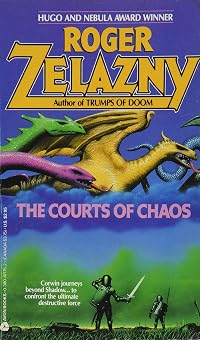
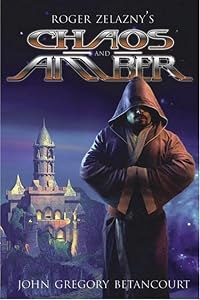
In the conclusion of the first cycle in the Amber series, Corwin finds his world dissolving slowly around him. His father, Oberon, who is disguised as Corwin's friend Ganelon, steals the Jewel of Judgment and tries to remake the Pattern which Brand has marred. When Oberon's efforts fail, Corwin is the only surviving son of Amber with the power to battle Brand.Tags
Recommendations























Member Reviews
And like all good things, Zelazny's brilliant Chronicles of Amber have ended. Well, the Merlin Cycle is always available, but that doesn't concern the journey of Corwin so I consider it largely unconnected. I've come to love the character of Corwin over the last 5 books like few I've ever come across and am truly sad to see it go.
The book begins with the return of Oberon, and the discovery that he had manipulated the entire situation since Corwin first entered into the Keep of Ganelon. Furthermore we soon discover that Dara was a party to his plans, and that the entire meeting of the two was contrived by Oberon in the hopes of setting them as King and Queen of Amber.
From there the forces of Amber make their stand against the Black Road show more and the forces of Chaos, and Corwin takes a trip through the madness contained in the shadows of Chaos where the normal rules do not apply, and all lines are blurred.
This book is largely Corwin and features comparatively little of the host of other characters when compared to the previous four volumes, however I think this book may be my favourite of the lot. The ending is bittersweet, and I'm not sure yet how I feel about it, but nevertheless I feel it is a fitting end for a superb series. show less
The book begins with the return of Oberon, and the discovery that he had manipulated the entire situation since Corwin first entered into the Keep of Ganelon. Furthermore we soon discover that Dara was a party to his plans, and that the entire meeting of the two was contrived by Oberon in the hopes of setting them as King and Queen of Amber.
From there the forces of Amber make their stand against the Black Road show more and the forces of Chaos, and Corwin takes a trip through the madness contained in the shadows of Chaos where the normal rules do not apply, and all lines are blurred.
This book is largely Corwin and features comparatively little of the host of other characters when compared to the previous four volumes, however I think this book may be my favourite of the lot. The ending is bittersweet, and I'm not sure yet how I feel about it, but nevertheless I feel it is a fitting end for a superb series. show less
I recently promised myself that I would reread some of the books I loved as a high-school kid to see if they still stood up. These do. They aren’t Great Novels, they aren’t High and Serious Literature, but they will remind you of the times you waited to get home from school to read something that you wanted to read and that, for the life of you, you couldn’t understand why you couldn’t read in school. I distinctly remember plowing through A Man for All Seasons at full speed, just so I could say, “Done!” and pick up The Courts of Chaos.
Now, of course, I love Robert Bolt’s play (and even have a copy of Holbein’s Sir Thomas More on the wall behind me where I write this), but the Amber books did not prove themselves show more unworthy of my nostalgia.
Book five is like its predecessors. Three characters in a room talk about the characters not in the room (which, to be fair, makes for a number of good surprises). Corwin’s brain proves able to keep six or seven plots straight (which, to be fair, might be easier for him than the reader since he was at the center of many of them). Details from previous books are mentioned as if the reader will have complete recall of them (which, to be fair, he often does, thanks to Zelazny’s pacing). And the reader gets a few long passages of Corwin on his hellrides (which, to be fair, aren’t any good: the imagery is too difficult to follow and Zelazny uses . . . ellipses . . . to suggest that the Shadow is . . . changing). Of course, if you’ve read the first four books, no review on this Earth or any Shadow of it is going to prevent you from reading number five. So walk the Pattern and find out what happens to Corwin, Random, Fiona, Brand, and the rest of them. The ending is not a letdown and Zelazny pushes the idea of order vs. chaos as far as he can—which is pretty darn far. show less
Now, of course, I love Robert Bolt’s play (and even have a copy of Holbein’s Sir Thomas More on the wall behind me where I write this), but the Amber books did not prove themselves show more unworthy of my nostalgia.
Book five is like its predecessors. Three characters in a room talk about the characters not in the room (which, to be fair, makes for a number of good surprises). Corwin’s brain proves able to keep six or seven plots straight (which, to be fair, might be easier for him than the reader since he was at the center of many of them). Details from previous books are mentioned as if the reader will have complete recall of them (which, to be fair, he often does, thanks to Zelazny’s pacing). And the reader gets a few long passages of Corwin on his hellrides (which, to be fair, aren’t any good: the imagery is too difficult to follow and Zelazny uses . . . ellipses . . . to suggest that the Shadow is . . . changing). Of course, if you’ve read the first four books, no review on this Earth or any Shadow of it is going to prevent you from reading number five. So walk the Pattern and find out what happens to Corwin, Random, Fiona, Brand, and the rest of them. The ending is not a letdown and Zelazny pushes the idea of order vs. chaos as far as he can—which is pretty darn far. show less
The last book in the first Amber Chronicles, which mostly has the battle between Amber (good) and Chaos (evil). Corwin tries his best to save Amber as it is and fight back both the Courts of Chaos and his siblings who want other things (trying not to spoil the story here...). It is a fight that he seems certain to lose. It is a pretty chaotic conclusion to the first chronicles (Zelazny later wrote more Amber works) that seems to end with most story lines concluded. All in all I enjoyed the Chronicles of Amber, but they aren't my favorite fantasy. I enjoyed the world that Zelazny built, both the idea of Amber and its Shadows, and the Pattern and the power it holds. In the end it felt to me like Zelazny tried to put a long list of things show more in the story, making it packed with fast paced action where I would have liked him to spend some time on things. Maybe I am spoiled/ruined by series that run 10 books and 15.000 pages (I am looking at you, Steven Erikson!). Mainly because the world-building fascinated me so much I wished Zelazny had spent more time (with me) in these books. Three out of five stars for this last book and the series. show less
Bleagh. So boring. Pacing problems. You simply can't bring yourself to care about anyone. One soon learns that the forces of Chaos threaten to destroy all order in the multiverse... and one yawns. The only reason I plowed through it is that I'd already read the other four, and I wanted to learn how it all came out. The answer is: In a rather pedestrain way.
Oh yeah, also: The implicit promise of a horrible conflict with Dara, from the end of the second book, is never fulfilled. Let me be clear here: It never comes within a parsec of being fulfilled. Zelazny doesn't even try to fulfill it; he just drops it. They say a few words to each other after the climatic battle, then she goes her merry way.
Don't bother.
Oh yeah, also: The implicit promise of a horrible conflict with Dara, from the end of the second book, is never fulfilled. Let me be clear here: It never comes within a parsec of being fulfilled. Zelazny doesn't even try to fulfill it; he just drops it. They say a few words to each other after the climatic battle, then she goes her merry way.
Don't bother.
It all works. Zelazny captures Corwin's exhaustion, his change in perspective, etc. Thee are a lot of loose ends to tie up and the book does so while opening possibilities for books to come in the series. Best part is Corwin etching the new Pattern and the horrendous cost in doing so.
With this slender volume, the five book first Amber series comes to a close. Oberon, the king, and father of the narrator, Corwin, and his siblings, plans to repair the damaged pattern on which Amber and the universe of parallel worlds is based, aware that he is likely to die in the process. Corwin declines to take the throne after him, having matured over the series and found that, without the rivalry with his now deceased brother Eric, the attractions of ruling have paled. The backup plan if Oberon fails is to send Corwin the Jewel of Judgement. Corwin has to embark on yet another ride through Shadow, to stay ahead of the storm that represents the unraveling of all reality apart from the Courts of Chaos, the enemy with which brother show more Brand has conspired. And Brand is doing his best to attack Corwin and get the Jewel.
As ever, it's an interesting read and if the prospect of yet another Hellride through a changing landscape is rather déjà vu, this one has some elements from northern myth, with a form of Yggdrasil, the world tree, and a bird inspired by the god Odin's raven Hunin (Thought) who has a philosophical bent of a rather nihilistic nature. The main issue I found, as in other volumes, was telling some of Corwin's siblings apart - for me, few of them have any real characterisation, for example, I struggled to remember that Flora was the sister Corwin went to when he started to regain his memory in book 1.
The book builds to the final confrontation with Chaos and Brand, and has a slightly anti climactic ending, but the questions posed earlier in the series are answered, and the scene is set for the next five volumes, which centre around Corwin's son. An undemanding read though it was nice to see it through to the conclusion to find out what happened. show less
As ever, it's an interesting read and if the prospect of yet another Hellride through a changing landscape is rather déjà vu, this one has some elements from northern myth, with a form of Yggdrasil, the world tree, and a bird inspired by the god Odin's raven Hunin (Thought) who has a philosophical bent of a rather nihilistic nature. The main issue I found, as in other volumes, was telling some of Corwin's siblings apart - for me, few of them have any real characterisation, for example, I struggled to remember that Flora was the sister Corwin went to when he started to regain his memory in book 1.
The book builds to the final confrontation with Chaos and Brand, and has a slightly anti climactic ending, but the questions posed earlier in the series are answered, and the scene is set for the next five volumes, which centre around Corwin's son. An undemanding read though it was nice to see it through to the conclusion to find out what happened. show less
I'm relieved. No more misdirections and lies. No more plots and counter-plots. Just a straight up end of the world scenario with brother against brother to settle the matter once and for all. No more "that's not what really happened". No more "I'm not quite who you think I am". No more trickery. Good.
Other goods included the bird psychology, the dwarven party, the writing of history, the funeral procession and the death of sister. I was pleased with Corwin - his maturation, his acceptance of duty and his reluctance to accept the crown. Although, I also sensed that he was disappointed that it didn't come to him in the end. Even a spoiled rich kid can eventually make a true man of himself.
All in all, I was quite pleased with the show more conclusion. I'm still not a fan of the hellrides, but I can just skip them. show less
Other goods included the bird psychology, the dwarven party, the writing of history, the funeral procession and the death of sister. I was pleased with Corwin - his maturation, his acceptance of duty and his reluctance to accept the crown. Although, I also sensed that he was disappointed that it didn't come to him in the end. Even a spoiled rich kid can eventually make a true man of himself.
All in all, I was quite pleased with the show more conclusion. I'm still not a fan of the hellrides, but I can just skip them. show less
Members
- Recently Added By
Lists

NPRs your picks: top 100 Sci-Fi/Fantasy books
297 works; 80 members

Books I've Read More Than Once
602 works; 49 members

Nonhuman Protagonists
243 works; 35 members

Speculative Fiction to Read
706 works; 32 members

Modern Arthurian Fiction
237 works; 15 members

Books Read in 2021
5,361 works; 114 members

Books Read in 2003
261 works; 7 members

um actually
76 works; 3 members

Books Read in 2013
1,630 works; 51 members

Books Read in 2024
4,727 works; 128 members

Books read in 2025
9 works; 1 member
Author Information

338+ Works 72,890 Members
Roger Zelazny was born in Euclid, Ohio on May 13, 1937. After receiving a B.A. from Case Western Reserve University and a M.A. from Columbia University, he began publishing science fiction stories in 1962. He received six Hugo awards, three Nebula awards including one in 1966 for And Call Me Conrad and 2 Locus awards. He died of kidney failure show more secondary to colorectal cancer on June 14, 1995. (Bowker Author Biography) show less
Some Editions
Awards and Honors
Awards
Series


Belongs to Publisher Series
Work Relationships
Is contained in
Common Knowledge
- Canonical title
- The Courts of Chaos
- Original title
- The Courts of Chaos
- Original publication date
- 1978
- People/Characters
- Corwin; Oberon
- Important places
- Amber; Shadow; Chaos
- Dedication
- To Carl Yoke, First Reader—
From Lucetania to Euclid Park,
Sarcobatus Flats to Cygnus X-1—
May you live another ten thousand years.
May your lair be safe from trendeltiles.
May the diminutive deities - First words
- Amber: high and bright atop Kolvir in the middle of the day.
- Last words
- (Click to show. Warning: May contain spoilers.)Good-bye and hello, as always.
- Original language
- English
- Canonical DDC/MDS
- 813.087661
Classifications
- Genres
- Fiction and Literature, Fantasy
- DDC/MDS
- 813.087661 — Literature & rhetoric American literature in English American fiction in English By type Genre fiction Adventure fiction Speculative fiction Fantasy High fantasy
- LCC
- PS3576 .E44 — Language and Literature American literature American literature Individual authors 1961-
- BISAC
Statistics
- Members
- 2,145
- Popularity
- 9,536
- Reviews
- 46
- Rating
- (3.95)
- Languages
- 15 — Chinese, Czech, Dutch, English, Estonian, French, German, Italian, Lithuanian, Polish, Portuguese, Romanian, Spanish, Swedish, Turkish
- Media
- Paper, Audiobook, Ebook
- ISBNs
- 39
- UPCs
- 1
- ASINs
- 18