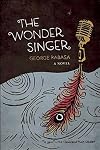
The Wonder Singer
by George Rabasa
On This Page
Description
The Wonder Singer is an operatic literary caper about one young writer's manic ambition. The ghostwriter's best chance at fame almost disappears when his Diva dies suddenly in her bath. His solution is to steal the tapes, liberate the Diva's aging husband, and write the autobiography on the run.Tags
Recommendations
























Member Reviews
The story revolves around Mark Lockwood, a writer who has grown to view writing as a means of paying the bills rather than an art. Well, rather - the story half revolves around him. More accurately, it revolves around the famous opera diva whom he has been visiting, gathering notes on, in order to ghostwrite her biography. Her death, however, pushes her into the spotlight once again, and Lockwood's agent attempts to take his notes to give to a more famous author, but Lockwood has become so intrigued by Merce Casals, that he absconds with the notes and locks himself in to finish her story himself.
The book alternates between Lockwood's current struggles and Merce Casals's reminiscences, which leads to the first problem, in that apparently show more the author felt the need to help readers differentiate by writing Lockwood's portions in present tense. I freely admit that I am a snob about such things, however; if you feel that this would not bother you, by all means, read on.
The problem is that Merce Casals is perfect. Rabasa creates a figure who should be arrogant (she listens to nothing but her own famous arias), but comes across as humble, precocious, poetic, and wistful. She is every bit as changeable and charming and larger-than-life as one would expect a famous diva to be. However, this is sort of the problem with the book - Lockwood, who dominates most of the plot, can never live up to her presence. The portions of Casals recollecting the Spanish Civil War, and later, her complicated love for one man she grows to despise as much as she loves, are far more interesting than the somewhat pathetic figure Lockwood cuts.
Interspersed with the dreamy, amused narrative of the diva, we have Lockwood's own cringe-worthy attempts at seducing a woman who is not his wife, disturbing ramblings when attempting to talk with his wife, and ignominious moments such as when a dog gets familiar with his leg at a bar. The ending never really shows that Lockwood has learned anything from Casals's life - instead, it takes another character to tell him what he should have garnered from so many intimate moments with his subject, recounting her beautiful life.
Finally, there are nominally three other important characters, but none seem to contribute anything meaningful and are gone almost as soon as they appear, with little fanfare as they leave.
All in all, it would have been more satisfying to have read a more in-depth fictional account of Casals's life and left poor Lockwood out of it entirely. show less
The book alternates between Lockwood's current struggles and Merce Casals's reminiscences, which leads to the first problem, in that apparently show more the author felt the need to help readers differentiate by writing Lockwood's portions in present tense. I freely admit that I am a snob about such things, however; if you feel that this would not bother you, by all means, read on.
The problem is that Merce Casals is perfect. Rabasa creates a figure who should be arrogant (she listens to nothing but her own famous arias), but comes across as humble, precocious, poetic, and wistful. She is every bit as changeable and charming and larger-than-life as one would expect a famous diva to be. However, this is sort of the problem with the book - Lockwood, who dominates most of the plot, can never live up to her presence. The portions of Casals recollecting the Spanish Civil War, and later, her complicated love for one man she grows to despise as much as she loves, are far more interesting than the somewhat pathetic figure Lockwood cuts.
Interspersed with the dreamy, amused narrative of the diva, we have Lockwood's own cringe-worthy attempts at seducing a woman who is not his wife, disturbing ramblings when attempting to talk with his wife, and ignominious moments such as when a dog gets familiar with his leg at a bar. The ending never really shows that Lockwood has learned anything from Casals's life - instead, it takes another character to tell him what he should have garnered from so many intimate moments with his subject, recounting her beautiful life.
Finally, there are nominally three other important characters, but none seem to contribute anything meaningful and are gone almost as soon as they appear, with little fanfare as they leave.
All in all, it would have been more satisfying to have read a more in-depth fictional account of Casals's life and left poor Lockwood out of it entirely. show less
Mercè Casals is an international opera star and the subject of The Wonder Singer by George Rabasa, but she is dead before we have the chance to meet her. Instead the reader follows the efforts of Mark Lockwood, ghostwriter for Señora Casals, as he tries to piece together hundreds of hours of interviews for the Señora’s autobiography. It’s not as easy as that, however, as Lockwood’s agent is desperate for the interview tapes so he can hire a more well-known -- yet less knowledgeable -- author to take over the life story of La Casals. His only help in trying to keep the new writer from running everything is limited to the Señora’s former nurse [and object of Lockwood’s affection] and her biggest fan – a six-foot-four show more female impersonator who shows up to Señora Casals’ funeral in an exact replica of a costume from a show performed thirty-six years earlier. Dedicated to telling the story as Mercè Casals would have wanted it told, the three barricade themselves in Lockwood’s house as he works on his book, immersing themselves in the audio from the Señora’s life – recordings of both her performances and her interviews loop endlessly for them as Lockwood weaves the tale of the diva.
There’s a clever aspect to this book – chapters of the story Lockwood is writing are interspersed with his adventures in trying to get them written, and so the reader has the opportunity to ‘meet’ Señora Casals and understand Lockwood’s motivation for making sure her story is told properly. George Rabasa does such a wonderful job of bringing Señora Casals to life – I regret that she is a fictional character, for I would have loved to hear her sing, or to lear more about her. One chapter from the ‘autobiography’ stuck with me, as it detailed a dark period in the Señora’s life. She was infatuated with the prince of a small, defunct European country, and to please him she changed everything about herself for him: her hair, her makeup, her wardrobe, her body. She sang only what and when he wanted her to, and she became a shell of her former self. After five years of starving herself and canceling her recitals and rarely singing in public, she snaps and leaves the prince, and returns to her former glory when she is out from under his thumb. And from that point on, she lives her life as she wishes to live it, not according to anyone else's standards.
I have to say, this is such a great book. Lockwood’s character is a little irritating, but I think he was supposed to be, for by the end of the novel he’s being transformed by his efforts in telling the Señora’s story. The Señora herself is such a strong woman, full of strength and joy, even after her death, even as someone else is telling her story. show less
There’s a clever aspect to this book – chapters of the story Lockwood is writing are interspersed with his adventures in trying to get them written, and so the reader has the opportunity to ‘meet’ Señora Casals and understand Lockwood’s motivation for making sure her story is told properly. George Rabasa does such a wonderful job of bringing Señora Casals to life – I regret that she is a fictional character, for I would have loved to hear her sing, or to lear more about her. One chapter from the ‘autobiography’ stuck with me, as it detailed a dark period in the Señora’s life. She was infatuated with the prince of a small, defunct European country, and to please him she changed everything about herself for him: her hair, her makeup, her wardrobe, her body. She sang only what and when he wanted her to, and she became a shell of her former self. After five years of starving herself and canceling her recitals and rarely singing in public, she snaps and leaves the prince, and returns to her former glory when she is out from under his thumb. And from that point on, she lives her life as she wishes to live it, not according to anyone else's standards.
I have to say, this is such a great book. Lockwood’s character is a little irritating, but I think he was supposed to be, for by the end of the novel he’s being transformed by his efforts in telling the Señora’s story. The Señora herself is such a strong woman, full of strength and joy, even after her death, even as someone else is telling her story. show less
Mark Lockwood, an author popularly known for his writings on how to talk to teens about a number of real life issues, has been assigned the task of acting as ghostwriter to pen and publish the biography of opera diva Mercè Casals. Hours are spent listening to her talk of her life, which is daunting in and of itself, until one day Senorita Casals dies in the bathtub with the project unfinished. With a high profile book in the works, Mark’s agent Hollywood Hank now wants to assign the book to a more well-known author. Only Mark is committed to the project and not willing to give up his hours of tapes despite their harassment and snooping. As Mark sees it, the book is his to write, the words entrusted to him by Senorita Casals and no show more one else. At the risk of his health, his sanity, and his marriage, Mark must write this book. It is a race against time to finish his book before Hollywood Hank and his new star author finish theirs.
With the help of Senorita Casals’ former nurse Perla, drag Queen and Casals’ number one fan Orson, and Senorita Casals’ husband Nolan, Mark protects his tapes and writes his book, becoming increasingly invested in not only the book but the life of the diva herself. The connection he has with Senorita Casals and her words is an intimate one. It almost seemed to me as if he were falling in a sort of platonic love with Mercè, or becoming obsessed with her life and her words. Maybe the obsession was in the book and his love for her made him love her story, but he definitely connected with the book on a very personal level.
The book weaves two stories in one: Mark’s journey through his book writing and Senorita Casals personal story. Injected here and there are ‘snippets’ from the autobiographical work by Mark. We learn of Mercè’s childhood, her abandonment by her father, her life as a rising star, her marriage, her marriage troubles, and all of her career difficulties. Through these snippets, we are better able to understand Mercè and her complicated life. She becomes less a diva and more a real person who experiences pain and conflict. It is often times hard to see ‘privileged’ people as anything but glitz and glamour, but such is far from the truth in the case of Mercè. The strength that Mercè displays throughout her life is truly impressive and inspiring.
Of course, I wish that Mark had developed more as a character-- rather, grew in his own maturity, not developed in a writing sense. He never really seems to take responsibility for what he is doing wrong to other people, namely his wife. It was sad to me to see that though he wishes to resolve this, he never really expresses regret until the end. Throughout the book, as he apologizes to his wife and says he loves her, he is still lusting after the nurse without the slightest hint of shame. I have to say, I quite disliked him for this, but his character was human enough in every regard that I found myself also sympathizing with him. I think this is a testament to Rabasa’s writing style and talent that he can make a character that anyone can sympathize with and understand even when he does things that are upsetting.
My favorite parts were the parts of Mercè Casals life. I wish that there really was a biography about her out! She told a lot of very interesting and emotional stories. Mr. Rabasa created a fascinating character when he created her. I found myself enamored with her and excusing everything she did wrong, which I guess makes me a lot like Mark.
The entire story is told in a smooth, sophisticated tone. Rabasa is an impeccable writer with a talent for making characters that are believable and complicated. The all too human experiences endured by the characters give the story a sublime and impossible to escape from charm. Arias rise and fall, suffused with a catalog of emotions, which capture the heart. This is, of course, the life of Mercè Casals-- a grand aria told in spoken language. show less
With the help of Senorita Casals’ former nurse Perla, drag Queen and Casals’ number one fan Orson, and Senorita Casals’ husband Nolan, Mark protects his tapes and writes his book, becoming increasingly invested in not only the book but the life of the diva herself. The connection he has with Senorita Casals and her words is an intimate one. It almost seemed to me as if he were falling in a sort of platonic love with Mercè, or becoming obsessed with her life and her words. Maybe the obsession was in the book and his love for her made him love her story, but he definitely connected with the book on a very personal level.
The book weaves two stories in one: Mark’s journey through his book writing and Senorita Casals personal story. Injected here and there are ‘snippets’ from the autobiographical work by Mark. We learn of Mercè’s childhood, her abandonment by her father, her life as a rising star, her marriage, her marriage troubles, and all of her career difficulties. Through these snippets, we are better able to understand Mercè and her complicated life. She becomes less a diva and more a real person who experiences pain and conflict. It is often times hard to see ‘privileged’ people as anything but glitz and glamour, but such is far from the truth in the case of Mercè. The strength that Mercè displays throughout her life is truly impressive and inspiring.
Of course, I wish that Mark had developed more as a character-- rather, grew in his own maturity, not developed in a writing sense. He never really seems to take responsibility for what he is doing wrong to other people, namely his wife. It was sad to me to see that though he wishes to resolve this, he never really expresses regret until the end. Throughout the book, as he apologizes to his wife and says he loves her, he is still lusting after the nurse without the slightest hint of shame. I have to say, I quite disliked him for this, but his character was human enough in every regard that I found myself also sympathizing with him. I think this is a testament to Rabasa’s writing style and talent that he can make a character that anyone can sympathize with and understand even when he does things that are upsetting.
My favorite parts were the parts of Mercè Casals life. I wish that there really was a biography about her out! She told a lot of very interesting and emotional stories. Mr. Rabasa created a fascinating character when he created her. I found myself enamored with her and excusing everything she did wrong, which I guess makes me a lot like Mark.
The entire story is told in a smooth, sophisticated tone. Rabasa is an impeccable writer with a talent for making characters that are believable and complicated. The all too human experiences endured by the characters give the story a sublime and impossible to escape from charm. Arias rise and fall, suffused with a catalog of emotions, which capture the heart. This is, of course, the life of Mercè Casals-- a grand aria told in spoken language. show less
George Rabasa's The Wonder Singer easily captures the imagination through deftly orchestrated prose and detailed description. The Wonder Singer is the story of famed opera singer Merce Casals, and her story as told to her ghostwriter Mark Lockwood. Through alternating chapters between the biography of Merce Casals and Mark Lockwood's musings and reviews of his interview tapes with Casals, her tragic and dramatic story unfolds like Aida or many of the other great operas she sang.
"There are moments when the order of life collapses in midbreath, when a missed heartbeat brings on an earthquake. At such a moment, this story takes an unexpected turn." (Page 1 of hardcover)
How can readers ignore the first, foreboding line of this novel? The show more Wonder Singer is more than a story of a famed opera singer, but the story of a ghostwriter who blossoms into his own when faced with giving up his dream job or plunging into the unknown. Lockwood teams up with the Casals' former caretaker Perla, who Lockwood fantasizes about having a torrid affair with, and Casals' self-proclaimed number one fan Orson La Prima, who dresses in drag to impersonate his favorite opera star. They are going to write Casals' story and celebrate her life against the wishes of her agent, Hollywood Hank.
"He [Nolan Keefe] had delicate handwriting, like a girl's, everything nicely rounded, the capital M done with a flourish. Every time he wrote out my name he seemed to be celebrating it. I [Merce] would read my name and see myself reflected in his consciousness. Sometimes he would write my name very small and I would sense he was saying it in a whisper, for my ears alone. Occasionally merce would be spelled out in uppercase, and it sounded in my mind like he was shouting it from the rooftop of the tallest building in New York. Once he even wrote the letters like notes in a pentagram, so that I could hear him singing." (Page 118 of hardcover)
Rabasa's prose is lyrical, enchanting, and absorbing, drawing readers into the vivid scenes full of emotion. The Wonder Singer is a character-driven novel examining the impact of early abandonment by a father on a gifted, young singer, her triumph as an opera star, and the drive and fear writers feel when they are faced with a project they would do almost anything to complete even if they feel outmatched and inexperienced.
"'Show me one false line I've written and I will eat the page.'" (Page 165 of hardcover) show less
"There are moments when the order of life collapses in midbreath, when a missed heartbeat brings on an earthquake. At such a moment, this story takes an unexpected turn." (Page 1 of hardcover)
How can readers ignore the first, foreboding line of this novel? The show more Wonder Singer is more than a story of a famed opera singer, but the story of a ghostwriter who blossoms into his own when faced with giving up his dream job or plunging into the unknown. Lockwood teams up with the Casals' former caretaker Perla, who Lockwood fantasizes about having a torrid affair with, and Casals' self-proclaimed number one fan Orson La Prima, who dresses in drag to impersonate his favorite opera star. They are going to write Casals' story and celebrate her life against the wishes of her agent, Hollywood Hank.
"He [Nolan Keefe] had delicate handwriting, like a girl's, everything nicely rounded, the capital M done with a flourish. Every time he wrote out my name he seemed to be celebrating it. I [Merce] would read my name and see myself reflected in his consciousness. Sometimes he would write my name very small and I would sense he was saying it in a whisper, for my ears alone. Occasionally merce would be spelled out in uppercase, and it sounded in my mind like he was shouting it from the rooftop of the tallest building in New York. Once he even wrote the letters like notes in a pentagram, so that I could hear him singing." (Page 118 of hardcover)
Rabasa's prose is lyrical, enchanting, and absorbing, drawing readers into the vivid scenes full of emotion. The Wonder Singer is a character-driven novel examining the impact of early abandonment by a father on a gifted, young singer, her triumph as an opera star, and the drive and fear writers feel when they are faced with a project they would do almost anything to complete even if they feel outmatched and inexperienced.
"'Show me one false line I've written and I will eat the page.'" (Page 165 of hardcover) show less
Mark Lockwood is a hack. He’s a writer without pretension, happy to make a living. But now he’s somehow landed the writing job of all time—ghostwriter of the autobiography of legendary opera diva Merce Casals. Suddenly he has a real investment in his work.
The story of Senora Casals life and career is a major thread throughout the novel. As she relays the triumphs and tragedies of her life, Mark develops a genuine affection for the sometimes difficult lady. And, bored in his marriage, he holds an affection of a different sort for her attractive nurse, Perla. All is going well with the project until La Casals up and dies on them.
Suddenly, her biography is a hot property. Lockwood’s manager wants to reassign the book to a more high show more profile biographer, and he wants Lockwood to surrender the recordings he and Casals made together. It is at this point that the novel veers off into what might be considered farcical territory, with an oversized drag queen added to the troupe of biographers on the run.
The story is interesting on multiple levels—first, simply for the grand operatic background. And George Rabasa has created a memorable tribe of characters that stick with the reader for some time. However, it was here that Rabasa and I ran into trouble. I continually got caught up in the action of The Wonder Singer, and time and time again it became obvious to me that the author was writing a novel about character, not plot. He hammered it home: character, not plot. And if you read the novel with that in mind, you’ll be satisfied. Silly thing that I am, I kept getting distracted by the plot, which led to a somewhat unsatisfying conclusion. show less
The story of Senora Casals life and career is a major thread throughout the novel. As she relays the triumphs and tragedies of her life, Mark develops a genuine affection for the sometimes difficult lady. And, bored in his marriage, he holds an affection of a different sort for her attractive nurse, Perla. All is going well with the project until La Casals up and dies on them.
Suddenly, her biography is a hot property. Lockwood’s manager wants to reassign the book to a more high show more profile biographer, and he wants Lockwood to surrender the recordings he and Casals made together. It is at this point that the novel veers off into what might be considered farcical territory, with an oversized drag queen added to the troupe of biographers on the run.
The story is interesting on multiple levels—first, simply for the grand operatic background. And George Rabasa has created a memorable tribe of characters that stick with the reader for some time. However, it was here that Rabasa and I ran into trouble. I continually got caught up in the action of The Wonder Singer, and time and time again it became obvious to me that the author was writing a novel about character, not plot. He hammered it home: character, not plot. And if you read the novel with that in mind, you’ll be satisfied. Silly thing that I am, I kept getting distracted by the plot, which led to a somewhat unsatisfying conclusion. show less
 This review was written for LibraryThing Early Reviewers.
The Wonder Singer is about life, and the things that make a life story worth telling: music, love, wisdom, and war. Mercé Casals's life, though fictional, makes for a ghost-written autobiography worthy of your time. The story of its writing isn't half bad, either.
I really enjoyed reading this book. There are passages that have remained very prominent in my mind, that I continue to think about. The book was definitely memorable, and mostly very well written. Sometimes the story of the opera singer's life and the story of her ghostwriter, Mark Lockwood, and his efforts to get it on paper were not equal in the interest they held for me, and I spent a lot of time waiting to get from one to the other. All in all, though, the story was a show more great tribute to the art of making beautiful music and the art of hack writing. show less
I really enjoyed reading this book. There are passages that have remained very prominent in my mind, that I continue to think about. The book was definitely memorable, and mostly very well written. Sometimes the story of the opera singer's life and the story of her ghostwriter, Mark Lockwood, and his efforts to get it on paper were not equal in the interest they held for me, and I spent a lot of time waiting to get from one to the other. All in all, though, the story was a show more great tribute to the art of making beautiful music and the art of hack writing. show less
This review was written for LibraryThing Early Reviewers.Mark Lockwood has been entrusted with the secrets of Merce Casals’ life as her biographer, and that is a job he doesn’t take lightly. He has spent months immersing himself in her voice, teasing out her secrets, and preparing to share her story in her words with the world. Then Merce dies and Lockwood’s agent wants to attach a bigger writing name to the project. Lockwood is appalled and rejects the idea, going into hiding with his tapes and becoming determined to write the book as it should be written, never mind what he loses for it.
There are definitely two sides to this story. There is Merce’s story and there is Lockwood’s story. I loved Merce’s story. I always wanted to get back to her words, her voice. Her life is show more fascinating, from abandonment at a very young age, to a war, to a husband and fantastic opera career, and ending up living a quiet life with a maid and a man eager for her every word. I wanted to know everything about her, and I couldn’t say why; maybe because not only is her story fascinating, but Lockwood is similarly obsessed, and that means there is something extraordinary about this lady. Her life is a mesh of cultures and experiences and I could not get enough.
I felt a little less interested in Lockwood’s life. Personally, since I really liked Merce’s story, I could understand why he would have been obsessed, but I didn’t think it was quite worth what he put into it. Moreover, I didn’t get his interest in the maid and I didn’t like the “party atmosphere” that was created towards the end of the book while he was writing. Honestly, I think that’s my own preference. I’d hate to have that going on in my house even if I was absorbed in writing the greatest biography of the century. I also don’t think it’s acceptable to hit on another woman when you still love your wife.
That’s not to say that I didn’t like this part. If anything, Lockwood’s fascination was really curious. It was like a psychological peek into his head every time he spoke to his wife. His frantic efforts to make sure that the big name author and his agent didn’t get the tapes were quite amusing. I liked most that it wasn’t about the money; Lockwood wanted to do justice to Merce and her life.
I would recommend this book, particularly for Merce’s sections. I think someone who had more life experience and knew what marriage was like would probably appreciate Lockwood’s half more than I did. Still, I very much enjoyed reading this, and would definitely pick up another book by George Rabasa.
http://chikune.com/blog/?p=894 show less
There are definitely two sides to this story. There is Merce’s story and there is Lockwood’s story. I loved Merce’s story. I always wanted to get back to her words, her voice. Her life is show more fascinating, from abandonment at a very young age, to a war, to a husband and fantastic opera career, and ending up living a quiet life with a maid and a man eager for her every word. I wanted to know everything about her, and I couldn’t say why; maybe because not only is her story fascinating, but Lockwood is similarly obsessed, and that means there is something extraordinary about this lady. Her life is a mesh of cultures and experiences and I could not get enough.
I felt a little less interested in Lockwood’s life. Personally, since I really liked Merce’s story, I could understand why he would have been obsessed, but I didn’t think it was quite worth what he put into it. Moreover, I didn’t get his interest in the maid and I didn’t like the “party atmosphere” that was created towards the end of the book while he was writing. Honestly, I think that’s my own preference. I’d hate to have that going on in my house even if I was absorbed in writing the greatest biography of the century. I also don’t think it’s acceptable to hit on another woman when you still love your wife.
That’s not to say that I didn’t like this part. If anything, Lockwood’s fascination was really curious. It was like a psychological peek into his head every time he spoke to his wife. His frantic efforts to make sure that the big name author and his agent didn’t get the tapes were quite amusing. I liked most that it wasn’t about the money; Lockwood wanted to do justice to Merce and her life.
I would recommend this book, particularly for Merce’s sections. I think someone who had more life experience and knew what marriage was like would probably appreciate Lockwood’s half more than I did. Still, I very much enjoyed reading this, and would definitely pick up another book by George Rabasa.
http://chikune.com/blog/?p=894 show less
Members
- Recently Added By
Author Information
5 Works 104 Members
Writer George Rabasa hails from San Migel Allende, Mexico but later moved to Minnesota. His short fiction writing has appeared in both Stiller's Pond and 26 Minnesota writers. Rabasa has written Glass Houses, a collection of his short stories that received the Minnesota Book Award, and Floating Kingdom: A Novel. Rabasa has also received the show more Writer's Voice Capricorn Award for Excellence in Fiction. (Bowker Author Biography) show less
Common Knowledge
- People/Characters
- Perla; Mark Lockwood; Mercè Casals; Pep Saval; Nolan Keefe; Orson La Prima
- Dedication
- For Juanita, always
- First words
- There are moments when the order of life collapses in midbreath, when a missed heartbeat brings on an earthquake.
- Last words
- (Click to show. Warning: May contain spoilers.)As he faces the open studio door, Mark Lockwood's entire body is suffused with lightness.
Classifications
Statistics
- Members
- 47
- Popularity
- 636,657
- Reviews
- 16
- Rating
- (3.30)
- Languages
- English
- Media
- Paper, Ebook
- ISBNs
- 3