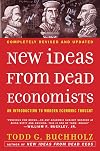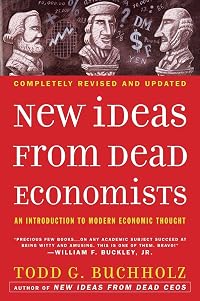
New Ideas from Dead Economists: An Introduction to Modern Economic Thought
by Todd G. Buchholz
On This Page
Description
A reexamination of the major economic theories of the past two hundred years discusses how long-dead, famous economists such as Adam Smith and others would handle today's economic problems.Tags
Recommendations

Member Reviews
I don't know too much about economics, but I want to know more, and so this book wasn't a bad place to start my economic education. Buchholz's book is written for the absolute beginner, and, while can be dry in places, the author is good at describing complicated ideas, like Ricardo's theory of comparative advantage, into language that laypeople can understand. He's also admirably even-handed, scrupulously comparing the advantages and disadvantages of every economic theory he covers and describing what each has contributes to the economic canon as it is understood today. "New Ideas from Dead Economists" covers three centuries or so of economic thinking in about three hundred pages, so it's not an in-depth analysis, but I'm sure that show more it's pointed many readers toward other, more serious works. It's not perfect: the author spent more time on the biographies of the thinkers he profiled than was strictly necessary, and he is, sadly, not as funny a writer as he seems to think he is, though I suppose that he might qualify as "funny for an economist." He's also, to his credit, a real optimist, and works hard to convince he is reader's that his subject is less dismal than it's reputed to be: he argues that economics does more than just study economic behavior, it also provides some insight into human nature and outlines the course that human progress might take. A good read, in a 100-level sort of way. show less
I learned an amazing amount from this book which will translate immediately into me teaching an amazing amount in a Jan term course on economic and financial thought in a few weeks.
Buchholz's history of economic thought is very readable with his witty humor. It definitely helps to have at least had some principles classes to completely understand the thoughts he explains, but he uses some simple explanations that are easy to follow. The history is great.
I now understand the syntheses of the economic schools more completely. My favorite line in the book is that "it is no longer possible to separate (modern, mainstream) economists into Keynesian and Monetarist camps." Both sides have learned from the other.
Buchholz pretty obviously has show more Keynesian readings (at least it was obvious to me) as he knocks a little too hard on the Monetarists and the Rational Expectations schools. But he's mostly fair (if not too simplistic) in his arguments.
This edition doesn't cover Behaviorialists or Austrians (although he mentions Hayek a few times). I assume the 2007 edition would include them and fix the typos I found.
In all, I give it 4 stars out of 5. show less
Buchholz's history of economic thought is very readable with his witty humor. It definitely helps to have at least had some principles classes to completely understand the thoughts he explains, but he uses some simple explanations that are easy to follow. The history is great.
I now understand the syntheses of the economic schools more completely. My favorite line in the book is that "it is no longer possible to separate (modern, mainstream) economists into Keynesian and Monetarist camps." Both sides have learned from the other.
Buchholz pretty obviously has show more Keynesian readings (at least it was obvious to me) as he knocks a little too hard on the Monetarists and the Rational Expectations schools. But he's mostly fair (if not too simplistic) in his arguments.
This edition doesn't cover Behaviorialists or Austrians (although he mentions Hayek a few times). I assume the 2007 edition would include them and fix the typos I found.
In all, I give it 4 stars out of 5. show less
Nice intro to economics type primer. I've never been interested much before, especially in economic history, but this did minorly motivate me. I'm also slightly less clueless now when newcasters/etc. start babbling about fiscal policies.
I wish I had had this to read before taking my first econ course, but then that was back in 1953, only 50 years after the first econ course taught in England. Now another 50 plus years have gone by. I wish I had my Oglethorpe instructor Mr Coulborn to comment on this book. A nice contrast of the econonists.
[edit]Chapter Headings
Introduction: The Plight of the Economist
The Second Coming of Adam Smith
Malthus: Prophet of Doom and Population Boom
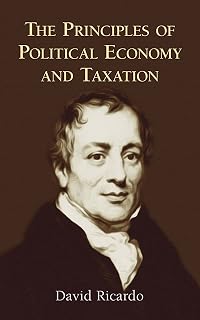
David Ricardo and the Cry for Free Trade
The Stormy Mind of John Stuart Mill
The Angry Oracle Called Karl Marx
Alfred Marshall and the Marginalist Mind
Old and New Institutionalists
Keynes: Bon Vivant as Savior
The Monetarist Battle Against Keynes
The Public Choice School: Politics as a Business
The Wild show more World of Rational Expectations
Dark Clouds, Silver Linings show less
[edit]Chapter Headings
Introduction: The Plight of the Economist
The Second Coming of Adam Smith
Malthus: Prophet of Doom and Population Boom
David Ricardo and the Cry for Free Trade
The Stormy Mind of John Stuart Mill
The Angry Oracle Called Karl Marx
Alfred Marshall and the Marginalist Mind
Old and New Institutionalists
Keynes: Bon Vivant as Savior
The Monetarist Battle Against Keynes
The Public Choice School: Politics as a Business
The Wild show more World of Rational Expectations
Dark Clouds, Silver Linings show less
Economics; History
Ratings
Members
- Recently Added By
Lists

Economics for the layperson
33 works; 9 members
Author Information

11 Works 922 Members
Todd G. Buchholz is a former White House director of economic policy, award-winning teacher at Harvard, and managing director of the Tiger hedge fund. Currently founder and managing director of the Two Oceans Fund, he is coproducer of the Tony Award-winning Jersey Boys, and has written for the New York Times, the Wall Street Journal, Forbes, and show more Reader's Digest. He is the author of New Ideas from Dead Economists, From Here to Economy, Market Shock, Bringing the Jobs Home, and the novel The Castro Gene, and he is a frequent in-demand speaker and television guest host. He lives with his wife and daughters in Solana Beach, California. show less
Some Editions
Common Knowledge
- Original publication date
- 1989; 1999 (Revised edition) (Revised edition)
- People/Characters
- Adam Smith; Thomas Malthus; David Ricardo; John Stuart Mill; Karl Marx; Alfred Marshall (show all 7); John Maynard Keynes
- First words
- Preface to the Revised Edition -- Vincent van Gogh painted twenty-eight portraits of himself in just two years!
Chapter I: Introduction: The Plight of the Economist -- It's not easy being an economist. - Blurbers
- Buckley, William F., Jr.; Friedman, Milton
Classifications
- Genres
- Economics, Nonfiction, General Nonfiction, History, Business
- DDC/MDS
- 330.092 — Society, government, & culture Economics Jobs & Careers > Biography And History Biography
- LCC
- HB76 .B83 — Social sciences Economic theory. Demography Economic theory. Demography History of economics. History of economic
- BISAC
Statistics
- Members
- 662
- Popularity
- 43,725
- Reviews
- 5
- Rating
- (3.76)
- Languages
- Czech, English, Hungarian, Korean
- Media
- Paper, Ebook
- ISBNs
- 15
- UPCs
- 1
- ASINs
- 5