
On This Page
Description
Parnassus on Wheels is a novel by Christopher Morley, published in 1917. The Parnassus of the title refers to the mountain that was the home of the Muses in Greek mythology. In the story, Roger Mifflin sells his traveling bookshop to Helen McGill, who tires of looking after Andrew, her ailing brother. Christopher Morley later continued the story of Roger Mifflin in his 1919 novel The Haunted Bookshop..
Tags
Recommendations







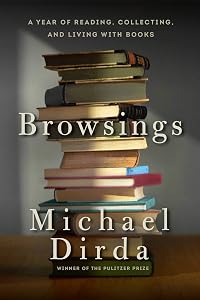
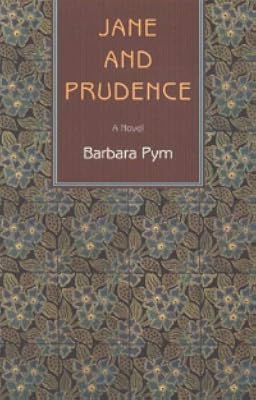
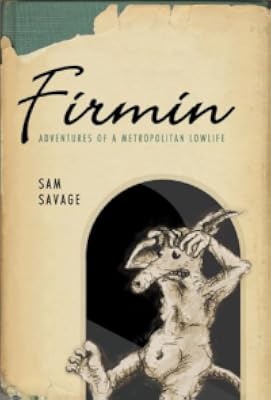
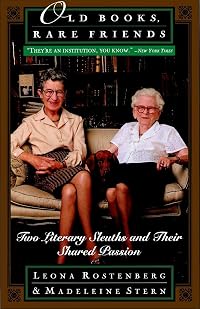




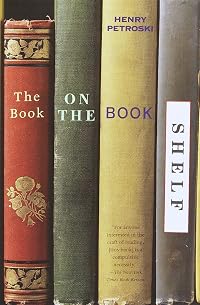
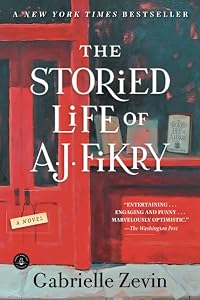
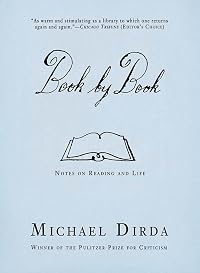

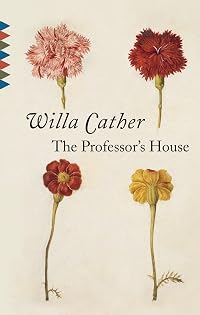
Member Recommendations
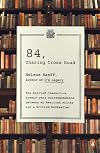
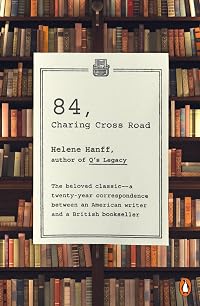
bookwoman247 If you are charmed by Parnassus, you will also be charmed by this non-fiction account of the friendship between a New York writer and the manager of a London bookshop, begun in the years just after the war and carried on for 20 - 30 years through letters.
50

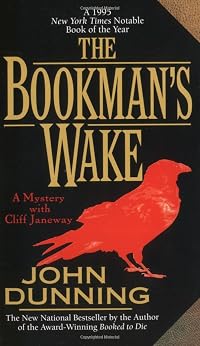
benjclark "Because Parnassus on Wheels was read aloud to him as a boy, Alan Armstrong always imagined himself as a Merchant Adventurer dealing in books...." - back blurb.
Member Reviews
Christopher Morley’s first novel, first released in 1917, hasn’t aged a bit: It’s still as funny, touching and thought-provoking as it was a century ago.
Spinster Helen McGill has spent most of her life as the unappreciated housekeeper for her impractical brother Andrew, who has made a name — and some money — writing books on the wonders of rural life in New England. When a traveling book peddler named Roger Mifflin arrives with a horse and cart housing a mobile bookstore — dubbed the Parnassus — Helen decides that, for the first time in her 39 years, she will embark on an adventure of her own.
The novel goes in a completely different direction than I expected, but I enjoyed every minute and fell completely in love with show more the feisty Helen McGill. This is my first book by Morley — a Renaissance man who wrote newspaper accounts, novels, essays, poetry and plays — but it won’t be my last.
And, if you get a chance to listen to the Audible edition, you’re in for a real treat! Nadia May truly captures Helen McGill. show less
Spinster Helen McGill has spent most of her life as the unappreciated housekeeper for her impractical brother Andrew, who has made a name — and some money — writing books on the wonders of rural life in New England. When a traveling book peddler named Roger Mifflin arrives with a horse and cart housing a mobile bookstore — dubbed the Parnassus — Helen decides that, for the first time in her 39 years, she will embark on an adventure of her own.
The novel goes in a completely different direction than I expected, but I enjoyed every minute and fell completely in love with show more the feisty Helen McGill. This is my first book by Morley — a Renaissance man who wrote newspaper accounts, novels, essays, poetry and plays — but it won’t be my last.
And, if you get a chance to listen to the Audible edition, you’re in for a real treat! Nadia May truly captures Helen McGill. show less
Parnassus on Wheels is a little book with a big message. It illustrates the power of books and reading to change lives. Spinster Helen McGill seems content to keep house and cook for her brother, Andrew. However, after Andrew becomes a successful author, Helen resents the time he spends away from home and his neglect of his responsibilities for the farm. When a traveling book salesman shows up during one of Andrew's absences, Helen impulsively buys his stock and his traveling wagon, Parnassus. She feared that Andrew would buy it if she didn't, and that he would spend even more time away from the farm. As the Professor shares the secrets of book selling with Helen, it opens her mind to unrealized possibilities for her life. Through the show more book seller, Helen learns that contentment can't be found through dedication to physical labor alone. To live a balanced life, one must nurture the mind as well as the body. This book is short enough to read in one sitting, and it's well worth the time spent. show less
A sort of sequel to David Grayson's ADVENTURES IN CONTENTMENT, which I just reviewed, this book speaks up for the woman's side of things. Although the character names are different, the sister from the Grayson book is home alone one day when a traveling bookseller arrives, looking to sell Parnassus--an ingeniously designed wagon full of books--to her brother. To prevent that happening, which will inevitably lead to her spending the next few months totally ignored while the brother becomes obsessed with the old-fangled bookmobile, she buys it herself, leaves her brother a note, and heads out on the road with its former owner, Roger Mifflin, who is going to give her a few pointers before heading to Brooklyn, where he plans to write the show more book he has conceived of in his head for so many years. Their resulting encounters and misadventures with the people they meet along the way are quite memorable, as the sister gets her revenge on her brother--who naturally sets out in pursuit. As well as righting the shortcomings of Grayson's book with regards to its treatment of the sister, Morley, through his two main characters, has a lot to say about the importance of books. And since only a book lover is likely to be digging up this rather old story (available in the public domain), a receptive audience is assured. There isn't a lot of unpredictability here--you'll see the end coming early on--and it isn't a long book, but you'll enjoy your time with these traveling companions. There is a sequel, THE HAUNTED BOOKSHOP, which I plan to read soon. show less
Helen McGill's brother has become a celebrated author, while she has been relegated to cooking all his meals and doing most of the work around their farmhouse as he spends more and more time away. Then, one day, a traveling bookseller arrives, hoping to sell his entire operation to her brother. On a whim, Helen buys it herself, and sets off on her own literary adventure.
It's a charming, good-hearted little story, one that's calculated to appeal to book-lovers, and, at novella-length, is exactly as long as it needs to be. It's also left me rather wistfully longing for a life spent wandering the countryside in a horse-drawn bookmobile.
It's a charming, good-hearted little story, one that's calculated to appeal to book-lovers, and, at novella-length, is exactly as long as it needs to be. It's also left me rather wistfully longing for a life spent wandering the countryside in a horse-drawn bookmobile.
I can’t remember the last time I enjoyed a book this much. It’s written in a loping, laconic style reminiscent of Mark Twain, yet makes a serious point: good books should not be embalmed in five-foot shelves nor be the exclusive preserve of an urban, educated elite.
That, at any rate, is the conviction of Roger Mifflin, a short, bald, red-bearded firebrand who peddles books with missionary zeal from a horse-drawn wagon on rural backroads up and down the east coast. There’s an ironic twist to this democratic vision, though: he once lectured in Camden, N. J., where he maintained that Tennyson was a greater poet than Whitman (the poet who lived in their midst).
Yet Mifflin is afflicted by loneliness and decides to sell out to the show more author he admires most, Andrew McGill, a rustic rhapsodist modeled on “David Grayson” (the pseudonym of Roy Stannard Baker). He pulls up at McGill’s farm, and to prevent this, McGill’s sister and housekeeper Helen purchases the rig herself and sets off with Mifflin on the first adventure of her life.
So what is a good book? Let Helen tell us: “A good book ought to have something simple about it. And, like Eve, it ought to come from somewhere near the third rib: there ought to be a heart beating in it. A story that’s all forehead doesn’t amount to much.” That may not be the last word on the subject, but it’s a pretty good one. show less
That, at any rate, is the conviction of Roger Mifflin, a short, bald, red-bearded firebrand who peddles books with missionary zeal from a horse-drawn wagon on rural backroads up and down the east coast. There’s an ironic twist to this democratic vision, though: he once lectured in Camden, N. J., where he maintained that Tennyson was a greater poet than Whitman (the poet who lived in their midst).
Yet Mifflin is afflicted by loneliness and decides to sell out to the show more author he admires most, Andrew McGill, a rustic rhapsodist modeled on “David Grayson” (the pseudonym of Roy Stannard Baker). He pulls up at McGill’s farm, and to prevent this, McGill’s sister and housekeeper Helen purchases the rig herself and sets off with Mifflin on the first adventure of her life.
So what is a good book? Let Helen tell us: “A good book ought to have something simple about it. And, like Eve, it ought to come from somewhere near the third rib: there ought to be a heart beating in it. A story that’s all forehead doesn’t amount to much.” That may not be the last word on the subject, but it’s a pretty good one. show less
“When you sell a man a book you don’t sell him just twelve ounces of paper and ink and glue - you sell him a whole new life. Love and friendship and humor and ships at sea by night - there’s all heaven and earth in a book, a real book I mean.”
What a delightful little humorous gem. About a traveling book-salesman, Roger Mifflin, who sells his “business” - an old horse-driven carriage with a lot of books - to 39-year-old Helen McGill - she buys it on a whim partly because she’s tired of taking care of her older brother, Andrew. Off she goes on an adventure of her life - and why not some romance along the way?
This short novel is crammed with life wisdom - mostly delivered by the wonderful Roger Mifflin.
“Oh, silly woman! show more Leave your stove, your pots and pans and chores, even if only for one day! Come out and see the sun in the sky and the river in the distance!” show less
What a delightful little humorous gem. About a traveling book-salesman, Roger Mifflin, who sells his “business” - an old horse-driven carriage with a lot of books - to 39-year-old Helen McGill - she buys it on a whim partly because she’s tired of taking care of her older brother, Andrew. Off she goes on an adventure of her life - and why not some romance along the way?
This short novel is crammed with life wisdom - mostly delivered by the wonderful Roger Mifflin.
“Oh, silly woman! show more Leave your stove, your pots and pans and chores, even if only for one day! Come out and see the sun in the sky and the river in the distance!” show less
Helen McGill is the long-suffering sister of the “Sage of Redfield”, her brother Andrew. For more than 15 years Helen has kept house for Andrew at Sabine Farm. Andrew, however, is more interested in his literary pursuits than in farming and apparently he has the knack, for his first two publications have made him famous. When Roger Mifflin arrives at the farm one morning with his horse-drawn travelling bookshop, the eponymous Parnassus on Wheels, looking to offer Andrew the chance of a lifetime, Helen is afraid that her unappreciative brother will abandon her and jump at the opportunity to purchase said Parnassus in order to go wandering about the countryside in the ongoing quest for material for his next book. Helen won’t have show more that. So she purchases the Parnassus herself and leaves her brother to his fate. Setting off with ‘Perfesser’ Mifflin, who has agreed to show her the rudiments of the trade, she is bound for adventure, literary and otherwise, or whatever else a nearly-forty, fat, housewife can find. Little does she suspect that what she will find is love.
Christopher Morley’s writing is delightfully rustic and pacey. There is a humour here that borders on but does not partake of satire. It’s more like opera buffa. And just as fun. show less
Christopher Morley’s writing is delightfully rustic and pacey. There is a humour here that borders on but does not partake of satire. It’s more like opera buffa. And just as fun. show less
Members
- Recently Added By
Lists

Best books about books
209 works; 106 members

novels in or about bookshops (or libraries)
59 works; 21 members

Books about Books
149 works; 24 members

1910s
90 works; 16 members

Books Read in 2014
2,343 works; 89 members

Five star books
1,757 works; 108 members

Best Books of the 20th Century
193 works; 5 members

Books Read in 2017
4,249 works; 130 members

Llibres que he llegit el 2012
28 works; 1 member

Books Read in 2022
5,168 works; 114 members
First Novels
373 works; 17 members

American Lit for Eng 11 Research Project
368 works; 6 members

READ in 2023
244 works; 1 member

First published in 1917
132 works; 3 members

KayStJ's to-read list
1,616 works; 11 members
Biblio-Mysteries
6 works; 4 members

Books Read in 2019
4,052 works; 110 members

Book-Themed Mysteries
21 works; 5 members

Majkia's Mystery/ Thriller TBR
86 works; 3 members

AudiblePlus 2023
12 works; 1 member

Mustich's 1000 Books to Read Before You Die: A Life Changing List
1,001 works; 19 members

Book ideas
6 works; 1 member
Best Audiobooks
240 works; 114 members

Bibliomania at Gutenberg
32 works; 1 member

Books We Discovered On LibraryThing
530 works; 130 members
Author Information

623+ Works 7,530 Members
Some Editions
Awards and Honors
Notable Lists
Series

Belongs to Publisher Series
Work Relationships
Is contained in
Common Knowledge
- Canonical title*
- La llibreria ambulant
- Original title
- Parnassus on Wheels
- Original publication date
- 1917
- People/Characters
- Roger Mifflin; Helen McGill; Andrew McGill
- Dedication
- To H. B. F. and H. F. M.
"Trusty, dusky, vivid, true" - First words
- I wonder if there isn't a lot of bunkum in higher education?
- Quotations
- "Lord!" he said, "when you sell a man a book you don't sell him just twelve ounces of paper and ink and glue—you sell him a whole new life. Love and friendship and humour and ships at sea by night—there's all heaven and e... (show all)arth in a book, a real book I mean. Jimmy! If I were the baker or the butcher or the broom huckster, people would run to the gate when I came by—just waiting for my stuff. And here I go loaded with everlasting salvation—yes, ma'am, salvation for their little, stunted minds—and it's hard to make 'em see it."
"That's what this country needs -- more books!"
"Talkers never write. They go on talking."
A good book ought to have something simple about it. And, like Eve, it ought to come from somewhere near the third rib: there ought to be a heart beating in it. A story that's all forehead doesn't amount to much. - Last words
- (Click to show. Warning: May contain spoilers.)"Not on your life!" said the Professor.
- Publisher's editor*
- Viena Edicions
- Original language*
- Anglès
*Some information comes from Common Knowledge in other languages. Click "Edit" for more information.
Classifications
Statistics
- Members
- 1,997
- Popularity
- 10,534
- Reviews
- 120
- Rating
- (3.99)
- Languages
- 9 — Catalan, Chinese, English, French, German, Galician, Hebrew, Italian, Spanish
- Media
- Paper, Audiobook, Ebook
- ISBNs
- 102
- ASINs
- 66