On This Page
Description
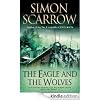
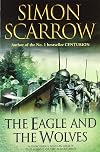
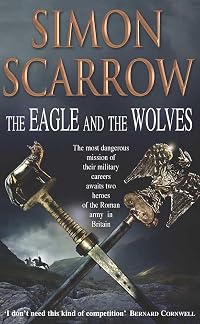
It's 44 AD, and Vespasian and the Second Legion are forging ahead in their campaign to seize the south-west of Britain. Macro and newly appointed centurion Cato are ordered to provide Verica, ruler of the Atrebatans, with an army. They must train his tribal levies into a force that can protect him and take on the increasingly ambitious raids that the enemy is launching. But despite the Atrebatans' official allegiance to Rome, open revolt is brewing, for many want to resist the Roman show more invaders. Macro and Cato must win the loyalty of the disgruntled levies - but can they succeed whilst surviving a deadly plot to destroy both them? Macro and Cato face the greatest test of their army careers as only they stand between the destiny of Rome and bloody defeat... show lessTags
Recommendations









Member Reviews
I rated the previous three books in the series with five stars, but ‘The Eagle and the Wolves’ doesn’t quite equal those other titles. I put this down to the situation, namely that while the first three novels feature numerous settings with the characters moving from here to there, in this story it’s largely set in one place. While this in no way makes it boring, it does limit the scope and variation. It also lacks a love interest for the two main characters, which spiced up the narrative in their earlier adventures.
This is still a Roman adventure, full of action and drama, but the excitement levels are down a notch from Books 1–3.
The characters are vivid. Cato, the main ‘star’, is my favourite. He’s believable and show more relatable. He’s getting to grips with being a centurion at such a young age. This new rank changes the dynamic between him and fellow centurion Macro to a small extent.
The different ranks take some getting used to if, like me, your knowledge of Roman times is sparse.
The language is contemporary, which makes the narrative flow better than if the author had used archaic turns of phrase. He also uses modern English slang, which some readers won’t like, but at least it’s consistent. I’ve read historical novels where in one scene a character says something like, ‘Keep it in your trousers,’ while in another scene someone else says, ‘Whence came he thus?’
While I admit I would’ve preferred the language to not incorporate modern slang, the characters and third-person narration are engaging enough for this not to make me feel like I’m reading a story set during any period other than the first century AD.
Perhaps my being an Englishman makes the slang words and phrases more palatable. I admit, it did annoy me when, in another historical novel, the author of that book used the odd Americanism – ‘ass’ and ‘butt’, for example – so I can understand why any non-English reader – and certainly non-British – would be distracted by the slang terms.
So, while the slang words and phrases didn’t bother me, three other elements did distract me at times. One being a trait that keeps cropping up in books I’ve read this year by different authors, namely this sort of thing: ‘more loudly’, ‘more closely’, instead of the more concise ‘louder’ and ‘closer’. Don’t use two words if one will do.
Adverbs: the ‘tell’, not ‘show’. In ‘Macro glared angrily,’ the adverb not only ‘tells’, it’s superfluous, as ‘glared’ shows his anger.
The two points above are minor criticisms. The one big gripe I have is the overuse of ‘then’ to state what happens next. This novel is riddled with ‘thens’, at times making the third-person narrative sound like a child’s voice. ‘Then’ is easy to cut when editing, and it’s not hard to drop it altogether. It ends up being a filler word, most notably when using it to start a sentence. The reader knows whatever’s happening is taking place after what’s just happened, so no need to put, ‘Then he …’ and such like.
In most cases, I deduct a star if a book is riddled with ‘thens’ or swamped with adverbs. As someone who appreciates good writing style, these things drive me to distraction. Yet, ‘The Eagle and the Wolves’ is such an engaging story it overrode these niggling points. show less
This is still a Roman adventure, full of action and drama, but the excitement levels are down a notch from Books 1–3.
The characters are vivid. Cato, the main ‘star’, is my favourite. He’s believable and show more relatable. He’s getting to grips with being a centurion at such a young age. This new rank changes the dynamic between him and fellow centurion Macro to a small extent.
The different ranks take some getting used to if, like me, your knowledge of Roman times is sparse.
The language is contemporary, which makes the narrative flow better than if the author had used archaic turns of phrase. He also uses modern English slang, which some readers won’t like, but at least it’s consistent. I’ve read historical novels where in one scene a character says something like, ‘Keep it in your trousers,’ while in another scene someone else says, ‘Whence came he thus?’
While I admit I would’ve preferred the language to not incorporate modern slang, the characters and third-person narration are engaging enough for this not to make me feel like I’m reading a story set during any period other than the first century AD.
Perhaps my being an Englishman makes the slang words and phrases more palatable. I admit, it did annoy me when, in another historical novel, the author of that book used the odd Americanism – ‘ass’ and ‘butt’, for example – so I can understand why any non-English reader – and certainly non-British – would be distracted by the slang terms.
So, while the slang words and phrases didn’t bother me, three other elements did distract me at times. One being a trait that keeps cropping up in books I’ve read this year by different authors, namely this sort of thing: ‘more loudly’, ‘more closely’, instead of the more concise ‘louder’ and ‘closer’. Don’t use two words if one will do.
Adverbs: the ‘tell’, not ‘show’. In ‘Macro glared angrily,’ the adverb not only ‘tells’, it’s superfluous, as ‘glared’ shows his anger.
The two points above are minor criticisms. The one big gripe I have is the overuse of ‘then’ to state what happens next. This novel is riddled with ‘thens’, at times making the third-person narrative sound like a child’s voice. ‘Then’ is easy to cut when editing, and it’s not hard to drop it altogether. It ends up being a filler word, most notably when using it to start a sentence. The reader knows whatever’s happening is taking place after what’s just happened, so no need to put, ‘Then he …’ and such like.
In most cases, I deduct a star if a book is riddled with ‘thens’ or swamped with adverbs. As someone who appreciates good writing style, these things drive me to distraction. Yet, ‘The Eagle and the Wolves’ is such an engaging story it overrode these niggling points. show less
After reading the previous books in this series I have complained a little about the lack of action in the beginning. That is no problem in this one. Before you know it you're thrown head first into adventures, intrige and battle. And if that's not enough for you, how about some murder then?
Simon Scarrow reaches new heights with this one. I absolutely loved it!
The characters (Macro and Cato) still stand strong (very well written) and they develop as the series progresses. Thanks to the details it feels like you're part of their battles and adventures. Not always a place where you'd want to be, but it definitely is an experience.
A word of warning: don't take things for granted. Sometimes you think you know who's done what, but quite show more often it's not that black and white.
I really think Simon Scarrow was evolving as a writer during the writing of these books. This one is a big step forward. show less
Simon Scarrow reaches new heights with this one. I absolutely loved it!
The characters (Macro and Cato) still stand strong (very well written) and they develop as the series progresses. Thanks to the details it feels like you're part of their battles and adventures. Not always a place where you'd want to be, but it definitely is an experience.
A word of warning: don't take things for granted. Sometimes you think you know who's done what, but quite show more often it's not that black and white.
I really think Simon Scarrow was evolving as a writer during the writing of these books. This one is a big step forward. show less
Este cuarto libro mantiene el mismo estilo, simple pero efectivo del resto de la serie: batallas desesperadas, bretones en la niebla, un fondo de conspiración y las interferencias y corrupción de las autoridades romanas. Para los que nos gusta la serie está muy bien, pero hay que reconocer que no se sale de la misma fórmula que los otros tres libros.
I really liked this book. Simon Scarrow is now telling the type of story that I was looking for all along. I like the camaraderie of Cato and Marco...it can be compared to that of Sharpe and Harper in the Cornwell's Sharpe series in my opinion. Where in the first book of this series I complained of muddy characters and foggy battle scenes Scarrow has now developed an eye for more detail in his writing. This story has twists in the telling that make it a real page turner....I hope the rest of this series continues improving.
Scarrow a leading torch in the march of Rome: Scarrow is someone that has only recently been recommended to me by a reader of the site (cheers Robin) and as such is an author that I feel having read is one that deserves to have his work mentioned. Many people know of authors such as Bernard Cornwell and Steven Pressfield and know the sort of historical fiction that they write. But what does Simon's work have to offer readers?Whilst many authors base thier characters in a more modern time, Simon's work is based during the Roman invasion of Britain during the first century and makes great use of not only the political strife of Rome at the time but also the beliefs of the peoples involved during this period of great conflict. An altogther show more rich environment full of intrigue which shows clearly in Scarrow's lovingly crafted work.
The tales centre around two characters in the roman legion and we follow thier careers as the series progresses, however unlike other authors, he isn't afraid to put them not only in mortal peril but will allow a soldiers language to accompany the situations, which is something that many authors leave out feeling that it would ruin the content of thier novel. Far from ruining it, this sort of careful consideration actually throws the reader a chance to see the emotional side of the characters in addition to making them more believeable.
Perhaps the greatest testimony to an author is recommendations by readers and as such Scarrow is starting to build a huge fanbase through not only those who have followed his work since the beginning but also by those who are new converts to the cause to which I am probably one of the newest members. As such I really don't think it will be too long before the fans will number more than enough for a number of legions marching under the banner of Scarrow's Eagle for the glory of Rome. show less
Great bus book, liked the characters, enjoyed the plot but seemed a bit flat in the finish.
A bit slow to get going, but the battles of the last third of the book were really quite exciting.
Members
- Recently Added By
Lists

Kindle Historical Re-Read
69 works; 1 member
Author Information

Some Editions
Series

Work Relationships
Common Knowledge
- Canonical title*
- A sas és a farkasok
- Original title
- The Eagle and the Wolves
- Original publication date
- 2003-08-04
- People/Characters
- Quintus Licinius Cato; Lucius Cornelius Macro; Titus Flavius Vespasianus (Legate); Verica; Tincommius; Cadminius (show all 7); Artrax
- Important places
- England, UK (as Britain); Calleva Atrebatum, Britannia, Roman Empire (Silchester); Britannia, Roman Empire; Silchester, Hampshire, England, UK
- Dedication
- This one is for my editor, Marion Donaldson, and for the agent who convinced Marion to read my first book, Wendy Suffield. It's been a great pleasure to work with both of you.
- First words
- "Halt!" the legate shouted, thrusting his arm up.
- Last words
- (Click to show. Warning: May contain spoilers.)"Let's get drunk. Really, Really drunk . . ."
- Publisher's editor
- Donaldson, Marion
- Original language*
- angol
*Some information comes from Common Knowledge in other languages. Click "Edit" for more information.
Classifications
Statistics
- Members
- 570
- Popularity
- 51,864
- Reviews
- 16
- Rating
- (3.92)
- Languages
- 13 — Dutch, English, French, German, Hungarian, Italian, Norwegian (Bokmål), Polish, Portuguese, Russian, Slovenian, Spanish, Swedish
- Media
- Paper, Audiobook, Ebook
- ISBNs
- 38
- ASINs
- 13