On This Page
Description
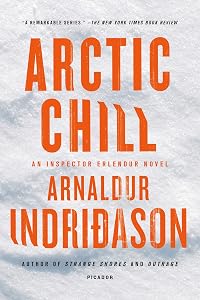
On an icy January day, the Reykjavik police are called to a block of flats where a body has been found in the garden: a young, dark-skinned boy, frozen to the ground in a pool of his own blood. The discovery of a stab wound in his stomach extinguishes any hope that this was a tragic accident. Erlendur and his team embark on their investigation with little to go on but the news that the boy's Thai half-brother is missing. Is he implicated, or simply afraid for his own life? The investigation show more soon unearths tensions simmering beneath the surface of Iceland's outwardly liberal, multicultural society. The boy's murder forces Erlendur to confront a tragedy in his own past. Soon, facts are emerging from the snow-filled darkness that are more chilling even than the Arctic night. show lessTags
Recommendations

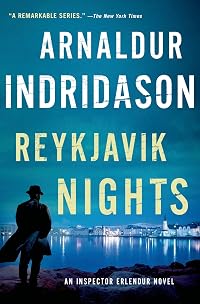

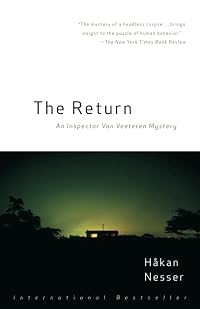
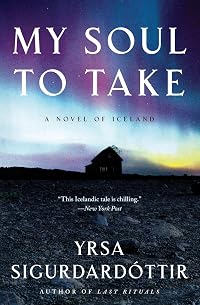
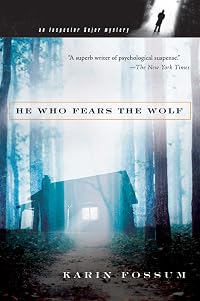






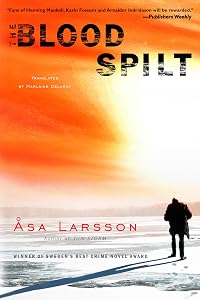
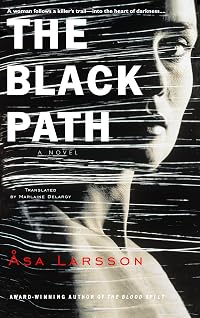

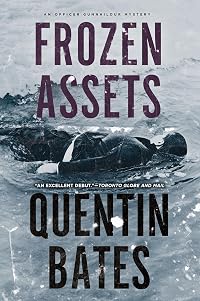
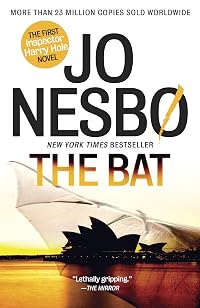








Member Recommendations
terran Winter atmosphere, immigrant alienation, slow-moving plot
30

Member Reviews
Indridason produces superior thrillers amongst those now writing under the 'Scandi crime' label. Set in the bleak, unforgiving environment of Iceland, they somehow capture the beauty and desolation of the landscape and its people more convincingly than others currently writing. Inspector Erlendur is a troubled but believable character, and although the mood of the books is unremittingly dark, Indridason brings an almost poetic beauty to his writing and sense of melancholy.
In Arctic Chill, Erlendur and his team tackle the shocking murder of a child, which in turn exposes the undercurrent of racial tension that runs through Icelandic society as portrayed in the story. As with previous books in this series, what really impresses is the show more sense of balance and credibility Indridason brings to the issues he tackles through the medium of the crime novel. These books are not only well-written (and well translated), but they contain important social history, all served up through the medium of the whodunnit. show less
In Arctic Chill, Erlendur and his team tackle the shocking murder of a child, which in turn exposes the undercurrent of racial tension that runs through Icelandic society as portrayed in the story. As with previous books in this series, what really impresses is the show more sense of balance and credibility Indridason brings to the issues he tackles through the medium of the crime novel. These books are not only well-written (and well translated), but they contain important social history, all served up through the medium of the whodunnit. show less
Arctic Chill is the fifth in Indridason's Reykjavik Thriller series, but it is the first I've read. Before I had even finished reading this book, I had placed an order for the first four. This novel has much to offer the mystery aficionado: a well-crafted police procedural, an unflinching indictment of modern culture, and a glimpse into Iceland's racial tensions and changing demographics. Erlendur and his two detectives, Elinborg and Sigurdur Oli, investigate when a young Thai boy, Elias, is found stabbed to death, his blood freezing his body to the ground outside his apartment complex. Elias's mother, Sunee, had been brought to Iceland as a bride in a marriage that ended in divorce, partly because of Sunee's insistence on bringing her show more older son to Iceland as well. Niran's difficulties in adapting to Icelandic culture provide the backdrop for a fascinating discussion on assimilation versus preserving one's own culture. Was this crime racially motivated? There is an abundance of liberal Icelanders whose hackles have been raised by the influx of immigrants who don't learn Icelandic and whose children scoff at learning Icelandic history in school. One of Elias's teachers is full of hateful rhetoric about "those people." Hints of a possible pedophile in the area, tensions between Icelandic and immigrant children at Elias's school, the disappearance of Niran, and whispers of a boyfriend for Sunee complicate the investigation.
Iceland itself is almost its own character in this novel. This is not a culture with which I was terribly familiar, and the insight was fascinating. In Iceland, disappearances are accepted as part of life in a country with an astronomical suicide rate. The Icelanders are welcoming of immigrants, but fear losing their dwindling culture. The climate is forbiddingly harsh, and it makes me wonder what keeps people there.
Subplots supplemented the central murder investigation. A second mystery, the disappearance of a woman, slips into the storyline as Erlendur receives strange phone calls. Erlendur broods on the disappearance of his brother decades before while awkwardly dealing with his son and daughter turning up, and his mentor is on his deathbed. The plots altogether added up to one of the bleaker mysteries I've read, but even a clunky translation can't diminish its compelling appeal.
Source disclosure: I received a copy of this book from Picador through LibraryThing's Early Reviewer Program. show less
Iceland itself is almost its own character in this novel. This is not a culture with which I was terribly familiar, and the insight was fascinating. In Iceland, disappearances are accepted as part of life in a country with an astronomical suicide rate. The Icelanders are welcoming of immigrants, but fear losing their dwindling culture. The climate is forbiddingly harsh, and it makes me wonder what keeps people there.
Subplots supplemented the central murder investigation. A second mystery, the disappearance of a woman, slips into the storyline as Erlendur receives strange phone calls. Erlendur broods on the disappearance of his brother decades before while awkwardly dealing with his son and daughter turning up, and his mentor is on his deathbed. The plots altogether added up to one of the bleaker mysteries I've read, but even a clunky translation can't diminish its compelling appeal.
Source disclosure: I received a copy of this book from Picador through LibraryThing's Early Reviewer Program. show less
 This review was written for LibraryThing Early Reviewers.
I have a great fondness for noirish crime novels set in the north, so when I snagged Arctic Chill by Arnaldur Indridason from the Early Reviewers program I was enormously pleased. Indridason is an Icelandic author and this book, one of a series of police procedurals, is set in Reykjavik in the winter. In Arctic Chill, the body of a boy is found near the apartment building in which he and his mother and brother live. His mother is Thai and although his father is Icelandic, the suspicion of the police is that this was a racially motivated murder.
The investigation is led by the dour and unfriendly Erlender, a man who is less lonely and wounded than asocial. He's an interesting variation on the usual loner detective and although his show more behavior is partially explained by events in his childhood, he is an unpleasant guy. He is haunted by an earlier missing woman case and can't let it go.
The novel's setting is an integral part of the story and, in the course of the investigation, Indridason explores the impact of immigrants, primarily from Asia, on the small Icelandic population. In comparison to events in the United States (where I am) the racism is mild and calmly addressed, but what really struck me about Indridason's Iceland is the isolation in which people choose to live. Marriages break up with very little thought and children are abandoned by their fathers who leave without having to support their offspring in any way and people live next to neighbors they never get to know. All this is amplified by the early dark and relentless cold of the Icelandic winter. show less
The investigation is led by the dour and unfriendly Erlender, a man who is less lonely and wounded than asocial. He's an interesting variation on the usual loner detective and although his show more behavior is partially explained by events in his childhood, he is an unpleasant guy. He is haunted by an earlier missing woman case and can't let it go.
The novel's setting is an integral part of the story and, in the course of the investigation, Indridason explores the impact of immigrants, primarily from Asia, on the small Icelandic population. In comparison to events in the United States (where I am) the racism is mild and calmly addressed, but what really struck me about Indridason's Iceland is the isolation in which people choose to live. Marriages break up with very little thought and children are abandoned by their fathers who leave without having to support their offspring in any way and people live next to neighbors they never get to know. All this is amplified by the early dark and relentless cold of the Icelandic winter. show less
This review was written for LibraryThing Early Reviewers.Arctic Chill is chilling indeed, and on many levels: racism, issues of immigration, themes of social class, trust and distrust of the police abound.
The novel opens with a 10-year-old boy, the child of a Thai mother and Icelandic father, found stabbed to death in the garden of his apartment complex. There are no clues, no witnesses, the mother is less than forthcoming, and Inspecter Erlendur and his team find themselves emeshed in a rather difficult case from the get-go. Other factors begin to emerge: there's a very racist teacher at school who may have been violent toward the boy, the possibility of ethnic gangs, the boy's isolation at his new school, and his older brother's disappearance-- an older brother who may be implicated in the show more crime, may be in danger himself, or may hold key evidence. Even as all of this is coming into play, the possibility of a pedophile crops up. The novel abounds with uncooperative witnesses and generally unlikeable characters, all of whom have their own motives for disclosing only the information they see fit to share. The detectives find themselves faced with a wall of hostile witnesses, prejudice, and ghosts from the past, not the least of whom are Erlendur's own children, who have suddenly shown up to ask questions about their father's past.
Indridason skillfully portrays characters who are not uniformally anti-immigration or uniformally racist yet each have their own set of prejudices; he shows there's not just one form of racial hostility or just one level of discomfort with multicultural society. Some characters try to justify their behavior, some are forthright about their beliefs, but there is tension everywhere; this is an Iceland in the midst of a huge cultural shift, and Indridason's lens is aimed at capturing the blurry image of this shifting society. There's no character with whom the reader can comfortably say, "Yes, I identify with this person;' everyone's position is aimed at knocking the reader off balance. You're not allowed to feel comfortable; you feel, acutely, the discomfort that arises when a society is rapidly changing.
Indridason gives us more of a view into his detectives' lives. We're allowed to delve a bit more deeply into Erlendur's past, into his youth, when his brother died during a freak blizzard during their youth. We see his relationship with his son and his daughter, and, in particular with his daughter, we see how she has matured and changed a bit from the sullen character of previous novels. We go into some depth with Sigurdur Oli and his problems with his marriage and also with his own youth, when he was involved at a riot at the very school he is now investigating. Elinborg perhaps gets the shorter end of the stick, but we do see her as a devoted mother, concerned about her sick child and how she will care for her during the long hours of a murder investigation. It's good to see the main characters fleshed out a bit; it makes the novel more than just a police procedural, allows it to be less "bare bones" than that.
As a police procedural, though, is how it's in its strongest form. It comes across as a strong example of the genre. We have the hardened Inspector, his dying mentor, the attendant detectives, and their quest for justice. We have them following the breadcrumbs of a trail of sparse clues, relying on the previously-mentioned unreliable witness testimony and their gut instinct to move them forward. There are no fancy forensics here, just sheer hard work, making the right connections, dotting all the Is and crossing all the Ts. It's harsh work set against a harsh and unforgiving landscape.
Indriadason hits the right notes here, balancing police procedural with humanizing his characters and setting it all up against a chaotic time in contemporary Iceland. Mix well, and you have a satisfying concoction of a murder mystery. show less
The novel opens with a 10-year-old boy, the child of a Thai mother and Icelandic father, found stabbed to death in the garden of his apartment complex. There are no clues, no witnesses, the mother is less than forthcoming, and Inspecter Erlendur and his team find themselves emeshed in a rather difficult case from the get-go. Other factors begin to emerge: there's a very racist teacher at school who may have been violent toward the boy, the possibility of ethnic gangs, the boy's isolation at his new school, and his older brother's disappearance-- an older brother who may be implicated in the show more crime, may be in danger himself, or may hold key evidence. Even as all of this is coming into play, the possibility of a pedophile crops up. The novel abounds with uncooperative witnesses and generally unlikeable characters, all of whom have their own motives for disclosing only the information they see fit to share. The detectives find themselves faced with a wall of hostile witnesses, prejudice, and ghosts from the past, not the least of whom are Erlendur's own children, who have suddenly shown up to ask questions about their father's past.
Indridason skillfully portrays characters who are not uniformally anti-immigration or uniformally racist yet each have their own set of prejudices; he shows there's not just one form of racial hostility or just one level of discomfort with multicultural society. Some characters try to justify their behavior, some are forthright about their beliefs, but there is tension everywhere; this is an Iceland in the midst of a huge cultural shift, and Indridason's lens is aimed at capturing the blurry image of this shifting society. There's no character with whom the reader can comfortably say, "Yes, I identify with this person;' everyone's position is aimed at knocking the reader off balance. You're not allowed to feel comfortable; you feel, acutely, the discomfort that arises when a society is rapidly changing.
Indridason gives us more of a view into his detectives' lives. We're allowed to delve a bit more deeply into Erlendur's past, into his youth, when his brother died during a freak blizzard during their youth. We see his relationship with his son and his daughter, and, in particular with his daughter, we see how she has matured and changed a bit from the sullen character of previous novels. We go into some depth with Sigurdur Oli and his problems with his marriage and also with his own youth, when he was involved at a riot at the very school he is now investigating. Elinborg perhaps gets the shorter end of the stick, but we do see her as a devoted mother, concerned about her sick child and how she will care for her during the long hours of a murder investigation. It's good to see the main characters fleshed out a bit; it makes the novel more than just a police procedural, allows it to be less "bare bones" than that.
As a police procedural, though, is how it's in its strongest form. It comes across as a strong example of the genre. We have the hardened Inspector, his dying mentor, the attendant detectives, and their quest for justice. We have them following the breadcrumbs of a trail of sparse clues, relying on the previously-mentioned unreliable witness testimony and their gut instinct to move them forward. There are no fancy forensics here, just sheer hard work, making the right connections, dotting all the Is and crossing all the Ts. It's harsh work set against a harsh and unforgiving landscape.
Indriadason hits the right notes here, balancing police procedural with humanizing his characters and setting it all up against a chaotic time in contemporary Iceland. Mix well, and you have a satisfying concoction of a murder mystery. show less
This review was written for LibraryThing Early Reviewers.Indridason targets the underlying tensions in Iceland's multicultural society when the young son of a Thai immigrant is murdered. The murder reminds Erlendur of a tragedy in his own childhood and fleshed out more of his life story and what has made him so unsociable. I found the police investigation and interview techniques slow, almost to the point of incompetence, but the ending delivered some activity. Overall, it provides a snapshot of modern Iceland but as a mystery novel it's less than what I expect from Indridason.
"Arctic Chill" is my first experience with Arnaldur Indridason’s police procedurals, so I do not have the earlier novels in the series to use as a yardstick. "Arctic Chill" is, in fact, the fifth of six “Reykjavik Thrillers” (if, that is, they were translated and published here in the order in which they were written) to be translated from the original Icelandic for publication in the U.S. And I am intrigued enough by the book’s main characters, atmosphere, and attention to detail that I will be seeking others in the series.
When he sees the little Asian boy frozen to the ground in a pool of his own blood, Erlendur fears the child has been the victim of a hate crime. What he sees, however, deeply disturbs him for an additional show more reason; it reminds him of his own little brother, lost to a blizzard decades earlier. Erlendur soon discovers that the mixed-race child is the son of a Thai woman who had the courage to move to Iceland to begin a new life in her husband’s home country. Worryingly, the woman also has an older son who has not been seen since before his younger brother’s body was found not far from the apartment they share with their now divorced mother.
Detective Erlendur and his Reykjavik police colleagues, in their effort to find the boy’s killer, begin their enquiries, naturally enough, at his school. There, they learn of the day-to-day racism and harassment mixed-race immigrant students suffer at the hands of fellow students, and perhaps even a teacher or two. Interview by interview, clue by clue, one discovery leading them to the next, Erlendur and his crew begin to close in on the killer. "Arctic Chill" is an excellent police procedural but the book is about much more than solving one murder.
Author Arnaldur Indridason takes a hard look at what immigrants, especially those from Asia or Africa, face when they come to Iceland. As in every country, native citizens have mixed emotions about immigration. On the one hand, they appreciate the willingness of the immigrants to work at the low paying jobs that have to be done. On the other, they fear that their country’s culture will be forever corrupted by people who make no effort to assimilate into the dominant society. This is especially true in a country, like Iceland, that has a relatively small population through which to defend its cultural heritage. As Detective Erlendur himself says at an early stage of the investigation, “This is all so new to us. Immigrants, racial issues...we know so little about it.”
Indridason gives the reader a good feel for life in modern Iceland, a way of life still largely influenced by the demands of the country’s harsh climate. Long, cold winters with very short days do not encourage neighbors to spend much time getting to know each other and Detective Erlendur and other characters in the book seem to have developed a rather fatalistic attitude as a result of the forced lifestyle.
This portion of a paragraph from near the end of the book (a scene in which Erlendur stands alone over a grave in freezing weather) says it best: “There were no final answers to explain the life-long solitude of the person in the urn, or the death of his brother all those years ago, or why Erlendur was the way he was, and why Elias was stabbed to death. Life was a random mass of unforeseeable coincidences that governed men’s fates like a storm that strikes without warning, causing injury and death.”
"Arctic Chill" won’t cheer you up - and that’s the point. This is a highly atmospheric book with a message and some characters I want to get to know better.
Rated at: 4.5 show less
When he sees the little Asian boy frozen to the ground in a pool of his own blood, Erlendur fears the child has been the victim of a hate crime. What he sees, however, deeply disturbs him for an additional show more reason; it reminds him of his own little brother, lost to a blizzard decades earlier. Erlendur soon discovers that the mixed-race child is the son of a Thai woman who had the courage to move to Iceland to begin a new life in her husband’s home country. Worryingly, the woman also has an older son who has not been seen since before his younger brother’s body was found not far from the apartment they share with their now divorced mother.
Detective Erlendur and his Reykjavik police colleagues, in their effort to find the boy’s killer, begin their enquiries, naturally enough, at his school. There, they learn of the day-to-day racism and harassment mixed-race immigrant students suffer at the hands of fellow students, and perhaps even a teacher or two. Interview by interview, clue by clue, one discovery leading them to the next, Erlendur and his crew begin to close in on the killer. "Arctic Chill" is an excellent police procedural but the book is about much more than solving one murder.
Author Arnaldur Indridason takes a hard look at what immigrants, especially those from Asia or Africa, face when they come to Iceland. As in every country, native citizens have mixed emotions about immigration. On the one hand, they appreciate the willingness of the immigrants to work at the low paying jobs that have to be done. On the other, they fear that their country’s culture will be forever corrupted by people who make no effort to assimilate into the dominant society. This is especially true in a country, like Iceland, that has a relatively small population through which to defend its cultural heritage. As Detective Erlendur himself says at an early stage of the investigation, “This is all so new to us. Immigrants, racial issues...we know so little about it.”
Indridason gives the reader a good feel for life in modern Iceland, a way of life still largely influenced by the demands of the country’s harsh climate. Long, cold winters with very short days do not encourage neighbors to spend much time getting to know each other and Detective Erlendur and other characters in the book seem to have developed a rather fatalistic attitude as a result of the forced lifestyle.
This portion of a paragraph from near the end of the book (a scene in which Erlendur stands alone over a grave in freezing weather) says it best: “There were no final answers to explain the life-long solitude of the person in the urn, or the death of his brother all those years ago, or why Erlendur was the way he was, and why Elias was stabbed to death. Life was a random mass of unforeseeable coincidences that governed men’s fates like a storm that strikes without warning, causing injury and death.”
"Arctic Chill" won’t cheer you up - and that’s the point. This is a highly atmospheric book with a message and some characters I want to get to know better.
Rated at: 4.5 show less
This review was written for LibraryThing Early Reviewers.While not quite up the quality of the Wallander series, I do enjoy these Icelandic thrillers. This book focuses on the issues and attitudes surrounding immigration in a country that is trying hard to hold on to its culture and its language. An interesting bit in the book was when police search a suspect's for hate propaganda and "...found a carefully folded Confederate flag and another bearing a swastika...unearthed articles...inciting hatred..." This, in a book written in 2005 by an Icelandic author, a decade before the fight over the Confederate flag re-emerged.
Members
- Recently Added By
Published Reviews
ThingScore 75
Is there such a thing as a perfect crime-fiction novel? Probably not, but if there were, this would surely be a strong contender. Arnaldur Indridason's latest novel in the Inspector Erlendur series continues the upward trend in quality, confidence and storytelling that I have come to hope for, even dare to expect, with each new outing. Tragically, Indridason's translator, Bernard Scudder died show more before he had completed work on ARCTIC CHILL, but Victoria Cribb has stepped in and the result seems to be a seamless one....This author is brilliant at speaking to the reader at the level at which the reader desires, so one can either ignore the economically presented character studies and get on with the plot, or revel in them and find further insight behind the sparse prose. For me, this author understands internal suffering all too well, and can convey the sadness of daily life in a dispassionate yet empathetic way. show less
added by vancouverdeb
The books of Icelandic crime writer Arnaldur Indridason may seem esoteric, but this is a situation that is fast changing. A film adaptation of his Jar City has won rave reviews, and UK bookselling chains are promoting crime in translation...An opaque Icelandic police procedural that's all shades of grey...
added by vancouverdeb
...may well be the most thoroughly depressing of all the gloomy police procedurals coming out of those cold lands near the Arctic Circle. But since the storyteller is Arnaldur Indridason, this Icelandic tale is delivered with exquisite sensitivity, in a moody translation...
added by y2pk
Lists

Scandinavian Crime Fiction
224 works; 37 members
Nordic Crime Fiction
66 works; 10 members
Scandinavian Crime
90 works; 3 members

Best Crime Fiction
48 works; 3 members

Books About Murder
313 works; 7 members

Reading List - Scandinavian Fiction
134 works; 3 members

Detective Stories
343 works; 5 members

Global Reads: Books Set in Western Europe
186 works; 10 members

Reading Globally
136 works; 16 members

Books Read in 2016
4,666 works; 197 members

Books Read in 2012
816 works; 31 members
Author Information

67+ Works 19,944 Members
Arnaldur Indriðason was born in Reykjavík January 28, 1961 and writes crime fiction. He is the son of writer Indriði G. Þorsteinsson. Arnaldur graduated with a degree in history from the University of Iceland in 1996. Arnaldur's first published book, Sons of Dust (Synir duftsins) in 1997, is the first in the Detective Erlendur series. show more Arnaldur's books have been published in twenty-six countries and have been translated into Russian, Polish, German, Greek, Danish, Catalan, English, Italian, Czech, Swedish, Norwegian, Dutch, Finnish, Spanish, Portuguese, Hungarian, Chinese, Croatian, Romanian and French. He won the Crime Writers' Association Gold Dagger Award in 2005 for the novel Silence of the Grave. Arnaldur lives in Reykjavík with his wife and three children. (Bowker Author Biography) show less
Some Editions
Awards and Honors
Series

Belongs to Publisher Series
Common Knowledge
- Canonical title
- Arctic Chill
- Original title
- Vetrarborgin
- Original publication date
- 2005; 2008 [English: Scudder, Cribb]
- People/Characters
- Erlendur Sveinsson; Sigurdur Óli; Elínborg; Elias; Niran; Sunee (show all 13); Kjartan; Eva Lind; Sindri Snaer; Valgerdur; Gudny; Andres; Marion Briem
- Important places
- Iceland; Reykjavík, Iceland
- Epigraph
- Ben ik nu degene die nog leeft
of degene die gestorven is?
Steinn Steinnar, Op het kerkhof
Am I the one, who lives on, or the other who died? Steinn Steinnar, In A Cemetery - Dedication
- In memory of Bernard Scudder
- First words
- They were able to guess his age, but had more trouble determining which part of the world he came from.
- Quotations
- Erlendur stood over the grave in the freezing cold, searching for a purpose to the whole business of life and death. As usual he could find no answers . . . . Life was a random mass of unforseeable coincidencees that governe... (show all)d men's fates like a storm that strikes without warning, causing injury and death. (340)
- Last words
- (Click to show. Warning: May contain spoilers.)They locked their doors, closed their windows and pulled the curtains, hoping against hope that the cold spell would soon be over.
- Blurbers
- Coben, Harlan
- Original language
- Icelandic
- Disambiguation notice
- Original title: Vetrarborgin
Classifications
- Genres
- Fiction and Literature, Mystery
- DDC/MDS
- 839.6934 — Literature & rhetoric German & related literatures Other Germanic literatures Old Norse, Old Icelandic, Icelandic, Faroese literatures Modern West Scandinavian; Modern Icelandic Modern Icelandic fiction 1900-1999
- LCC
- PT7511 .A67 .V4713 — Language and Literature German, Dutch and Scandinavian literatures Modern Icelandic literature Individual authors or works 19th-20th centuries
- BISAC
Statistics
- Members
- 1,584
- Popularity
- 14,344
- Reviews
- 89
- Rating
- (3.62)
- Languages
- 16 — Catalan, Czech, Danish, Dutch, English, Finnish, French, German, Hungarian, Icelandic, Italian, Norwegian (Bokmål), Norwegian, Polish, Spanish, Swedish
- Media
- Paper, Audiobook, Ebook
- ISBNs
- 68
- ASINs
- 19
