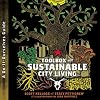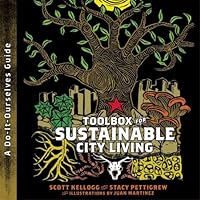
Toolbox for Sustainable City Living: A do-it-Ourselves Guide
by Scott Kellogg, Stacy Pettigrew
On This Page
Description
The tools you need to create self-sufficient, ecologically sustainable cities "A surprisingly effective model for connecting people with dreams to the resources they need." --Austin Chronicle With more than half the world's population now residing--and struggling to survive--in cities, we can no longer afford to think of sustainability as something that applies only to forests and fields. We need sustainable living right where so many of us are: in urban neighborhoods. But how do we do it? show more That's where Toolbox for Sustainable City Living comes in. In 2000 the dynamic Rhizome Collective transformed an abandoned warehouse in Austin, Texas, into a sustainability training center. Here, with their first book, Scott and Stacy, two of Rhizome's founders, provide city dwellers--those who have never foraged or gardened along with those who dumpster-dive and belong to CSAs--with step-by- step instructions for producing our own food, collecting water, managing waste, reclaiming land, and generating energy. With vibrant illustrations created by Juan Martinez of the Beehive Collective and descriptive text based on years of experimentation, Stacy and Scott explain how to build and grow with cheap, salvaged, and recycled materials. More than a how-to manual, Toolbox is packed with accessible and relevant tools to help move our communities from envisioning a sustainable future toward living it. Scott Kellogg a Stacy Pettigrew are co-founders of the Rhizome Collective, an educational and activist organization based in Austin, Texas, that recently received a $200,000 grant from the EPA to clean up a 10-acre brownfield that they are transforming into an ecological justice park. Toolbox developed out of R.U.S.T.--Radical Urban Sustainability Training--their intensive weekend seminar in urban ecological survival skills. show lessTags
Recommendations








Member Recommendations

Member Reviews
We will need to abolish the state and capitalism in order to live sustainably (and for some people, just to live). And collective liberation should be foregrounded at every step, as opposed to Liberal individual action, as it creates an population that doesn't need governance.
That said, I'm looking forward to implementing some of the projects in this book, not because I want to be holier than thou and more "sustainable," but because I think I can harness the unharnessed energy around me (wind, sunshine, water that comes from the sky) to reduce my bills and to reduce my reliance on "the grid." I plan on sharing whatever I learn with anyone who'll listen.
Dual-Power? Non-cooperation? I swear I won't be pompous about this book, or anything show more I implement from it. show less
That said, I'm looking forward to implementing some of the projects in this book, not because I want to be holier than thou and more "sustainable," but because I think I can harness the unharnessed energy around me (wind, sunshine, water that comes from the sky) to reduce my bills and to reduce my reliance on "the grid." I plan on sharing whatever I learn with anyone who'll listen.
Dual-Power? Non-cooperation? I swear I won't be pompous about this book, or anything show more I implement from it. show less
Pretty good primer on a number of sustainable and alternative practices. Like others in this category, it gives you enough information to get you started but you'll probably need to dig into more complete references if you're tackling one of the bigger projects. The depth of the information provided here was a little inconsistent. Some project types get full treatment while others are passed over in a couple quick paragraphs. Those are pretty forgivable shortcomings, though, for a book that covers a lot of ground. The authors also inject an unapologetically political viewpoint into the book; their point being that sustainability cannot be effective if it is considered as agnostic pieces in isolation of a larger vision for rebuilding. I show more was fine with the tone and generally agree with their take, just be ready for that. show less
Kellogg and Pettigrew do an excellent job on several fronts. Not only do they make a good case for Urban Agriculture as a smart move, but they also describe in clear and simple language and pictures how one is to begin such activities. Lots of good source materials too. I may need to own this, and I'll definitely be re-reading the aquaculture section soon.
While this book has some really nifty projects, most are geared for the advanced sustainability guru with access to land. As I don't have a yard, don't have access to the plumbing to install greywater recycling, etc, this book is really not terribly useful for me. However, I could see it as a resource in the future if I ever own some land.
If you're interested in more small-scale sustainability projects that can be undertaken even in tiny, studio apartments, I strongly recommend reading Urban Homestead instead.
If you're interested in more small-scale sustainability projects that can be undertaken even in tiny, studio apartments, I strongly recommend reading Urban Homestead instead.
This is a great primer on self-sufficiency and sustainable skills. It is grounded in the contextual framework of climate change and peak oil, a foundation that sets it apart from the current wave of corporate green-washing.
It covers the basic categories of food, water and energy, but delves deeper into topics not usually covered in sustainability books like micro-livestock management, aquaculture basics and composting toilets.
It is great for the DIYer with ample how-to instructions and illustrations. The anecdotes from the author's own collective are also great.
It covers the basic categories of food, water and energy, but delves deeper into topics not usually covered in sustainability books like micro-livestock management, aquaculture basics and composting toilets.
It is great for the DIYer with ample how-to instructions and illustrations. The anecdotes from the author's own collective are also great.
Probably more helpful if you own your home, as a lot of the projects are long term and/or involve digging up the driveway. I thought many of the projects could have used better descriptions and illustrations - some of it would be hard to follow for beginners.
Lots of great ideas, though, and extra bonus points for the completely awesome cover.
Lots of great ideas, though, and extra bonus points for the completely awesome cover.
Can't wrap my head around the level of off-the-grid but stay in the city.
Members
- Recently Added By
Lists

South End Press
35 works; 1 member
Author Information

2 Works 228 Members
Scott Kellogg PhD, is a clinical assistant professor in the New York University Department of Psychology. He is also in private practice at The Chairwork/Schema Therapy Treatment Project.
2 Works 219 Members
All Editions
Common Knowledge
- Original publication date
- 2008
- Dedication
- This book is dedicated to Eleanor Elodea Kellogg.
- First words
- In the coming decades, humanity will be faced with an enormous challenge—to survive the implosion of a society that has overextended its natural limitations in every capacity.
- Last words
- (Click to show. Warning: May contain spoilers.)The enormous task given to our generation is to figure out how to repair the damage that has been done to our natural systems, to undo the social structures that act as blockades to self-reliance, and to begin building communities and networks that are founded in the values of sustainability and egalitarianism.
- Blurbers
- Jensen, Derrick; Toll-DuBois, Renee; Perry, Amber
Classifications
Statistics
- Members
- 216
- Popularity
- 150,624
- Reviews
- 7
- Rating
- (3.89)
- Languages
- English
- Media
- Paper
- ISBNs
- 1