
About the Author
R. J. Ruppenthal, an attorney and professor at Evergreen Valley College in San Jose, California
Image credit: R.J. Ruppenthal
Works by R. J. Ruppenthal
Fresh Food from Small Spaces: The Square-Inch Gardener's Guide to Year-Round Growing, Fermenting, and Sprouting (2008) 217 copies, 6 reviews
Backyard Chickens for Beginners: Getting the Best Chickens, Choosing Coops, Feeding and Care, and Beating City Chicken Laws (2012) 37 copies
How to Grow Potatoes: Planting and Harvesting Organic Food From Your Patio, Rooftop, Balcony, or Backyard Garden (26-page Booklet) (2012) 28 copies
The Healthy Probiotic Diet: More Than 50 Recipes for Improved Digestion, Immunity, and Skin Health (2014) 21 copies
Fall and Winter Gardening: 25 Organic Vegetables to Plant and Grow for Late Season Food (2012) 19 copies, 1 review
How to Make Probiotic Drinks for a Raw Food Diet: Kefir, Kombucha, Ginger Beer, and Naturally Fermented Ciders, Sodas, and Smoothies (2012) 19 copies
Best Chicken Breeds: 12 Types of Hens that Lay Lots of Eggs, Make Good Pets, and Fit in Small Yards (Plus Bonus: 5 Varieties of Exotic Poultry) (2012) 17 copies, 1 review
How to Sprout Raw Food: Grow an Indoor Organic Garden with Wheatgrass, Bean Sprouts, Grain Sprouts, Microgreens, and More (2012) 16 copies
Blueberries in Your Backyard: How to Grow America's Hottest Antioxidant Fruit for Food, Health, and Extra Money (Booklet) (2012) 16 copies, 1 review
Essential Vegetables Box Set (4 Books in 1 Package): Organic Gardening with Tomatoes, Potatoes, Peppers, Eggplants, Broccoli, Cabbage, and More (2013) 10 copies
How to Grow Beans and Peas: Planting and Growing Organic Green Beans, Sugar Snap Peas, and Heirloom Dry Beans and Peas (2013) 10 copies
Starting a New Garden (VOL. 1): How to Transform Your Yard and Patio Into Beds and Container Gardens (Growing Organic Vegetables at Home) (2013) 8 copies
Cheating on a Chicken Coop: 8 Cheap Ideas to House Your Backyard Hens and Save Money (2014) 6 copies
Tagged
Common Knowledge
- Canonical name
- Ruppenthal, R. J.
- Other names
- Ruppenthal, Rama J.
- Birthdate
- 1974
- Gender
- male
- Education
- University of California, Davis
University of Wisconsin Law School - Nationality
- USA
- Associated Place (for map)
- USA
Members
Reviews
Fresh Food from Small Spaces: The Square-Inch Gardener's Guide to Year-Round Growing, Fermenting, and Sprouting by R. J. Ruppenthal
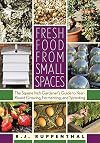
This book was written for apartment, condo, and small-house dwellers. The author gives suggestions for eking home-grown/sprouted/fermented foods out of postage-stamp yards, balconies, laundry rooms, sunken patios, cupboards, windowsills, and closets. He covers vegetable gardening (using reflected light, trellising, and terracing), compact fruits and berries, sprouting, fermenting (yogurt, kefir, sauerkraut, and kimchi), cultivating mushrooms, keeping chickens and bees, and composting. show more Somewhere in there was also a mention of foraging. He says:
“Using this book, most urban residents can learn to grow as much as 10 to 20 percent of the fresh food their families eat from an average-sized urban condominium or apartment space.” [pg xiii]
I found many interesting nuggets in this low-visual, high-text book: Mr. Ruppenthal has some great advice on making your own extra-large self-watering containers out of storage bins, and he makes a convincing argument for sprouting (convincing enough to get even me thinking about trying it).
The final chapter discusses the sustainability movement (local food, organic agriculture, farmers markets, etc.). Just before that is an unexpected chapter on emergency preparedness. After that: no index. That bit took me by surprise – there's not many non-fiction books without indexes these days. show less
“Using this book, most urban residents can learn to grow as much as 10 to 20 percent of the fresh food their families eat from an average-sized urban condominium or apartment space.” [pg xiii]
I found many interesting nuggets in this low-visual, high-text book: Mr. Ruppenthal has some great advice on making your own extra-large self-watering containers out of storage bins, and he makes a convincing argument for sprouting (convincing enough to get even me thinking about trying it).
The final chapter discusses the sustainability movement (local food, organic agriculture, farmers markets, etc.). Just before that is an unexpected chapter on emergency preparedness. After that: no index. That bit took me by surprise – there's not many non-fiction books without indexes these days. show less
Fresh Food from Small Spaces: The Square-Inch Gardener's Guide to Year-Round Growing, Fermenting, and Sprouting by R. J. Ruppenthal
This is a good book for ideas - the author dips into gardening, beekeeping, mushroom growing, sprouts, etc... with more expertise in the gardening and sprouting areas. I may not be as ready as he is to contemplate more closely any future shortages in resources that will make more urban food production necessary, but I'm thinking I might try raspberries this spring and may try out some sprouting this winter. The writing style made my eyes roll from time to time (supernouns and "you may laugh" show more especially) - but I've got the book put aside to go investigate some of the web resources that he lists. I'd like to see more books on urban food production out there. show less
Fresh Food from Small Spaces: The Square-Inch Gardener's Guide to Year-Round Growing, Fermenting, and Sprouting by R. J. Ruppenthal

I can't say that this book has any earth shattering information in it - if you are already growing vegetables in your apartment or have read books like Urban Homestead Your Guide to Self-sufficient Living in the Heart of the City, then you probably won't find a ton of new information in it. However the author does focus specifically on a few plants that are particularly good in low space / low light situations, such as berries and dwarf trees, so I appreciated that insight.
The author also show more covers fermentation, and recommends a book (Wild Fermentation The Flavor, Nutrition, and Craft of Live-Culture Foods) that I intend to check out of the library for a more detailed view. He also brings up chicken and bee-keeping, something that both Toolbox for Sustainable City Living and Urban Homestead Your Guide to Self-sufficient Living in the Heart of the City covered. I skipped over that section, being a vegan and not having nearly enough space.
The author also covers mushroom cultivation, composting and sprouting (of which he is a huge advocate) and keeping prepared with food and water in case of emergencies. I like the mushroom and sprouting ideas, but sprouting always comes with the caveat that you have to continue to buy seeds and grains, whereas veggies provide seeds for future plants without further purchases.
I was sort of disappointed that the author seems to assume that everybody has plenty of patio space, even though this book is specifically written for apartment dwellers and people who live in cities. I only have a fire escape which dramatically limits the amount of vegetables I can grow outside. The author doesn't really mention growing veggies indoors, how that affects the growing season, etc.
I also found it annoying that the author said that apartments without outdoor space cannot compost (without worms). It's a long, slow wait, but I have been composting for awhile, and while I have yet to get my first bin totally decomposed, it's not out of the question for patient apartment dwellers to compost their organic waste.
Overall, this is a really good introduction book, and I look forward to trying my hand at growing berries and reading the fermentation book he recommends. show less
The author also show more covers fermentation, and recommends a book (Wild Fermentation The Flavor, Nutrition, and Craft of Live-Culture Foods) that I intend to check out of the library for a more detailed view. He also brings up chicken and bee-keeping, something that both Toolbox for Sustainable City Living and Urban Homestead Your Guide to Self-sufficient Living in the Heart of the City covered. I skipped over that section, being a vegan and not having nearly enough space.
The author also covers mushroom cultivation, composting and sprouting (of which he is a huge advocate) and keeping prepared with food and water in case of emergencies. I like the mushroom and sprouting ideas, but sprouting always comes with the caveat that you have to continue to buy seeds and grains, whereas veggies provide seeds for future plants without further purchases.
I was sort of disappointed that the author seems to assume that everybody has plenty of patio space, even though this book is specifically written for apartment dwellers and people who live in cities. I only have a fire escape which dramatically limits the amount of vegetables I can grow outside. The author doesn't really mention growing veggies indoors, how that affects the growing season, etc.
I also found it annoying that the author said that apartments without outdoor space cannot compost (without worms). It's a long, slow wait, but I have been composting for awhile, and while I have yet to get my first bin totally decomposed, it's not out of the question for patient apartment dwellers to compost their organic waste.
Overall, this is a really good introduction book, and I look forward to trying my hand at growing berries and reading the fermentation book he recommends. show less
Fall and Winter Gardening: 25 Organic Vegetables to Plant and Grow for Late Season Food by R. J. Ruppenthal
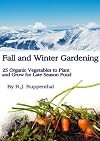
Fall and Winter Gardening: 25 Organic Vegetables to Plant and Grow for Late Season Food
Lots of information on late gardening and very descriptive list of plants you can grow in colder weather.
Each plant has a list of helpful information to help you decide what you want to grow.
Color photos are included. Frost charts and other strategies are discussed.
Resources and other very useful information, a good read!
Lots of information on late gardening and very descriptive list of plants you can grow in colder weather.
Each plant has a list of helpful information to help you decide what you want to grow.
Color photos are included. Frost charts and other strategies are discussed.
Resources and other very useful information, a good read!
Lists
You May Also Like


Statistics
- Works
- 16
- Members
- 438
- Popularity
- #55,889
- Rating
- 3.5
- Reviews
- 9
- ISBNs
- 14